
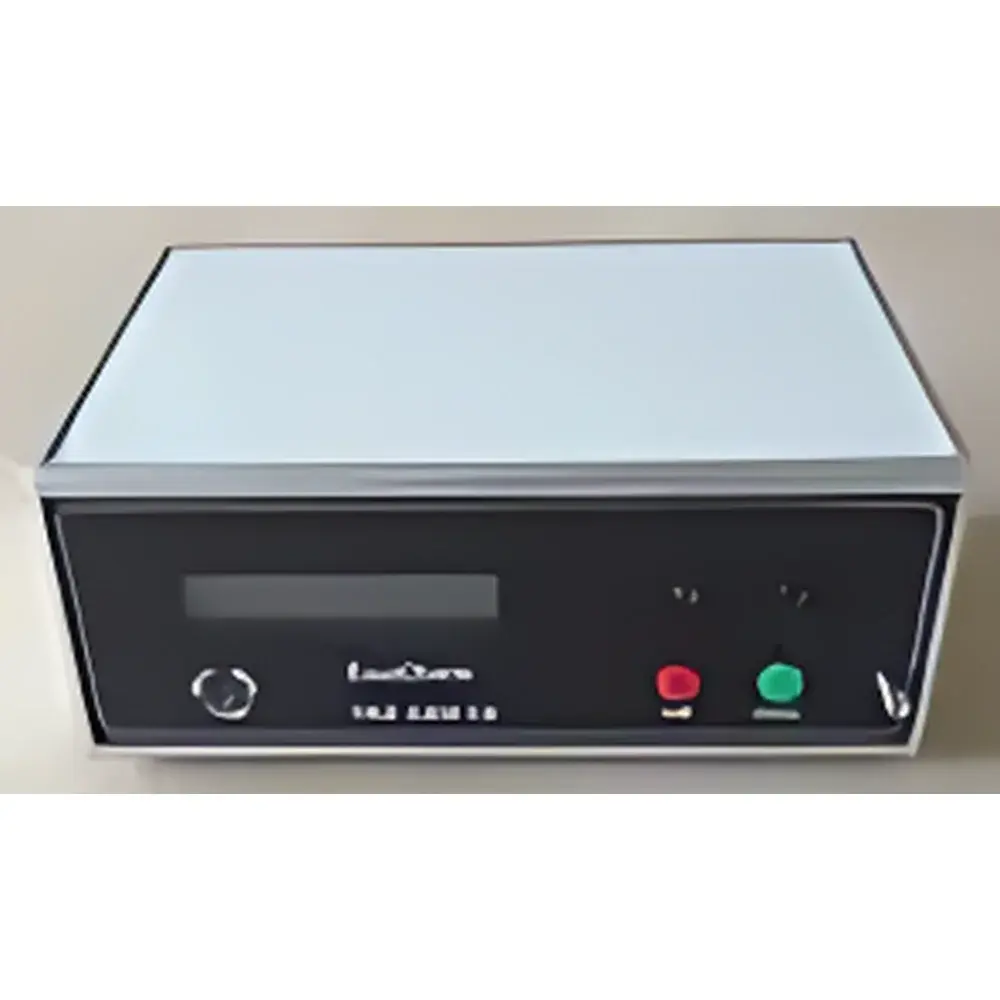
EcoChem PAS-2200CE Portable Photoionization Aerosol Sensor for Particle-Bound PAHs
| Brand | EcoChem |
|---|---|
| Origin | USA |
| Model | PAS-2200CE |
| Instrument Type | Aerosol-Bound PAH Monitor |
| Detection Principle | UV Photoionization of Adsorbed PAHs |
| Measurement Range | 0–1000 ng/m³ |
| LOD | 10 ng/m³ (total adsorbed PAH) |
| Flow Rate | 1 L/min |
| Response Time | <10 s (adjustable) |
| Sensitivity | 10 ng/m³ |
| Operating Temperature | 5–40 °C |
| Data Storage | 8,000 points (timestamped) |
| Weight | 1.5 kg |
| Dimensions | 58 × 175 × 124 mm |
| Power | 15 V DC (rechargeable battery) or 220 V AC/50 Hz |
| Display | 2-line × 16-character LED |
| Output | RS232 serial interface |
| Data Logging | Embedded system (up to 2,500 records) |
Overview
The EcoChem PAS-2200CE is a field-deployable, battery-operated photoionization sensor engineered for real-time quantification of particle-bound polycyclic aromatic hydrocarbons (PAHs) in ambient and occupational aerosols. Unlike conventional GC-MS or HPLC-based laboratory methods—which require offline filter collection, solvent extraction, and time-intensive analysis—the PAS-2200CE employs selective ultraviolet photoionization to detect PAHs adsorbed onto carbonaceous particulate matter (e.g., soot, diesel exhaust particles, biomass combustion aerosols) directly in the gas stream. Its core detection mechanism relies on a pulsed excimer lamp emitting narrow-band UV radiation (typically 172 nm or 222 nm), tuned to ionize only PAH molecules with ionization potentials below the photon energy—while leaving gaseous VOCs, inorganic aerosols, and non-aromatic organics unaffected. Ionized PAH-coated particles acquire positive charge under an applied electric field; this charge is measured via a high-impedance electrometer, yielding a current signal linearly proportional to total adsorbed PAH mass concentration (ng/m³). The chopper-modulated lamp operation enables synchronous detection, effectively suppressing baseline drift and interference from nearby combustion sources—a critical advantage in mobile or near-source monitoring scenarios.
Key Features
- Patented excimer lamp technology enabling selective, real-time ionization of particle-adsorbed PAHs (≥3-ring structures)
- Detection optimized for health-relevant ultrafine and fine carbonaceous aerosols (PM1, PM2.5)—the primary carriers of carcinogenic PAHs into human respiratory tracts
- High analytical sensitivity: limit of detection at 10 ng/m³ for total adsorbed PAH, validated across urban, indoor, and industrial environments
- Robust, vibration-resistant mechanical design suitable for handheld, vehicle-mounted, or backpack deployment
- Fully autonomous operation: integrated data logger stores up to 2,500 timestamped measurements; full memory capacity supports 8,000 data points with time stamps
- Modular sampling interface compatible with optional dilution systems for high-concentration source characterization (e.g., stack emissions, combustion chambers)
- Low-power architecture: operates continuously for >8 hours on rechargeable 15 V DC battery; also supports 220 V AC/50 Hz mains input
Sample Compatibility & Compliance
The PAS-2200CE is calibrated and validated for use with ambient, indoor, and workplace aerosols containing carbonaceous particulate matter—particularly those generated by incomplete combustion processes. It responds selectively to PAHs adsorbed onto elemental carbon (EC), organic carbon (OC), and black carbon (BC) matrices, including but not limited to benzo[a]pyrene, fluoranthene, pyrene, and phenanthrene derivatives. The instrument does not provide compound-specific identification; rather, it delivers a quantitative metric of total carcinogenic PAH burden associated with respirable particles. While not certified to ISO 17025 or EPA Compendium Method TO-13A, its measurement principle aligns with established toxicological exposure frameworks used in occupational hygiene (ACGIH TLV® guidance) and environmental epidemiology (WHO Air Quality Guidelines, US EPA IRIS assessments). Field validation studies referenced in peer-reviewed literature—including traffic microenvironments, residential wood combustion, and industrial stack plumes—demonstrate strong correlation with reference gravimetric and chromatographic methods under controlled co-location protocols.
Software & Data Management
Data acquisition and post-processing are supported via RS232 serial communication to Windows-compatible PCs. EcoChem provides proprietary charting software that enables real-time visualization, configurable averaging intervals, and export to CSV or Excel-compatible formats. All logged records include absolute UTC timestamps, flow-corrected concentration values, and diagnostic flags (e.g., low-flow warning, battery status). The firmware implements basic audit trail functionality—recording instrument startup/shutdown events and configuration changes—with metadata embedded in each exported file. For GLP/GMP-aligned deployments, users may integrate PAS-2200CE output into validated third-party data acquisition platforms supporting 21 CFR Part 11-compliant electronic signatures and secure user access controls. No cloud connectivity or remote firmware updates are implemented; all configuration and calibration adjustments require local physical interface access.
Applications
- Mobile and fixed-site ambient air monitoring: roadside corridors, highway tunnels, urban intersections, and airport ground operations zones
- Indoor air quality assessment: evaluation of kerosene heater emissions, fireplace smoke, environmental tobacco smoke, and candle combustion byproducts
- Occupational exposure monitoring in refineries, coke ovens, aluminum smelters, steel foundries, and municipal waste incineration facilities
- Wildfire and agricultural burning impact studies—quantifying transient PAH spikes during active plume passage
- Source apportionment support: coupling with real-time BC monitors (e.g., Aethalometers) and particle number counters to distinguish combustion-derived PAH contributions
- Vehicle emission testing: on-road and chassis-dynamometer measurements of diesel/gasoline exhaust PAH loading per unit mass of particulate matter
FAQ
Does the PAS-2200CE identify individual PAH compounds?
No. It measures total ionizable PAH mass adsorbed onto aerosol particles, primarily targeting 3–6 ring structures. Compound-specific speciation requires laboratory-based GC-MS or LC-FLD analysis.
Can it be used for regulatory compliance reporting?
It is not EPA-certified as a reference or equivalent method. However, it serves as a validated screening tool for exposure assessment and source characterization in research, industrial hygiene, and environmental consulting applications.
What maintenance is required?
Routine cleaning of the inlet nozzle and quartz window; annual recalibration against NIST-traceable PAH-coated particle standards is recommended. The excimer lamp has a rated lifetime of ≥2,000 hours.
Is temperature or humidity compensation built-in?
No active compensation is applied. Operation is specified for 5–40 °C and non-condensing conditions. Field studies indicate minimal drift within this range when sampling at constant flow.
How is background signal minimized during near-source measurements?
The chopper-synchronized detection mode rejects steady-state photoelectron emission from non-PAH surfaces and reduces interference from broadband UV-emitting combustion sources (e.g., flames, hot metal surfaces).







