
Eijkelkamp 05.07 Gas-Powered Undisturbed Soil Core Sampler
| Brand | Eijkelkamp |
|---|---|
| Origin | Netherlands |
| Model | 05.07 |
| Weight | 84 kg |
| Maximum Sampling Depth | 1 m |
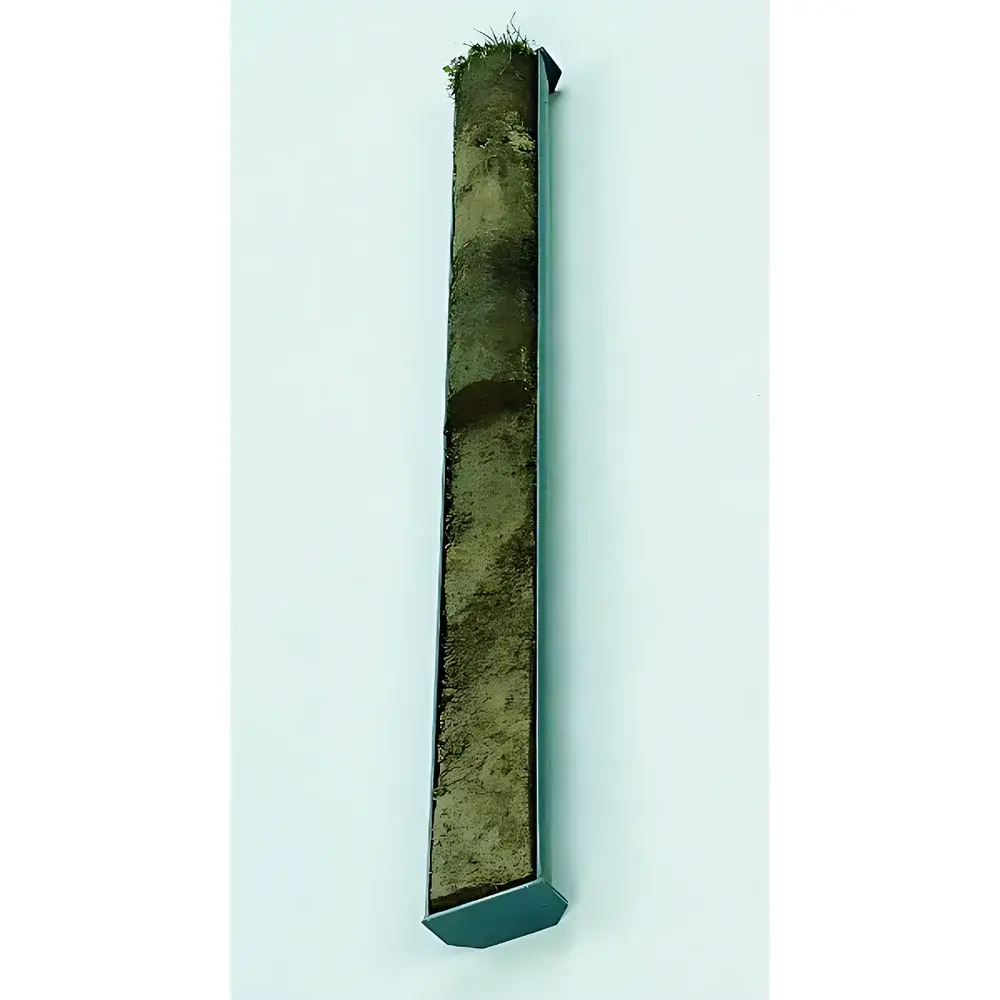
| Core Dimensions | 100 cm length × 93 mm diameter |
| Power Source | Gasoline-driven percussion hammer |
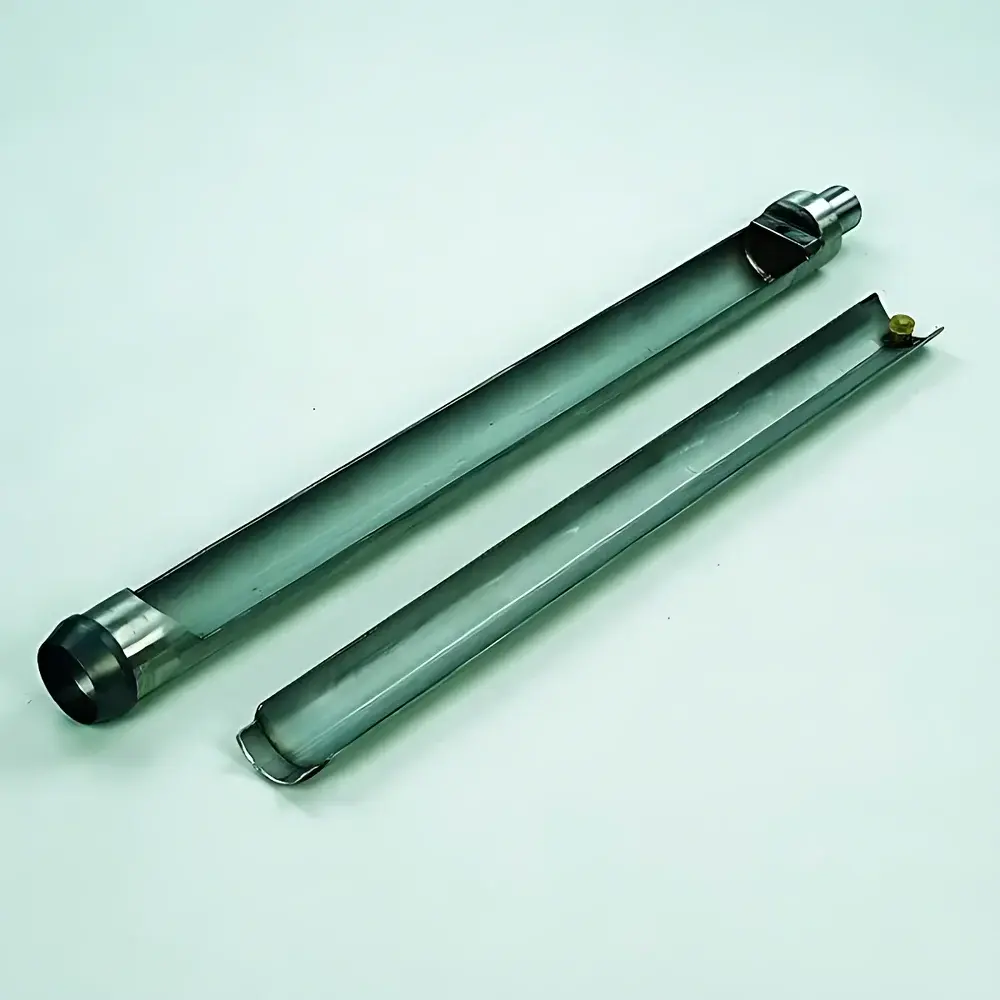
| Core Retrieval | Split-barrel, hinged side-wall design |
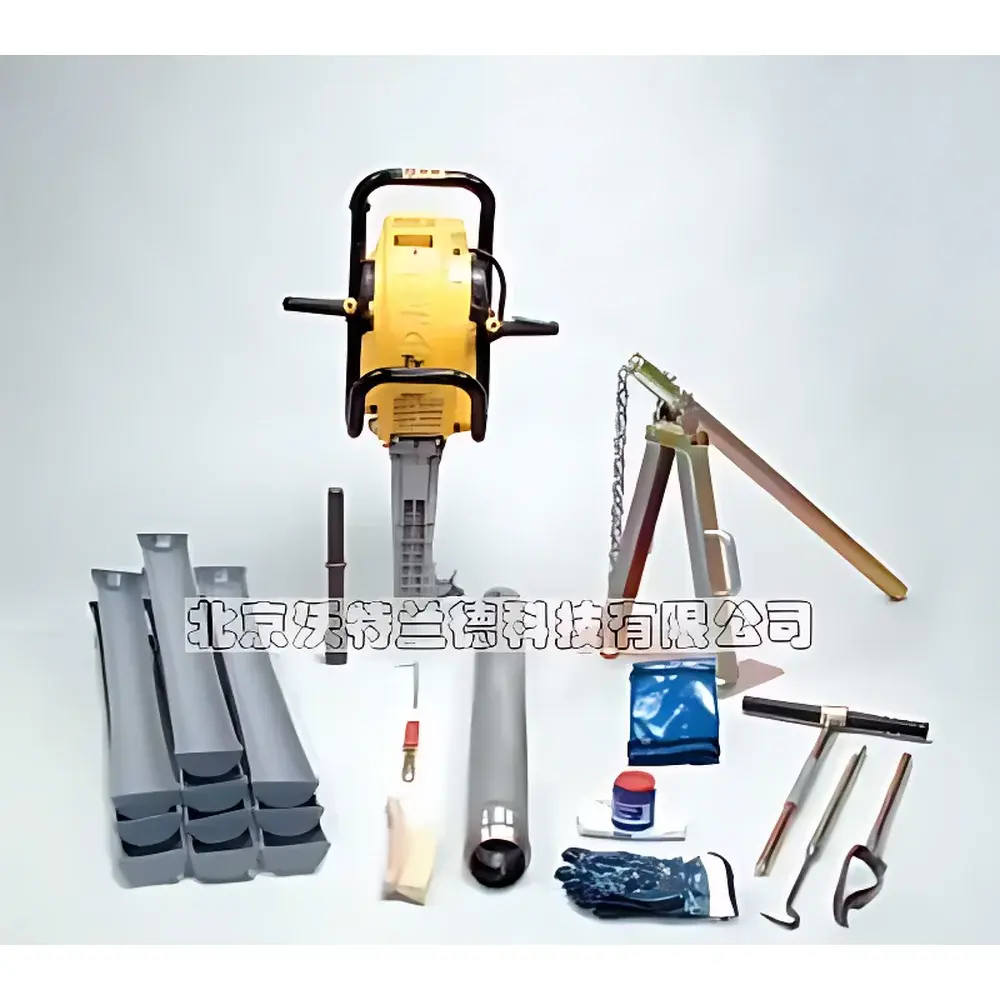
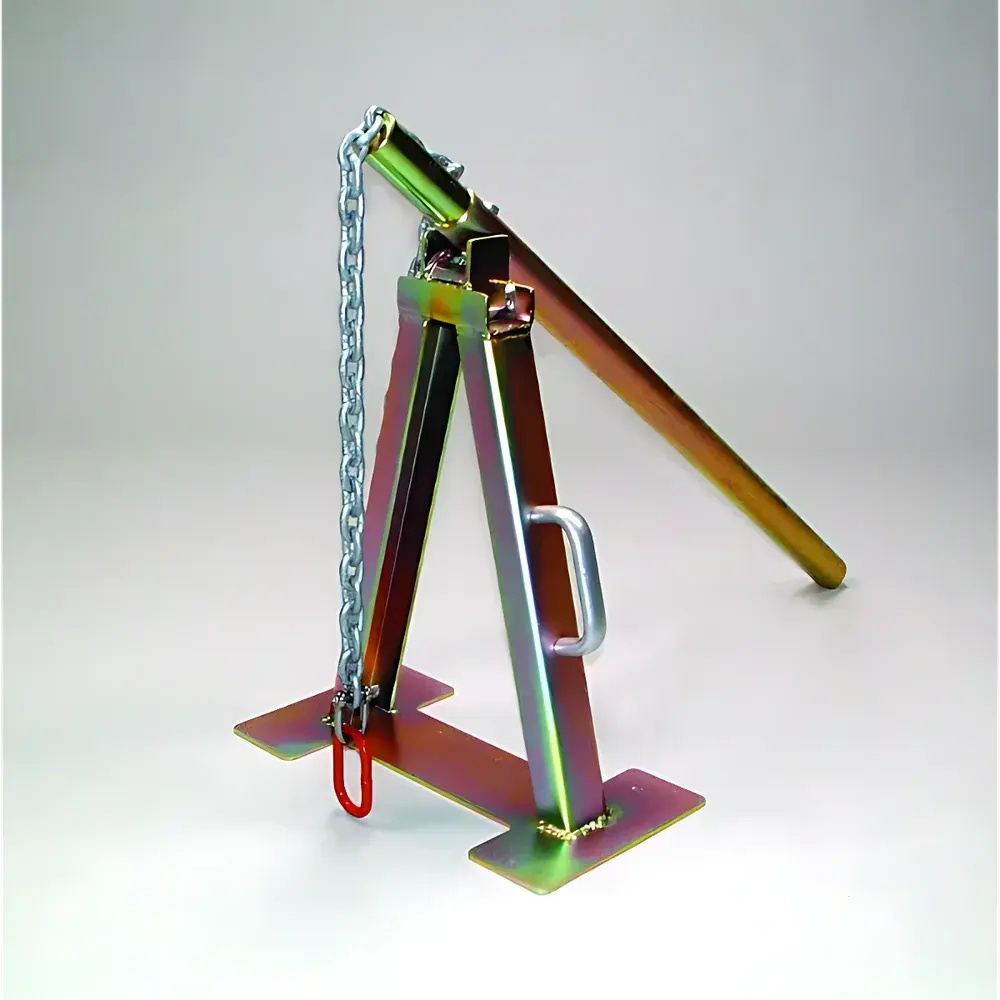
| Standard Accessories | Percussion hammer, split-core barrel with hinge mechanism, extension rods, lever-assisted lifting device, 10 cm Edelman auger, T-handle, cutting head extraction hook, scraper, brush, gloves, maintenance kit, and sample storage components |
| Soil Compatibility | Suitable for cohesive, granular, and moderately compacted soils |
Overview
The Eijkelkamp 05.07 Gas-Powered Undisturbed Soil Core Sampler is an engineered field instrument designed to extract intact, minimally disturbed cylindrical soil cores up to 100 cm in length and 93 mm in diameter. It operates on the principle of percussive penetration—utilizing a gasoline-powered hammer to drive a split-barrel core sampler vertically into the ground. The hinged, side-opening barrel design enables retrieval of the full-length core with minimal compression or shearing, preserving in situ soil structure, horizonation, root architecture, and pore geometry. This capability is critical for studies requiring structural integrity—such as soil hydraulic conductivity analysis, root-soil interaction mapping, and long-term monitoring of pedogenic processes. Unlike trenching or augering methods, the 05.07 avoids lateral disturbance, enabling representative sampling across multiple depth intervals without excavation-related compaction or layer mixing.
Key Features
- Gasoline-powered percussion hammer delivers consistent impact energy for reliable penetration in medium-to-high density soils (e.g., loam, silt loam, clay loam), reducing operator fatigue during repetitive sampling.
- Hinged, two-part stainless-steel core barrel with precision-machined sealing edges ensures minimal wall friction and maintains core integrity during extraction—critical for undisturbed density and moisture content measurements.
- Lever-assisted lifting system facilitates safe, controlled core retrieval—even at maximum 1 m depth—without manual prying or twisting that may fracture fragile horizons.
- Integrated accessory set includes an Edelman auger (100 mm Ø) for pilot hole pre-drilling in stony or dense surface layers, a T-handle for torque-sensitive alignment, and dedicated extraction tools (cutting head hook, scraper, brush) to minimize contamination and preserve surface morphology.
- Modular rod system allows extension beyond standard depth when paired with optional couplings—supporting stratified sampling protocols aligned with ISO 10381-3 (soil sampling—part 3: guidance on sampling of soil quality).
- Robust construction (84 kg operational mass) provides stability on uneven terrain while maintaining portability via integrated lifting points and ergonomic transport handles.
Sample Compatibility & Compliance
The 05.07 is validated for use in non-cemented, non-lithic mineral soils ranging from sandy loams to plastic clays. It is not recommended for water-saturated peat, gravelly soils (>15% >20 mm fragments), or heavily indurated caliche layers where percussion energy dissipates inefficiently. Core recovery rates exceed 95% in soils with <30% volumetric moisture content and CBR values <15. All metallic components comply with EN 10025-2 S355 structural steel specifications for corrosion resistance and mechanical durability. The system supports traceable field documentation per ISO/IEC 17025:2017 requirements when used in conjunction with certified lab workflows for soil physical property analysis (e.g., bulk density, porosity, saturated hydraulic conductivity).
Software & Data Management
While the 05.07 is a mechanical field instrument without embedded electronics, its operation integrates seamlessly into digital soil data ecosystems. Core metadata—including GPS-referenced location, depth interval, soil horizon notation, timestamp, operator ID, and visual condition notes—can be logged directly into LIMS-compatible platforms (e.g., ESRI Field Maps, QGIS-based soil survey apps, or custom ODK Collect forms). Optional barcode-labeled core tubes enable chain-of-custody tracking from field to lab. When paired with laboratory instrumentation (e.g., CT scanners for pore network analysis or time-domain reflectometry systems), the 05.07’s standardized core dimensions ensure compatibility with ASTM D4220 (preservation of undisturbed samples) and USP guidelines for environmental sample integrity.
Applications
- Soil structural characterization—quantifying horizon thickness, texture gradients, and macroporosity distribution via core sectioning and image analysis.
- Root phenotyping—non-destructive assessment of root depth distribution, branching density, and root-soil contact under varying agronomic treatments.
- Soil hydrology studies—measuring vertical infiltration rates, preferential flow paths, and solute leaching potential using intact core column experiments.
- Long-term ecological monitoring—repeated sampling at fixed locations to detect trends in bulk density, organic carbon stratification, or compaction progression.
- Agricultural nutrient management—correlating fertilizer placement depth with root uptake efficiency through synchronized core-based nutrient profiling (e.g., NO₃⁻, NH₄⁺, K⁺ extraction).
- Archaeological stratigraphic analysis—recovering undisturbed sediment columns for micromorphological examination and radiocarbon dating context preservation.
FAQ
What soil types are optimal for the Eijkelkamp 05.07?
It performs best in well-drained, moderately cohesive soils (e.g., loams, silts, and fine sands) with low stone content (20 mm lithic fragments.
Can the 05.07 collect samples deeper than 1 meter?
The standard configuration supports up to 1 m. Extended sampling is possible using additional rod couplings and reinforced extension sets—though core recovery reliability decreases beyond 1.2 m due to increased friction and hammer energy attenuation.
How is core integrity verified post-extraction?
Intactness is assessed visually (absence of cracks, slumping, or extrusion) and quantitatively via bulk density comparison against in situ measurements (e.g., gamma densitometry or neutron probe calibration curves). ASTM D1557 compaction testing on subsampled segments further validates structural fidelity.
Is the 05.07 compliant with EPA or EU regulatory sampling protocols?
Yes—it meets the mechanical sampling criteria outlined in EPA SW-846 Method 5035A (soil core collection for VOC analysis) and EU Regulation (EC) No 1107/2009 Annex VI requirements for representative field sampling in pesticide fate studies.
What maintenance is required for sustained field performance?
Daily cleaning of barrel hinges and sealing surfaces with non-corrosive solvent; biannual lubrication of percussion hammer cylinder and rod threads; annual inspection of hammer piston ring wear and barrel weld integrity per Eijkelkamp Service Bulletin SB-0507-2023.







