
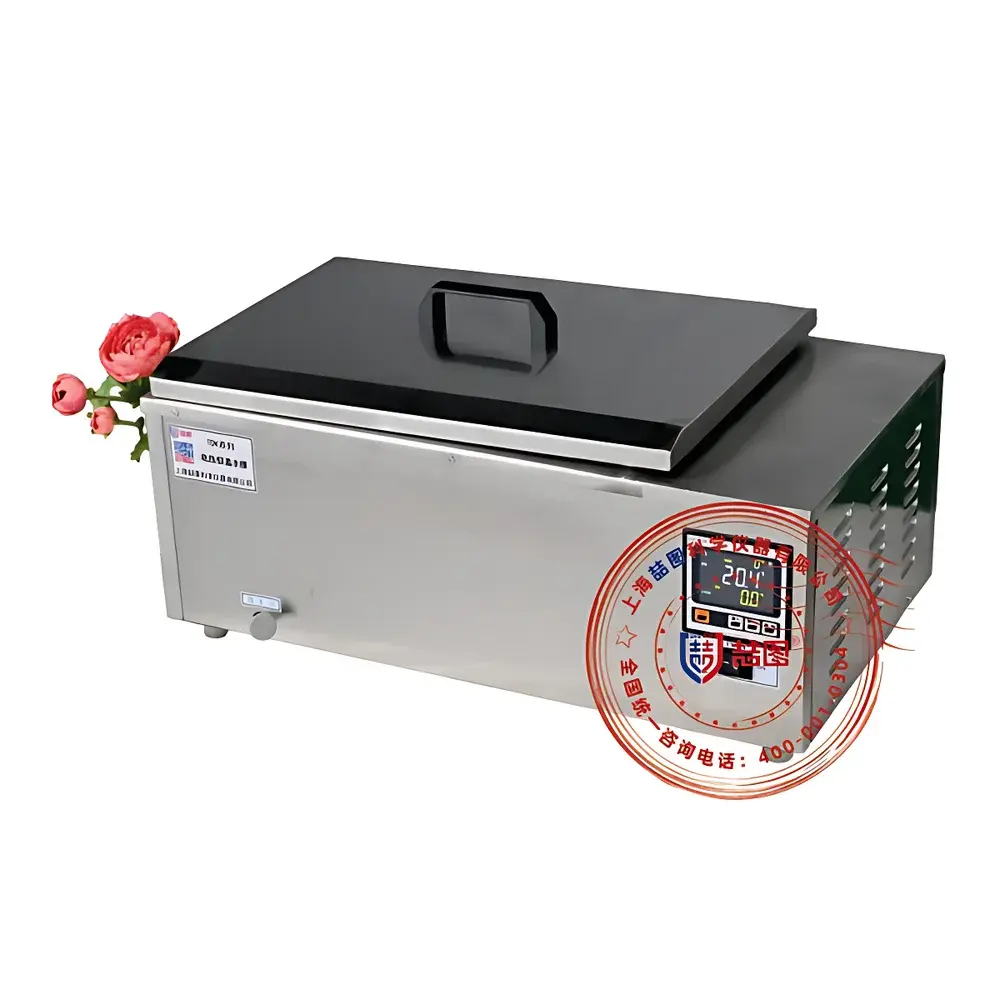
English Product Name
| Brand | DRETOP |
|---|---|
| Origin | Shanghai, China |
| Manufacturer Type | Authorized Distributor |
| Country of Origin | China |
| Model | TDK Series |
| Price Range | USD 280 – 14,000 |
| Temperature Range (Refrigerated Models) | 15–70 °C |
| Refrigeration Capability | Down to 20 °C (±0.3 °C stability) |
| Temperature Resolution | 0.1 °C |
| Heating Power | 1000 W (TDK-24R) |
| Tank Capacity | 24 L |
| Internal Dimensions (TDK-24R) | 400 × 200 × 300 mm (L×W×H) |
| External Dimensions (TDK-24R) | 470 × 230 × 810 mm |
| Timer Range | 1–9999 min |
| Power Supply | AC 220 V, 50 Hz |
| Insulation | ≥5 mm mineral wool |
| Construction | 304 stainless steel inner chamber & lid, electrostatically sprayed steel outer casing |
| Optional Accessories | Dry-run protection, auto-refill (external water source required), 30-segment programmable temperature controller, RS485 interface with PC communication software |
Overview
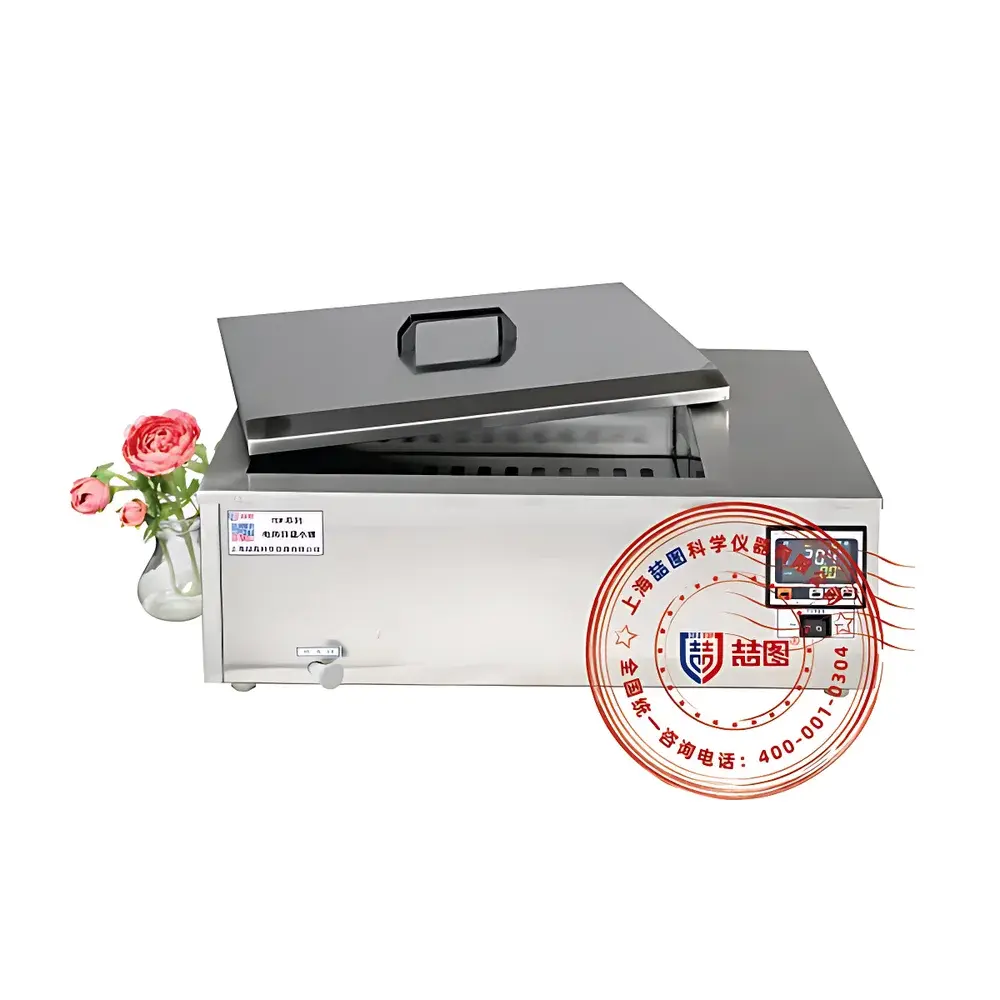
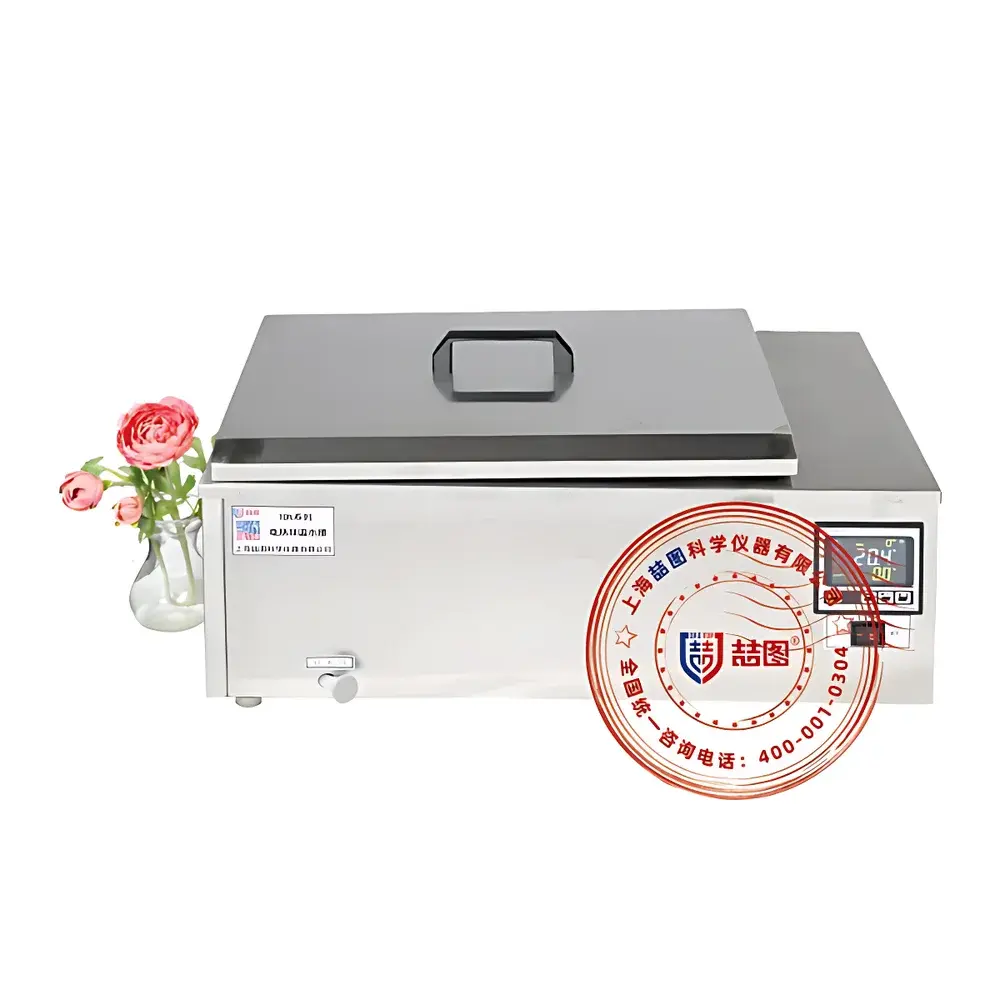
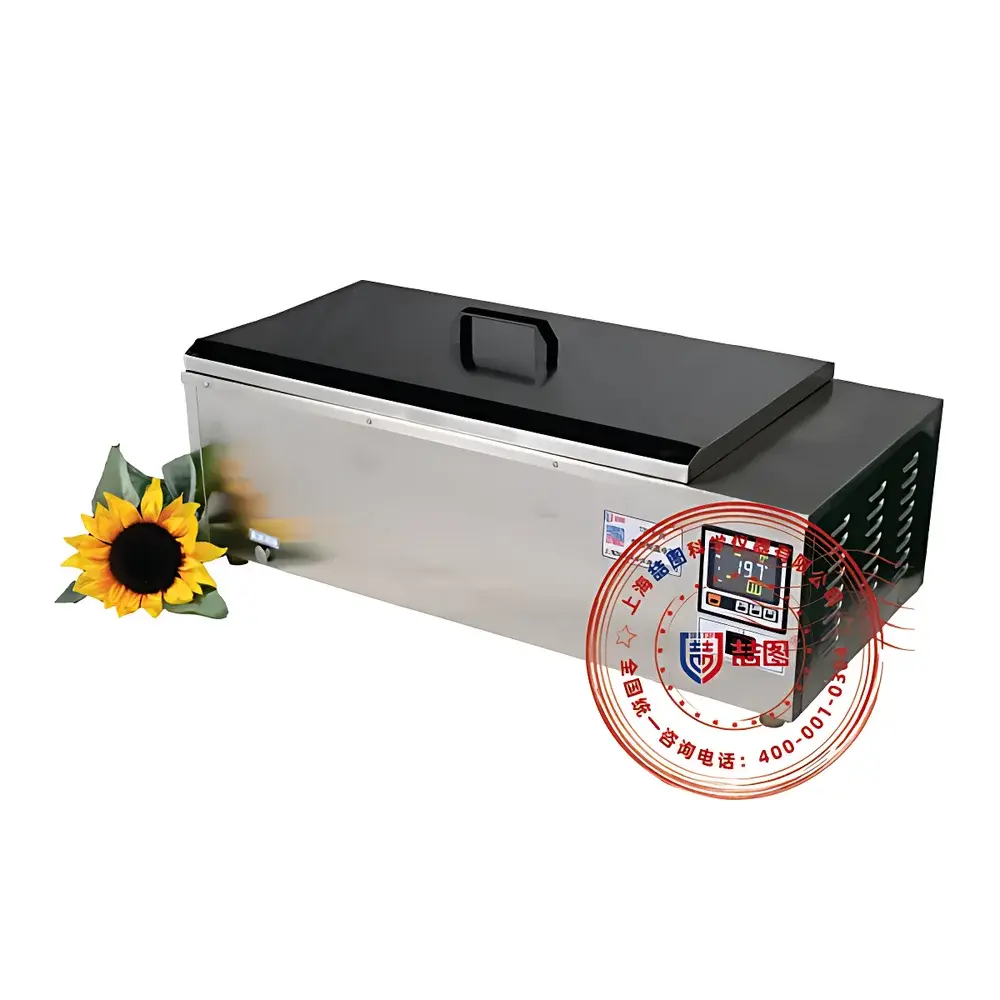
The DRETOP TDK Series Refrigerated Circulating Water Bath is a precision thermal management system engineered for laboratory environments requiring stable, bidirectional temperature control—both heating and active refrigeration—within a single integrated unit. Designed around a closed-loop circulation architecture, it maintains uniform thermal conditions across the bath volume via forced convection driven by an internal centrifugal pump. Its core operational principle relies on proportional-integral-derivative (PID) feedback control coupled with high-stability platinum resistance temperature sensors (PT100-class equivalent), enabling accurate setpoint tracking and minimal thermal overshoot. Unlike passive cooling baths or non-circulating units, the TDK series delivers consistent heat transfer to external devices—including jacketed reactors, condensers, viscometers, and analytical instrumentation—making it suitable for applications demanding tight thermal budgets over extended durations (≥5 hours at ±1 °C stability). The system complies with fundamental safety and electromagnetic compatibility requirements per IEC 61000-6-3 and IEC 61000-6-2, and its construction adheres to standard laboratory equipment design practices for chemical resistance and mechanical durability.
Key Features
- Microprocessor-based PID temperature controller with large LED display, real-time setpoint and actual temperature readout, and programmable timer (1–9999 minutes)
- High-precision temperature sensing using industrial-grade RTD elements; typical accuracy ±0.3 °C at 20 °C (refrigerated models)
- Intelligent self-tuning PID algorithm that dynamically adjusts output power to minimize settling time and improve long-term stability
- 304 stainless steel inner tank and lid—electropolished finish for corrosion resistance, ease of cleaning, and compatibility with aqueous buffers, solvents, and mild acids
- Multi-layer insulation system incorporating ≥5 mm mineral wool and sealed air gaps to reduce thermal leakage and improve energy efficiency
- Closed-type immersion heater with direct contact to working medium; optimized thermal coupling minimizes power consumption and localized hot spots
- Integrated circulation pump generating laminar flow patterns to ensure spatial temperature uniformity (<±0.5 °C across working volume)
- Comprehensive safety suite including over-temperature cutoff, dry-run protection, automatic restart after power interruption, and parameter retention during blackout events
- Modular design supporting optional upgrades: 30-segment programmable temperature ramping, RS485 serial interface with Modbus RTU protocol, and automated refill module (requires external potable water supply)
Sample Compatibility & Compliance
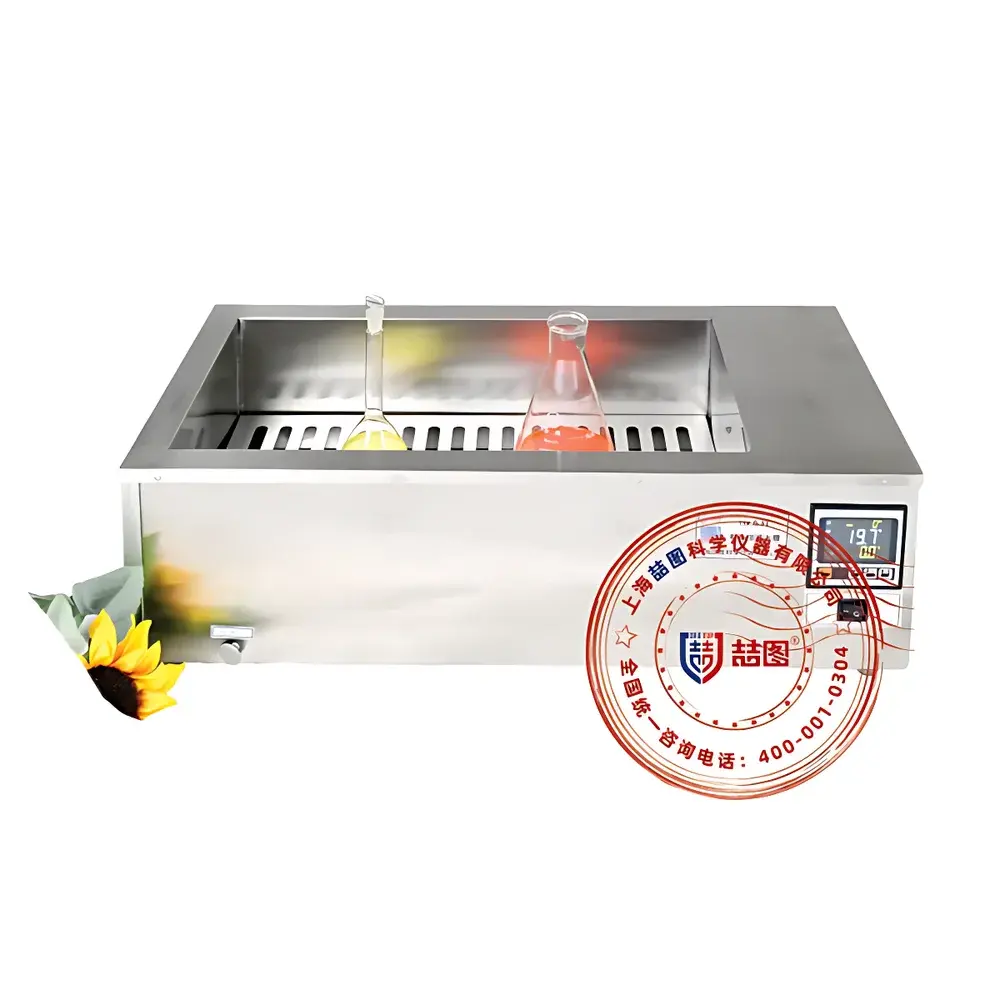
The TDK series accommodates a wide range of sample containers—from standard glass beakers and reaction flasks to jacketed vessels and inline heat exchangers—provided they fit within the specified internal dimensions and do not obstruct pump intake or overflow channels. It supports operation with deionized water (Type III or higher per ASTM D1193), minimizing scale formation and sensor drift. Use of tap water is discouraged without regular descaling maintenance. While not certified to ISO/IEC 17025 or GLP as a standalone instrument, the system’s traceable temperature control, audit-ready parameter logging (when equipped with RS485 + software), and configurable alarm thresholds align with routine QC/QA workflows in pharmaceutical, environmental, and academic laboratories. Its electrical design conforms to IEC 61010-1 for laboratory equipment safety.
Software & Data Management
When configured with the optional RS485 interface and companion Windows-based communication software, the TDK bath enables remote monitoring and control via serial connection. Users can log temperature profiles at user-defined intervals (1 s to 60 min), export CSV-formatted datasets for post-processing in Excel or MATLAB, and configure alarm thresholds and hysteresis settings digitally. The software supports basic calibration offset entry and provides timestamped event logs—including power loss recovery, over-temperature triggers, and manual setpoint changes—facilitating compliance with internal SOPs and FDA 21 CFR Part 11 readiness when deployed with appropriate IT governance controls (e.g., user access levels, electronic signatures).
Applications
- Temperature-controlled extraction and solvent evaporation in analytical chemistry workflows
- Calibration of thermometers, thermocouples, and digital temperature probes against NIST-traceable references
- Thermal conditioning of biological reagents prior to enzymatic assays or cell culture procedures
- Stabilization of optical components and laser diodes during performance testing
- Supporting jacketed reactor systems in pilot-scale synthesis under controlled exothermic conditions
- Accelerated aging studies for polymer degradation and material stability testing
- Environmental simulation for aquatic toxicology experiments requiring precise thermal regimes
FAQ
What is the recommended working fluid for optimal longevity?
Deionized or distilled water meeting ASTM D1193 Type III specifications is strongly recommended to prevent scaling, corrosion, and sensor fouling. Tap water may be used only with scheduled descaling and sensor verification.
Can the TDK bath maintain sub-ambient temperatures?
Yes—refrigerated models (e.g., TDK-24R) incorporate a hermetic compressor-based cooling system capable of stabilizing the bath at 20 °C with ±0.3 °C fluctuation, independent of ambient conditions up to 30 °C.
Is the unit suitable for GMP-regulated environments?
While not pre-certified, its programmable alarms, data logging capability (with optional hardware/software), and robust mechanical construction support integration into validated processes when accompanied by site-specific IQ/OQ documentation and periodic calibration per ISO/IEC 17025-accredited providers.
How does the circulation system ensure temperature homogeneity?
A low-pulsation centrifugal pump drives continuous flow through precisely engineered inlet/outlet ports and a perforated 304 stainless steel baffle plate, promoting laminar recirculation and eliminating thermal stratification.
What safety protections are built-in?
Over-temperature cutoff, dry-run shutdown, power-fail memory retention, auto-restart with configurable delay, and audible/visual alarm activation upon deviation beyond user-defined limits.



