
English Product Name
| Brand | Changchun Intelligent |
|---|---|
| Origin | Jilin, China |
| Manufacturer Type | Authorized Distributor |
| Country of Origin | China |
| Model | ZJL-200B |
| Torque Range | 0–200 N·m (Rated: 300 N·m) |
| Torque Measurement Accuracy | ±0.3% F.S. |
| Speed Range | 0.1–200 rpm |
| Speed Control Accuracy | ±0.1% F.S. |
| Motor Power | 5.0 kW (Panasonic Servo Motor & Drive) |
| Reduction Ratio | 10:1 |
| Melt Pressure Range | 0.1–100 MPa |
| Pressure Measurement Accuracy | ±0.3% F.S. |
| Temperature Control Range | Ambient to 350 °C |
| Temp. Control Channels | 5 (extruder), 7–8 (twin-screw), 3 (mixer) |
| Temp. Control Accuracy | ±0.5 °C |
| Screw Diameter | 22 mm |
| L/D Ratio | 40:1 |
| Screw Configuration | Modular Co-Rotating Parallel Twin-Screw |
| Max. Screw Speed | 500 rpm |
| Mixer Capacity | 60 mL / 200 mL |
| Max. Mixer Torque | 200 N·m |
| Heating Method | Segmented Electric Heating (5500 W extruder |
| Cooling Method | Compressed Air |
| Data Acquisition Rate | 50 Hz |
| Software Version | 4.1.14–4.1.18 (Torque Rheology, Melt Viscosity, Extrusion, Mixing Modules) |
Overview
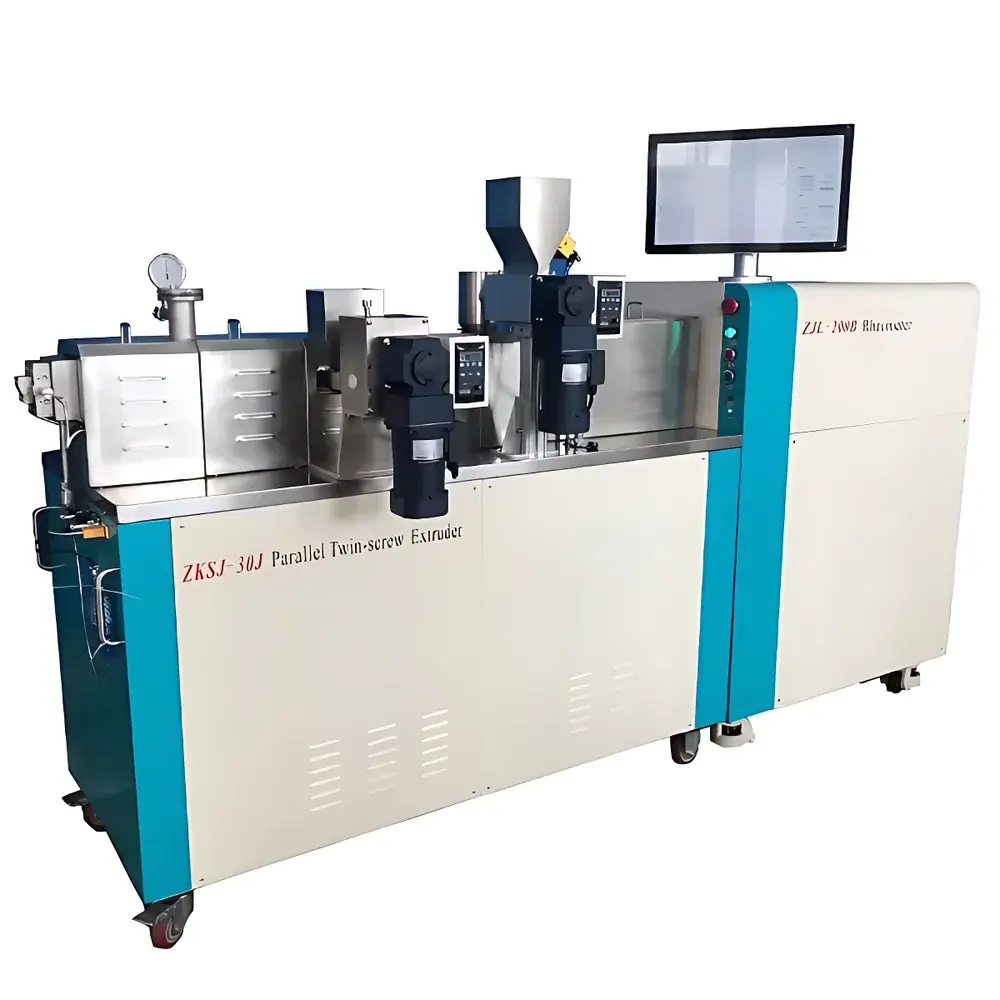
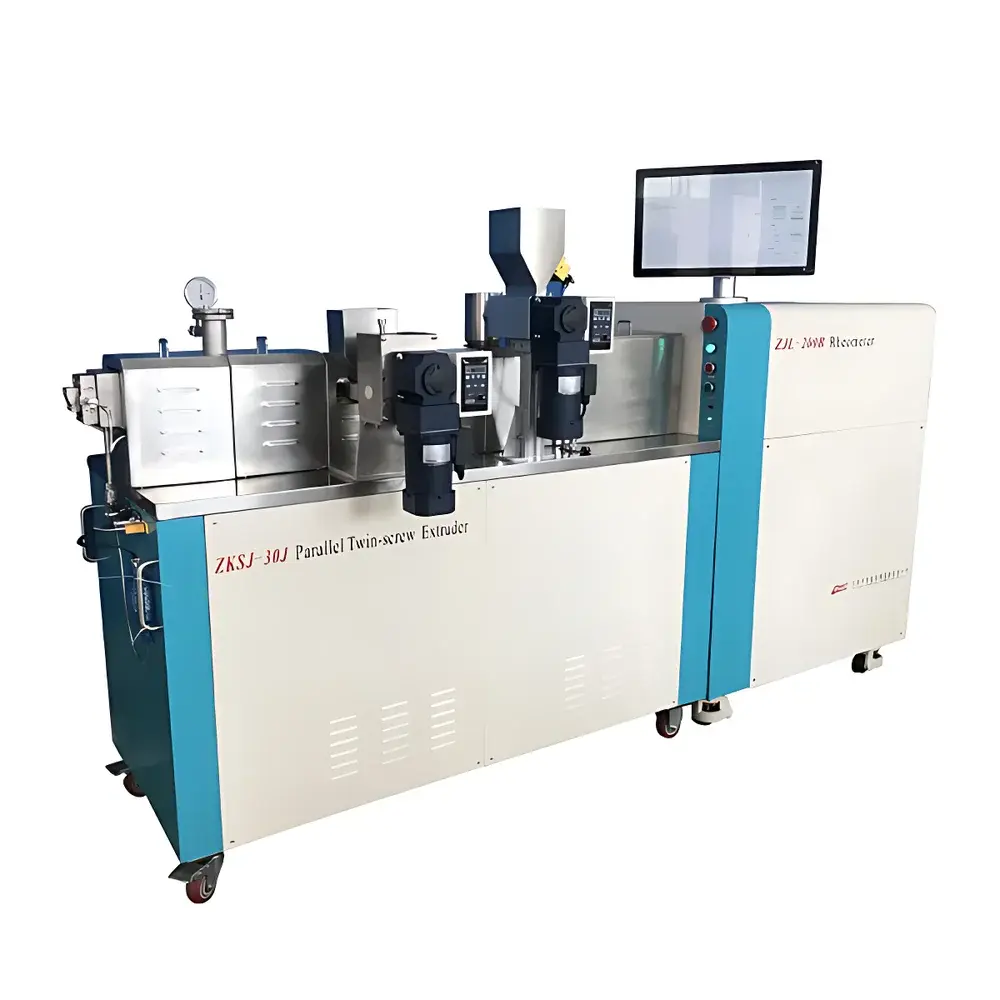
The Changchun Intelligent ZJL-200B Torque Rheometer is a modular, research-grade polymer processing simulation platform engineered for quantitative analysis of melt rheology, thermal stability, dynamic shear response, and compounding behavior under near-process conditions. Unlike conventional capillary or rotational rheometers, this system integrates torque-based viscoelastic measurement with physically representative extrusion and mixing mechanics—enabling direct correlation between laboratory-scale data and industrial-scale processing parameters. Its core architecture relies on the Couette flow principle within a controlled shear field, where torque, temperature, pressure, and rotational speed are simultaneously monitored to derive apparent viscosity, power law indices, activation energies, and time–temperature superposition (TTS) master curves. The platform supports ASTM D3835, ISO 6721-10, and ISO 11443-compliant test protocols, making it suitable for R&D labs operating under GLP-aligned workflows or pre-commercial formulation development requiring traceable, reproducible process mapping.
Key Features
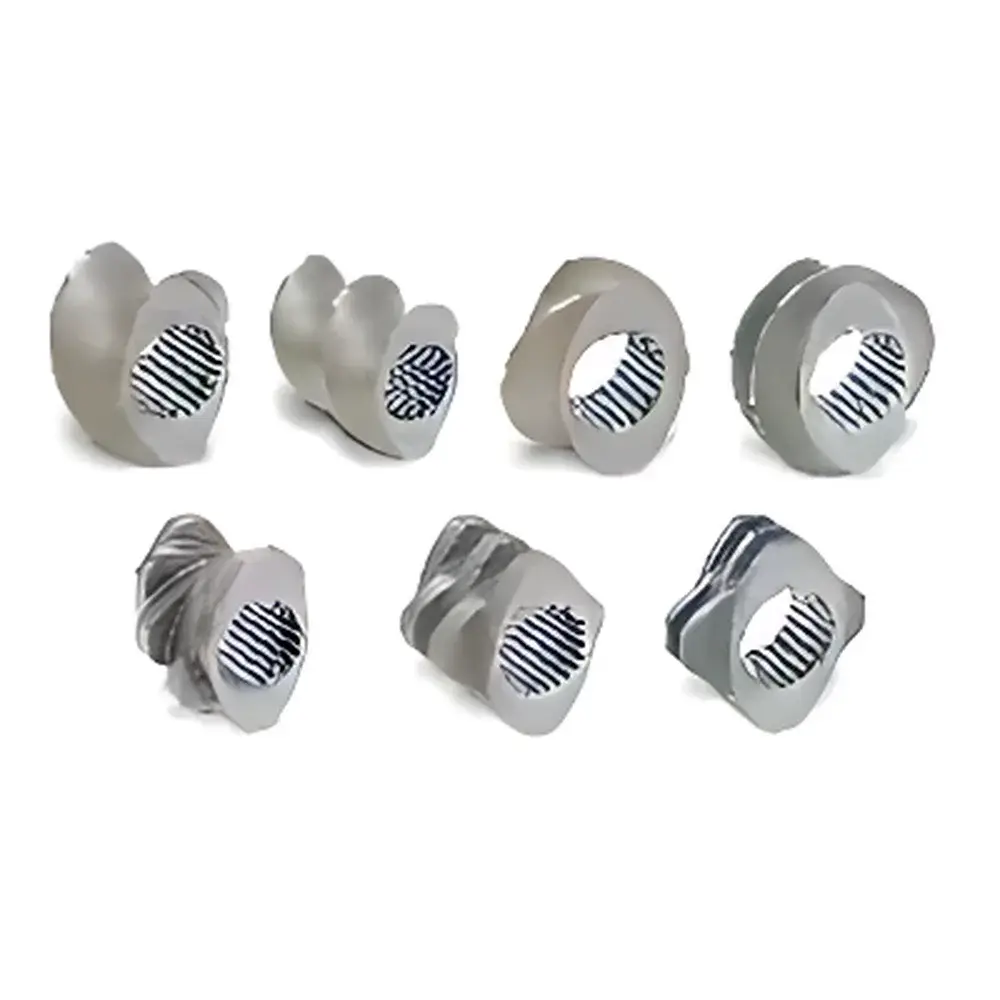
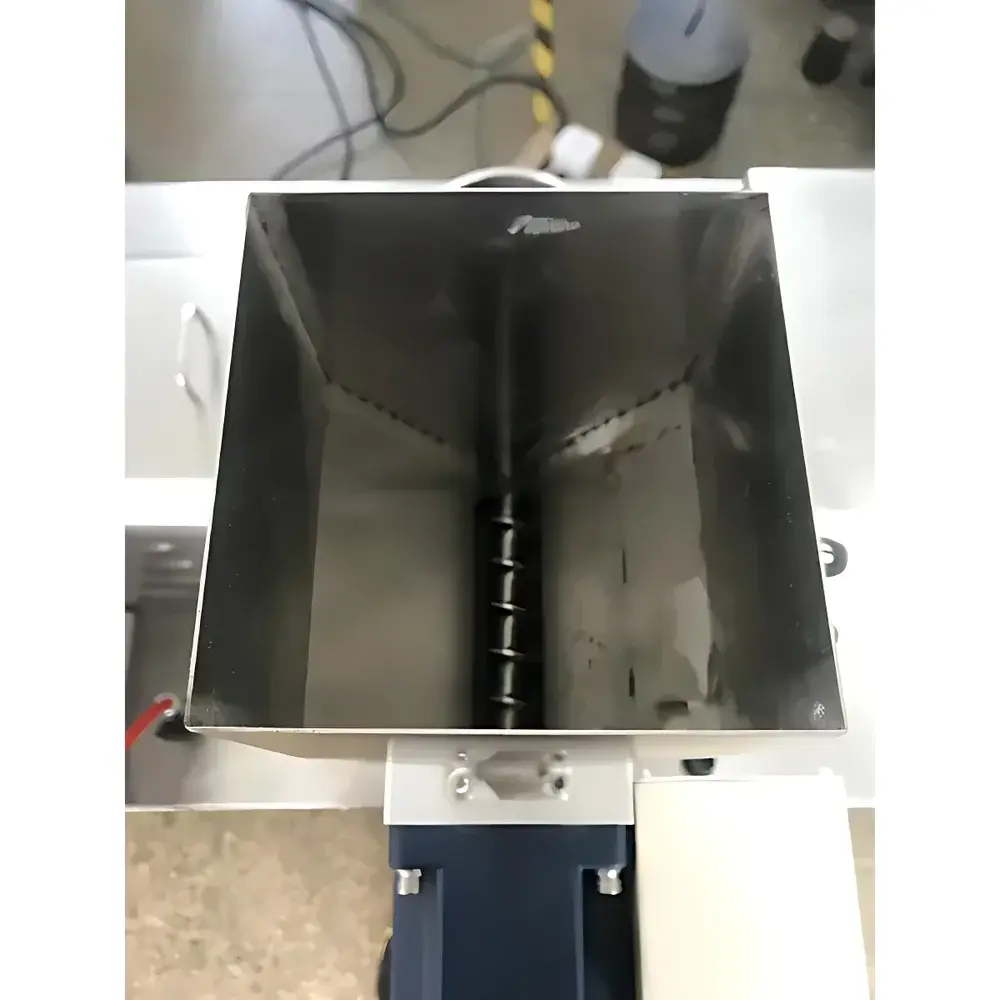
- Modular twin-screw extrusion unit with fully configurable co-rotating parallel screws (22 mm Ø, L/D = 40:1), enabling precise replication of feeding, melting, devolatilization, homogenization, and metering zones via interchangeable screw elements (conveying, kneading, reverse, mixing, and vacuum venting segments).
- Vacuum-assisted degassing capability integrated into the barrel assembly, supporting moisture-sensitive polymers, reactive extrusion (e.g., grafting, polymerization), and volatile removal in thermoset precursors.
- Dual-purpose internal mixer (60 mL / 200 mL capacity) featuring Banbury-style roller rotors (optional cam/delta configurations), 3:2 speed ratio, and real-time torque–time–temperature profiling for cure kinetics, dispersion efficiency, and scorch time evaluation.
- High-fidelity multi-channel control: five independent temperature zones for extrusion, seven for twin-screw operation, and three for mixer heating—all regulated via K-type or T-type thermocouples with ±0.5 °C stability and PID feedback loops.
- Real-time 50 Hz data acquisition synchronizing torque (±0.3% F.S.), rotational speed (±0.1% F.S.), melt pressure (0.1–100 MPa), and eight temperature points—capturing transient phenomena such as gelation onset, filler network breakdown, or thermal degradation thresholds.
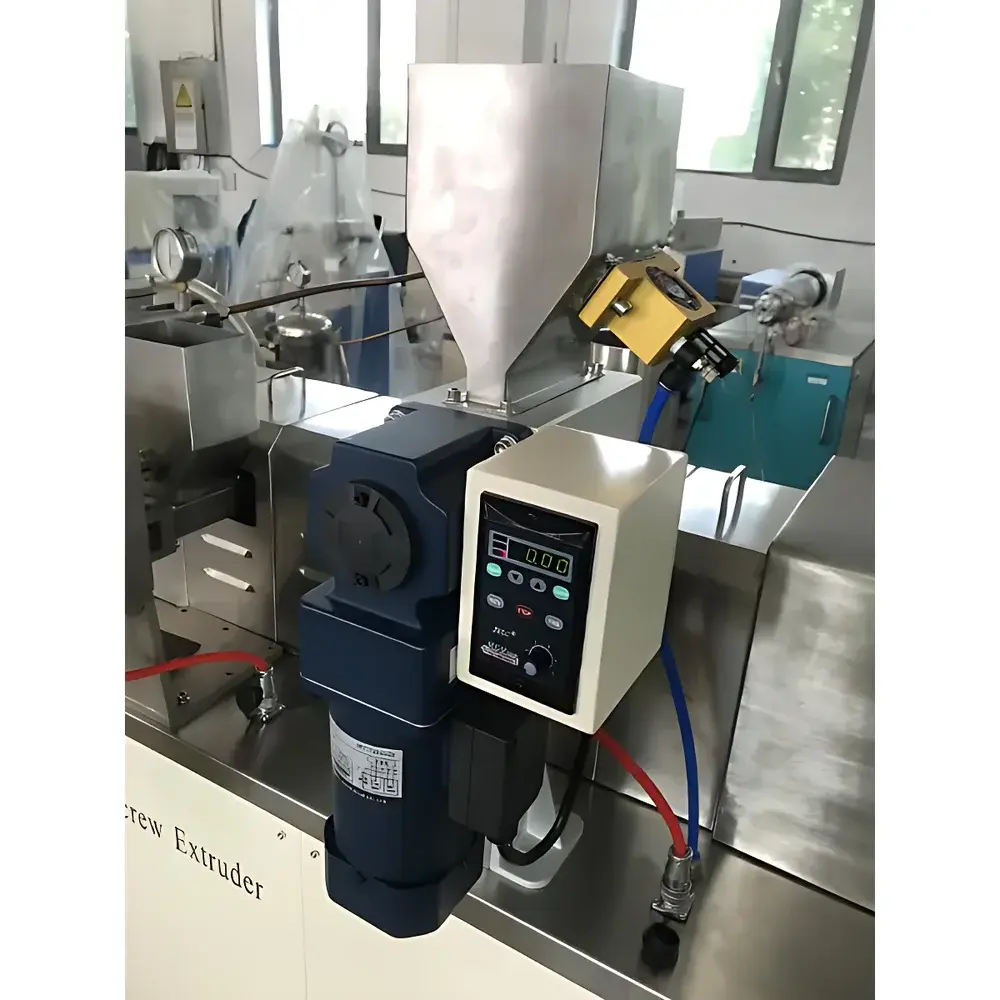
- Industrial-grade drive system powered by a 5.0 kW Panasonic servo motor coupled to a 10:1 precision gearbox, delivering stable low-speed torque resolution down to 0.1 rpm and high-speed operational reliability up to 500 rpm (screw) or 200 rpm (mixer shaft).
Sample Compatibility & Compliance
The ZJL-200B accommodates thermoplastics (PE, PP, PET, PC, PLA), thermoplastic elastomers (TPE, TPU), filled composites (glass/carbon fiber, nanocellulose, CaCO₃), reactive systems (epoxy prepolymers, silicone RTVs), and thermosetting resins (phenolics, unsaturated polyesters). Its stainless-steel wetted parts (4Cr13 rotor barrels, hardened screw elements) resist abrasion and chemical attack during extended testing. The system complies with electrical safety standards IEC 61000-6-2/6-4 and supports audit-ready data integrity through software-enforced user roles, electronic signatures, and 21 CFR Part 11–compatible audit trails in optional GxP mode. All thermal and mechanical calibrations adhere to ISO/IEC 17025 traceability requirements when performed using NIST-traceable reference standards.
Software & Data Management
The proprietary Windows-based control suite (v4.1.14–4.1.18) provides synchronized visualization of torque–time, torque–temperature, pressure–time, and viscosity–shear rate curves. Dedicated modules include: (1) Polymer Melt Viscosity Processor for Carreau-Yasuda and Cross model fitting; (2) Extrusion Data Analyzer for specific energy consumption, residence time distribution estimation, and die swell prediction; (3) Mixing Module with time-to-peak-torque, dispersion index, and scorch delay quantification. Raw datasets export to CSV, Excel, or HDF5 formats; curve overlays support comparative batch analysis across formulations. All measurements are timestamped, digitally signed, and archived with metadata (operator ID, ambient conditions, calibration status) to satisfy internal SOPs and external regulatory submissions.
Applications
- Formulation screening: Quantifying filler dispersion quality, plasticizer efficiency, and compatibilizer effectiveness in multi-phase blends.
- Process optimization: Mapping optimal screw speed, barrel temperature profile, and feed rate for minimal specific mechanical energy (SME) and maximal output consistency.
- Thermal stability assessment: Detecting onset of degradation via torque inflection points and exothermic peaks in temperature sweeps.
- Crosslinking kinetics: Monitoring torque rise profiles during vulcanization or epoxy curing to determine t₁₀, t₉₀, and activation energy (Arrhenius analysis).
- Recycled polymer characterization: Evaluating melt strength retention, gel content, and oxidative stability after multiple extrusion passes.
- Educational use: Demonstrating polymer processing fundamentals—including solid conveying theory, melting zone dynamics, and distributive vs. dispersive mixing mechanisms—to graduate-level materials science curricula.
FAQ
Can the ZJL-200B be used for FDA-regulated medical device polymer processing validation?
Yes—when configured with 21 CFR Part 11–compliant software options and operated under documented IQ/OQ protocols, it supports material qualification studies for Class II/III device components.
Is vacuum capability available on both the extruder and mixer units?
Vacuum integration is standard on the twin-screw extruder barrel (up to 10⁻² mbar); the internal mixer operates under atmospheric or nitrogen-purged conditions only.
What calibration certificates are supplied with shipment?
Factory calibration reports for torque transducer, pressure sensor, and temperature controllers are included; NIST-traceable recalibration services are available upon request.
Does the system support third-party software integration (e.g., MATLAB, Python)?
Yes—the system exposes real-time data streams via TCP/IP and provides DLL-based API documentation for custom scripting and automated test sequencing.
How is cleaning and maintenance handled for multi-material campaigns?
Barrel sections and screw elements are fully disassemblable; recommended purging protocols (e.g., HDPE or PP purge compounds) are provided in the operator manual, along with wear-part replacement schedules.



