
English Product Name
| Litron Nano L series Nd | YAG Pulsed Nanosecond Laser System |
|---|---|
| Origin | Imported |
| Manufacturer Type | Authorized Distributor |
| Model | Nano L series Nd:YAG |
| Pulse Energy (1064 nm) | 320 mJ |
| Pulse Energy (532 nm) | 180 mJ |
| Pulse Energy (355 nm) | 60 mJ |
| Pulse Energy (266 nm) | 40 mJ |
| Pulse Width (1064 nm) | 10–14 ns |
| Beam Diameter | <6 mm |
| Energy Stability (1064 nm) | ±2.5% RMS |
| Jitter | ≤1.0 ns |
| Repetition Rate | 1–20 Hz |
| Temperature Control Accuracy | ±0.05 °C |
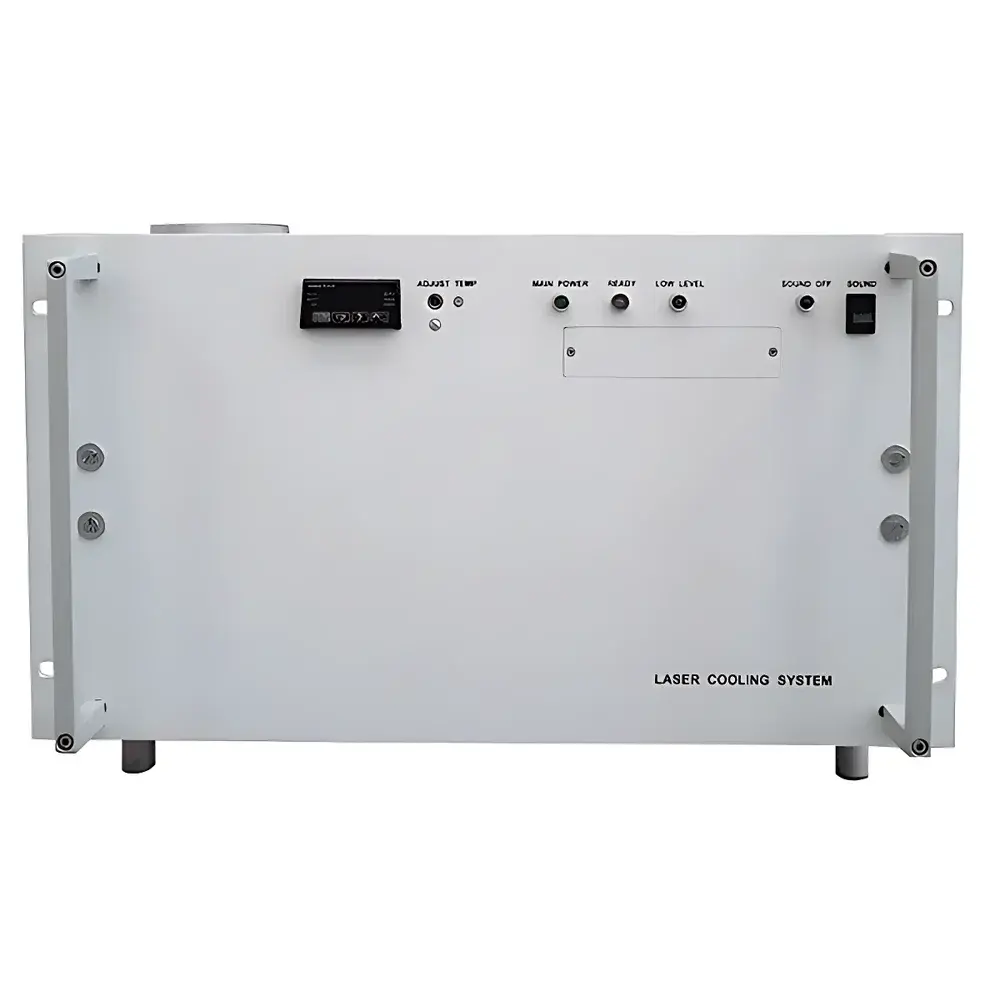
| Cooling Power Capacity | Up to 1200 W |
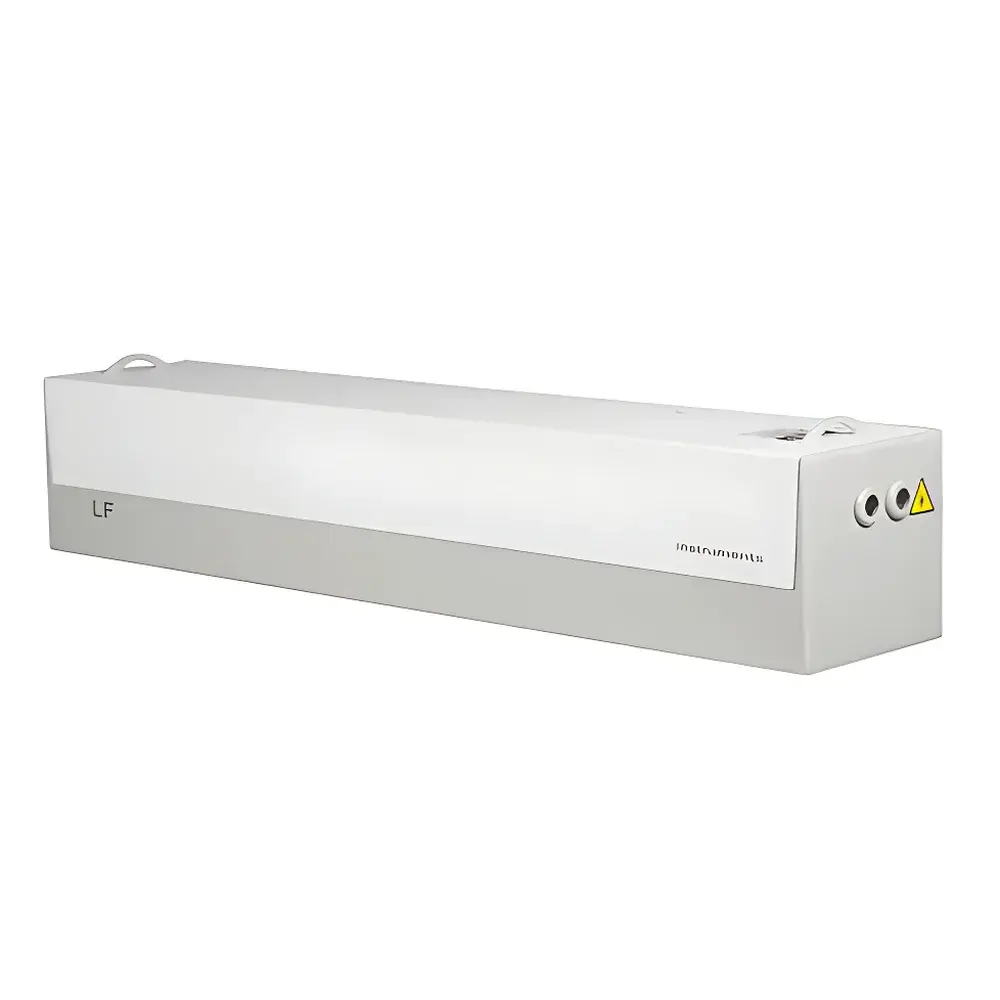
| Dimensions (Laser Head) | 720 × 136 × 156 mm |
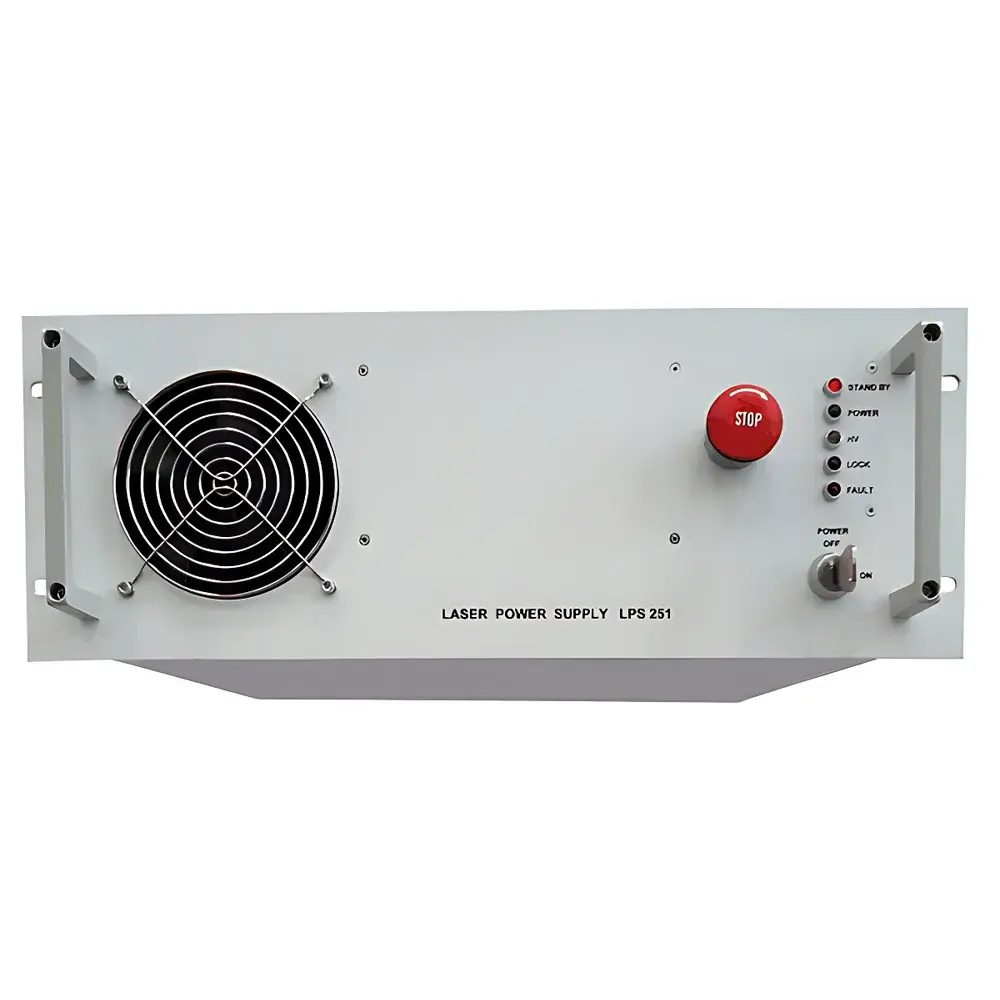
| Dimensions (Power & Cooling Unit) | 435 × 485 × 285 mm |
| Input Power | 220 V AC, 50–60 Hz, 1000 W |
Overview
The Litron Nano L series Nd:YAG pulsed nanosecond laser system is a fully integrated, OEM-grade solid-state laser platform engineered for high-precision time-resolved spectroscopy and photonics applications. Based on flashlamp-pumped neodymium-doped yttrium aluminum garnet (Nd:YAG) gain media, it delivers stable, high-energy nanosecond pulses across four harmonically generated wavelengths—1064 nm (fundamental), 532 nm (second harmonic), 355 nm (third harmonic), and 266 nm (fourth harmonic)—enabling broad spectral coverage from deep UV to near-IR. Its design adheres to fundamental principles of Q-switched laser physics, with optimized cavity geometry, thermally stabilized nonlinear crystals, and hermetically sealed optical paths to ensure long-term beam pointing stability and pulse-to-pulse reproducibility. This system serves as a primary pump source for optical parametric oscillators (OPOs), supporting tunable output from 220 nm to 2200 nm—critical for transient absorption spectroscopy (TAS), time-resolved photoluminescence, and ultrafast pump-probe experiments in academic and industrial R&D laboratories.
Key Features
- Hermetically sealed Nd:YAG rod and fully enclosed beam path to prevent contamination by dust or moisture, ensuring consistent optical performance in non-cleanroom environments.
- Monolithic solid-state rod architecture minimizes mechanical drift and enhances long-term power stability under variable ambient conditions.
- All nonlinear crystals housed in precision thermostatted ovens (±0.05 °C control), enabling high harmonic conversion efficiency and inter-pulse energy consistency across all output wavelengths.
- Integrated high-efficiency cooling unit with internal deionized water circulation, no external heat exchanger required; thermal exchange capacity up to 1200 W supports sustained operation at 20 Hz repetition rate.
- Dedicated power supply with automatic voltage compensation, single-phase 220 V input, and auxiliary interfaces for external triggering, synchronization, and remote monitoring via TTL/RS-232.
Sample Compatibility & Compliance
The Nano L series is compatible with standard optical tables, motorized translation stages, and commercial spectrometers (e.g., Andor, Ocean Insight, Horiba) used in transient spectroscopy setups. Its pulse timing jitter (<1 ns) and energy stability (±2.5% RMS at 1064 nm) meet the stringent requirements of time-correlated single-photon counting (TCSPC), laser-induced breakdown spectroscopy (LIBS), and particle image velocimetry (PIV). The system conforms to IEC 60825-1:2014 (laser safety classification Class IV), and its thermal management architecture complies with ISO 14644-1 cleanroom compatibility guidelines for laboratory integration. While not pre-certified for FDA 21 CFR Part 11, the laser’s deterministic trigger interface and stable output enable full traceability when integrated into GLP/GMP-compliant analytical workflows—particularly in photophysical characterization labs subject to audit.
Software & Data Management
The laser operates without proprietary software dependency; control is executed via industry-standard TTL-level digital signals (trigger in/out, ready signal, interlock status) and optional RS-232 serial commands. Users may integrate it directly into LabVIEW, Python (PySerial), MATLAB, or EPICS-based control frameworks. All operational parameters—including repetition rate, pulse energy mode selection, and temperature setpoints—are accessible through ASCII command protocol. Internal diagnostics log thermal sensor readings, lamp firing count, and power supply status—data exportable for preventive maintenance scheduling and ISO 17025-compliant instrument qualification reports.
Applications
- Transient Absorption Spectroscopy (TAS) and time-resolved transient mapping for charge carrier dynamics in perovskites and 2D materials.
- Laser-Induced Fluorescence (LIF) and time-resolved phosphorescence imaging in combustion diagnostics and bioimaging.
- Surface photovoltage (TPV) and photoelectrochemical cell characterization under pulsed illumination.
- Raman and resonance Raman spectroscopy requiring high peak-power excitation at 532 nm or 355 nm.
- Laser-Induced Breakdown Spectroscopy (LIBS) for elemental analysis in metallurgy, geoscience, and cultural heritage studies.
- Atmospheric sensing via Differential Absorption Lidar (DIAL) and Particle Image Velocimetry (PIV) in fluid mechanics research.
FAQ
Is this laser suitable for OPO pumping?
Yes—the Nano L series is specifically engineered as a high-stability pump source for synchronously pumped and nanosecond OPOs, delivering the pulse energy and temporal profile required for efficient broadband tunable output from 220 nm to 2200 nm.
What cooling infrastructure is required?
No external chiller or water-air heat exchanger is needed. The integrated recirculating cooler uses deionized water and maintains thermal stability within ±0.05 °C, even during extended 20 Hz operation.
Can the laser be triggered externally with sub-nanosecond precision?
Yes—TTL-compatible external trigger input accepts rising-edge signals with jitter <1 ns relative to pulse emission, supporting precise synchronization with streak cameras, ICCDs, or delay generators.
Are harmonic wavelengths selectable manually or automatically?
Harmonic generation is achieved via motorized crystal translation stages (optional); manual alignment is possible, but automated wavelength switching requires integration with third-party motion controllers via RS-232.
Does the system include calibration documentation?
Each unit ships with factory calibration certificates for pulse energy (NIST-traceable pyroelectric sensor), beam diameter (ISO 11146-compliant knife-edge scan), and temporal pulse width (autocorrelator-measured FWHM).
Related Products



