
English Product Name
| Origin | Shanghai, China |
|---|---|
| Manufacturer Type | Authorized Distributor |
| Regional Origin | Domestic (PRC) |
| Model | EX-TE-03 / EX-TE-05 / EX-TE-10 / EX-TE-30 / EX-TE-50 / EX-TE-100 |
| Quotation | Available Upon Request |
| Vessel Capacity | 3–100 L |
| Jacket Design Pressure | 0.3–0.4 MPa |
| Internal Design Pressure | 0.09 MPa |
| Heating Power | 3–15 kW |
| Agitation Power | 0.09–0.5 kW |
| Optional Ultrasonic Frequency Range | 15–60 kHz |
Overview
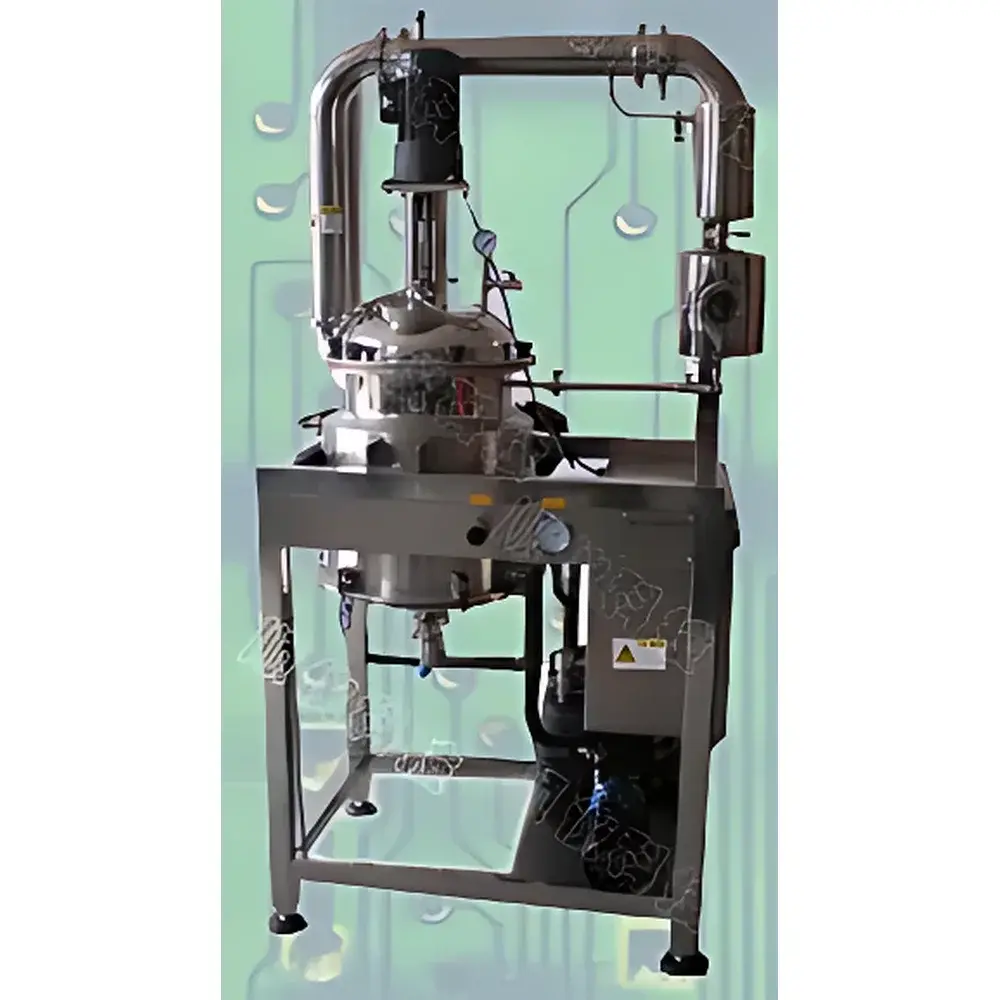
The EX-TE Series Miniature Laboratory-Scale Herbal Extraction Vessel is an engineered platform for controlled, reproducible solid–liquid extraction of botanical and biological matrices under varied thermal, mechanical, and physicochemical conditions. Designed for R&D laboratories in pharmaceutical, nutraceutical, food science, and natural product chemistry sectors, it implements classical extraction principles—including decoction, percolation, reflux, and forced-circulation leaching—while supporting advanced modalities such as ultrasonically assisted extraction (UAE). Its modular architecture enables operation at atmospheric pressure or under mild vacuum (optional), with precise regulation of temperature, agitation, residence time, and pH—critical parameters influencing solute diffusion kinetics, cell wall disruption efficiency, and thermolabile compound stability. The vessel’s dual-zone heating system (jacket + internal heater) ensures uniform thermal distribution across both cylindrical wall and conical base, minimizing thermal gradients that compromise extraction homogeneity and repeatability.
Key Features
- Modular capacity range: Six standardized models (EX-TE-03 to EX-TE-100) covering 3 L to 100 L effective working volume—optimized for scale-down studies and process parameter mapping.
- Integrated PLC-based central controller with real-time display and setpoint adjustment for extraction temperature, heating temperature, agitation speed, and operational duration.
- Triple-layer insulation (stainless steel jacket + mineral wool + outer cladding) minimizes thermal loss and enhances energy efficiency during prolonged heating cycles.
- Self-contained heating system: Electric immersion heaters located within the vessel jacket and base eliminate dependency on external steam or thermal oil utilities—reducing infrastructure complexity and contamination risk.
- Low-level liquid detection circuitry provides automatic cut-off of heating elements when fluid volume falls below safe operational threshold—preventing dry-run damage and ensuring equipment longevity.
- Expandable multi-unit configuration: Standardized mounting interface and synchronized control protocol support parallel operation of up to 20 units for high-throughput screening or statistical design of experiments (DoE).
- Optional integrated ultrasonic transducer array (15–60 kHz, selectable frequency) with focused energy delivery via titanium horn and frame-type agitator—enabling cavitation-mediated cell lysis without bulk temperature elevation.
Sample Compatibility & Compliance
The EX-TE series accommodates heterogeneous particulate feedstocks including dried herbal powders, granulated botanicals, protein-rich biomass (e.g., animal/plant tissue), starch suspensions, and fermented mash. Its 316L stainless steel contact surfaces meet ASTM A240 and ISO 8502-3 standards for corrosion resistance and cleanability. All electrical components comply with IEC 61000-6-2 (EMC immunity) and IEC 60529 (IP54 enclosure rating). For regulated environments, optional audit-trail-enabled firmware supports 21 CFR Part 11-compliant electronic records, including user authentication, parameter change logging, and timestamped event history—facilitating GLP/GMP-aligned method validation and regulatory submissions.
Software & Data Management
The embedded HMI supports local data acquisition at 1-second intervals for up to eight concurrent variables: vessel temperature, jacket temperature, agitation RPM, pH (via optional probe), vacuum level (if equipped), ultrasonic power output, liquid level status, and cumulative runtime. Export formats include CSV and Excel-compatible .xlsx. Optional Ethernet/Wi-Fi connectivity enables remote monitoring via secure web interface or integration into LabVantage, Empower, or custom LIMS platforms. All data files are SHA-256 hashed and digitally signed to ensure integrity and traceability—meeting ALCOA+ (Attributable, Legible, Contemporaneous, Original, Accurate, Complete, Consistent, Enduring, Available) data governance requirements.
Applications
- Phytochemical R&D: Optimization of solvent-to-solid ratio, temperature ramp profiles, and cycle duration for alkaloids, flavonoids, saponins, and polysaccharides.
- Biopharmaceutical process development: Extraction of recombinant proteins or intracellular metabolites from microbial or mammalian cell cultures.
- Food ingredient isolation: Recovery of natural pigments (e.g., anthocyanins), antioxidants (e.g., polyphenols), and functional peptides from agricultural byproducts.
- Fermentation broth clarification: Integrated hot extraction and filtration-ready effluent generation for downstream purification workflows.
- Regulatory method transfer: Bridging bench-scale extraction protocols to pilot-plant or manufacturing-scale operations using geometrically similar vessels and dimensionless number matching (e.g., Reynolds, Peclet).
FAQ
What materials are in direct contact with the sample?
All wetted parts—including vessel body, lid, agitator shaft, and impeller—are fabricated from electropolished AISI 316L stainless steel, compliant with USP Class VI biocompatibility and FDA 21 CFR 178.3570 for indirect food additives.
Is vacuum-assisted extraction supported?
Yes—vacuum ports and pressure-rated sealing gaskets are standard; optional vacuum pump integration enables operation down to 50 mbar absolute pressure for low-temperature volatile oil recovery or solvent evaporation coupling.
Can the system be validated per IQ/OQ/PQ protocols?
Full validation documentation packages—including factory acceptance test (FAT) reports, sensor calibration certificates (NIST-traceable), and URS-mapped test scripts—are available upon request for GxP-regulated installations.
What safety certifications does the unit carry?
CE marking per Machinery Directive 2006/42/EC and Low Voltage Directive 2014/35/EU; RoHS 2011/65/EU compliance confirmed; UL/cUL listing available as optional configuration.
How is ultrasonic energy coupled into the extraction medium?
A submerged titanium alloy horn delivers focused acoustic energy directly into the slurry zone, while the frame-type agitator ensures continuous repositioning of particulates within the cavitation field—maximizing energy transfer efficiency and avoiding hot-spot formation.



