
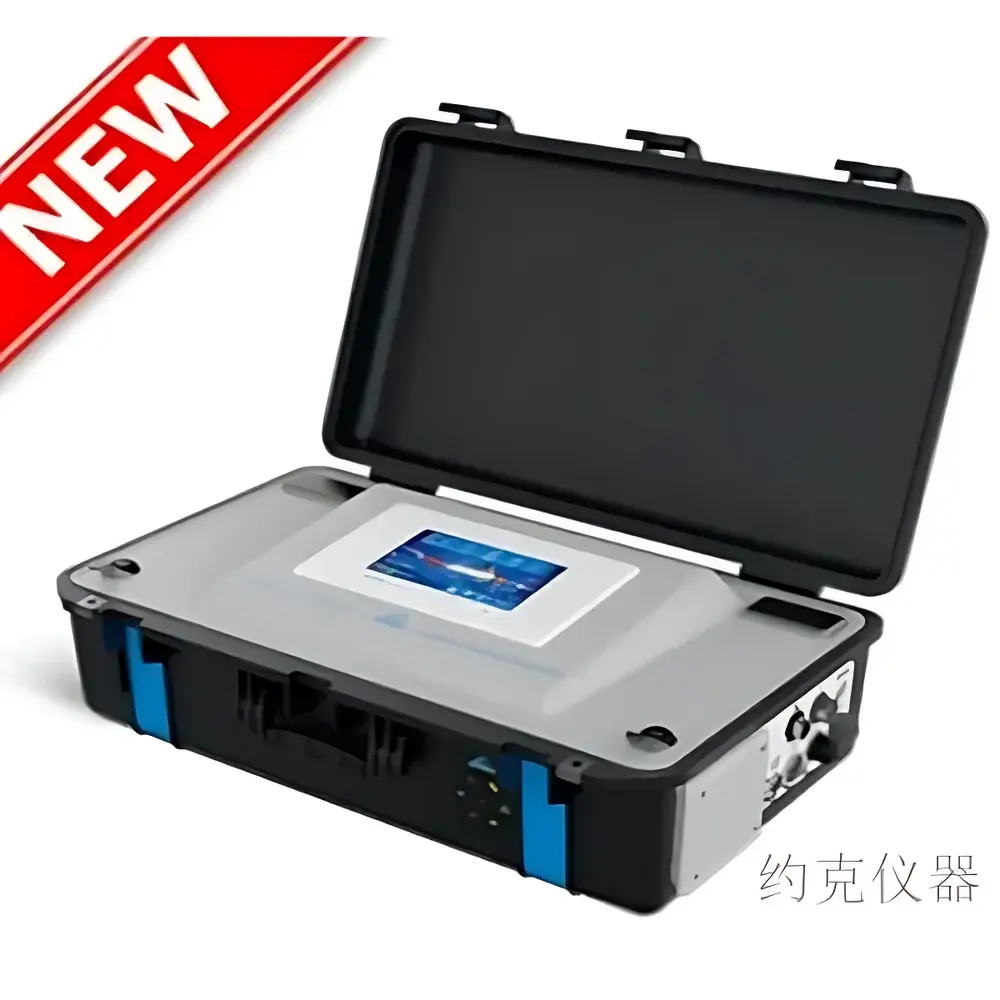
Envea MIR 9000P Portable Multi-Gas Emission Analyzer
| Brand | Envea |
|---|---|
| Origin | France |
| Model | MIR 9000P |
| Measurement Principle | Gas Filter Correlation – Non-Dispersive Infrared (GFC-NDIR) with Integrated Paramagnetic/O2 Sensor |
| Measured Gases | CO, CO₂, CH₄, N₂O, O₂ |
| Concentration Units | ppm and mg/m³ selectable |
| Compliance | CPA Certified (China Metrology Type Approval) |
| Environmental Operating Range | −10 °C to +50 °C |
| Data Storage | Internal SD card (USB expansion optional) |
| Connectivity | Bluetooth 4.2, RS232, optional 4–20 mA analog outputs |
| Power Supply | Rechargeable Li-ion battery (≥8 h continuous operation) |
| Enclosure Rating | IP65 |
| Weight | ≤6.2 kg |
Overview
The Envea MIR 9000P is a field-deployable, multi-component infrared gas analyzer engineered for high-fidelity continuous emission monitoring (CEM) and source-level carbon emission quantification in compliance with national and international environmental reporting frameworks. It implements Gas Filter Correlation coupled with Non-Dispersive Infrared (GFC-NDIR) spectroscopy — a selective, interference-resistant optical technique that eliminates cross-sensitivity between overlapping absorption bands of CO, CO₂, CH₄, and N₂O. A dedicated paramagnetic or electrochemical O₂ sensor is integrated to support stoichiometric correction and dilution compensation. Designed for regulatory-grade data acquisition at stack outlets, combustion sources, biogas facilities, landfill vents, and mobile verification campaigns, the MIR 9000P delivers trace-level detection (sub-ppm resolution) with long-term baseline stability, enabling metrologically traceable measurements aligned with ISO 14064-3, EN 15267, and China’s HJ 75–2017 technical specifications for CEMS.
Key Features
- True portable architecture: Compact, ergonomic design (<6.2 kg) with IP65-rated ruggedized housing, internal shock-absorbing mounts, and wide thermal operating range (−10 °C to +50 °C) for reliable field deployment under variable ambient conditions.
- GFC-NDIR core optics: Dual-beam, temperature-stabilized infrared source and detector array with gas-filled reference cells for each target analyte — ensuring immunity to water vapor interference, dust loading, and optical drift without frequent recalibration.
- Multi-gas simultaneous measurement: Real-time, independent quantification of CO, CO₂, CH₄, N₂O, and O₂ — all within a single compact flow path using optimized sample conditioning (heated filter, particle trap, and condensate management).
- Intuitive human-machine interface: 7-inch color capacitive touchscreen with dynamic trend visualization, configurable alarm thresholds, and contextual soft-keys; supports multilingual UI (English, Chinese, Spanish, French).
- Autonomous system control: Onboard microprocessor manages automatic zero/span calibration sequences, programmable purge cycles, pump speed regulation, and fault diagnostics — reducing operator dependency and minimizing downtime.
- Low-power, maintenance-light operation: No consumables (e.g., chemical scrubbers or optical lamps), 8-hour battery life — validated for unattended multi-point surveys across industrial sites and municipal infrastructure.
Sample Compatibility & Compliance
The MIR 9000P accepts raw or conditioned flue gas samples with particulate content ≤10 mg/m³ and dew point ≤5 °C. Sample inlet pressure range: 80–120 kPa (abs); flow rate: 0.8–1.2 L/min. The analyzer meets China’s CPA (China Metrology Type Approval) certification requirements per JJF 1354–2012 and is designed to satisfy QA/QC protocols outlined in HJ 76–2017 for CEMS performance testing. While not intrinsically rated for Zone 1 hazardous areas, optional ATEX-compliant accessories are available upon request. All firmware and calibration records adhere to GLP-aligned audit trails, supporting 21 CFR Part 11-compliant data integrity when paired with Envea’s optional secure logging module.
Software & Data Management
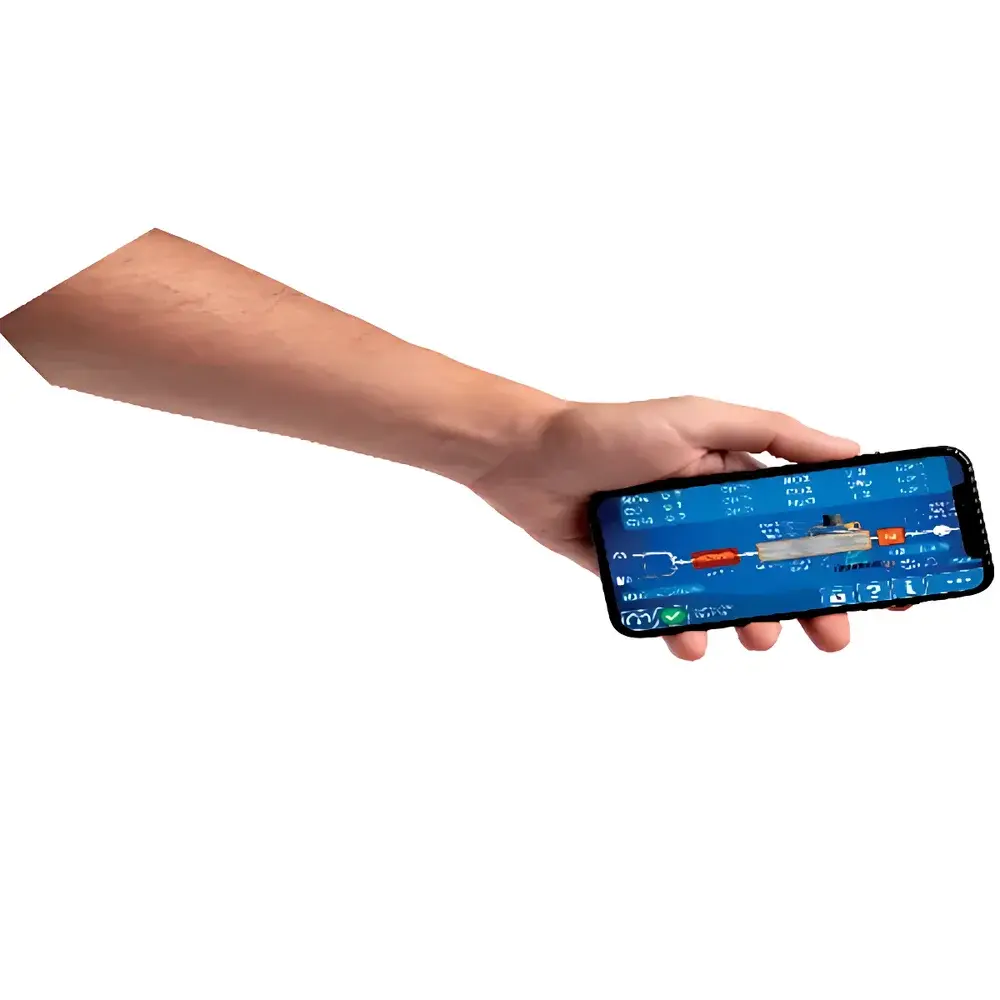
Data acquisition and instrument configuration are managed via Envea’s proprietary EmissionView™ PC software (Windows 10/11 compatible), which enables remote setup, spectral diagnostics, calibration certificate generation, and batch export to CSV or XML formats compliant with national emission reporting portals. Field data are stored on an internal industrial-grade SD card (16 GB standard) with time-stamped metadata (GPS coordinates, ambient T/P, operator ID). Bluetooth 4.2 connectivity permits live telemetry streaming to Android/iOS mobile devices using the certified Envea FieldLink™ app — supporting real-time validation, annotation, and photo-tagged measurement logs. Optional USB memory expansion allows archival of >12 months of second-by-second data at full channel resolution.
Applications
- Regulatory stack testing for coal-fired, biomass, and waste-to-energy plants under national carbon monitoring plans.
- Verification of carbon abatement projects (e.g., landfill gas capture, anaerobic digestion units) per Verra or Gold Standard methodologies.
- Mobile source emissions profiling during vehicle chassis dynamometer tests or roadside enforcement campaigns.
- Biogas quality assurance in agricultural digesters and wastewater treatment facilities.
- Research-grade greenhouse gas flux studies requiring transportable, multi-species capability with minimal warm-up latency (<30 min from cold start).
- Third-party verification audits supporting ISO 50001 energy management systems and corporate Scope 1 emissions inventories.
FAQ
What gases does the MIR 9000P measure simultaneously, and how is cross-interference minimized?
The instrument measures CO, CO₂, CH₄, N₂O, and O₂ concurrently. Cross-interference is mitigated through GFC-NDIR’s physical bandpass filtering — each target gas has a dedicated sealed reference cell containing pure analyte, enabling differential absorption detection immune to spectral overlap.
Is the MIR 9000P suitable for continuous unattended operation over extended periods?
Yes — it supports scheduled auto-calibration, battery-backed clock, and non-volatile memory. For >72-hour deployments, external DC power or solar-charged auxiliary battery packs are recommended.
Does the analyzer require periodic optical alignment or lamp replacement?
No. The solid-state IR source and thermopile detectors are lifetime components. No user-serviceable optics or consumable light sources are present.
Can raw flue gas be introduced directly, or is pre-conditioning mandatory?
A heated particulate filter (standard) and optional chiller/dryer are required for wet or high-dust streams. The unit is not rated for direct entry of saturated or corrosive gas without upstream conditioning.
How is measurement traceability established for regulatory reporting?
Each unit ships with factory NIST-traceable calibration certificates. Field verifications use certified span gases traceable to NIM (National Institute of Metrology, China) or BIPM-endorsed standards, fulfilling ISO/IEC 17025 documentation requirements.







