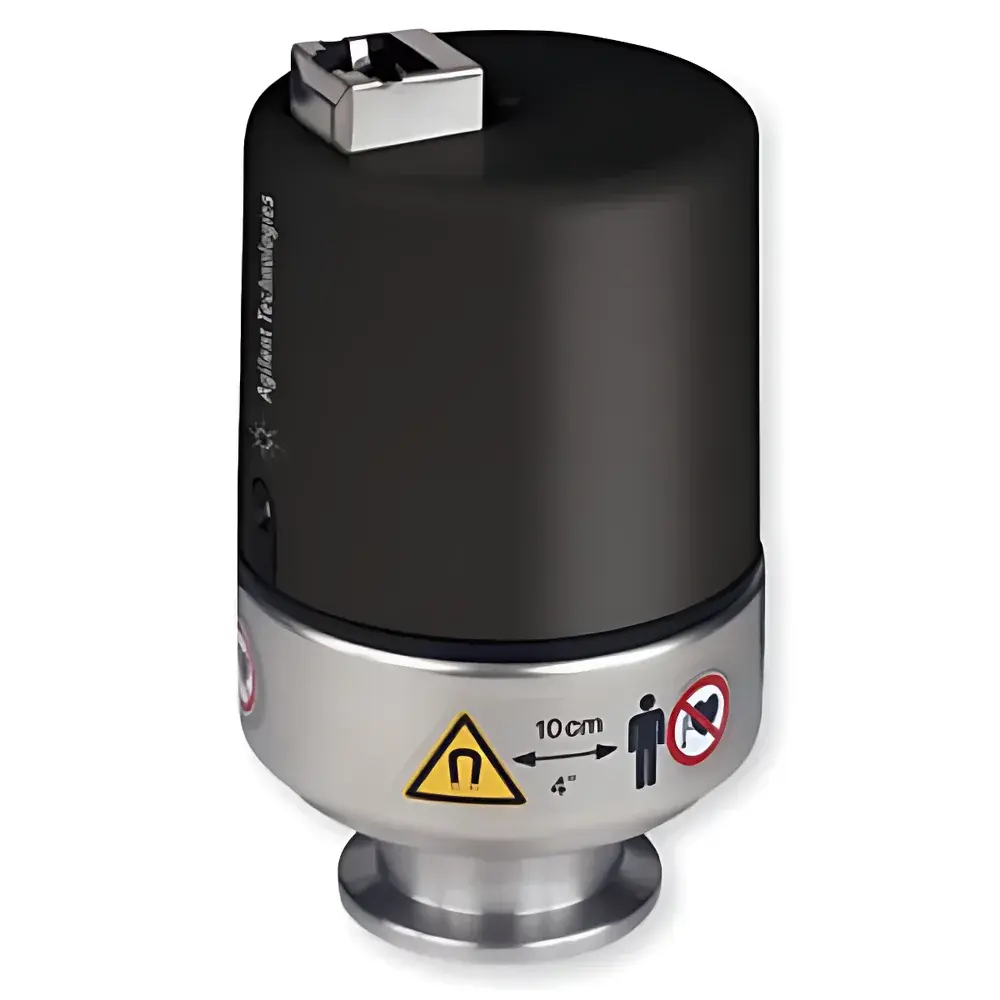
FD-M Series Non-Contact Electromagnetic Flow Sensor for Conductive Liquids
| Origin | Japan |
|---|---|
| Manufacturer Type | Authorized Distributor |
| Origin Category | Imported |
| Model | FD-M Series |
| Pricing | Available Upon Request |
Overview
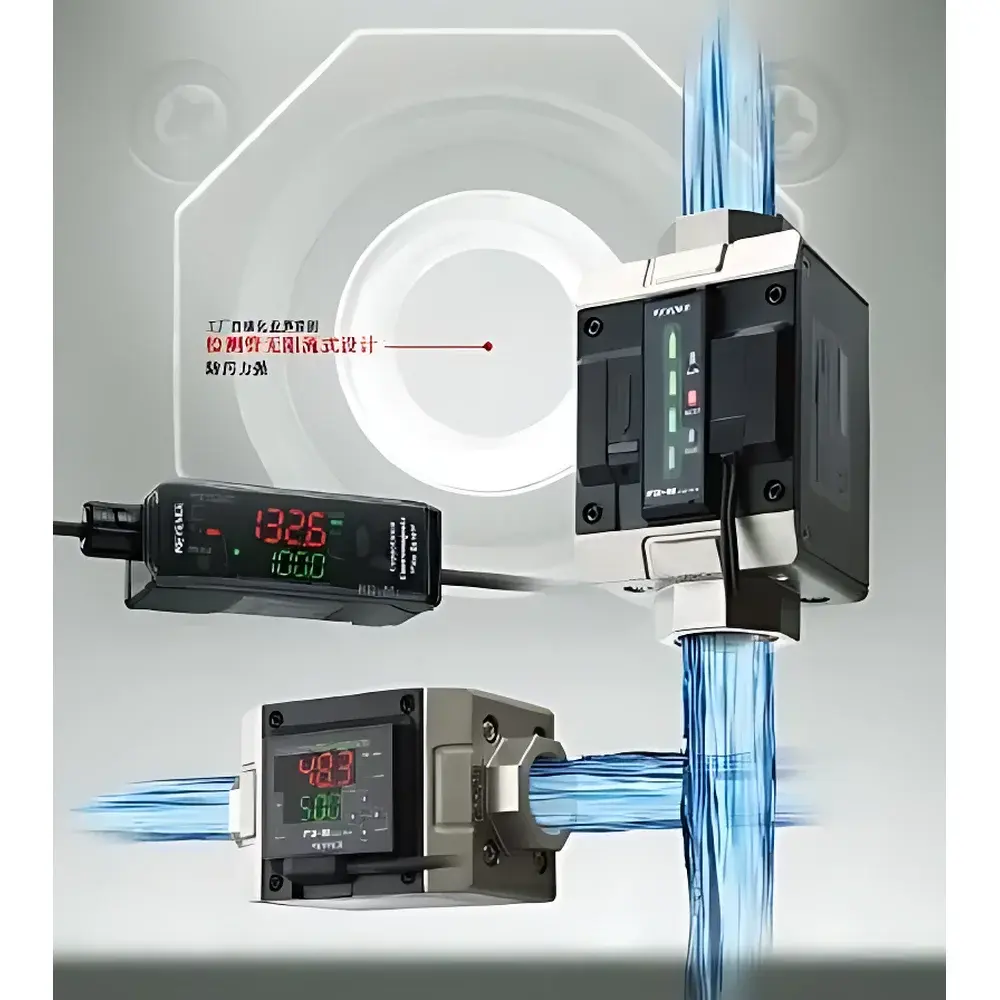
The FD-M Series is a non-contact electromagnetic flow sensor engineered for reliable, maintenance-free measurement of conductive liquid flow in industrial process environments. Unlike conventional electromagnetic flowmeters that require internal electrodes in direct contact with the fluid, the FD-M Series employs a fully贯通 (full-bore) sensing tube design with no protruding elements, no moving parts, and no embedded electrodes. Its operation is based on Faraday’s law of electromagnetic induction: when a conductive fluid flows through a magnetic field generated externally across the pipe cross-section, a voltage proportional to the average flow velocity is induced perpendicular to both the magnetic field and flow direction. This voltage is detected capacitively or inductively through the non-metallic (e.g., PTFE-lined or ceramic) wall of the sensor body—eliminating galvanic contact while preserving signal integrity. Designed specifically for applications where fouling, scaling, corrosion, or insulation-layer buildup compromises traditional electrode-based sensors, the FD-M Series delivers stable zero-point stability and long-term repeatability under harsh coolant, quenching, and mold-water conditions.
Key Features
- Full-bore, obstruction-free architecture: No internal obstructions—no turbine blades, no vortex shedders, no wetted electrodes—minimizing pressure drop (<0.1 kPa typical at rated flow) and eliminating clogging risk in cooling circuits contaminated with metal fines, rust, or polymer residues.
- Non-contact electromagnetic detection: Magnetic field generation and signal pickup occur externally via precision-wound excitation coils and shielded pick-up coils mounted on the sensor housing; the measuring tube remains electrically isolated and chemically inert.
- Robust mechanical longevity: Absence of rotating or reciprocating components eliminates mechanical wear, bearing failure, and shaft seal degradation—extending mean time between failures (MTBF) beyond 100,000 operating hours.
- Insulation-tolerant measurement: Capable of accurate flow detection even when the inner tube surface is coated with non-conductive films (e.g., oil emulsions, silicone residues, or dried coolant additives), a common failure mode for conventional 2- or 4-electrode magmeters.
- Wide thermal operating range: Rated for continuous operation up to 85 °C, supporting return-loop monitoring of tempered mold coolants and post-quenching water circuits without thermal drift compensation.
Sample Compatibility & Compliance
The FD-M Series is validated for use with aqueous-based coolants (including water-soluble cutting fluids with conductivity ≥50 µS/cm), deionized water blends (when conductivity is maintained above threshold), and mild alkaline or acidic process waters. It is not suitable for hydrocarbons, pure DI water (<1 µS/cm), or non-conductive solvents. The sensor meets IP67 ingress protection and complies with IEC 61326-1 (EMC for industrial environments) and IEC 61000-4 series immunity standards. While not intrinsically safe certified, it supports integration into SIL2-capable control loops when paired with appropriate safety-rated PLCs and configured per IEC 61511 guidelines.
Software & Data Management
The FD-M Series provides dual-output capability: a scalable 4–20 mA analog output (HART 7 compatible) and a pulse/frequency output (0–10 kHz, NPN/PNP selectable) for totalization. Configuration is performed locally via DIP switches or remotely using standard HART communicators. All calibration parameters—including K-factor, damping time, zero offset, and alarm thresholds (high/low flow limits)—are stored in non-volatile memory with write-protection. Audit trails are maintained per device power cycle, supporting GLP-compliant documentation requirements. Data logging and trend analysis are enabled via integration with SCADA systems (Modbus RTU over RS-485 optional with adapter module), and cumulative pulse outputs interface directly with PLC counters for plant-level coolant consumption accounting.
Applications
- Machine tool coolant management: Real-time monitoring of water-soluble cutting fluid flow to CNC machining centers, ensuring consistent thermal regulation and preventing tool wear due to under-cooling.
- Mold temperature control: Closed-loop verification of return-flow rate from injection molding or die-casting dies, enabling predictive maintenance of chiller load and detecting flow restriction before thermal runaway occurs.
- Induction hardening system safeguarding: Low-flow alarm triggering below user-defined thresholds prevents coil overheating and workpiece distortion during high-frequency quenching cycles.
- Welding equipment cooling assurance: Dual-limit (min/max) flow supervision for resistance welding guns and seam welders, supporting ISO 14001 energy-use tracking and IATF 16949 process validation.
- Extrusion line thermal management: Analog output integration with PID controllers enables precise modulation of cooling water valves on plastic extruders, reducing warpage and improving dimensional stability of profiles.
FAQ
Does the FD-M Series require fluid conductivity calibration?
No—factory-calibrated K-factors are traceable to JIS Z 8000 and remain valid across the specified conductivity range (50–2000 µS/cm); no field recalibration is needed unless tube lining integrity is compromised.
Can it be installed in vertical upward-flow piping only?
It supports horizontal, vertical upflow, and vertical downflow orientations; full-bore design ensures symmetrical velocity profile development regardless of mounting angle.
Is explosion-proof certification available?
Not as a standard configuration; however, hazardous-area deployment is achievable using remote-mounted transmitters with appropriate barrier systems compliant with ATEX/IECEx Zone 2 requirements.
What maintenance intervals are recommended?
Zero scheduled maintenance—only periodic visual inspection of external housing integrity and verification of output signal stability every 12 months is advised per JIS B 7554 preventive maintenance guidelines.
How does it handle air pockets or two-phase flow?
Like all electromagnetic flowmeters, it requires fully filled pipe conditions; upstream air elimination and proper pipe slope are mandatory—air entrainment causes signal dropout and should be mitigated via degassing valves or vented tees.