
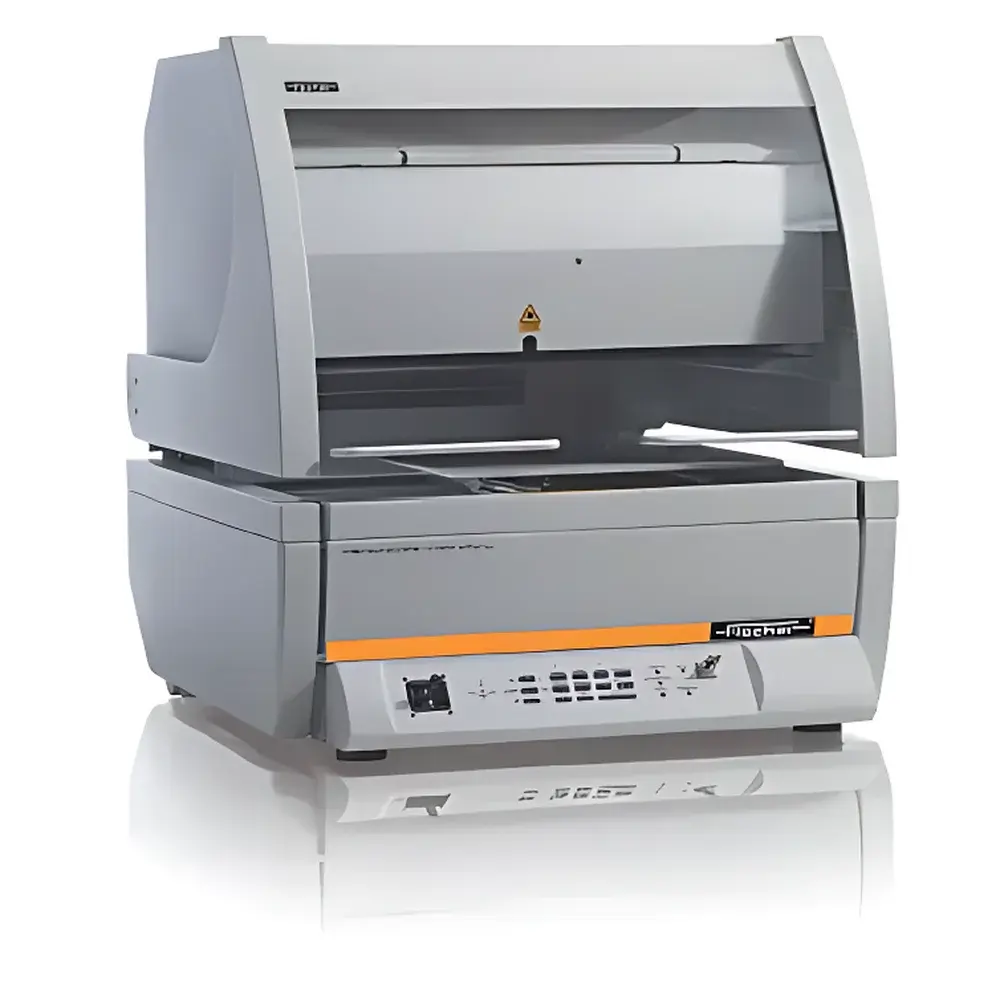
FISCHERSCOPE® X-RAY XDV-μ Energy Dispersive X-ray Fluorescence Coating Thickness Analyzer
| Brand | Fischer |
|---|---|
| Origin | Germany |
| Model | XDV-μ |
| Excitation Optics | Polycapillary X-ray Lens System |
| Detector | Silicon Drift Detector (SDD) |
| Elemental Range | Al (13) to U (92) |
| Max. Simultaneous Elements | 24 |
| Sample Stage | Motorized X/Y Table + Motorized Z-axis Lift |
| Filtration | 4 Switchable Primary Filters |
| High Voltage | 3 Adjustable kV Settings |
| Software | WinFTM® |
| Compliance | ISO 3497, ASTM B568, DIN EN ISO 3497, RoHS/WEEE Directive Support |
| Optional Accessories | Large-area PCB Stage, Custom Collimators |
Overview
The FISCHERSCOPE® X-RAY XDV-μ is a benchtop energy dispersive X-ray fluorescence (EDXRF) analyzer engineered for non-destructive, high-precision measurement of metallic and compound coating thicknesses on micro-scale components and complex substrates. Operating on the fundamental principle of X-ray fluorescence spectroscopy, the instrument irradiates the sample surface with a focused polycapillary X-ray beam, inducing characteristic secondary X-ray emission from constituent elements. The emitted photons are collected by a high-resolution silicon drift detector (SDD), enabling quantitative determination of both layer thickness and elemental composition—without requiring reference standards. Its unique polycapillary optics deliver exceptional excitation intensity within sub-100 µm spot sizes, making it especially suited for fine-pitch electronics, MEMS devices, connector contacts, and multi-layer plating systems such as Ni/Cu/Sn, Au/Pd/Ni/Cu, or Cr/Ni/Cu on PCBs and leadframes.
Key Features
- Polycapillary X-ray lens system providing ultra-high photon flux density in measurement spots down to 30 µm diameter
- Motorized, programmable X/Y stage with ±0.5 µm positioning repeatability and motorized Z-axis lift for precise focus control
- Four switchable primary filters and three adjustable high-voltage settings (up to 50 kV) optimized for diverse matrix and coating combinations
- Silicon drift detector (SDD) with <135 eV Mn Kα energy resolution at 100,000 cps, ensuring high spectral fidelity and low detection limits (sub-ppm for many elements)
- Laser crosshair guidance and integrated high-definition color camera for rapid, sub-pixel visual alignment of measurement positions
- Side-access slot design accommodating large-format samples including full-size PCBs (up to 400 × 400 mm with optional stage)
- Interlocked safety enclosure with automatic stage egress upon door opening—fully compliant with IEC 61010-1 and radiation safety regulations (DIN 54113)
Sample Compatibility & Compliance
The XDV-μ supports analysis of planar, curved, and recessed surfaces across a broad range of industrial substrates—including copper, brass, steel, aluminum, ceramics, and plastics. It accommodates coatings ranging from nanometer-thin barrier layers (e.g., Pd or Ni underplating on Au) to multi-micron electroplated stacks. Measurement accuracy adheres to international standards including ISO 3497 (metallic coatings), ASTM B568 (XRF coating thickness), and DIN EN ISO 3497. For regulated industries, WinFTM® software supports audit-trail logging, user access levels, electronic signatures, and 21 CFR Part 11 compliance packages upon configuration. All measurements are traceable to NIST-traceable calibration materials and validated per GLP/GMP requirements where applicable.
Software & Data Management
WinFTM® is the dedicated, Windows-based analytical platform for the XDV-μ. It integrates real-time spectrum acquisition, fundamental parameter (FP) quantification, multi-layer modeling (including absorption/enhancement corrections), and automated report generation. The FP method eliminates dependence on physical standards—enabling accurate analysis of unknown or proprietary coating systems. Batch measurement routines, statistical process control (SPC) charts, pass/fail thresholding, and customizable export formats (CSV, PDF, XML) support integration into MES and QMS environments. Data integrity safeguards include time-stamped measurement logs, operator ID tracking, and encrypted database storage.
Applications
- Quality assurance of ENIG (electroless nickel immersion gold), ENEPIG, and immersion silver finishes on PCBs
- Thickness verification of solder mask, OSP (organic solderability preservative), and conductive ink layers
- Composition and thickness control of decorative and functional platings on automotive fasteners, connectors, and sensors
- Failure analysis of intermetallic growth, diffusion barriers, and corrosion-resistant duplex coatings
- RoHS-compliant screening for restricted substances (Pb, Cd, Hg, Cr⁶⁺, Br) in finished assemblies
- R&D of novel thin-film metallization schemes for semiconductor packaging and power electronics
FAQ
Does the XDV-μ require certified reference standards for routine calibration?
No—its fundamental parameter (FP) quantification engine enables accurate thickness and composition analysis without physical standards, though optional calibration verification kits are available for periodic performance checks.
Can the system analyze multi-layer structures with interdiffused interfaces?
Yes—WinFTM® includes advanced multi-layer models that account for attenuation, secondary fluorescence, and interface roughness; depth profiling is supported via variable take-off angle measurements.
Is remote operation or network integration supported?
Yes—the instrument supports TCP/IP communication, OPC UA connectivity, and can be integrated into factory automation networks via standardized protocols for unattended batch processing.
What maintenance is required for long-term stability?
Annual preventive maintenance is recommended, including SDD cooling system inspection, optical path cleaning, and HV generator performance validation; no consumables are required during normal operation.
How does the polycapillary optic compare to conventional collimation?
Unlike pinhole collimators that sacrifice intensity for resolution, the polycapillary lens preserves >60% of source photons while achieving spot sizes below 50 µm—delivering superior signal-to-noise ratio and measurement reproducibility.



