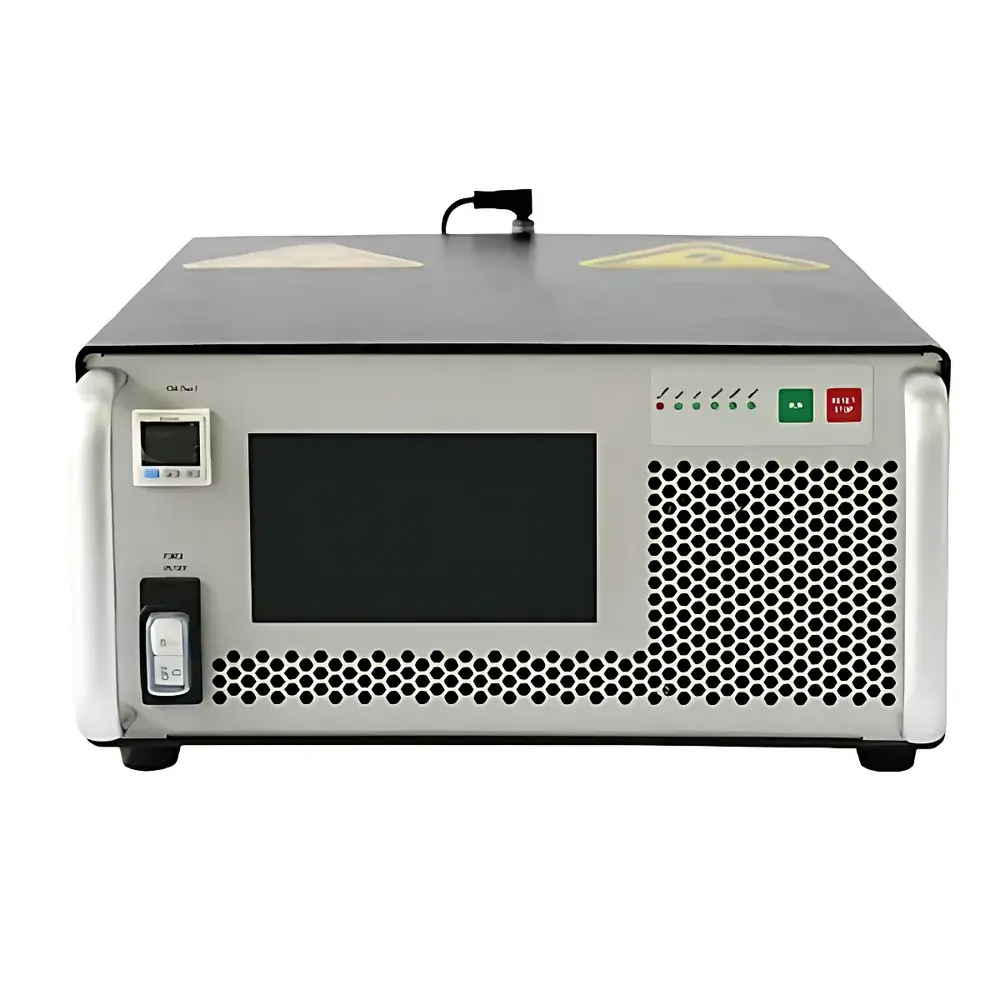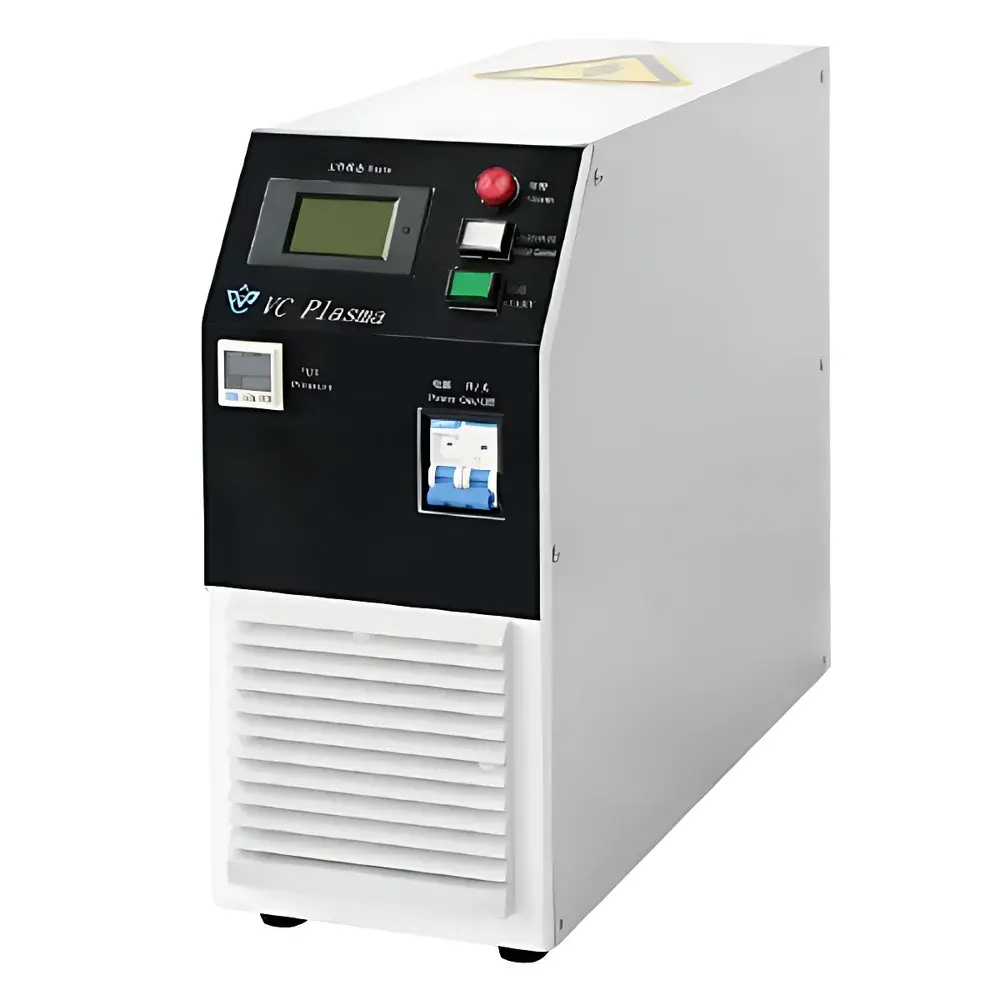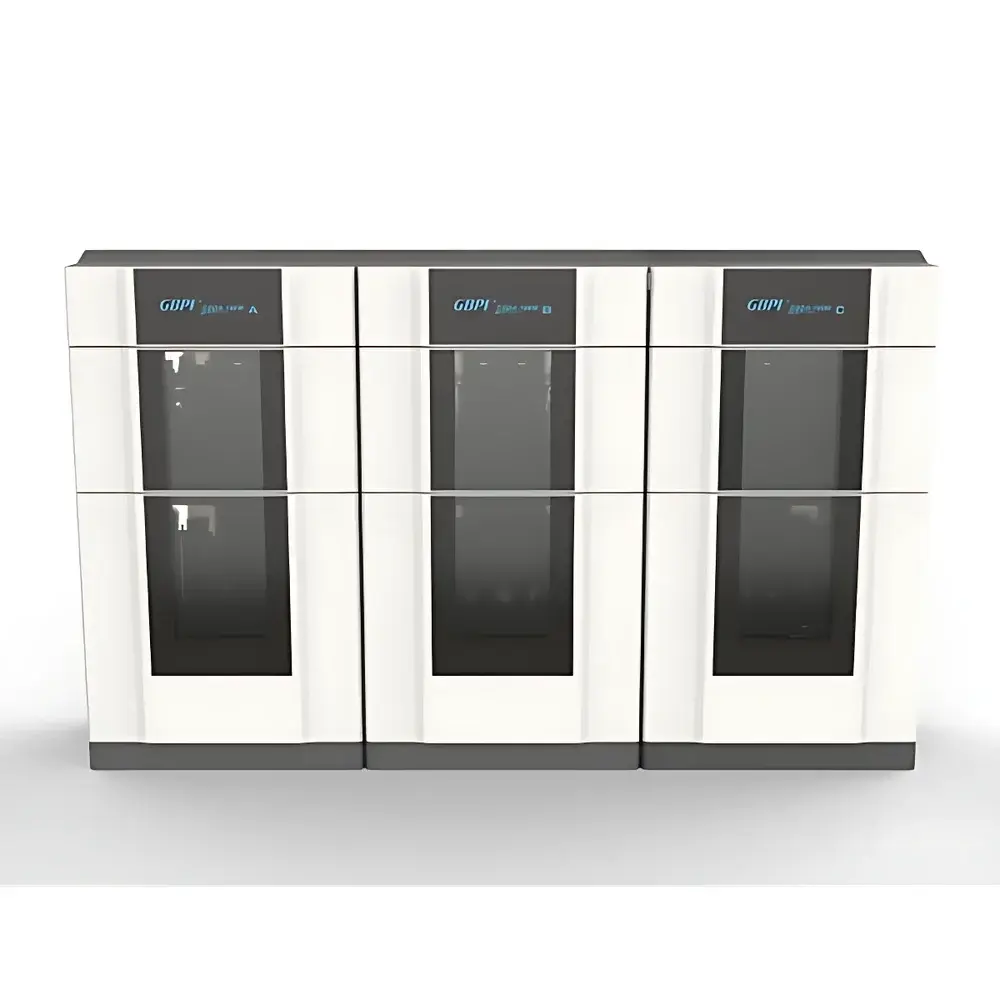
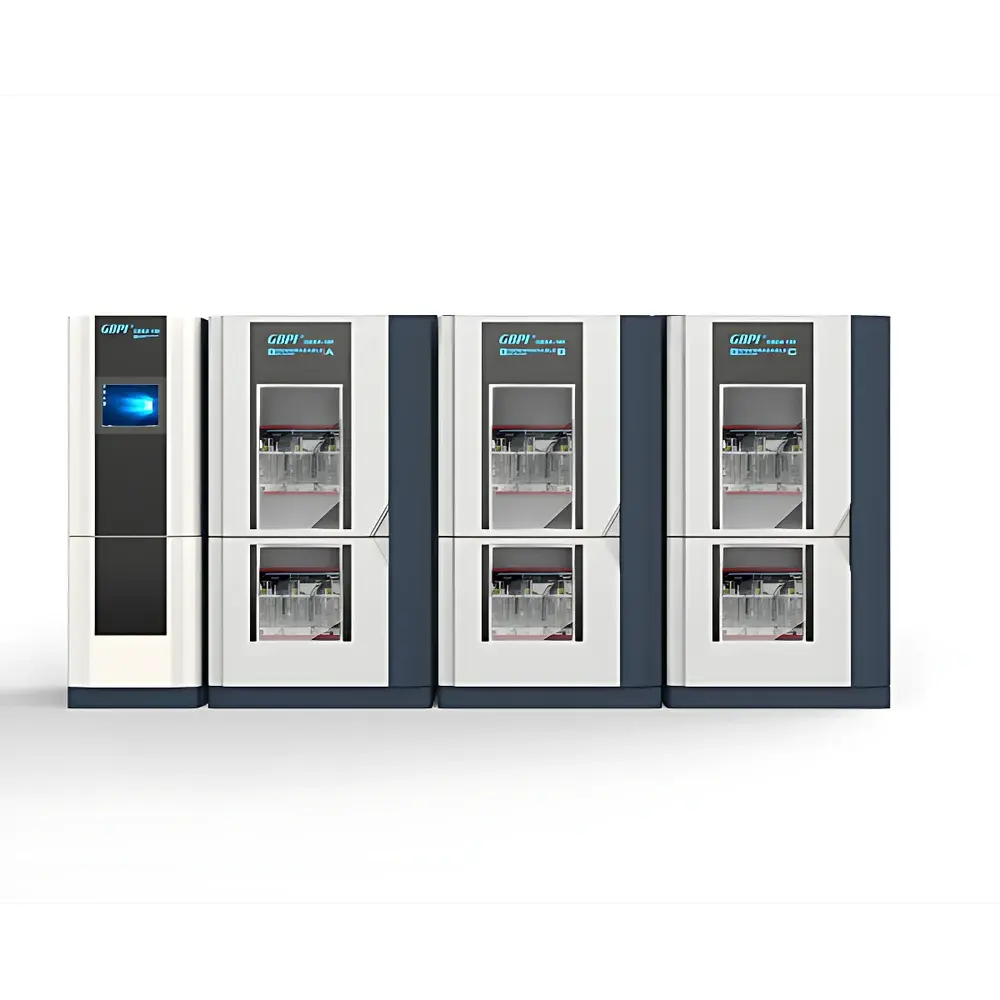
GBPI GBDA-180L Automated Composting Biodegradation Testing System
| Brand | GBPI |
|---|---|
| Origin | Guangdong, China |
| Manufacturer | GBPI Packaging Equipment Co., Ltd. |
| Model | GBDA-180L |
| Measurement Resolution | ±0.01 g |
| Gas Flow Rate | 0.01–10 L/min |
| Reactor Volume | 500 mL |
| Maximum Number of Reactors per System | 18 |
| Temperature Control Range | Ambient to 80 °C |
| Temperature Control Accuracy | ±0.5 °C |
| CO₂ Detection Range | 0–10,000 ppm |
| CO₂ Detection Accuracy | ±40 ppm (0–3,000 ppm), ±2% FS (3,000–10,000 ppm) |
| O₂ Detection Range | 0–25% |
| O₂ Detection Accuracy | ±1% FS |
| Pressure Detection Range | 0–200 kPa |
| Pressure Detection Accuracy | ±1% FS |
| Gas Supply Pressure | 0.2–0.8 MPa |
| Test Chamber Count | 18 |
| Chamber Volume | 3.5 L |
| Dimensions | 3600 × 810 × 1930 mm |
| Weight | 1100 kg |
| Power Consumption | 3000 W |
| Electrical Supply | AC 220 V, 50 Hz |
Overview
The GBPI GBDA-180L Automated Composting Biodegradation Testing System is a high-precision, multi-channel analytical platform engineered for standardized assessment of aerobic biodegradability under controlled composting conditions. It operates on the principle of respirometric quantification: microbial mineralization of organic test materials—such as PLA, PBAT, PHA, or starch-based polymers—is monitored in real time via continuous measurement of evolved carbon dioxide (CO₂) using non-dispersive infrared (NDIR) sensors. Oxygen consumption and headspace pressure are concurrently tracked to ensure stoichiometric consistency with ISO 14855-1, ASTM D5338, and GB/T 19277.1 protocols. The system integrates 18 independent 500 mL reactors housed within thermally stabilized 3.5 L test chambers, each equipped with dedicated gas flow control, CO₂/O₂ sensing, and programmable agitation—enabling parallel, statistically robust evaluation of degradation kinetics across replicates, blanks, and reference materials (e.g., microcrystalline cellulose ≤20 µm).
Key Features
- 18-channel parallel operation with fully independent reactor control—each chamber supports individual setpoints for temperature, gas flow (0.01–10 L/min), agitation timing, and data acquisition frequency.
- High-fidelity gas metrology: calibrated mass flow controllers (±1.0% FS accuracy) and factory-calibrated NDIR CO₂ sensors (±40 ppm baseline accuracy) ensure traceable, reproducible respirometry.
- PID-fuzzy logic temperature regulation (ambient to 80 °C, ±0.5 °C stability) with integrated chamber-level thermal uniformity verification.
- Automated seal integrity validation prior to assay initiation—detects leaks ≥0.5 mL/min at 200 kPa test pressure.
- Modular hardware architecture: sensor modules, flow controllers, and reactor trays are field-replaceable; built-in calibration routines support user-performed verification of CO₂, O₂, and pressure transducers.
- Role-based access control (administrator, operator, observer) with granular permission assignment and full audit trail per ICH GCP and FDA 21 CFR Part 11 requirements.
Sample Compatibility & Compliance
The GBDA-180L accommodates solid particulates, films, foams, and molded specimens up to 5 g per reactor, compatible with inocula including mature compost, activated sludge, or standardized activated vermiculite (supplied by GBPI). It meets the physical and operational requirements of ISO 14855-1 (determination of ultimate aerobic biodegradability), ASTM D5338 (standard test method for determining aerobic biodegradation of plastic materials in soil), ASTM D6400 (specification for labeling of plastics designed to be aerobically composted), JIS K 6953, and GB/T 19277.1. All gas sensors comply with EN 61000-6-3 (EMC) and ATEX Zone 2 certification for safe operation in laboratory environments with organic volatiles.
Software & Data Management
GBPI BioDecay Suite v4.2 provides ISO/IEC 17025-aligned data governance: method templates preconfigured for ISO 14855-1 Annex A, automated calculation of % theoretical CO₂ evolution (ThCO₂), kinetic modeling (e.g., first-order degradation rate constants), and statistical outlier detection per Grubbs’ test. Raw sensor logs (time-stamped CO₂, O₂, pressure, temperature, flow) are stored in encrypted SQLite databases with SHA-256 hashing. Audit trails record every user action—including parameter edits, report exports (PDF/Office formats), and calibration events—with immutable timestamps and operator ID linkage. Data export supports CSV, Excel, and XML for integration with LIMS or statistical packages (e.g., R, JMP).
Applications
- Regulatory compliance testing for EN 13432, OK Compost INDUSTRIAL, and TÜV Austria certifications.
- Formulation development of bio-based polymers, additives, and compatibilizers—quantifying impact of plasticizer type, filler loading, or hydrophilicity on degradation onset and rate.
- Quality control of commercial compostable packaging—batch release testing against internal specifications or customer-defined ThCO₂ thresholds (e.g., ≥90% in 180 days).
- Fundamental research on microbial consortia activity, substrate inhibition effects, and temperature-dependent Arrhenius kinetics in mesophilic (25–40 °C) and thermophilic (55–60 °C) regimes.
- Interlaboratory method validation studies requiring high inter-unit reproducibility (CV < 5% for reference cellulose controls across 10+ runs).
FAQ
Does the GBDA-180L support unattended operation over extended periods (e.g., 180-day tests)?
Yes—hardware includes redundant power supply monitoring, automatic sensor drift compensation, and scheduled self-diagnostics; software enables remote status alerts via SMTP or SNMP traps.
Can I validate CO₂ sensor accuracy in-house without external calibration gases?
Yes—the system includes a built-in zero/span verification mode using certified N₂ and 1000 ppm CO₂ span gas (optional accessory); all calibrations are logged with certificate-of-conformance metadata.
Is the reactor material compliant with USP Class VI and ISO 10993-5 cytotoxicity requirements?
All wetted components (reactor vessels, gas manifolds, tubing) are fabricated from medical-grade 316L stainless steel and PTFE-lined FEP—certified per ISO 10993-5 and USP /.
How does the system handle variable inoculum activity between batches?
The software implements adaptive blank correction: daily CO₂ output from inoculum-only controls is subtracted from sample channels in real time, normalizing for microbial baseline variance.
What documentation is provided for regulatory submissions (e.g., FDA, EU Commission)?
Delivery includes IQ/OQ/PQ protocols, Factory Acceptance Test (FAT) reports, sensor calibration certificates (NIST-traceable), and a full 21 CFR Part 11 compliance package with electronic signature workflow configuration.