
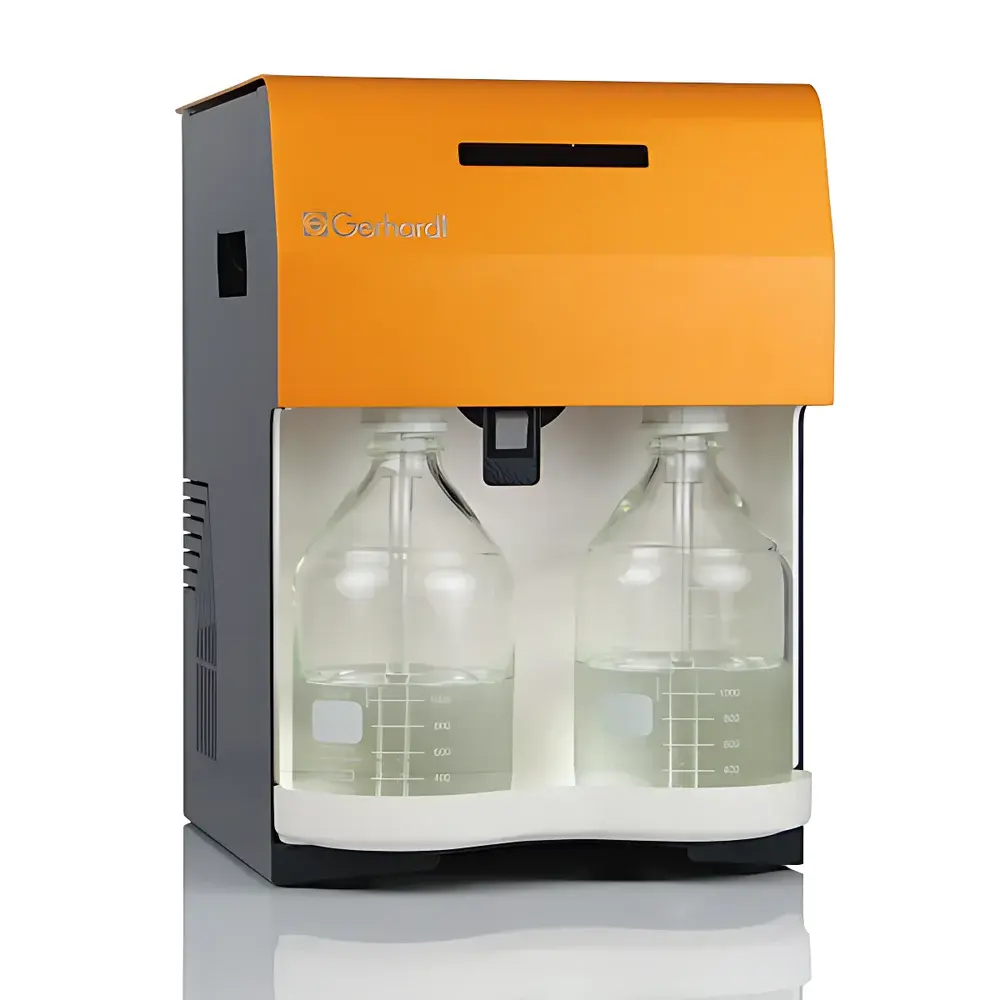
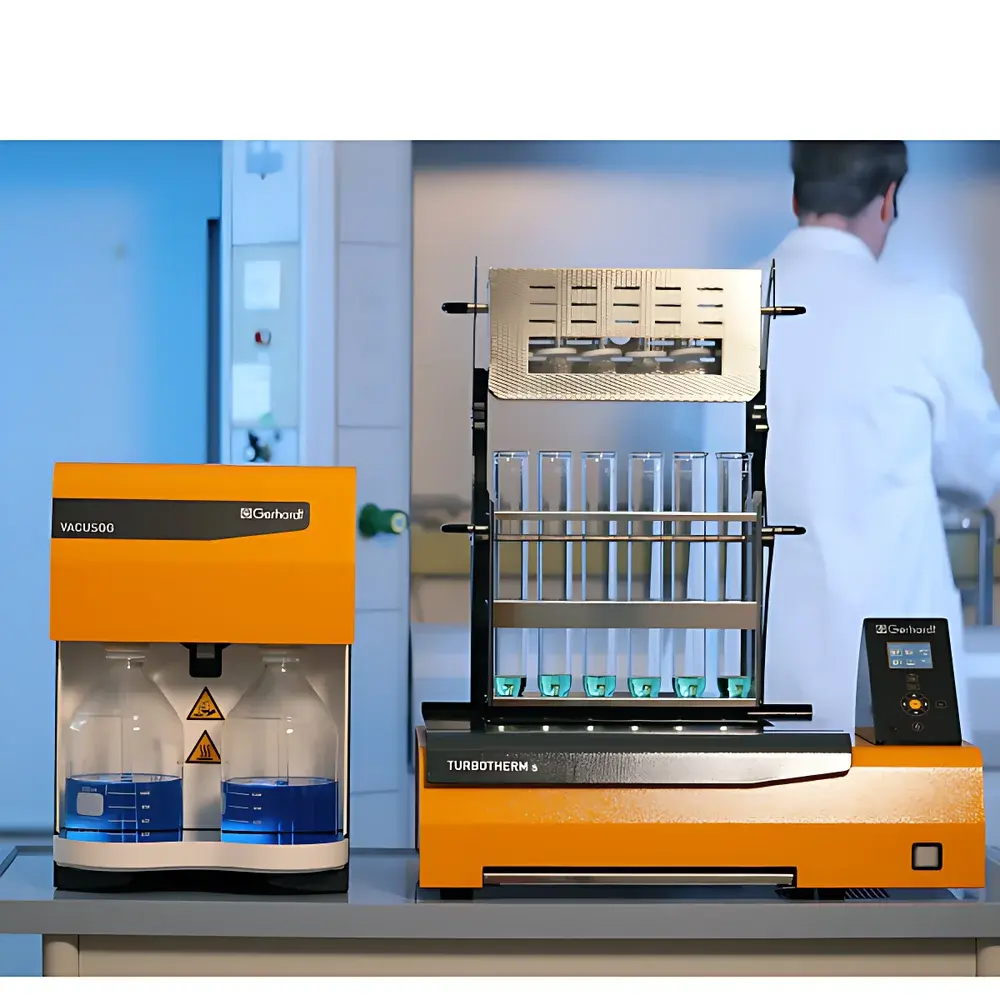
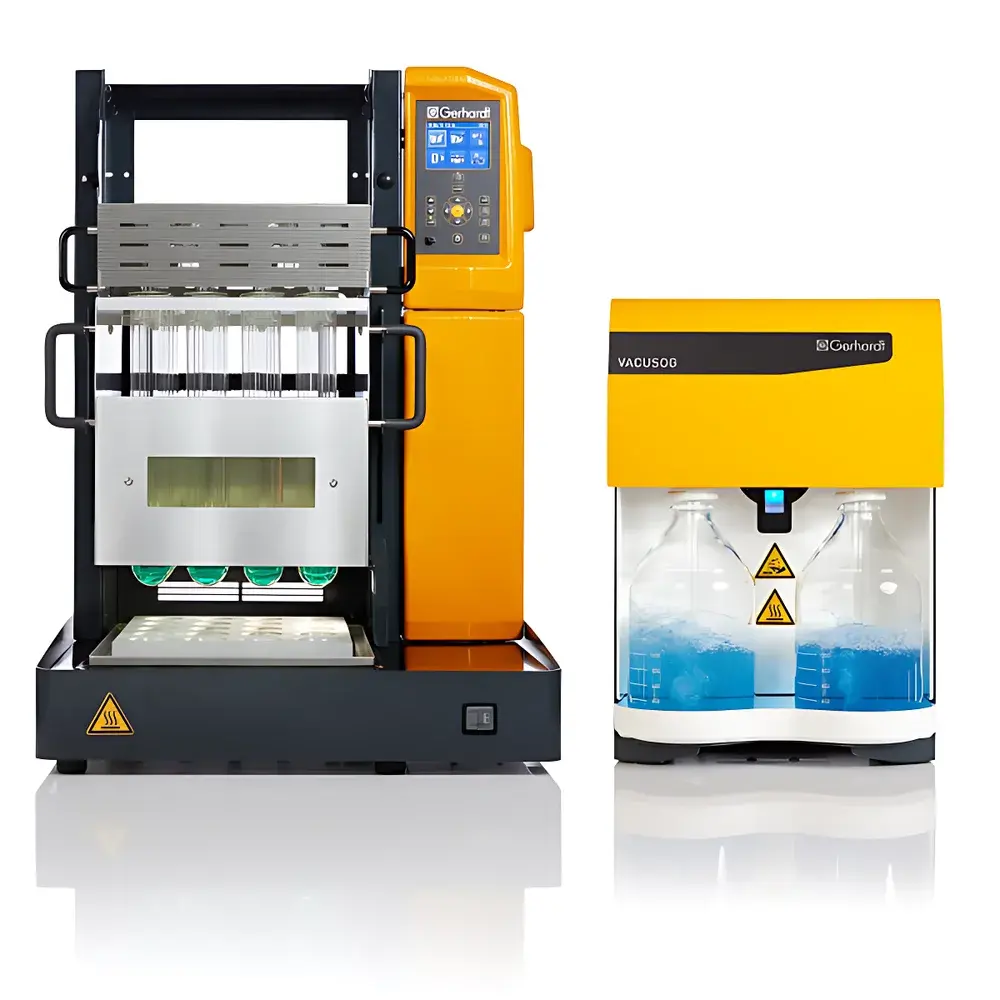
Gerhardt VACUSOG VS Acid Mist Scrubber System
| Brand | Gerhardt |
|---|---|
| Origin | Germany |
| Manufacturer | C. Gerhardt GmbH & Co. KG |
| Type | VS |
| Application | Laboratory Acid Fume Treatment |
| Principle | Dilution, Chemical Neutralization, Absorption |
| Flow Rate | 120 L/min |
| Compliance | Meets German TRGS 554 and EU Directive 2010/32/EU for laboratory fume control |
| Power Consumption | 100 W |
| Noise Level | <52 dB(A) |
| Maintenance | Tool-free access via top-hinged door |
| Cooling | Integrated condensate trap |
| Filtration | Dual-stage — chemical scrubbing + optional solid-phase adsorption cartridge |
| Compatibility | Fully interoperable with Gerhardt KJELDATHERM, TURBOTHERM, KI digestion units and SMA series reflux digesters |
Overview
The Gerhardt VACUSOG VS Acid Mist Scrubber System is a purpose-engineered, water-free, low-energy fume treatment solution designed specifically for the safe and efficient removal of inorganic acid mists generated during high-temperature laboratory digestion processes. Operating on the principles of controlled dilution, selective chemical neutralization, and physical absorption, the VS system employs a closed-loop air circulation path with an integrated reagent-based scrubbing chamber to convert corrosive HNO₃, H₂SO₄, and HCl vapors into stable, non-volatile salts. Unlike conventional wet scrubbers requiring continuous water supply and drainage infrastructure, the VACUSOG VS utilizes dry-phase reagent cartridges and a passive condensate trap—eliminating wastewater generation while maintaining consistent capture efficiency across variable flow conditions (0–120 L/min). Its compact footprint and plug-and-play integration make it suitable for ISO 17025-accredited laboratories, GLP-compliant QC environments, and research facilities where regulatory traceability, operator safety, and long-term operational reliability are mandatory.
Key Features
- Adjustable suction capacity from 0 to 120 L/min, enabling precise matching to digestion vessel volume, heating ramp profile, and reagent volatility.
- Tool-free top-hinged access door facilitates rapid cartridge replacement and routine inspection without disassembly or downtime.
- Energy-efficient operation at ≤100 W—significantly lower than standard fume hoods or recirculating scrubbers—reducing both thermal load and facility power demand.
- Acoustically optimized blower assembly ensures noise emission remains below 52 dB(A) at 1 m distance, supporting quiet laboratory environments per DIN 45635-16.
- Dual-stage filtration architecture: primary neutralization via proprietary alkaline granular reagent bed, secondary retention using optional activated alumina or impregnated carbon solid-phase adsorbent cartridges.
- Integrated condensate trap captures volatile condensables (e.g., NOₓ aerosols, SO₃ mist) prior to scrubber entry, preventing reagent saturation and extending service intervals.
Sample Compatibility & Compliance
The VACUSOG VS is validated for use with all major digestion chemistries involving concentrated mineral acids—including Kjeldahl nitrogen determination (ISO 8968, AOAC 984.13), heavy metal digestion per EPA Method 3050B and EN 13656, and automated reflux digestion per DIN EN ISO 11885. It complies with German Technical Rules for Hazardous Substances (TRGS 554), EU Directive 2010/32/EU on prevention of risks from hazardous agents, and aligns with OSHA 1910.1200 and CLP Regulation (EC) No 1272/2008 requirements for workplace exposure control. When operated in conjunction with Gerhardt digestion instruments equipped with standardized exhaust interfaces (e.g., KJELDATHERM, TURBOTHERM, KI, SMA series), the system supports full audit trails under GLP and GMP frameworks, including documented maintenance logs and reagent replacement records.
Software & Data Management
While the VACUSOG VS operates as a standalone hardware unit without embedded firmware or digital controls, its mechanical design enables seamless integration into laboratory-wide monitoring networks via analog 4–20 mA airflow feedback signals (optional accessory). All consumables—including scrubber cartridges and condensate traps—are serialized and tracked via Gerhardt’s Global Consumables Registry (GCR), allowing institutions to maintain inventory compliance with ISO/IEC 17025 Clause 6.6.2 and FDA 21 CFR Part 11–aligned documentation practices. Service history, calibration certificates, and safety validation reports are accessible through Gerhardt’s secure customer portal—supporting internal audits and external accreditation reviews.
Applications
- Kjeldahl digestion workflows requiring real-time acid mist containment during sulfuric acid catalysis and selenium catalyst addition.
- Heavy metal extraction from environmental matrices (soils, sludges, sediments) using hot-block or microwave-assisted digestion protocols.
- Pharmaceutical residual solvent analysis where HCl/HBr fumes must be contained during sample prep for ICP-MS or AAS quantification.
- Food safety testing labs performing AOAC 992.15 or ISO 14891 methods involving perchloric acid oxidation steps.
- University teaching laboratories implementing risk-based safety management systems per ANSI Z9.5–2022 standards.
FAQ
What types of acid mists does the VACUSOG VS effectively neutralize?
It is engineered for H₂SO₄, HNO₃, HCl, and mixed acid mists typical of Kjeldahl and heavy metal digestion—excluding HF due to material compatibility constraints.
Can the system be retrofitted to non-Gerhardt digestion instruments?
Yes—provided the host instrument features a standardized 50–75 mm exhaust port and maintains negative pressure at the hood interface per DIN EN 14175-3.
How often must the scrubber cartridge be replaced?
Under typical usage (8 hrs/day, 5 days/week), replacement is required every 6–12 months depending on acid concentration and digestion frequency—tracked via visual indicator window and weight differential.
Is external ventilation ducting required?
No—the VACUSOG VS is a recirculating system; ambient air is drawn in, treated, and returned to the lab environment, eliminating need for roof penetrations or HVAC modifications.
Does the unit meet explosion-proof certification requirements?
It is not intrinsically safe or ATEX-certified; installation in Zone 1/2 classified areas requires consultation with Gerhardt’s application engineering team for site-specific hazard assessment and mitigation planning.



