
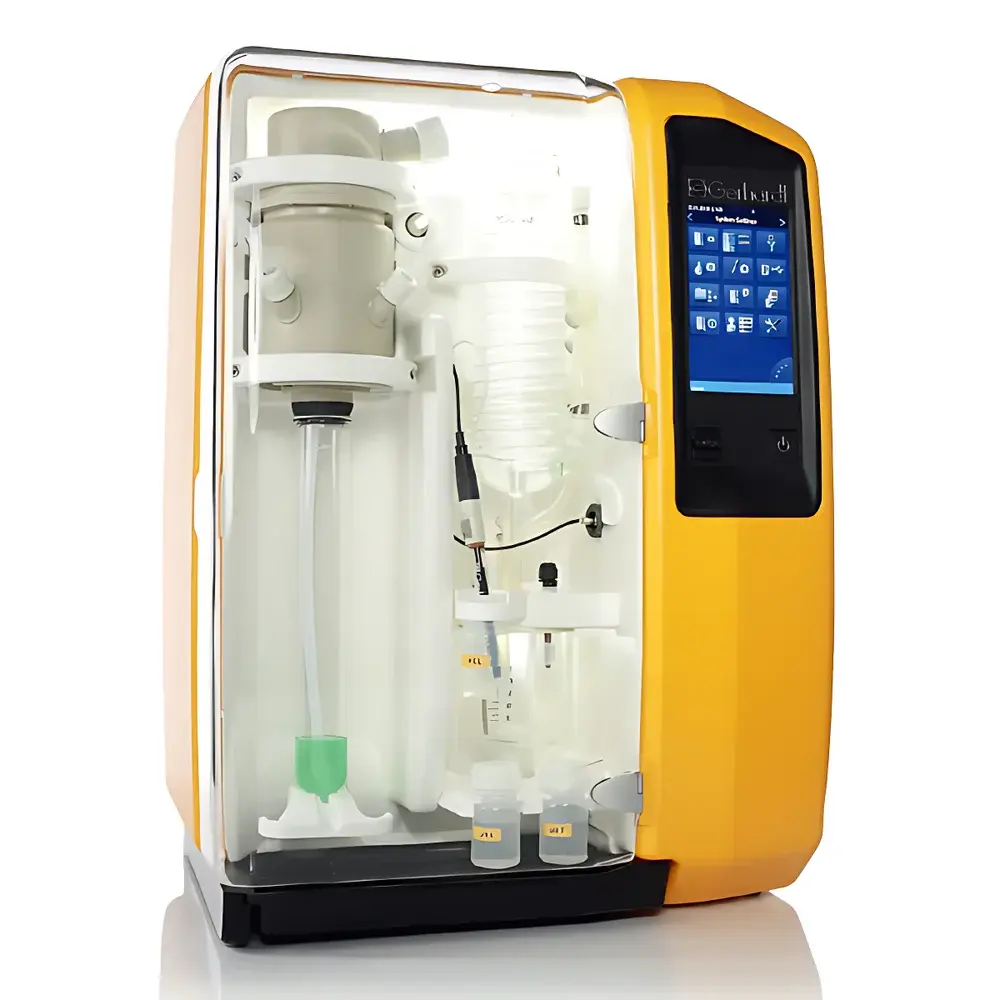
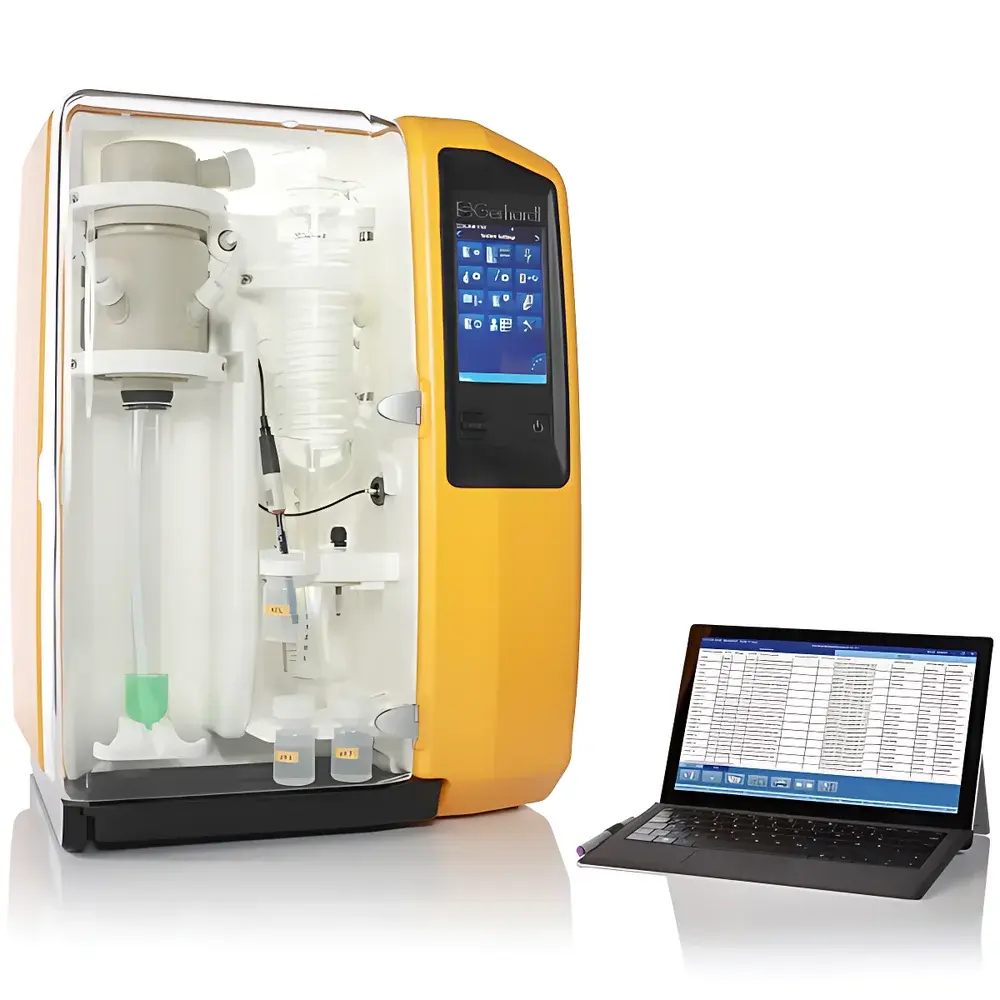
C. Gerhardt VAPODEST 550 Fully Automated Formaldehyde Analyzer for Food Analysis
| Brand | C. Gerhardt |
|---|---|
| Origin | Germany |
| Manufacturer | C. Gerhardt GmbH & Co. KG |
| Type | Imported Instrument |
| Model | VAPODEST 550 |
| Distillation Time | 12 min |
| Compliance | ISO 9001, ISO/IEC 17025, GLP |
| Connectivity | LAN, LIMS, Barcode Scanners, Balances, Printers |
| Software | Gerhardt MasterLab Suite |
| Safety Features | Real-time Coolant Flow Monitoring, Reagent Level Sensors, Steam Generator Status, Sample Tube Position Detection |
| Optional | Liquid Level Sensors for 5 L / 10 L / 20 L Reagent Carboys |
| Maintenance | Maintenance-free Steam Generator, Chemically Resistant Components |
| Operation Mode | Simultaneous Distillation and Titration, Standby Mode with Instant Restart |
Overview
The C. Gerhardt VAPODEST 550 is a fully automated, modular distillation–titration system engineered specifically for the quantitative determination of formaldehyde in food matrices according to standardized wet-chemical methods (e.g., AOAC Official Method 988.12, ISO 14402:2005, and national food safety regulations). It implements a validated, two-stage analytical principle: first, acid-catalyzed steam distillation under controlled temperature and pressure conditions to selectively volatilize formaldehyde from complex food homogenates; second, real-time potentiometric titration of the distillate using a high-stability pH composite electrode and precision ceramic dosing pumps. This integrated approach eliminates manual transfer steps, minimizes analyst exposure to hazardous reagents, and ensures metrological traceability throughout the entire workflow — from sample introduction to final concentration reporting in mg/kg or ppm.
Key Features
- Fully automated distillation–titration sequence with 12-minute cycle time, enabling high-throughput analysis without operator intervention.
- Simultaneous distillation and titration architecture reduces turnaround time per sample and eliminates intermediate handling of volatile distillates.
- Maintenance-free stainless-steel steam generator with thermal overload protection and automatic dry-run prevention.
- Chemically inert fluidic pathway constructed from PTFE, borosilicate glass, and ceramic components resistant to strong acids, alkalis, and oxidizing agents.
- Integrated safety monitoring: real-time detection of coolant flow interruption, reagent depletion (via optional level sensors), incorrect sample tube placement, and steam generator operational status.
- Intuitive touchscreen interface with context-sensitive guidance, preloaded method templates, and customizable “Favorites” list for rapid method recall.
- Energy-efficient standby mode with instant wake-up capability — no warm-up delay between analyses.
- Optimized water management system with adjustable flow control and automatic shut-off during idle periods.
Sample Compatibility & Compliance
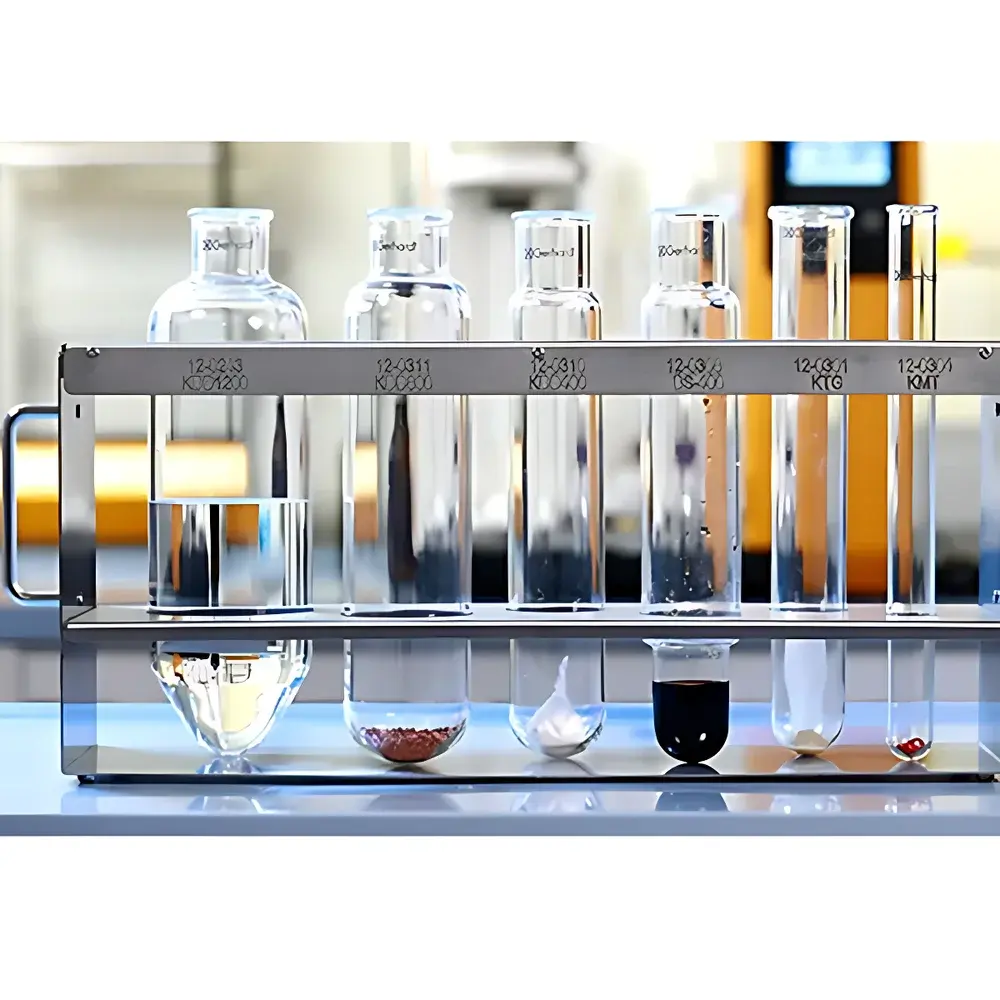
The VAPODEST 550 accommodates a broad range of food samples — including fish, seafood, tofu, noodles, dried fruits, and processed meat products — through configurable sample vessel options (e.g., 100 mL, 250 mL, and 500 mL digestion tubes and distillation flasks). Its design conforms to international quality and regulatory frameworks: data integrity meets ISO/IEC 17025:2017 requirements for testing laboratories; electronic records and audit trails align with GLP principles and FDA 21 CFR Part 11 expectations when used with MasterLab software; mechanical and electrical construction complies with IEC 61010-1 for laboratory equipment safety. Optional liquid level sensors support standard reagent carboys (5 L, 10 L, 20 L), eliminating manual pouring and reducing spill risk.
Software & Data Management
Gerhardt MasterLab Suite serves as the central platform for method development, instrument control, and data governance. It supports role-based user authentication with configurable access levels (operator, supervisor, administrator), full electronic signature capability, and immutable audit trails for all critical actions (method edits, result approvals, calibration events). Raw sensor data (pH, temperature, volume dispensed), calculated results, and metadata are stored in encrypted SQLite databases compliant with ISO 17025 clause 7.11. Seamless bidirectional integration with LIMS is achieved via ASTM E1384-compliant messaging or direct SQL export. External peripherals — analytical balances, barcode scanners, network printers — are auto-detected and synchronized without custom drivers.
Applications
The VAPODEST 550 is deployed in food safety laboratories conducting routine surveillance, import/export compliance testing, and R&D validation studies. Typical use cases include: quantification of exogenous formaldehyde adulteration in aquatic products; verification of residual formaldehyde following disinfection in food contact surfaces; stability testing of preservative systems in acidic beverages; and forensic analysis of unregulated formaldehyde-containing additives. Its robustness supports continuous operation in high-volume QC environments — up to 40+ samples per 8-hour shift — while maintaining inter-day reproducibility ≤3% RSD (n=10, fortified matrix controls).
FAQ
Does the VAPODEST 550 require daily pH electrode calibration?
No. The system uses a factory-calibrated, temperature-compensated pH composite electrode with built-in reference stability monitoring. Calibration is only required after electrode replacement or at scheduled intervals defined by internal QA protocols.
Can the instrument handle crystalline or highly viscous food samples?
Yes. The steam distillation module includes programmable soft-start heating profiles to prevent bumping or foaming, and optional ultrasonic pre-homogenization integration ensures consistent sample presentation.
Is method validation documentation available?
Yes. C. Gerhardt provides IQ/OQ documentation packages, method transfer guides, and performance qualification reports aligned with ISO/IEC 17025 Annex A.2 and USP Analytical Instrument Qualification.
What happens if cooling water supply is interrupted during analysis?
The system immediately halts distillation, triggers an audible/visual alarm, logs the event with timestamp and cause code, and maintains safe thermal hold until resolution — preventing condenser dry-out or distillate loss.
How is data integrity ensured during LIMS transmission?
All exported datasets include digital signatures, checksums, and embedded metadata (operator ID, instrument serial, method version, environmental conditions) to satisfy ALCOA+ principles (Attributable, Legible, Contemporaneous, Original, Accurate, Complete, Consistent, Enduring, Available).







