
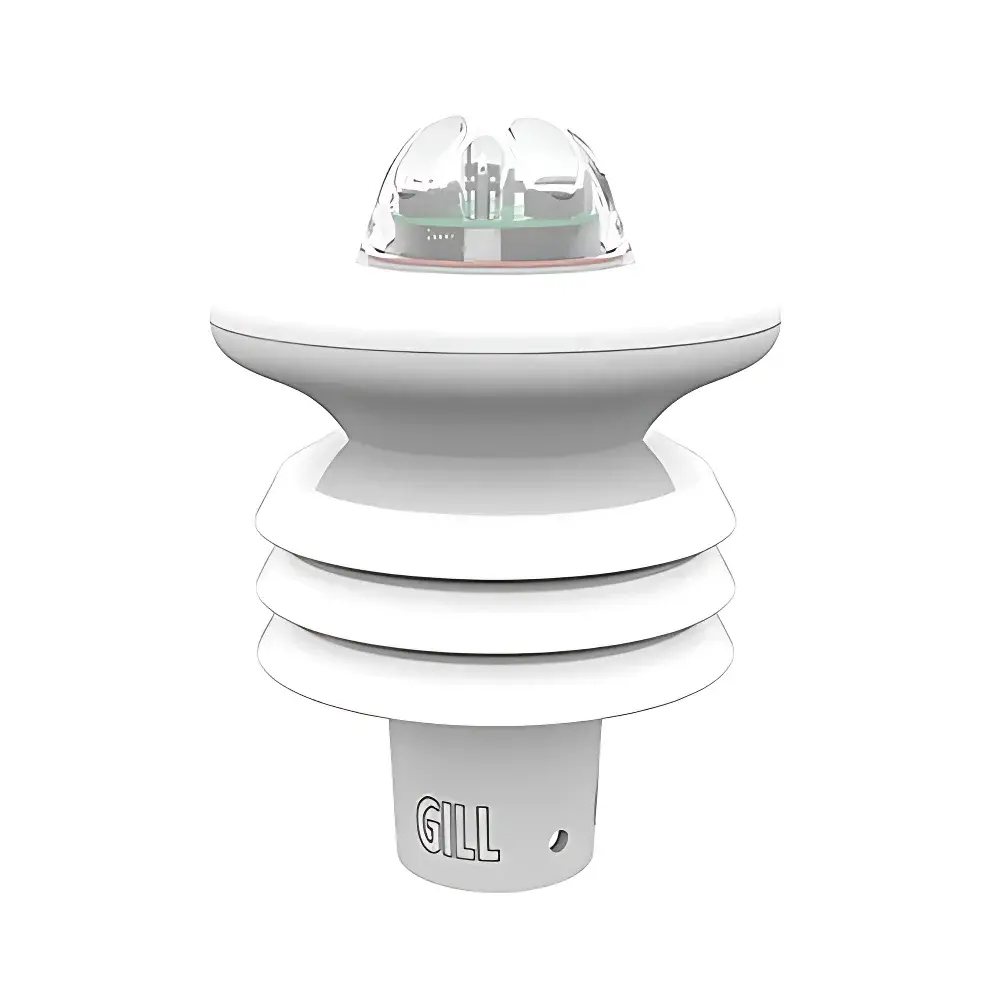
Gill GMX400 Compact Weather Station
| Brand | Gill |
|---|---|
| Origin | United Kingdom |
| Model | GMX400 |
| Instrument Type | Portable Weather Station |
| Enclosure | UV-stabilized, naturally ventilated triple-louvered radiation shield |
| Temperature/Humidity/Pressure Sensor | Integrated solid-state module |
| Rain Measurement | Optical rain sensor (0.08 mm resolution, heater-equipped) |
| Output Protocols | RS-232/422/485 (ASCII), SDI-12, NMEA 0183, MODBUS RTU, analog (optional) |
| Environmental Rating | IP66 |
| Compliance | CE, UKCA, RoHS |
| Power Supply | 6–30 VDC |
| Operating Temperature | −40 °C to +70 °C |
Overview
The Gill GMX400 Compact Weather Station is a fully integrated, maintenance-free environmental monitoring system engineered for long-term, high-reliability deployment in demanding outdoor conditions. Designed and manufactured in the United Kingdom by Gill Instruments—a leader in precision meteorological instrumentation—the GMX400 employs solid-state sensing technology across all core atmospheric parameters, eliminating mechanical wear and ensuring consistent metrological performance over extended service life. Unlike traditional rotating or tipping-bucket configurations, the GMX400 utilizes a patented optical rain sensor that detects individual raindrop impacts on a calibrated hydrophobic surface, enabling simultaneous quantification of rainfall intensity, cumulative depth, and drop size distribution. Temperature, relative humidity, and barometric pressure are measured via a thermally stabilized, multi-sensor module housed within a triple-louvered, UV-resistant, naturally ventilated radiation shield—designed per WMO guidance for minimizing solar radiation error and thermal lag. The station operates without moving parts, delivering robust data integrity under continuous exposure to wind, precipitation, dust, and extreme thermal cycling.
Key Features
- Solid-state temperature, humidity, and pressure sensing with no moving components, ensuring long-term calibration stability and minimal drift
- Optical rain sensor with 0.08 mm detection threshold, integrated heating element for snowmelt and dew suppression, and algorithmic emulation of standard tipping-bucket output formats
- Triple-louvered, naturally aspirated radiation shield compliant with WMO Class II specifications for solar radiation shielding and thermal equilibrium
- IP66-rated enclosure with UV-stabilized polycarbonate housing, suitable for permanent outdoor installation in coastal, industrial, and arid environments
- Multi-protocol digital interface supporting RS-232/422/485 (ASCII), SDI-12, NMEA 0183, MODBUS RTU, and optional analog voltage/current outputs for seamless integration into SCADA, PLC, and IoT telemetry infrastructures
- Wide operating temperature range (−40 °C to +70 °C) and low-power consumption (typ. 150 mW at 12 VDC), enabling battery- or solar-powered deployments
Sample Compatibility & Compliance
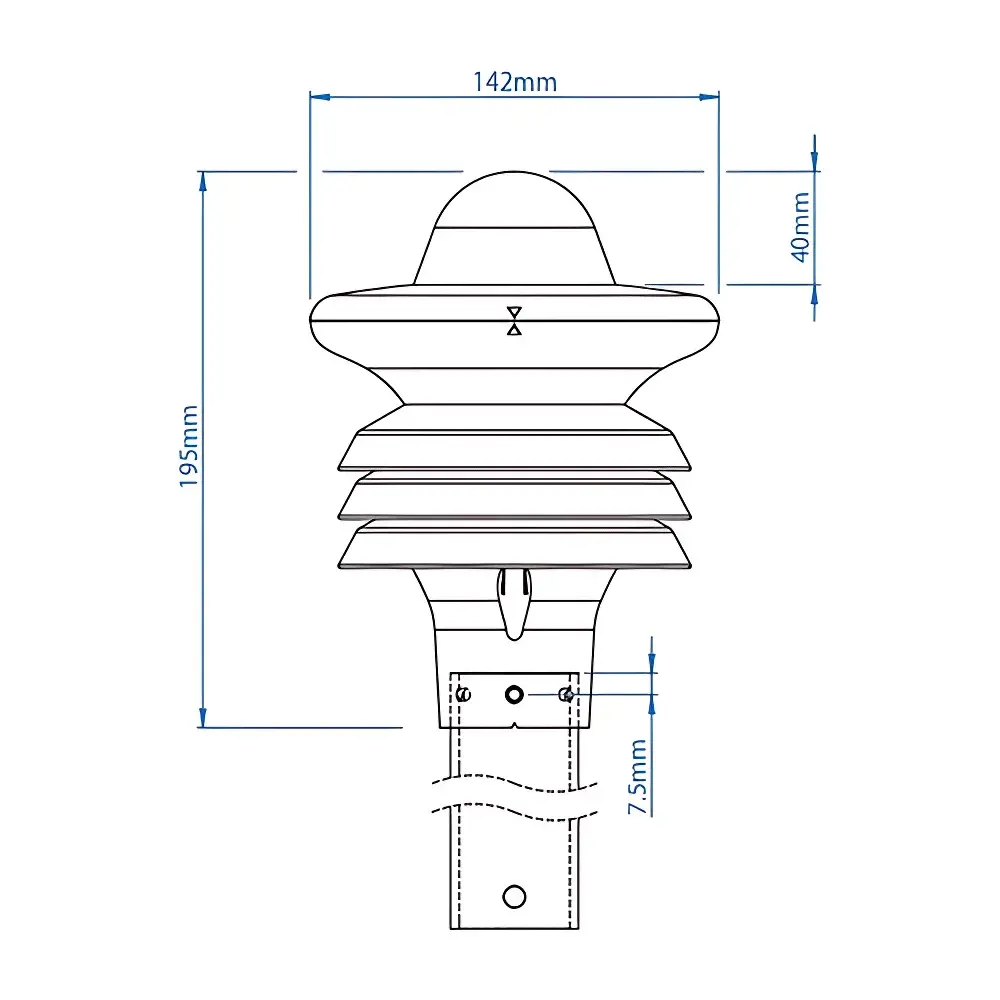
The GMX400 is designed for direct atmospheric sampling in unobstructed outdoor locations, including rooftops, masts, towers, and mobile platforms. Its compact footprint (190 × 190 × 320 mm) and lightweight construction (≈1.8 kg) facilitate rapid installation and repositioning without structural reinforcement. All sensors meet IEC 60529 (IP66), EN 61326-1 (EMC for industrial environments), and EN 61000-6-2/-6-3 standards. The optical rain sensor complies with WMO Guide to Meteorological Instruments and Methods of Observation (CIMO Guide, Chapter 7) for precipitation measurement accuracy under light-to-heavy rainfall regimes. Data logging and transmission protocols support audit-ready operation under GLP and ISO/IEC 17025 frameworks when paired with validated data acquisition systems.
Software & Data Management
The GMX400 outputs ASCII-formatted telemetry streams compatible with industry-standard data loggers (e.g., Campbell Scientific CR series, Onset HOBO, Delta-T Devices DL2e) and cloud-based environmental platforms (e.g., WeatherLink, ThingSpeak, AWS IoT Core). Gill provides free configuration utilities for baud rate, protocol selection, and output interval tuning (1 s to 24 h). When deployed in regulated environments—including energy infrastructure monitoring or transport safety systems—the station supports time-synchronized, timestamped data packets with checksum validation. Optional firmware upgrades enable NIST-traceable time stamping via GPS or PTP (Precision Time Protocol), satisfying requirements for data integrity in ISO 50001 energy management or EN 13791 structural health monitoring applications.
Applications
- Transportation Infrastructure: Real-time road surface condition forecasting, fog detection, and wind warning systems for bridges, tunnels, and rail corridors
- Agricultural Monitoring: Evapotranspiration modeling, frost prediction, and irrigation scheduling using calculated wet-bulb temperature, vapor pressure deficit, and accumulated rainfall
- Renewable Energy: Site assessment and performance optimization for solar PV (irradiance proxy via temperature/humidity trends) and small-wind generation (wind speed input optional via external anemometer)
- Coastal & Marine Operations: Corrosion risk assessment through combined chloride deposition modeling and microclimate trend analysis
- Smart Building Management: HVAC demand forecasting and natural ventilation control based on outdoor air enthalpy and dew point tracking
- Educational & Research Use: Field-based atmospheric science curricula, citizen science networks, and long-term climate trend studies requiring traceable, low-maintenance instrumentation
FAQ
Does the GMX400 require routine calibration or sensor replacement?
No scheduled recalibration is required within the first 24 months of operation. Gill recommends annual verification against reference standards per ISO/IEC 17025 procedures for regulatory compliance; the solid-state architecture ensures negligible sensor drift under normal operating conditions.
Can the optical rain sensor distinguish between rain, snow, and sleet?
The sensor detects hydrometeor impact dynamics and, when combined with concurrent air temperature and wet-bulb readings, supports algorithmic phase classification—though definitive snow accumulation measurement requires supplemental ultrasonic snow depth sensors.
Is the GMX400 compatible with Modbus TCP or MQTT?
The standard interface supports MODBUS RTU over RS-485. Integration with Modbus TCP or MQTT requires an external protocol gateway; Gill provides technical documentation for common third-party converters (e.g., Advantech ECU-1051, Siemens Desigo CC).
What mounting hardware is included?
The station ships with a universal U-bolt mast clamp (30–76 mm diameter), leveling base, and M6 stainless-steel fasteners. Pole-mounting kits and solar panel brackets are available as optional accessories.
How is data security handled during wireless transmission?
The GMX400 itself does not include built-in wireless radios. When interfaced with secure telemetry modules (e.g., LTE-M/NB-IoT gateways), end-to-end encryption, TLS 1.2+ handshaking, and certificate-based authentication must be implemented at the gateway layer per NIST SP 800-53 Rev. 5 controls.
Related Products







