
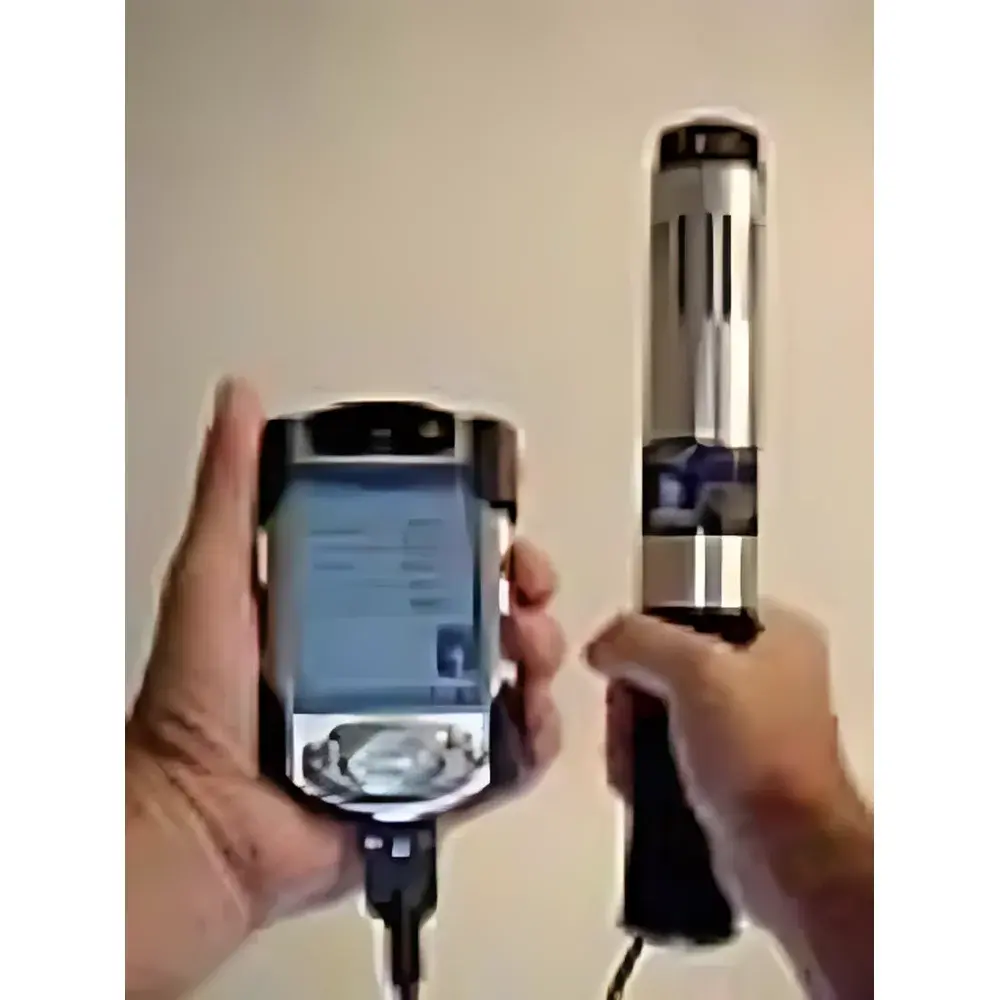
Graywolf GW-1000 Portable Multi-Gas Detector
| Origin | USA |
|---|---|
| Manufacturer Type | Authorized Distributor |
| Origin Category | Imported |
| Model | Graywolf GW-1000 |
| Pricing | Available Upon Request |
| Gas Detection Capabilities | SO₂ (0–20 ppm, 0.1 ppm res), NO₂ (0–20 ppm, 0.1 ppm res), NO (0–200 ppm, 1.0 ppm res), H₂S (0–200 ppm, 0.5 ppm res), HCN (0–100 ppm, 0.5 ppm res), HCl (0–30 ppm, 0.7 ppm res), NH₃ (0–100 ppm, 1 ppm res), Cl₂ (0–10 ppm, 0.1 ppm res), Ethylene Oxide (0–20 ppm, 0.1 ppm res), O₃ (0–1 ppm, 0.01 ppm res), CO₂ (0–10,000 ppm, ±3% rdg ±50 ppm), CO (0–500 ppm, ±2 ppm <50 ppm |
| Integrated Temperature Sensor | Yes |
| Modular Sensor Architecture | Up to 6 gas sensors per probe |
| Expandable Probe Options | TVOC, IAQ, Air Velocity, Airflow, Outdoor Air Intake, Cleanroom Particle Counting, Differential Pressure, Sound Level |
Overview
The Graywolf GW-1000 Portable Multi-Gas Detector is a field-deployable, PC-integrated environmental monitoring platform engineered for precision real-time measurement of toxic, combustible, and asphyxiant gases in occupational health, indoor air quality (IAQ), industrial hygiene, and remediation applications. Unlike conventional single-purpose handheld gas meters, the GW-1000 employs a modular probe architecture combined with an embedded Windows-based computing module—enabling simultaneous acquisition, time-synchronized logging, and on-device data visualization without external hardware. Its core measurement principle relies on electrochemical (EC), non-dispersive infrared (NDIR), and metal oxide semiconductor (MOS) sensor technologies, each selected and calibrated per ISO 17025-accredited procedures to ensure traceability to NIST standards. The system operates within ambient temperature ranges of −10 °C to +50 °C and relative humidity up to 95% non-condensing, supporting continuous operation for up to 8 hours on rechargeable lithium-ion battery power.
Key Features
- Modular multi-gas probe design accommodating up to six interchangeable electrochemical or NDIR sensors in a single housing—configurable for SO₂, NO₂, NO, H₂S, HCN, Cl₂, NH₃, CO, O₂, CO₂, O₃, ethylene oxide (EtO), and HCl
- Integrated high-resolution temperature sensor (±0.5 °C accuracy) co-located with gas sensing elements to support compensation algorithms and thermally stable readings
- Onboard Windows 10 IoT operating system enabling direct execution of Graywolf’s proprietary FieldView™ software suite—supporting real-time trend graphs, alarm threshold configuration, and customizable report generation
- USB-C and Bluetooth 5.0 connectivity for seamless synchronization with laboratory information management systems (LIMS) and enterprise environmental health & safety (EHS) platforms
- Ruggedized IP65-rated enclosure with drop-tested polycarbonate housing, compliant with MIL-STD-810G for shock, vibration, and dust resistance
- Calibration traceability documentation provided per sensor lot, including factory calibration certificates with uncertainty budgets aligned to ISO/IEC 17025 requirements
Sample Compatibility & Compliance
The GW-1000 is validated for use across diverse sampling environments including confined spaces, HVAC ducts, cleanrooms, wastewater treatment facilities, pharmaceutical manufacturing suites, and post-remediation verification sites. All gas sensors meet UL 2075 certification for combustible and toxic gas detectors and are CE-marked per EN 61000-6-2 (EMC immunity) and EN 61000-6-4 (EMC emissions). For regulated industries, the system supports audit-ready data integrity through optional 21 CFR Part 11-compliant user authentication, electronic signatures, and immutable audit trails when paired with Graywolf’s SecureLog™ server module. It also satisfies key provisions of OSHA 29 CFR 1910.120 (HAZWOPER), ISO 16000-23 (indoor air—determination of VOCs), and ASTM D6196 (selection of sorbents for VOC monitoring).
Software & Data Management
FieldView™ software provides full instrument control via intuitive touchscreen interface or remote desktop access. Raw sensor outputs are logged at user-selectable intervals (1 sec to 60 min) with timestamping synchronized to GPS or network time protocol (NTP). Export formats include CSV, PDF summary reports, and XML for integration into third-party analytics tools. Data encryption at rest (AES-256) and in transit (TLS 1.2+) ensures compliance with GDPR and HIPAA transmission requirements where applicable. Optional cloud-hosted data archiving enables centralized fleet management, cross-site comparative analysis, and automated regulatory submission workflows for EPA Tier II, TRI, or REACH reporting.
Applications
- Occupational exposure assessment per ACGIH TLVs® and OSHA PELs for short-term exposure limits (STEL) and time-weighted averages (TWA)
- Indoor air quality diagnostics—including VOC profiling during building commissioning, mold remediation verification, and post-construction off-gassing evaluation
- Hazardous materials response: rapid identification of chlorine, hydrogen cyanide, or phosgene leaks in chemical handling areas
- Pharmaceutical facility environmental monitoring: ethylene oxide sterilization chamber validation and residual gas clearance testing
- Wastewater infrastructure safety: hydrogen sulfide and oxygen deficiency detection in lift stations and digesters
- Energy audit support: CO₂-based demand-controlled ventilation (DCV) verification and combustion efficiency analysis
FAQ
Does the GW-1000 support third-party sensor integration?
No—only Graywolf-certified, factory-calibrated sensor modules are supported to maintain measurement integrity and regulatory compliance.
What is the recommended calibration frequency?
Bump testing prior to each day’s use is required; full span calibration every 30 days or after exposure to sensor-poisoning compounds (e.g., silicones, lead, sulfur compounds).
Can the device store historical data without cloud connectivity?
Yes—the internal 64 GB eMMC storage retains ≥12 months of compressed sensor logs at 1-minute intervals, with automatic overwrite protection for flagged alarm events.
Is the system compatible with explosion-proof enclosures?
The base unit is rated Class I, Division 2; intrinsically safe (IS) probe variants (UL 913 listed) are available upon request for Zone 1/21 hazardous locations.
How is firmware updated?
Updates are delivered via signed .pkg files through USB or secure OTA channels, requiring administrator-level credentials and cryptographic signature verification before installation.
Related Products







