
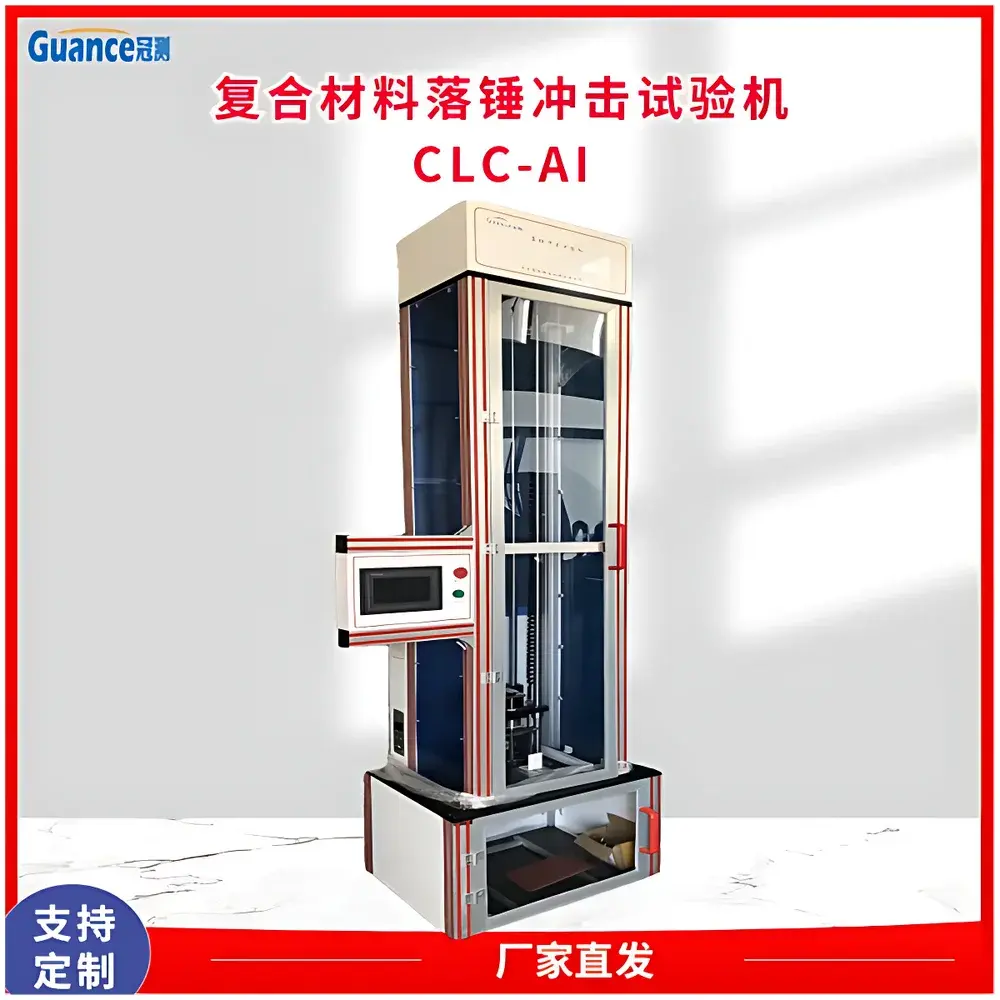
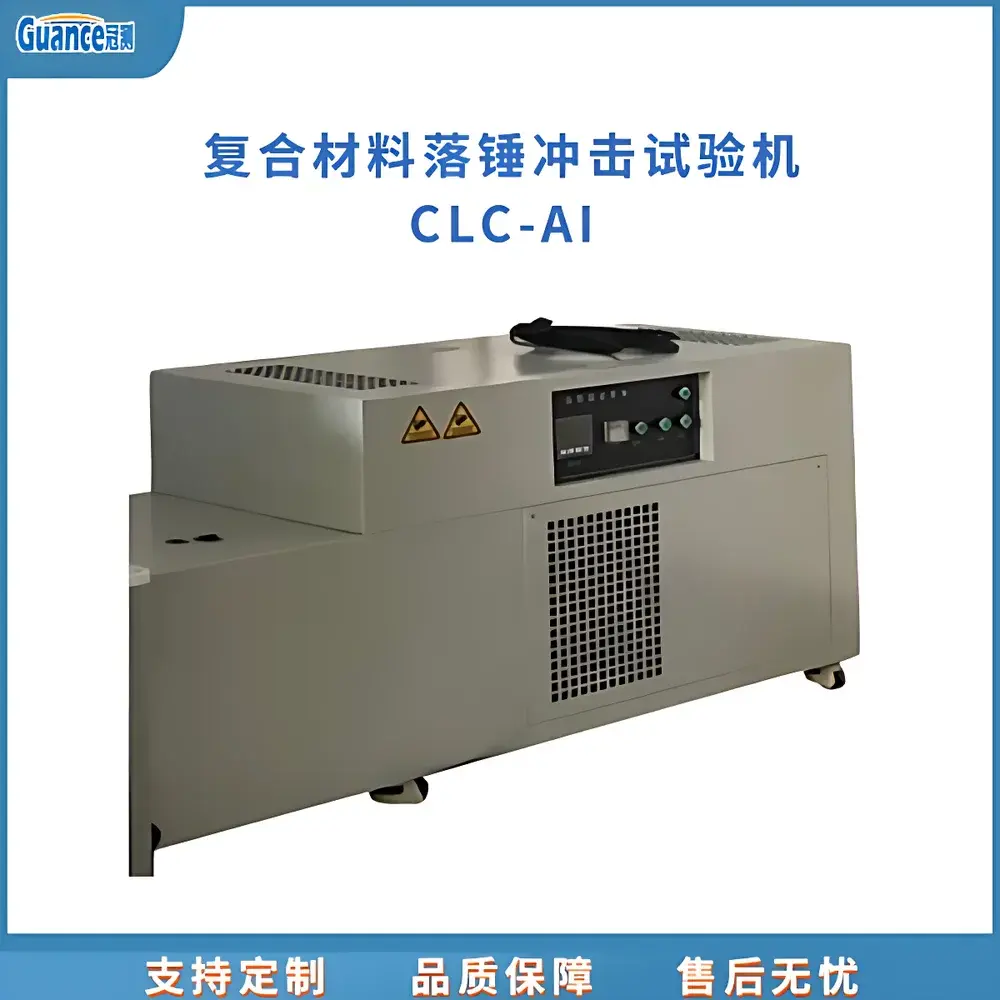
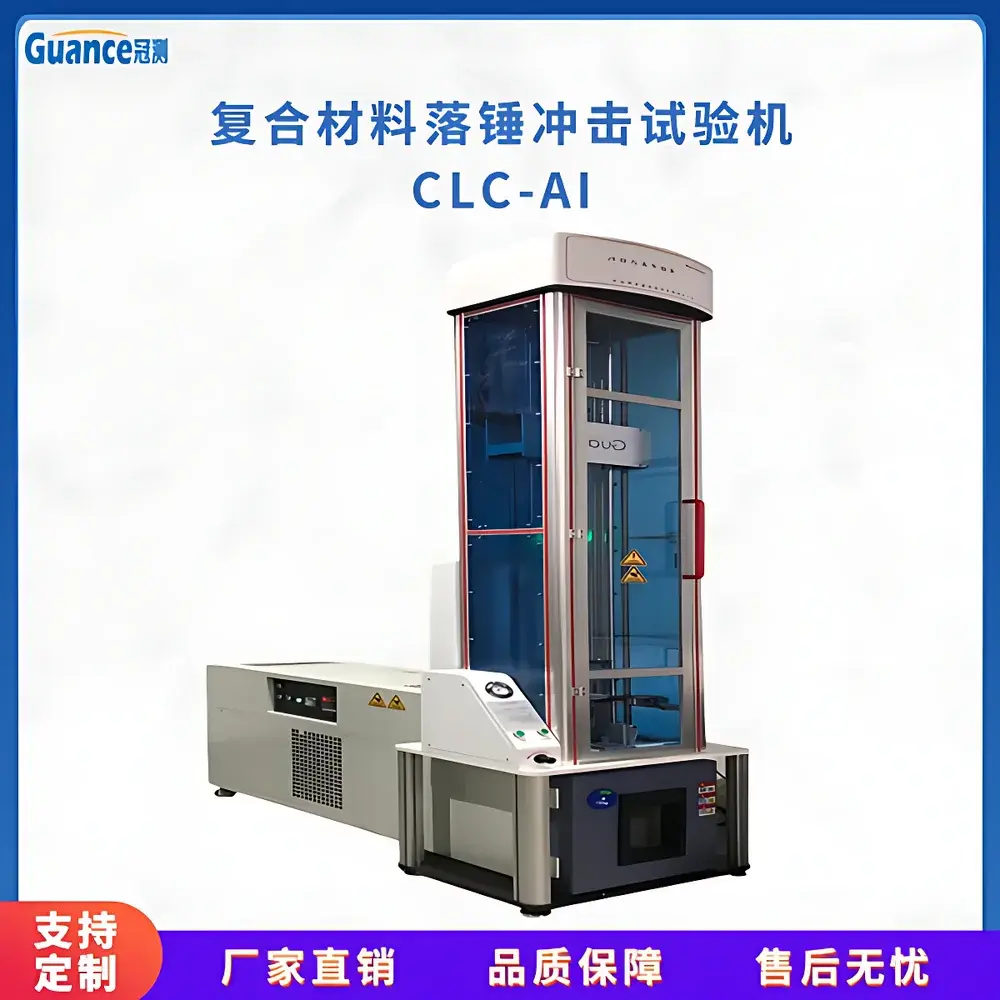

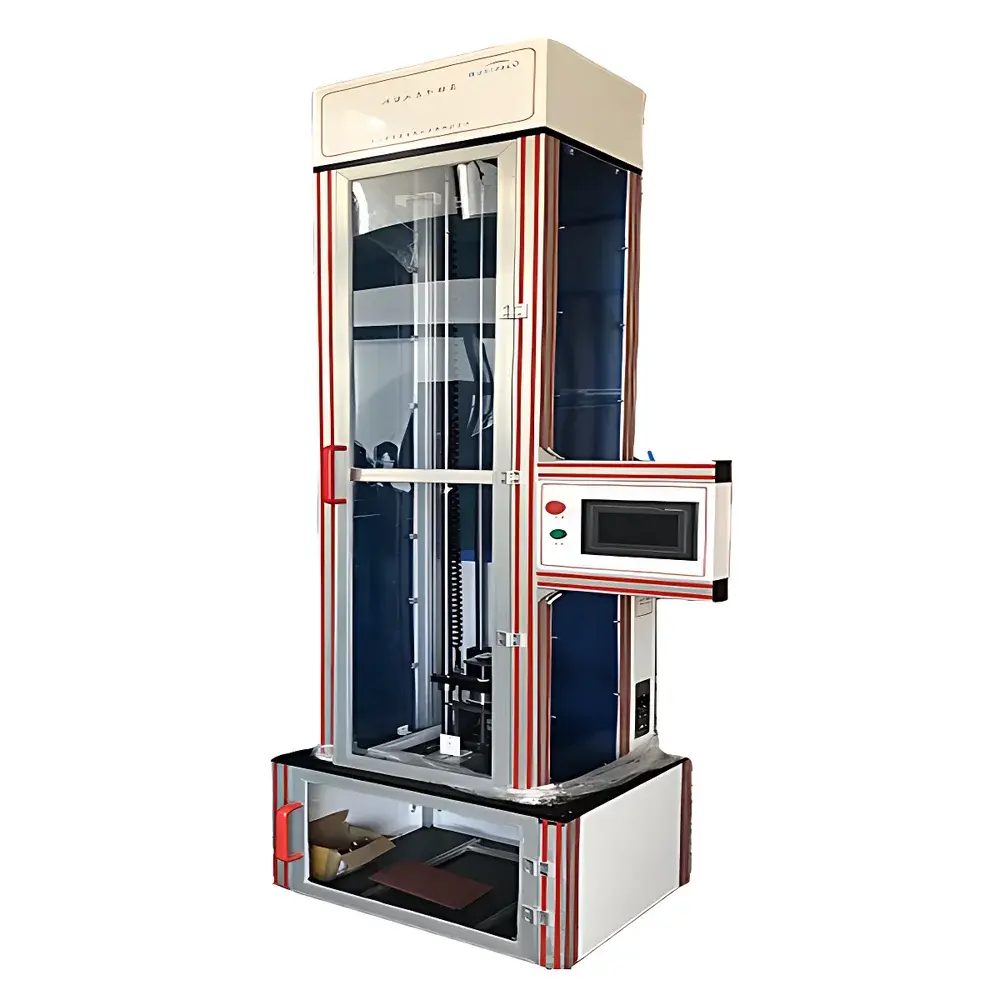
GuanCe CLC-AI3 Instrumented Drop-Weight Impact Tester for Composites
| Brand | GuanCe |
|---|---|
| Origin | Beijing, China |
| Manufacturer Type | Authorized Distributor |
| Product Category | Domestic |
| Model | CLC-AI3 |
| Quotation | USD 2,200 (FOB Beijing) |
| Instrument Type | Drop-Weight Impact Tester |
| Maximum Impact Energy | 0–150 J |
| Maximum Impact Velocity | 5.5 m/s |
| Hammer Mass Options | 2–10 kg (standard configurations: 5 kg, 15 kg, 20 kg) |
| Displacement Resolution | 0.01 mm |
| Crosshead Speed Range (for auxiliary positioning) | 0.01–1000 mm/min (infinitely adjustable) |
| Maximum Lift Height | 1500 mm |
| Dimensions (L×W×H) | 1200 × 700 × 2100 mm |
| Net Weight | 300 kg |
| Compliance | ISO 3127, ISO 6603, ISO 7765, ISO 8256, ISO 11343, PREN 6038, DIN 53373, ASTM D2444, ASTM D3763, ASTM D5628, ASTM D7136, ASTM D7192 |
Overview
The GuanCe CLC-AI3 Instrumented Drop-Weight Impact Tester is engineered for high-fidelity dynamic mechanical characterization of fiber-reinforced polymer (FRP) composites, sandwich structures, thermoplastic laminates, and hybrid material systems. It operates on the principle of instrumented drop-weight impact testing—where a precisely guided hammer of known mass is released from a controlled height to strike a specimen supported in standardized boundary conditions. Unlike conventional non-instrumented impact testers, the CLC-AI3 integrates high-frequency force transducers, optical displacement sensors, and synchronized high-speed data acquisition to capture the full time-history of impact force (F-t), displacement (δ-t), and velocity (v-t). This enables direct calculation of instantaneous kinetic energy, absorbed energy, dissipated energy, and damage initiation thresholds—critical parameters for assessing impact resistance, delamination tolerance, and energy-absorption efficiency in structural composites.
Key Features
- Instrumented measurement architecture with dual-sensor fusion: integrated piezoelectric load cell (±0.5% FS accuracy) and non-contact optical encoder (0.01 mm resolution) for simultaneous force and displacement tracking at up to 1 MHz sampling rate.
- Motorized hammer lift and auto-release mechanism with programmable release timing (±0.1 ms repeatability), eliminating manual handling variability and ensuring consistent impact initiation.
- Adjustable hammer mass system (2–10 kg standard; optional 15/20 kg configurations) with quick-change mounting interface and calibrated inertia compensation in software.
- Anti-rebound arrest system prevents secondary impact events by mechanically arresting the hammer within 50 ms post-first contact—ensuring single-impact fidelity per test cycle.
- Modular support fixture set compliant with ISO and ASTM standards: includes clamped-edge, simply-supported, and pin-loaded configurations for plates, beams, and coupons (up to 300 × 300 mm).
- Robust steel frame with vibration-damped base and precision linear guides ensures mechanical stability under high-energy impacts (up to 150 J) and long-term metrological consistency.
Sample Compatibility & Compliance
The CLC-AI3 accommodates flat composite specimens ranging from 50 × 50 mm to 300 × 300 mm and thicknesses from 0.5 mm to 50 mm—including carbon/epoxy, glass/polyester, aramid/phenolic, and bio-based fiber laminates. Its mechanical design and control logic conform to the essential requirements of ISO/IEC 17025-accredited testing laboratories. All test procedures and data reporting modules are structured to align with ISO 178, ASTM D7136 (for compression-after-impact), ASTM D7192 (for low-velocity impact response), and ISO 6603-2 (for plastic impact behavior). The system supports GLP-compliant audit trails, user-access logging, and electronic signature capability—facilitating regulatory submissions under FDA 21 CFR Part 11 where required.
Software & Data Management
The proprietary ImpactAnalysis v4.2 software provides real-time visualization and post-test quantification of key metrics including peak impact force (Fmax), maximum deflection (δmax), absorbed energy (Eabs), damage dissipation ratio (DDR), critical impact energy (Ec), and ductile-brittle transition threshold. Raw waveform data (F-t, δ-t, v-t) are exported in ASCII and HDF5 formats for third-party analysis in MATLAB, Python (NumPy/Pandas), or commercial FEA preprocessing tools. Calibration certificates traceable to NIM (National Institute of Metrology, China) are embedded in the software database, with automatic recalibration prompts based on usage cycles and environmental drift monitoring. Data integrity safeguards include write-once archival mode, version-controlled report templates, and encrypted backup to network drives or NAS devices.
Applications
- Quantifying low-velocity impact response of aerospace-grade CFRP panels per ASTM D7136 and Airbus AITM 1-0005.
- Evaluating interlaminar fracture toughness and delamination onset in hybrid laminates using energy partitioning models (e.g., modified R-curve analysis).
- Supporting material qualification for automotive B-pillars, battery enclosures, and EV crash structures under SAE J2937 and ISO 6487.
- Generating empirical databases for finite element model validation—particularly for progressive damage modeling in LS-DYNA and Abaqus/Explicit.
- Comparative assessment of toughening mechanisms (e.g., thermoplastic veils, nanofiber interleaves, z-pinning) via multi-hit impact sequences with automated energy ramping.
- Teaching laboratory use in advanced materials courses, enabling students to correlate microstructural features (fiber architecture, matrix toughness) with macro-scale impact metrics.
FAQ
What standards does the CLC-AI3 natively support?
The system includes pre-configured test templates and reporting formats for ISO 3127, ISO 6603-2, ASTM D7136, ASTM D7192, and DIN 53373. Custom protocol development is available upon request.
Can the system perform repeated impact testing at variable energies?
Yes—via programmable multi-step impact sequences with automatic hammer repositioning, energy adjustment (by height or mass), and inter-impact dwell time control (1–300 s).
Is third-party calibration certification included?
Each unit ships with a factory calibration certificate traceable to NIM (China), valid for 12 months. Optional UKAS or DAkkS-accredited calibration services are available.
What is the minimum resolvable impact energy increment?
With 0.01 mm displacement resolution and ±0.5% force transducer linearity, the system achieves ≤0.2 J effective energy resolution across the 0–150 J range.
Does the software comply with FDA 21 CFR Part 11 requirements?
Yes—audit trail logging, electronic signatures, role-based access control, and data immutability settings are fully implemented and configurable per site-specific SOPs.



