
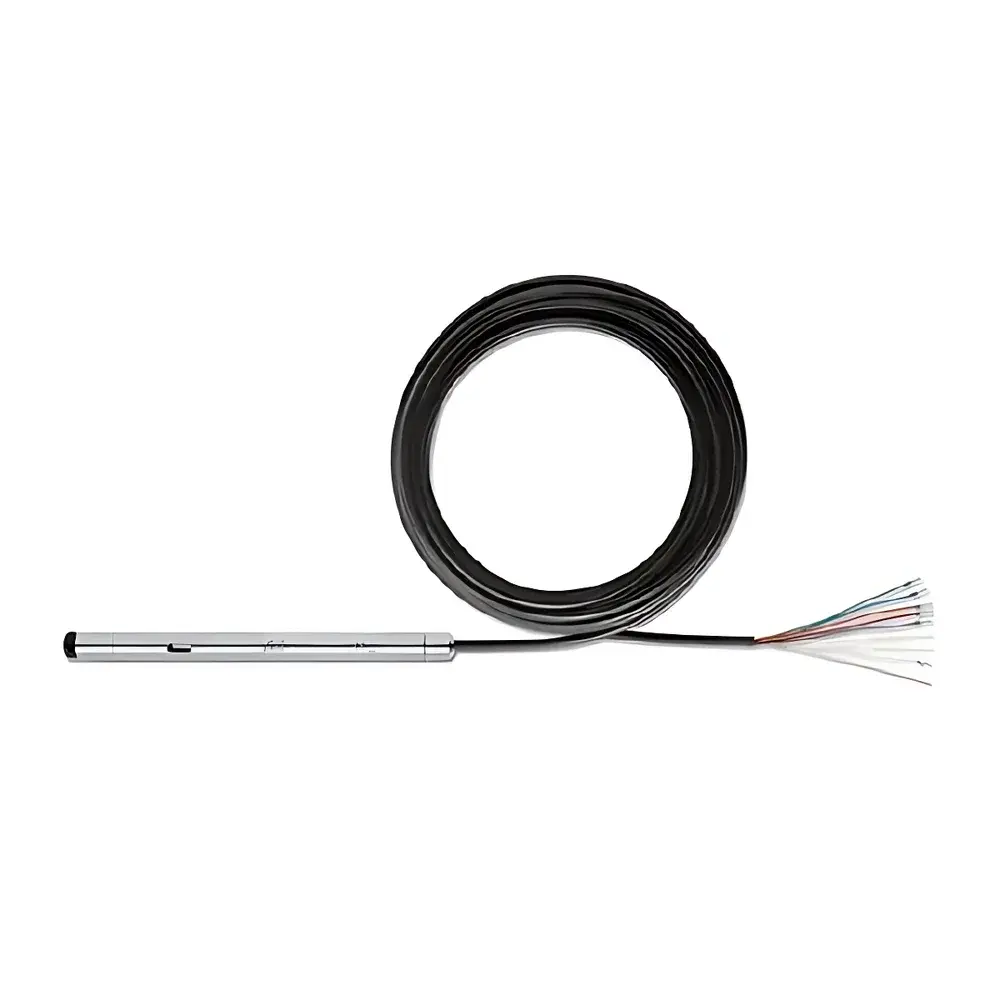
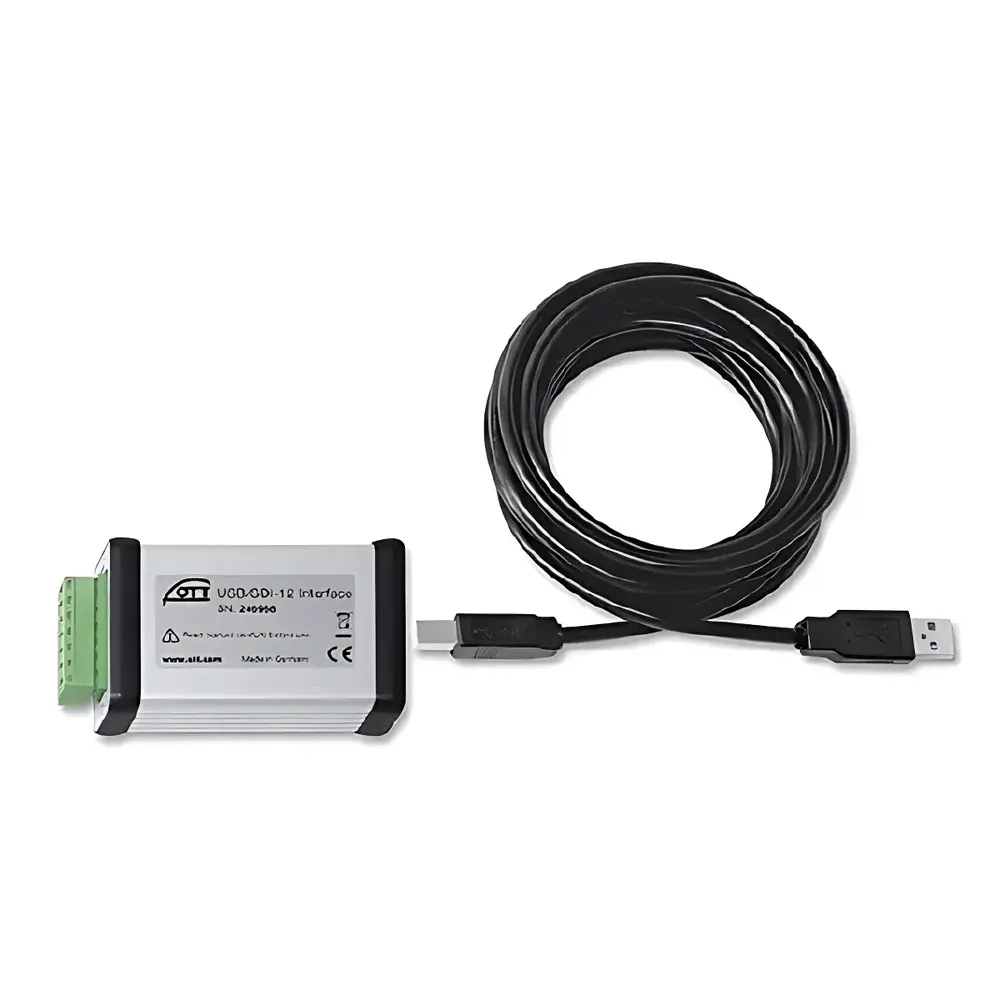
HACH OTT PLS-C Pressure-Based Water Level Sensor
| Brand | OTT Hydromet |
|---|---|
| Origin | Imported |
| Model | OTT PLS-C |
| Output Options | RS485 (SDI-12 protocol) or SDI-12 digital interface |
| Measurement Principle | Differential pressure via vented ceramic capacitive sensor with integrated temperature, density, altitude, and gravity compensation |
| Accuracy | ±0.05 mm water column |
| Overpressure Rating | 10× full scale |
| Enclosure | Laser-welded stainless steel housing |
| Cable | Kelvar-reinforced, submersible, long-term dimensional stability |
| Compliance | Designed for long-term unattended operation in accordance with ISO 4064-1 (water metering), ASTM D4044 (groundwater monitoring), and USGS NWIS data quality standards |
Overview
The HACH OTT PLS-C is a high-stability, vented pressure transducer engineered for precise, long-term water level measurement in both surface water and groundwater applications. It operates on the differential pressure principle: a dry, ceramic capacitive pressure sensor simultaneously measures absolute water pressure at the sensing diaphragm and ambient atmospheric pressure transmitted via an integrated, self-venting capillary tube. The onboard microprocessor computes the pressure difference—representing hydrostatic head—and converts it to water depth (mm or m) using real-time compensation algorithms. Unlike non-vented sensors, the PLS-C inherently eliminates barometric drift without requiring external barometer integration or post-processing corrections. Its measurement chain accounts for temperature-induced fluid density variation, local gravitational acceleration (adjusted for latitude and elevation), and thermal expansion effects within the sensor cavity—ensuring metrological traceability across diverse geographical and climatic conditions.
Key Features
- Dry ceramic capacitive sensing element with no oil fill or gel medium—eliminates zero-point drift, hysteresis, and long-term calibration drift over decades of deployment.
- Integrated vented capillary system with atmospheric reference path ensures continuous, passive barometric compensation without moving parts or maintenance.
- Onboard microprocessor performs real-time compensation for water temperature, local gravity (g), and fluid density—enabling direct output of true geometric water depth independent of seasonal or regional environmental shifts.
- Laser-welded 316L stainless steel pressure housing rated IP68 (continuous submersion up to 100 m), fully sealed against moisture ingress and chemical corrosion.
- Kelvar®-reinforced polyurethane cable provides exceptional tensile strength, UV resistance, and dimensional stability under prolonged immersion—no creep or elongation observed after >10 years in field trials.
- 10× overpressure rating protects against transient hydraulic shocks, pump surges, or ice loading without sensor damage or recalibration requirement.
- Dual-output capability: configurable analog 4–20 mA loop (2-wire, HART-compatible) and digital RS485/SDI-12 interface supporting simultaneous transmission of water level, temperature, and optional conductivity (when paired with OTT CTD modules).
Sample Compatibility & Compliance
The OTT PLS-C is validated for continuous immersion in freshwater, brackish water, and low-conductivity groundwater environments. It complies with the mechanical and environmental requirements of IEC 60529 (IP68), EN 61326-1 (EMC for industrial measurement equipment), and ISO 9001-certified manufacturing processes. Its measurement methodology aligns with USGS Recommended Protocols for Continuous Water-Level Monitoring (TWRI Book 4, Chapter A2), EPA Method 100.2 (Groundwater Monitoring), and ISO 4064-1 Annex B for static head measurement uncertainty budgeting. The device supports GLP/GMP-compliant data acquisition when integrated with HACH DataTrac or third-party SCADA systems featuring audit-trail logging and electronic signature capability per FDA 21 CFR Part 11.
Software & Data Management
Digital outputs conform to SDI-12 v1.4 specification, enabling plug-and-play interoperability with Campbell Scientific CR-series, Onset HOBO, and other SDI-12–compatible data loggers. The embedded firmware supports user-configurable sampling intervals (1 min to 24 h), burst-mode logging, and alarm-triggered high-frequency capture. All raw sensor values—including compensated water level (mm), internal thermistor reading (°C), and diagnostic flags—are timestamped with millisecond precision. When deployed with HACH’s AquaSuite™ software or compatible platforms, data streams are automatically validated against physical plausibility thresholds (e.g., rate-of-change limits, temperature-density consistency checks) and flagged for review prior to ingestion into cloud-based hydrometric databases such as USGS NWIS or national water information systems.
Applications
- Permanent installation in rivers, lakes, reservoirs, and tidal estuaries for flood forecasting and hydrologic modeling.
- Long-term groundwater monitoring wells (including multi-level piezometers) for aquifer response analysis and regulatory compliance reporting (e.g., EU WFD, US Safe Drinking Water Act).
- Urban stormwater infrastructure monitoring—combined sewer overflow (CSO) basins, retention ponds, and pump station wet wells.
- Glacial meltwater and periglacial hydrology studies where temperature gradients and variable gravity fields necessitate rigorous compensation.
- Calibration reference for acoustic or radar-based water level sensors in cross-validation deployments.
FAQ
How does the PLS-C compensate for changes in local gravity?
The sensor’s firmware applies the International Gravity Formula (IGF 1980) using user-input latitude and elevation to adjust the conversion factor between pressure (Pa) and water column height (m), ensuring metrological accuracy across global deployment sites.
Is the vented capillary susceptible to clogging or moisture ingress?
No—the capillary is a sealed, gas-permeable Teflon membrane system that allows only air molecules to pass; liquid water, dust, and salts are excluded by molecular size exclusion and hydrophobic barrier design.
Can the PLS-C be used in saline or seawater environments?
It is rated for low-salinity applications (<10,000 µS/cm); for marine use, consult OTT Hydromet’s PLS-S variant with titanium housing and specialized electrolyte compensation.
What is the recommended recalibration interval?
Under stable environmental conditions and proper handling, OTT recommends verification every 24 months against NIST-traceable deadweight tester or certified pressure standard—field drift remains typically <0.1 mm/year based on 15-year operational datasets.
Does the 4–20 mA output include temperature compensation?
Yes—the analog output reflects fully compensated water level; temperature is measured independently and used internally for density and sensor linearity correction, but is not transmitted over the analog loop unless configured via HART command.
Related Products







