
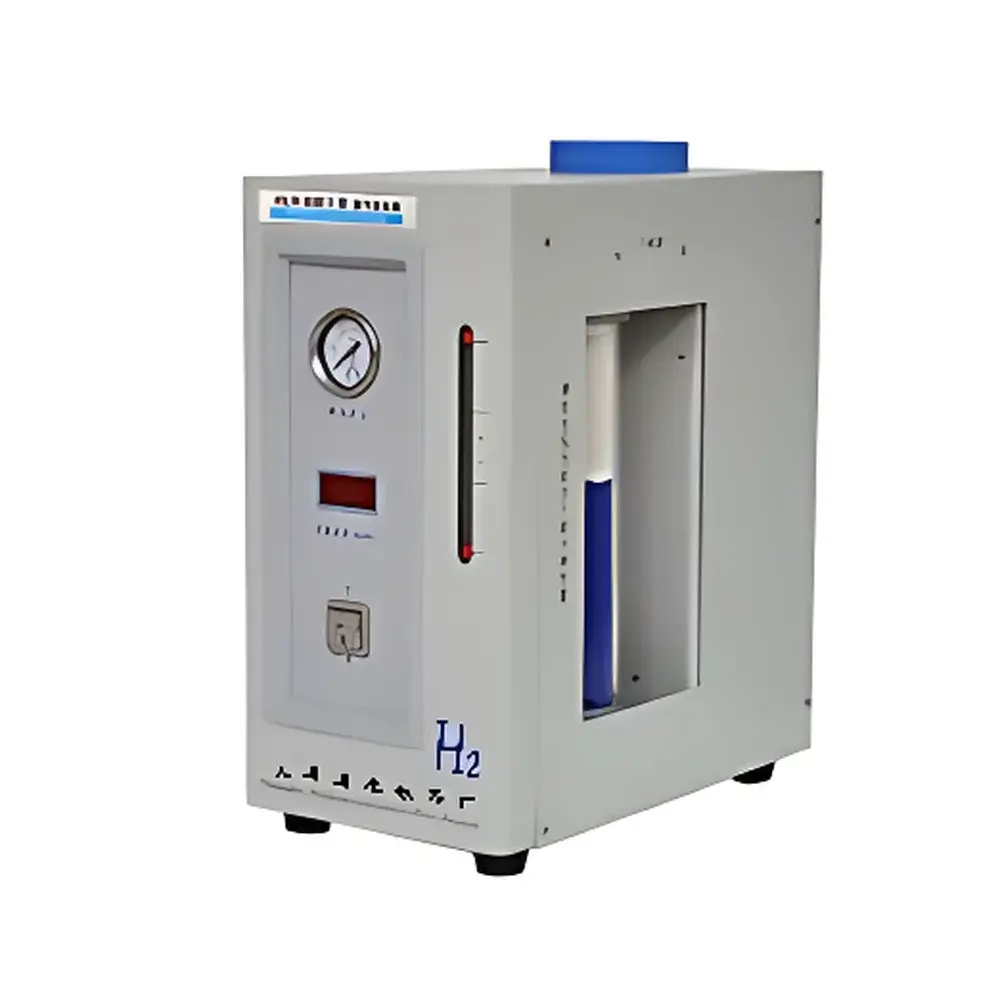
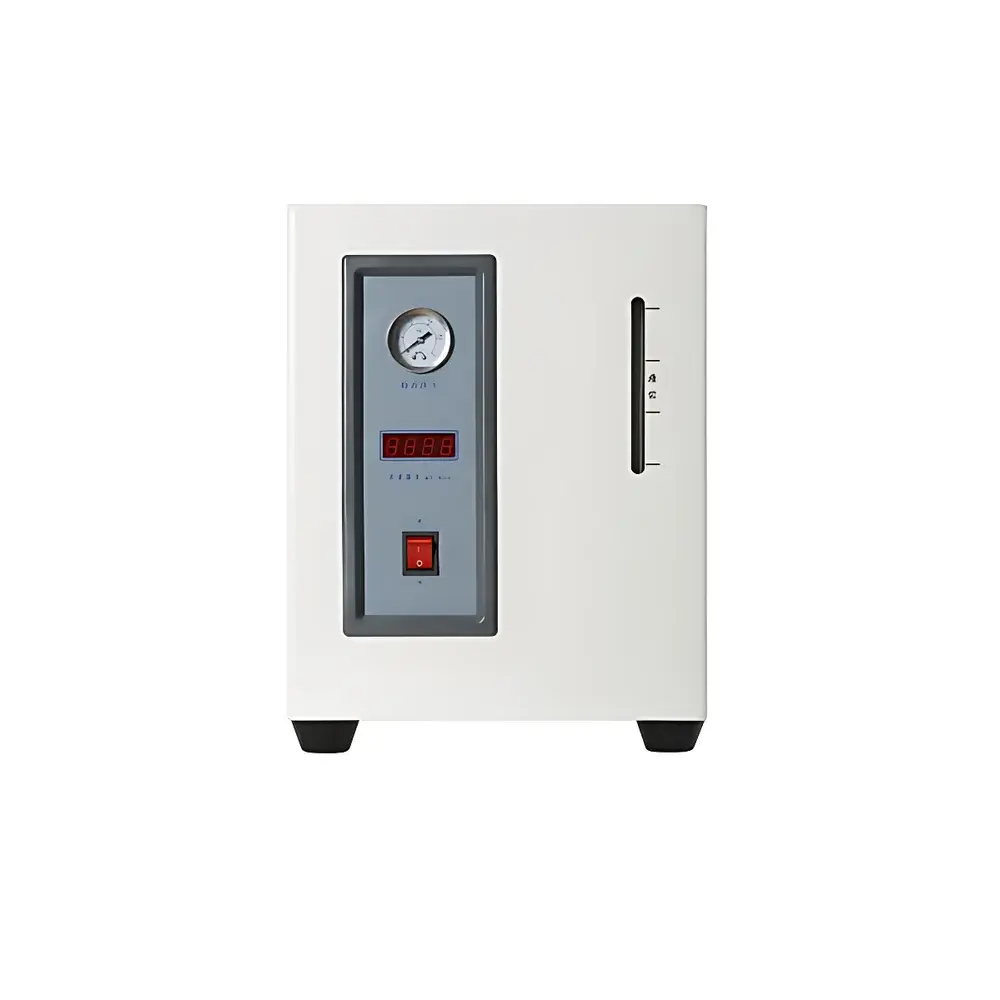
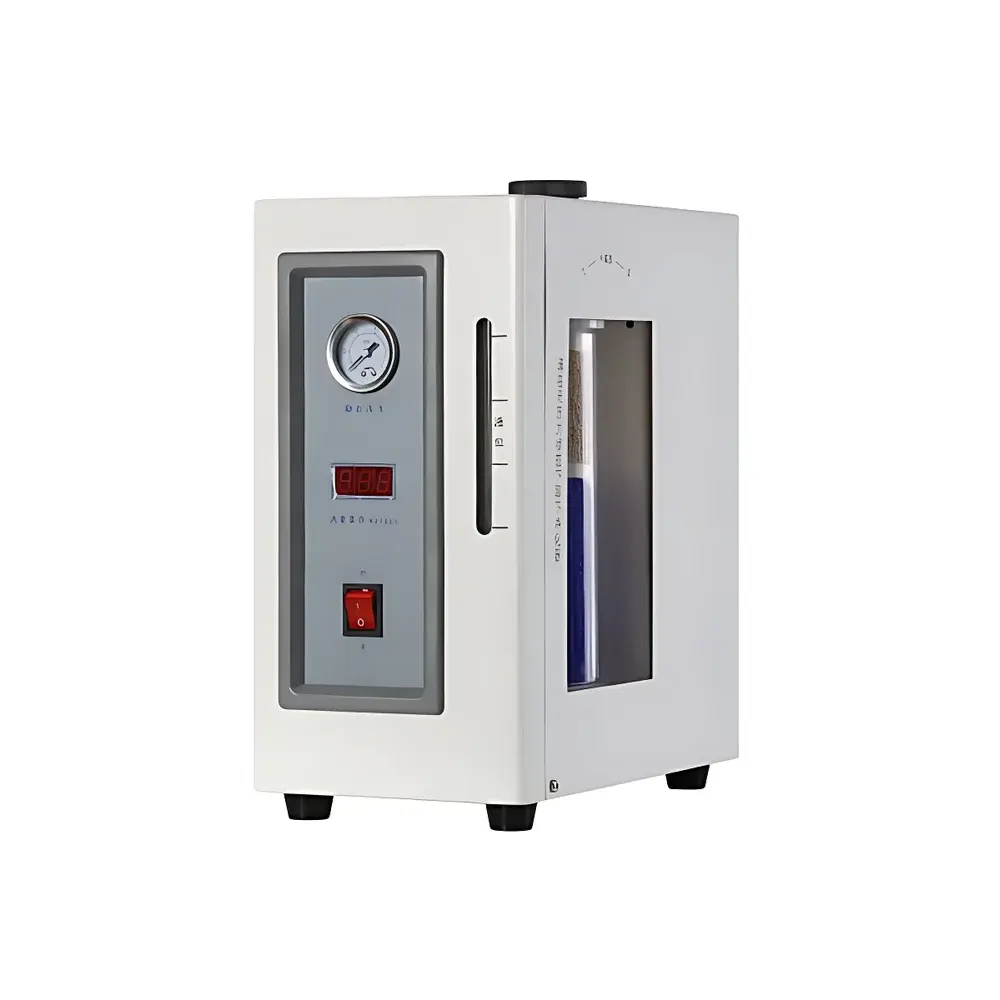
Haileong HLH-500II Hydrogen Generator
| Brand | Haileong |
|---|---|
| Origin | Shanghai, China |
| Manufacturer Type | Authorized Distributor |
| Country of Origin | China |
| Model | HLH-500II |
| Price Range | USD 1,400–2,800 (FOB Shanghai) |
| Hydrogen Generation Principle | PEM-free Alkaline Electrolysis of Deionized Water |
| Output Flow Rate | 0–500 mL/min |
| Output Pressure | 0–0.4 MPa (factory-set at 0.3 MPa) |
| Hydrogen Purity | 99.999% (v/v, measured by online thermal conductivity detection) |
| Power Consumption | 200 W |
| Pressure Stability Accuracy | < 0.0001 MPa |
| Electrolyte | KOH solution (single-fill design, replenishment only with distilled/deionized water) |
| Gas Path Material | Electropolished 316L stainless steel tubing, ultrasonically cleaned |
| Safety Features | Dual-stage overpressure cutoff, anti-backflow valve, real-time leak monitoring |
| Warranty | 1-year full system |
Overview
The Haileong HLH-500II Hydrogen Generator is a benchtop alkaline electrolysis-based gas supply system engineered for continuous, on-demand hydrogen production in analytical laboratories. It employs a membrane-free, liquid-electrolyte (KOH) alkaline electrolysis process—distinct from proton exchange membrane (PEM) systems—to split deionized water into high-purity H₂ and O₂ gases. The core reaction occurs within a cylindrical, thermally stabilized electrolytic cell constructed with imported noble-metal-coated electrodes, ensuring consistent current efficiency and minimized voltage drift over extended operation. Designed specifically to replace high-pressure hydrogen cylinders in gas chromatography (GC), GC-MS, and other hydrogen-dependent instrumentation, the HLH-500II delivers ultra-high-purity hydrogen (99.999% v/v) at flow rates scalable from zero to 500 mL/min and pressures up to 0.4 MPa. Its pressure-regulated output maintains stability within ±0.0001 MPa—critical for retention time reproducibility in capillary GC methods. All wetted gas-path components are fabricated from electropolished 316L stainless steel and subjected to ultrasonic cleaning per ASTM F1372-22 standards, eliminating particulate shedding and minimizing adsorption artifacts.
Key Features
- Single-fill alkaline electrolyte system: Pre-charged with high-purity KOH; routine maintenance requires only periodic top-up with distilled or deionized water—no electrolyte replacement needed during standard operation.
- Patented anti-backflow architecture: A dual-stage mechanical and pressure-differential check valve prevents condensate or electrolyte migration into connected instruments, eliminating risk of column contamination or detector damage.
- Thermally regulated electrolyzer: Integrated temperature stabilization circuitry maintains optimal cell operating temperature (75–85 °C), enhancing Faraday efficiency and extending electrode service life beyond 8,000 operational hours.
- Dual-stage purification: Integrated molecular sieve and palladium-doped copper catalyst beds remove residual moisture, oxygen, and trace hydrocarbons—ensuring compliance with ASTM D7622-21 purity specifications for GC carrier gas.
- Fail-safe pressure management: Independent mechanical overpressure relief (0.45 MPa setpoint) and electronic pressure cutoff (0.41 MPa) provide redundant protection aligned with ISO 22847-1:2021 safety requirements for laboratory gas generators.
Sample Compatibility & Compliance
The HLH-500II is compatible with all major GC and GC-MS platforms requiring ultra-high-purity hydrogen as carrier, fuel, or make-up gas—including Agilent, Thermo Fisher Scientific, Shimadzu, and PerkinElmer systems. Its output meets or exceeds the hydrogen quality requirements defined in USP , EP 2.5.27, and ISO 8573-1:2010 Class 1 for particle count, dew point (−70 °C), and total hydrocarbon content (<0.1 ppmv). The generator’s control firmware supports audit trail logging per FDA 21 CFR Part 11 when integrated with compliant LIMS environments. Electrical safety complies with IEC 61010-1:2010, and CE marking is valid under the EU Machinery Directive 2006/42/EC.
Software & Data Management
The HLH-500II operates via embedded microcontroller with local LED interface (no PC dependency). Real-time parameters—including flow rate, outlet pressure, cell temperature, and cumulative runtime—are displayed and logged internally for ≥30 days. Optional RS-232 or analog 4–20 mA outputs enable integration into centralized lab monitoring systems (e.g., DeltaV, LabVantage) for automated calibration tracking and preventive maintenance scheduling. Event logs record all safety interventions (e.g., overpressure event timestamp, anti-backflow activation), supporting GLP-compliant instrument qualification (IQ/OQ/PQ) documentation.
Applications
- Carrier gas for capillary GC analysis of volatile organic compounds (VOCs), pesticides, and residual solvents per ICH Q2(R2) guidelines.
- Fuel gas for flame ionization detectors (FID) and helium ionization detectors (HID), delivering stable baseline and linear response across 10⁶ dynamic range.
- Make-up gas for electron capture detectors (ECD) and nitrogen-phosphorus detectors (NPD), reducing noise and improving signal-to-noise ratio.
- Hydrogen source for catalytic hydrogenation studies in synthetic chemistry labs, where cylinder-free operation enhances workflow continuity and reduces storage hazards.
- On-site supply for portable hydrogen sensors and fuel cell test benches requiring certified 99.999% purity feedstock.
FAQ
What type of water is required for operation?
Deionized or distilled water with resistivity ≥15 MΩ·cm is mandatory. Tap water or softened water will cause rapid scaling and irreversible electrolyzer degradation.
Can the HLH-500II supply multiple GC instruments simultaneously?
Yes—provided total demand remains ≤500 mL/min and downstream pressure drop across manifolds is compensated via calibrated regulators; recommended maximum branch count is three.
How often does the electrolyte require servicing?
The KOH electrolyte is pre-filled for life-of-cell operation; only distilled water top-up is needed every 7–10 days under continuous 500 mL/min use.
Is the hydrogen output suitable for GC-MS applications?
Yes—the 99.999% purity, combined with sub-ppb oxygen and moisture removal, satisfies the stringent carrier gas specifications for quadrupole and triple-quadrupole mass spectrometers.
What documentation is provided for regulatory compliance?
Factory calibration certificate, CE Declaration of Conformity, electrical safety test report, and a complete PQ protocol template aligned with ISO/IEC 17025:2017 are included with shipment.



