
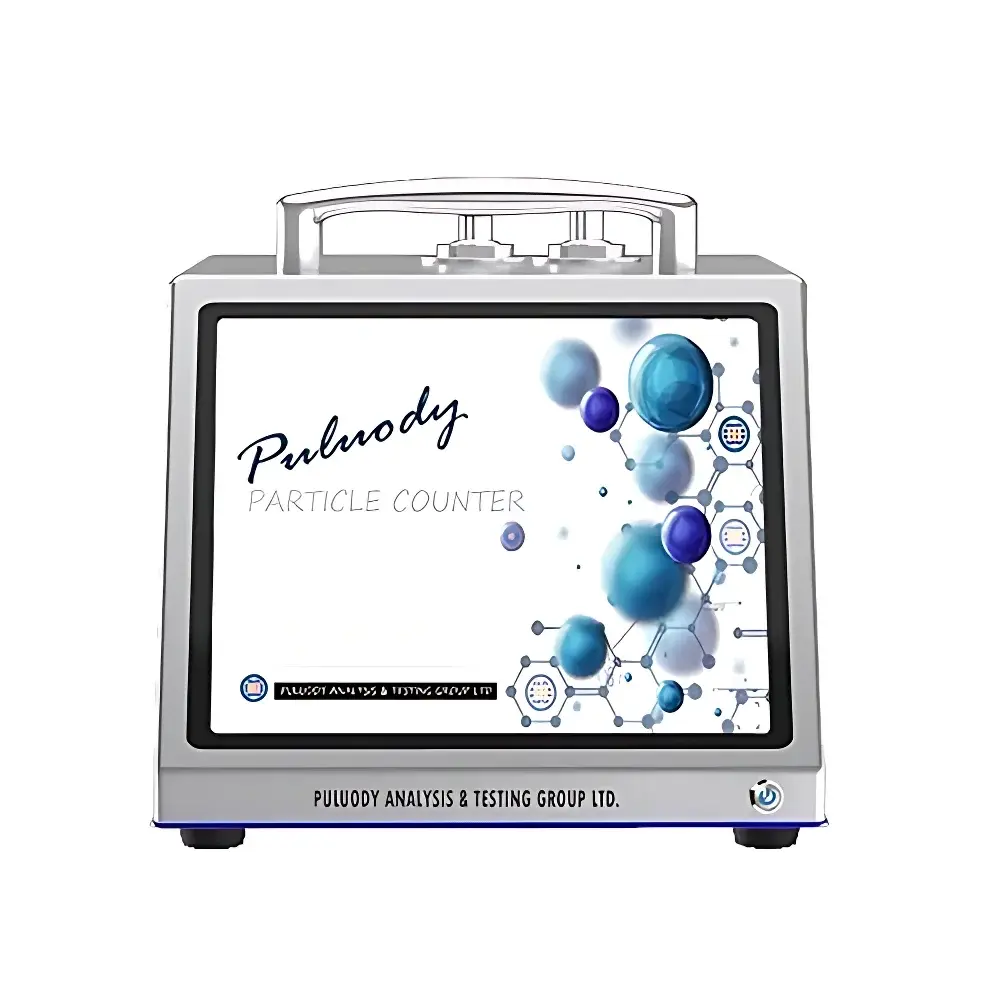
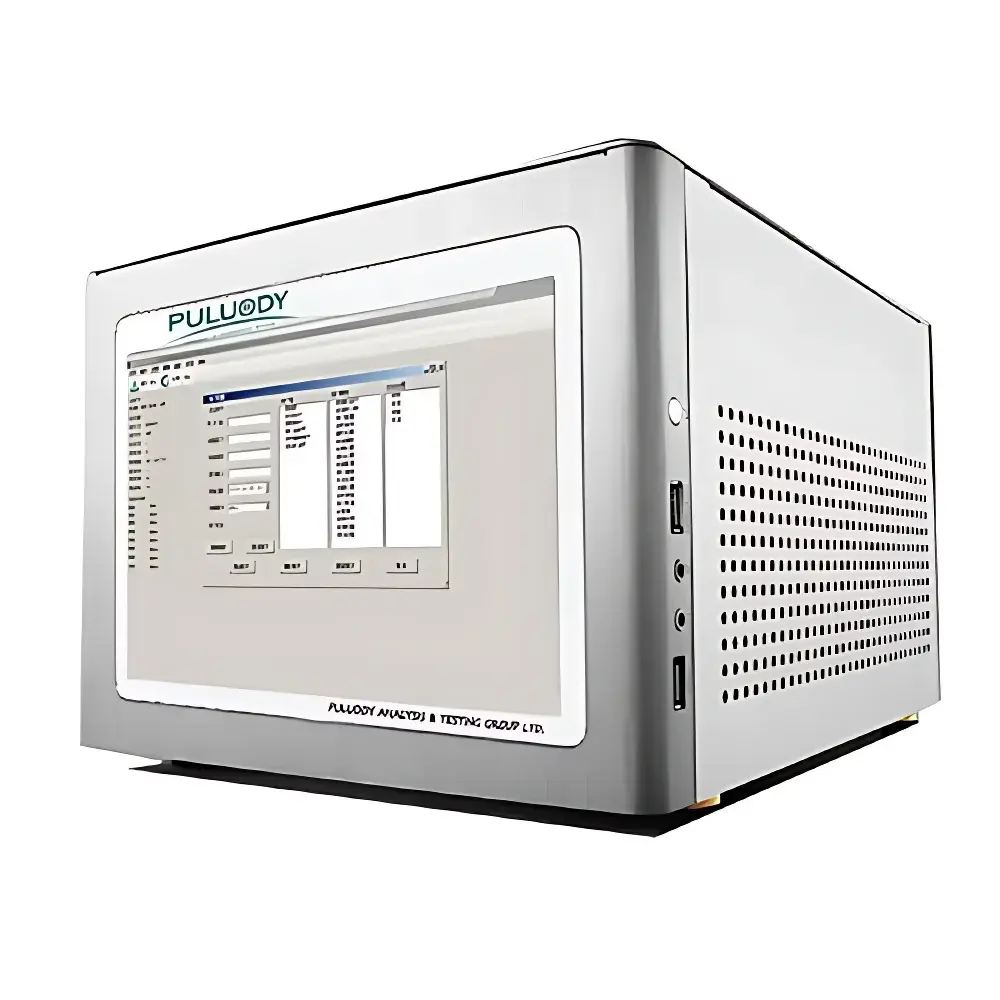
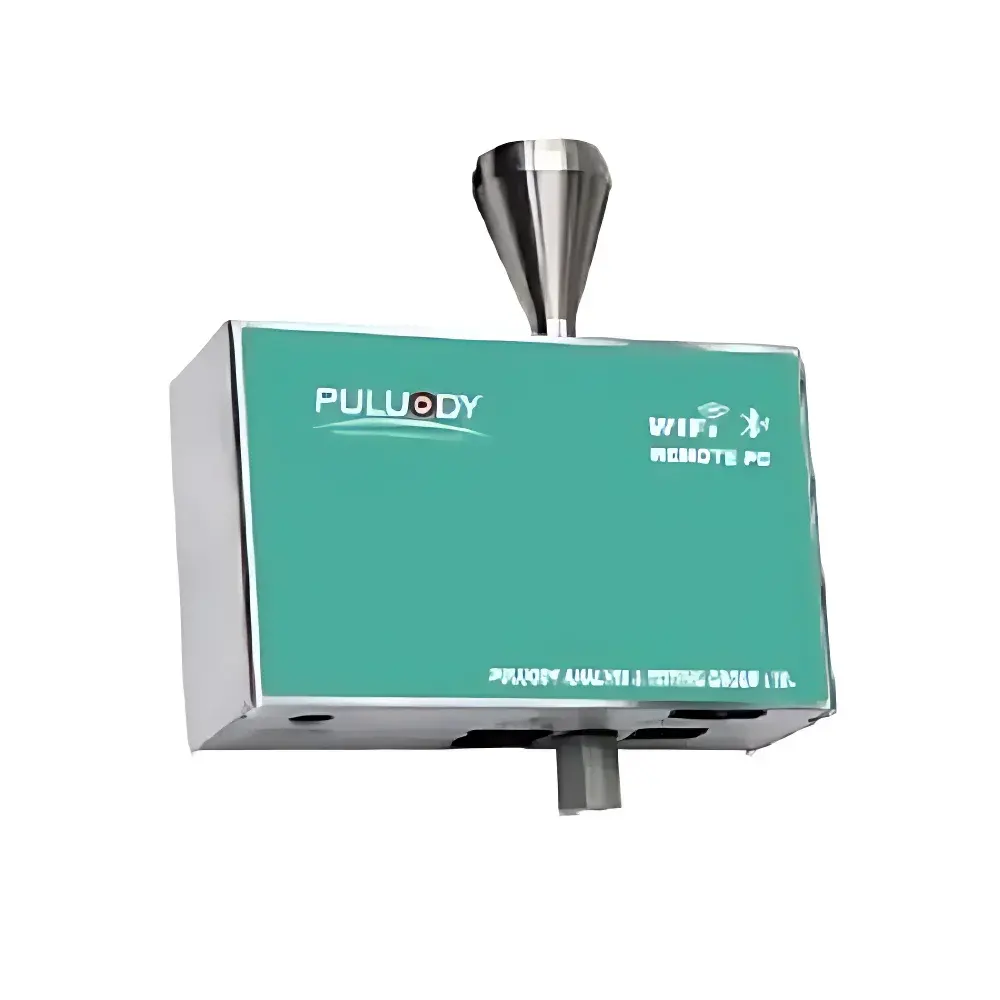
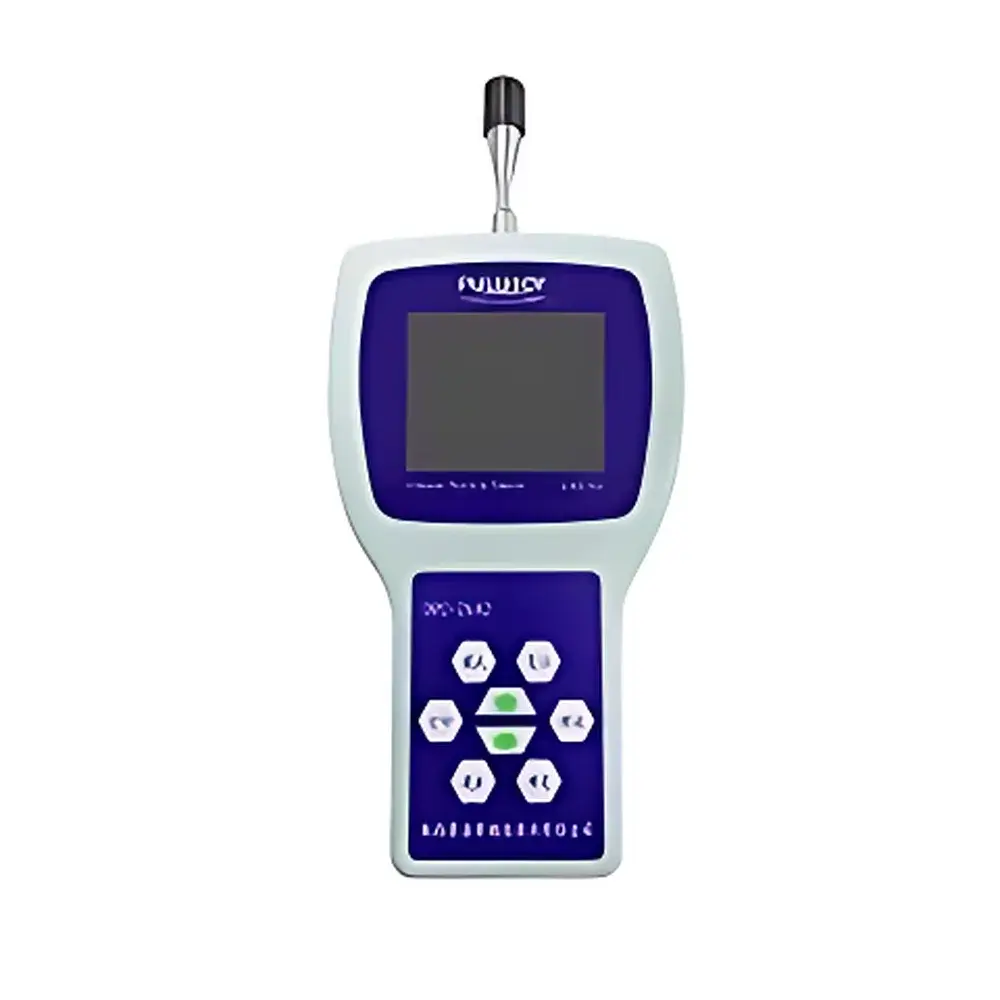
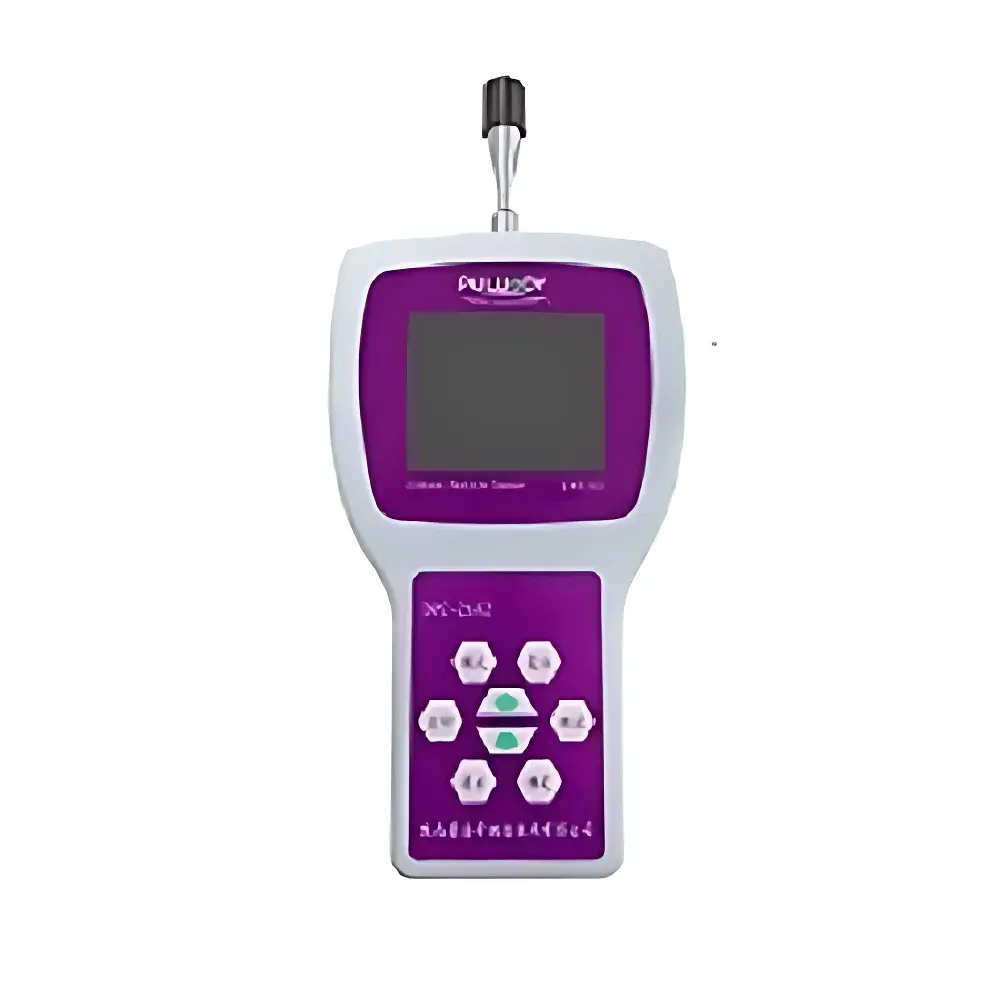
PULUODY DPC-2611 Portable Laser Particle Counter
| Brand | PULUODY |
|---|---|
| Model | DPC-2611 |
| Detection Principle | Light Scattering (Mie Theory) |
| Particle Size Range | 0.10–25.0 µm (configurable channels) |
| Channel Count | 20 user-selectable size bins |
| Counting Accuracy | ≤±30% (per ISO 21501-4) |
| Concentration Accuracy | ≤±30% |
| Repeatability | ≤±10% FS |
| Coincidence Error | <5% at 2×10⁶ particles/ft³ |
| Flow Rate Options | 2.83, 28.3, 50, or 100 L/min |
| Sampling Time | 60 s default |
| Display | 10.0-inch industrial TFT-LCD with full-view angle |
| Data Storage | ≥10,000 test records (expandable via USB/SD) |
| Environmental Sensors | Integrated temperature (−40 to +120 °C), relative humidity (0–100% RH), dew point |
| Gas Detection Capability | Optional 1–3-channel electrochemical or NDIR sensors (e.g., CO, HCHO) |
| Compliance | ISO 21501-4, ISO 14644-1, GB/T 16292, GB/T 6167, JJF 1190, JIS B9921, CE, 21 CFR Part 11 (audit trail, electronic signatures, role-based access) |
| Power Supply | AC 100–240 V, 50/60 Hz |
| Operating Environment | 5–45 °C, ≤90% RH non-condensing |
| Protection | Overvoltage, overcharge, short-circuit, ESD & EMI shielding |
Overview
The PULUODY DPC-2611 Portable Laser Particle Counter is an advanced airborne particle monitoring instrument engineered for precision, regulatory compliance, and field-deployable versatility. It operates on the principle of single-particle light scattering (Mie theory), utilizing a proprietary seventh-generation dual-laser narrow-beam optical detection system optimized for high signal-to-noise ratio and minimal coincidence error. Designed in strict accordance with ISO 21501-4 and ISO 14644-1, the DPC-2611 supports quantitative assessment of particulate contamination across cleanroom classifications from ISO Class 5 (equivalent to Fed Std 209E Class 100) through ISO Class 9 (Class 300,000). Its modular architecture enables simultaneous measurement of particle number concentration (particles/L), mass concentration (µg/m³), and filtration efficiency (%), making it suitable for both routine environmental monitoring and validation-grade applications in regulated industries.
Key Features
- Configurable 20-channel particle sizing with six pre-defined channel sets—covering 0.10 µm to 25.0 µm—allowing flexible adaptation to pharmaceutical, semiconductor, or HVAC commissioning requirements.
- Multi-parameter real-time sensing: integrated temperature, relative humidity, and dew point calculation; optional plug-in gas sensor modules for CO, formaldehyde (HCHO), or other target analytes.
- Triple operational modes: particle count (PC/L), mass concentration (µg/m³), and purification efficiency (%)—each with independent alarm thresholds and data logging parameters.
- Industrial 10.0-inch full-view-angle TFT-LCD interface with bilingual (English/Chinese) menu navigation, intuitive touch-responsive controls, and real-time graphical trend display.
- Robust hardware protection suite including overvoltage suppression, overcharge management, short-circuit isolation, and certified ESD/EMI shielding for stable operation in electrically noisy environments (e.g., cleanroom utility corridors or manufacturing floors).
- Comprehensive data integrity framework compliant with FDA 21 CFR Part 11: role-based user authentication, tamper-evident audit trails, electronic signatures, and immutable electronic records exportable in CSV or PDF format.
Sample Compatibility & Compliance
The DPC-2611 is validated for use with ambient air, compressed gases (with optional pressure regulator and desiccant filter), and recirculated HVAC airstreams. It meets all essential metrological requirements defined in JJF 1190–2008 (Calibration Specification for Airborne Particle Counters) and GB/T 6167–2007 (Performance Testing Methods for Particle Counters). Its optical design satisfies ISO 21501-4’s criteria for resolution, sizing accuracy, and counting efficiency across the full 0.1–25 µm range. For GMP-regulated facilities, the instrument supports qualification protocols (IQ/OQ/PQ) and integrates seamlessly into controlled document management systems. All factory calibrations are traceable to NIM (National Institute of Metrology, China) standards, and third-party calibration services—including annual recalibration verification—are supported throughout the instrument’s service life.
Software & Data Management
Data acquisition, visualization, and reporting are managed via embedded firmware with local storage capacity exceeding 10,000 complete test records. Users may configure automatic storage intervals (real-time or periodic), define custom sampling schedules (timed or looped), and assign unique site/location identifiers per measurement session. Export options include USB mass storage, SD card, or Ethernet (LAN) transfer to centralized LIMS or MES platforms. Optional desktop software provides advanced statistical analysis—cumulative/differential distribution plots, temporal trend overlays, and pass/fail compliance mapping against ISO 14644-1 or USP limits. All exported datasets retain full metadata: operator ID, timestamp, location tag, environmental conditions, and instrument configuration state.
Applications
- Pharmaceutical manufacturing: monitoring Grade A–D cleanrooms per EU GMP Annex 1 and WHO TRS 961; validating isolators, RABS, and aseptic processing environments.
- Medical device production: verifying ISO 13485-compliant clean areas and packaging line integrity.
- Semiconductor fabrication: characterizing ultra-low particulate environments in photolithography bays and wafer handling zones.
- HVAC system commissioning: quantifying filter leakage (via upstream/downstream differential counts), airflow uniformity, and recovery time testing.
- Healthcare infrastructure: assessing operating room air quality, biosafety cabinet certification (per NSF/ANSI 49), and infection control surveillance.
- Automotive and aerospace: evaluating paint booth cleanliness, composite layup environments, and avionics assembly enclosures.
- Food & beverage processing: ensuring compliance with SQF, BRCGS, and FSSC 22000 airborne particulate limits in filling and packaging zones.
FAQ
Does the DPC-2611 comply with FDA 21 CFR Part 11 for electronic records and signatures?
Yes—the instrument implements full Part 11 functionality, including user-level permissions, automated audit trails, electronic signature capture, and record immutability.
Can the particle size channels be customized beyond the six preset configurations?
Channel selection is fixed per configuration set; however, users may switch between Sets A–F via the system menu without hardware modification.
Is external calibration required annually, and does PULUODY provide traceable certificates?
While the unit ships with NIM-traceable factory calibration, annual third-party recalibration is recommended for GxP environments; PULUODY coordinates accredited metrology labs and issues ISO/IEC 17025-compliant certificates.
What flow rate options are available, and how is flow accuracy maintained?
Selectable flow rates include 2.83 L/min (standard for 1 ft³ sampling), 28.3 L/min, 50 L/min, and 100 L/min—each calibrated using a NIST-traceable thermal mass flow meter with ±1% full-scale accuracy.
How does the instrument handle high-concentration aerosols to avoid coincidence error?
The optical design and pulse-height discrimination algorithm limit coincidence error to <5% at concentrations up to 2×10⁶ particles/ft³, satisfying ISO 21501-4 Clause 6.4.2.




