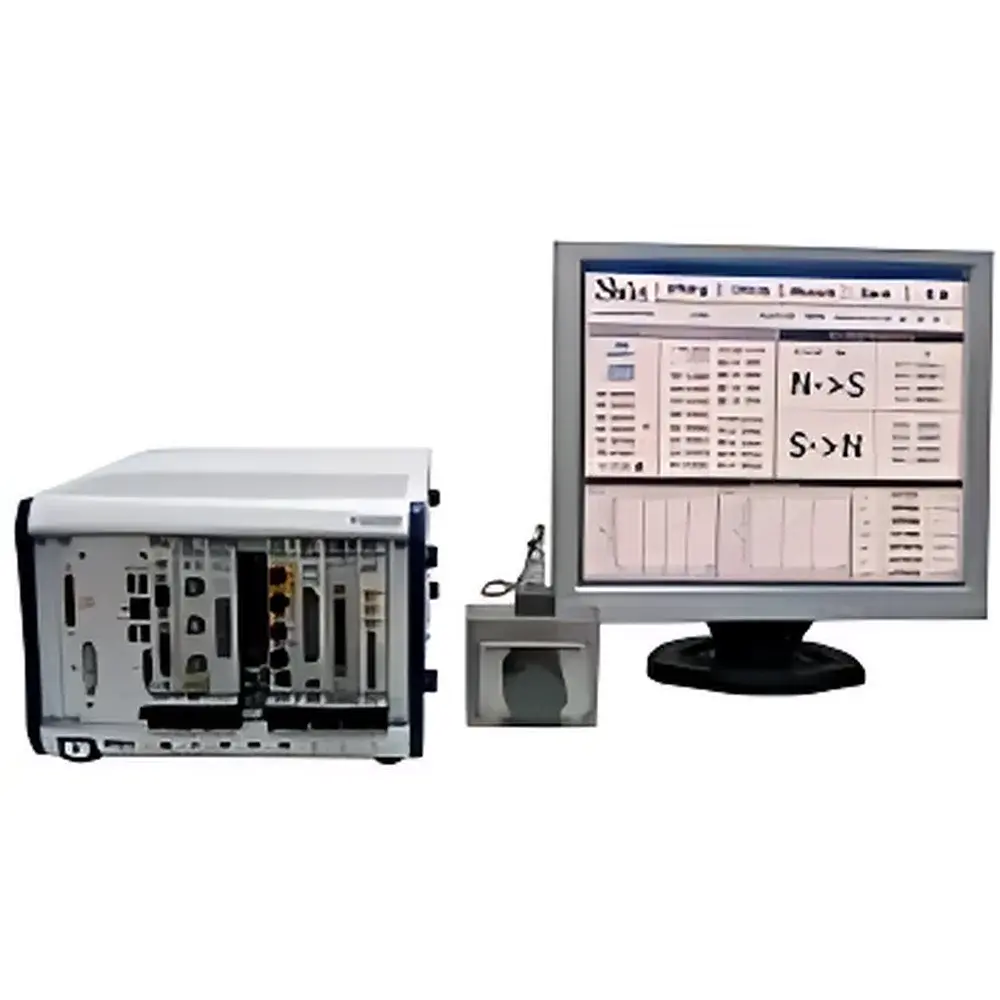
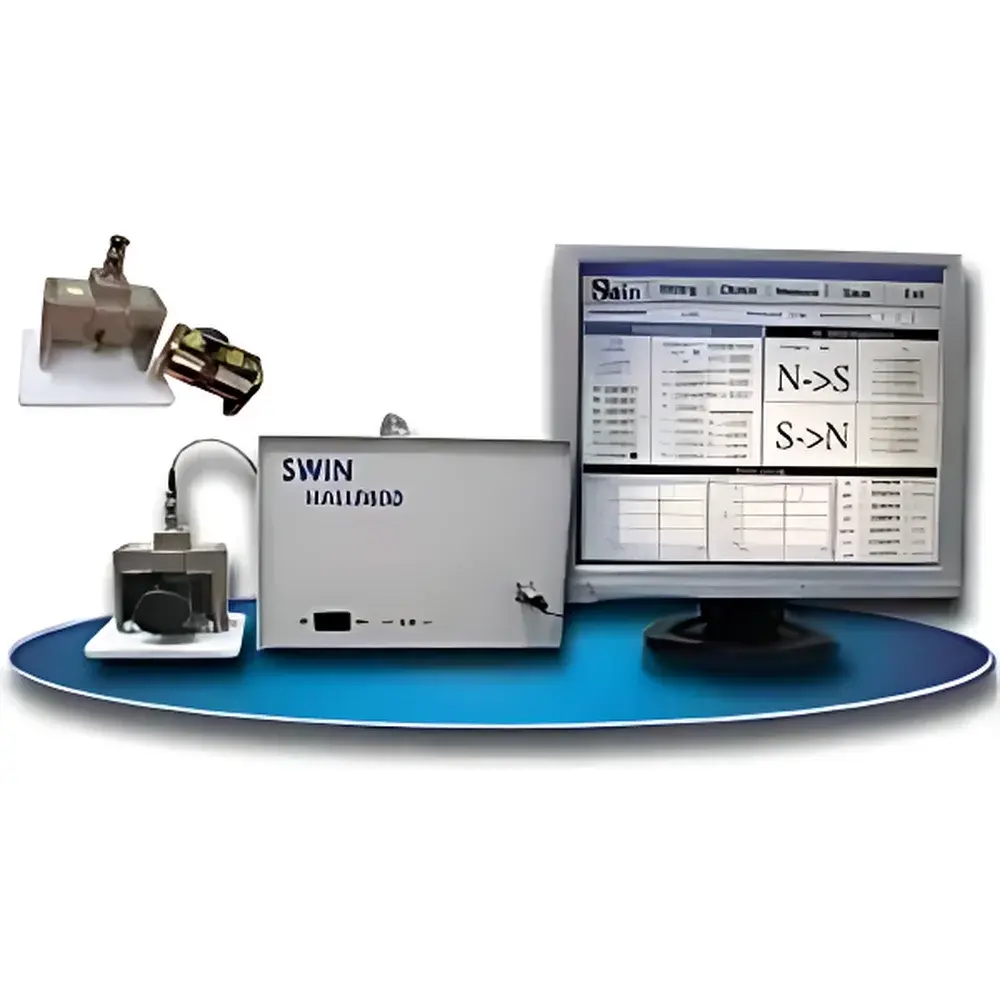
Hall8800 Hall Effect Measurement System
| Origin | Taiwan |
|---|---|
| Manufacturer Type | Authorized Distributor |
| Model | Hall8800 |
| Price | USD 485,000 (FOB) |
Overview
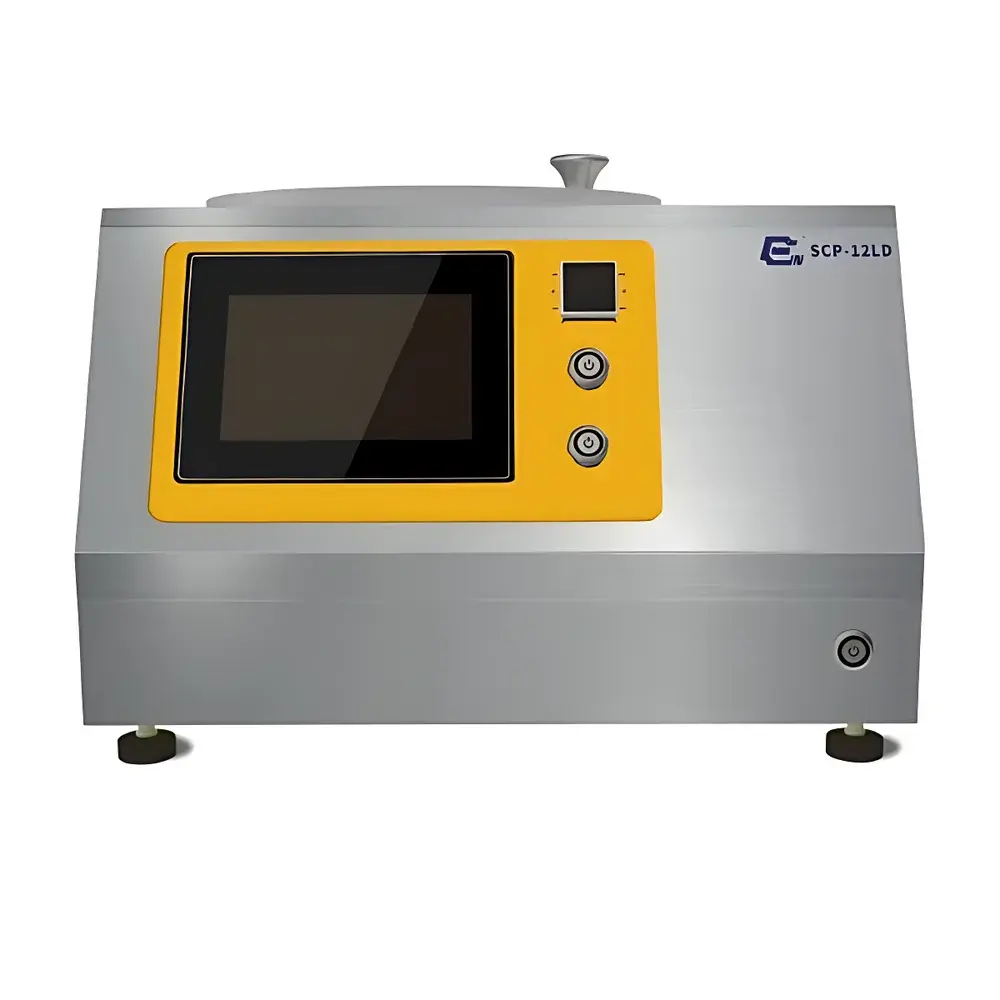
The Hall8800 Hall Effect Measurement System is a precision benchtop instrument engineered for quantitative characterization of semiconductor materials via the classical Hall effect and van der Pauw methodology. It operates on the fundamental principle that when a current-carrying semiconductor sample is subjected to a perpendicular magnetic field, a transverse voltage—known as the Hall voltage—is generated due to Lorentz-force-induced charge carrier deflection. By measuring this voltage under controlled current and magnetic field conditions, the system determines key electronic transport parameters including bulk and sheet carrier concentration (n or p type), Hall mobility (μ), resistivity (ρ), and Hall coefficient (RH). Designed for both room-temperature and cryogenic operation (down to 77 K using standard liquid nitrogen dewars), the Hall8800 supports research-grade analysis across bulk wafers, epitaxial layers, thin films, and nanostructured semiconductors—enabling critical process feedback in LED epi-layer qualification, HEMT 2DEG verification, and photovoltaic cell development.
Key Features
- Ultra-low-noise current source with programmable output range from 2 nA to 100 mA—optimized for high-resistivity semi-insulating substrates (e.g., GaN, SiC) and low-conductivity organic semiconductors.
- High-resolution nanovoltmeter capable of ±10 nV resolution up to 300 V full scale—ensuring accurate Hall voltage detection even under weak-field or low-carrier-density conditions.
- Integrated 0.65 T / 1 T permanent magnet assembly with reversible polarity; modular design allows rapid field orientation switching without realignment.
- Dedicated van der Pauw four-point probe station featuring proprietary spring-loaded tungsten carbide probes—engineered for repeatable, low-contact-resistance measurement on fragile or patterned samples without lithographic patterning.
- Real-time I–V curve acquisition across all probe pairs (AB–CD, BC–DA, etc.) to verify ohmic contact quality prior to Hall analysis—reducing measurement uncertainty caused by non-ideal contacts.
- Single-interface software environment: all instrument control, data acquisition, parameter calculation (including correction for geometric asymmetry), and result visualization occur within one unified GUI—eliminating context switching and minimizing operator error.
- Cryogenic-ready mechanical architecture: compact footprint (260 × 220 × 180 mm), lightweight chassis (6 kg), and thermally isolated probe stage ensure stable low-temperature operation with standard LN2 dewars.
Sample Compatibility & Compliance
The Hall8800 accommodates a broad spectrum of semiconductor materials—including elemental (Si, Ge), compound (GaAs, InP, GaN, ZnO), alloy (SiGe, AlGaAs, InGaAs), and wide-bandgap (SiC, Ga2O3) systems—in both n-type and p-type configurations. Its van der Pauw geometry support enables reliable measurements on irregularly shaped or unpatterned samples (e.g., as-grown wafers, sputtered films, MBE layers). The system meets essential requirements for laboratory quality assurance: raw data logging includes full metadata stamping (timestamp, operator ID, calibration ID); software enforces audit-trail compliance per GLP/GMP frameworks; and all electrical calibrations traceable to NIST-certified standards are documented in the instrument’s calibration certificate. While not FDA 21 CFR Part 11–certified out-of-the-box, the software architecture supports configuration for electronic signature and role-based access control upon customer request.
Software & Data Management
The Hall8800 Control Suite is a Windows-based application developed in-house for deterministic measurement sequencing and ISO/IEC 17025–aligned data handling. It implements automated field-current-voltage sweep protocols, real-time noise filtering (moving average + median rejection), and iterative van der Pauw symmetry correction. All calculated parameters—including temperature-dependent mobility activation energy plots—are exported in CSV and XML formats compatible with MATLAB, Python (NumPy/Pandas), and JMP. Raw voltage traces, magnetic field logs, and environmental sensor data (sample stage temperature, ambient humidity) are archived in HDF5 format for long-term reproducibility. The software supports batch processing of multi-sample datasets and generates customizable PDF reports compliant with internal lab SOPs or external review requirements (e.g., IEEE Std 118–2021 for Hall effect metrology).
Applications
- Quantitative evaluation of dopant activation efficiency in ion-implanted or diffusion-doped silicon wafers.
- In-line monitoring of carrier concentration uniformity across GaN-on-Si epiwafers for micro-LED manufacturing.
- Verification of two-dimensional electron gas (2DEG) formation and sheet density in AlGaN/GaN HEMT heterostructures.
- Correlation of Hall mobility degradation with defect density in neutron-irradiated SiC power devices.
- Temperature-dependent transport analysis (10 K–300 K) to extract scattering mechanisms in novel oxide semiconductors (e.g., IGZO).
- Process window definition for thermal annealing steps in perovskite solar cell fabrication.
FAQ
What magnetic field options are available? Can users upgrade to higher fields?
The Hall8800 ships with dual-field permanent magnets (0.65 T and 1 T). Electromagnet or superconducting magnet integration is not supported; field strength is fixed per installed magnet module.
Does the system support AC Hall measurements or only DC?
The Hall8800 performs DC Hall measurements exclusively. AC Hall capability (e.g., for mobility spectrum analysis) requires external lock-in amplification and is outside the standard configuration.
Is the van der Pauw correction algorithm compliant with ASTM F76–22?
Yes—the software implements the iterative geometric correction method specified in ASTM F76–22 Annex A1 for asymmetric contact placement, with user-adjustable convergence thresholds.
Can the system measure insulating oxides like Al2O3 or HfO2?
No. The Hall8800 requires measurable conduction; it is not suitable for true insulators (ρ > 109 Ω·cm). It is validated for semiconductors with resistivity between 10−6 and 107 Ω·cm.
What is the minimum sample size supported?
Van der Pauw measurements require sample dimensions ≥ 5 mm × 5 mm with contact pads placed near corners. Smaller samples may be measured using alternative geometries (e.g., linear four-point probe), but Hall coefficient extraction becomes nonstandard and requires custom validation.