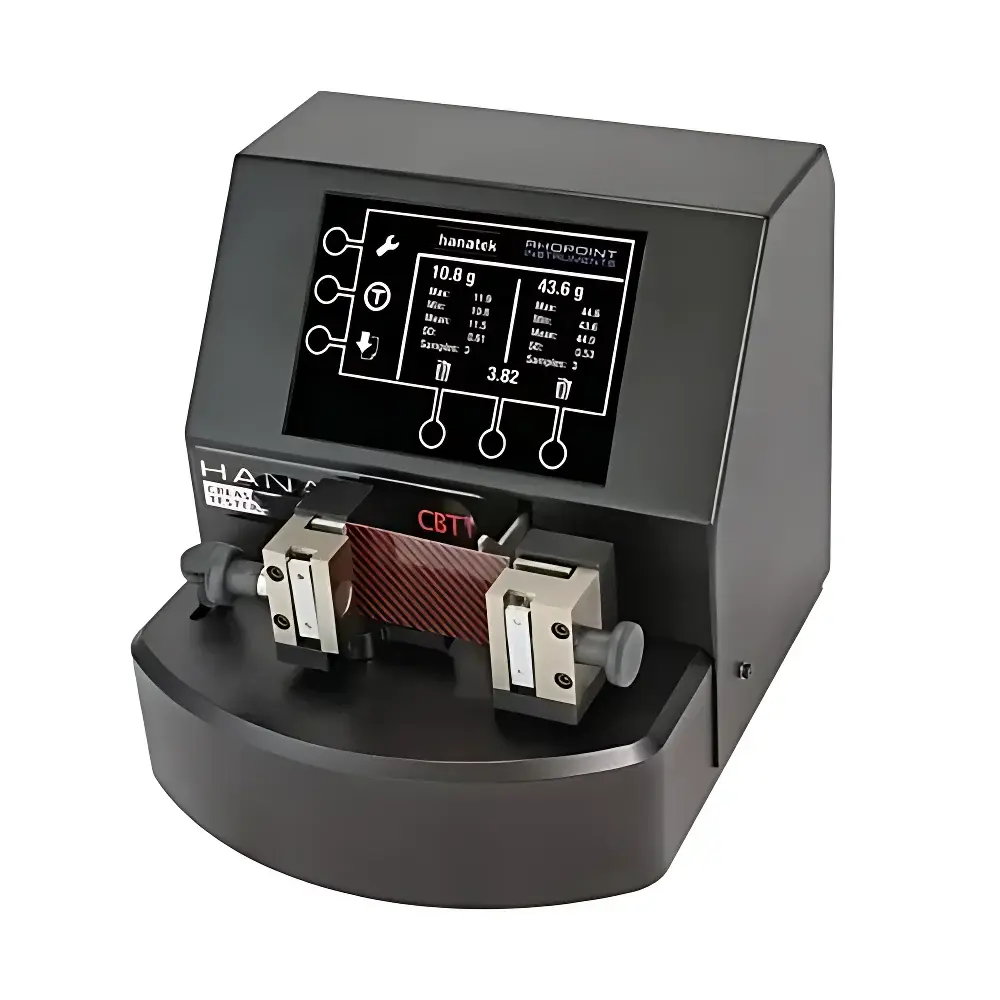

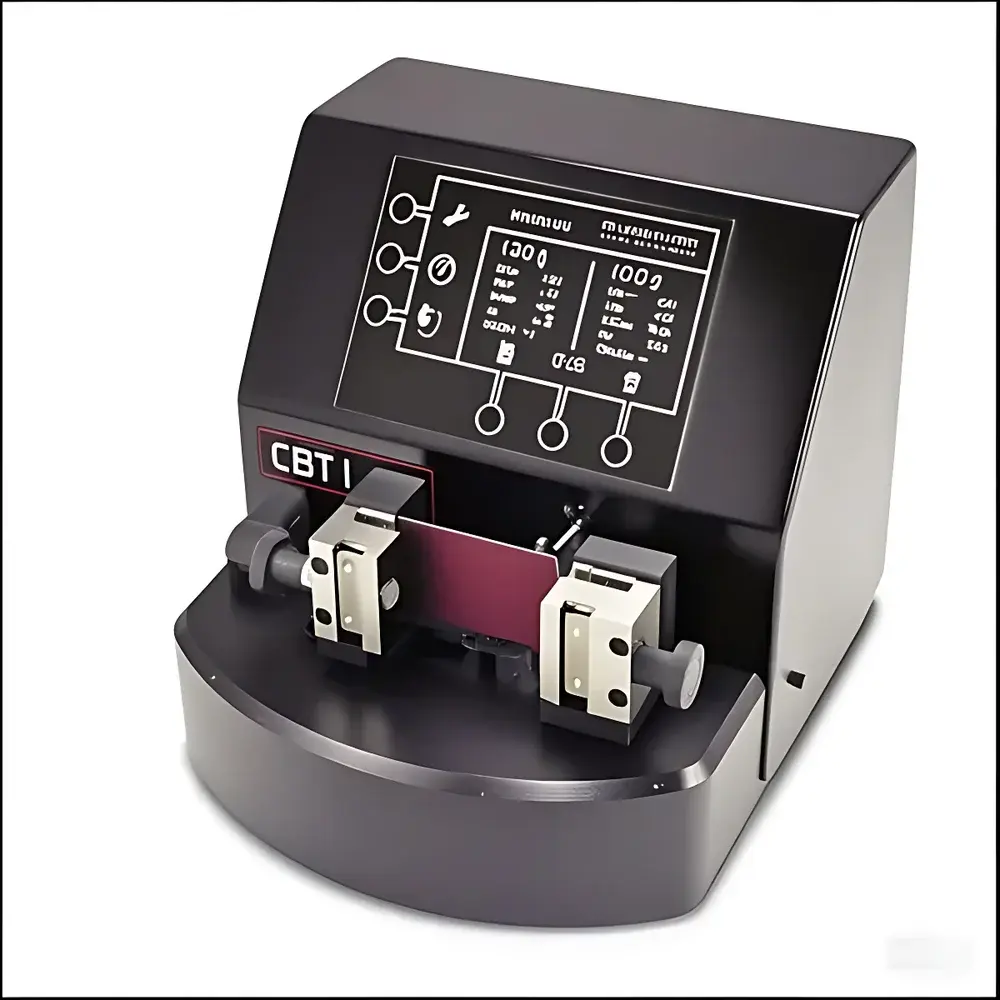
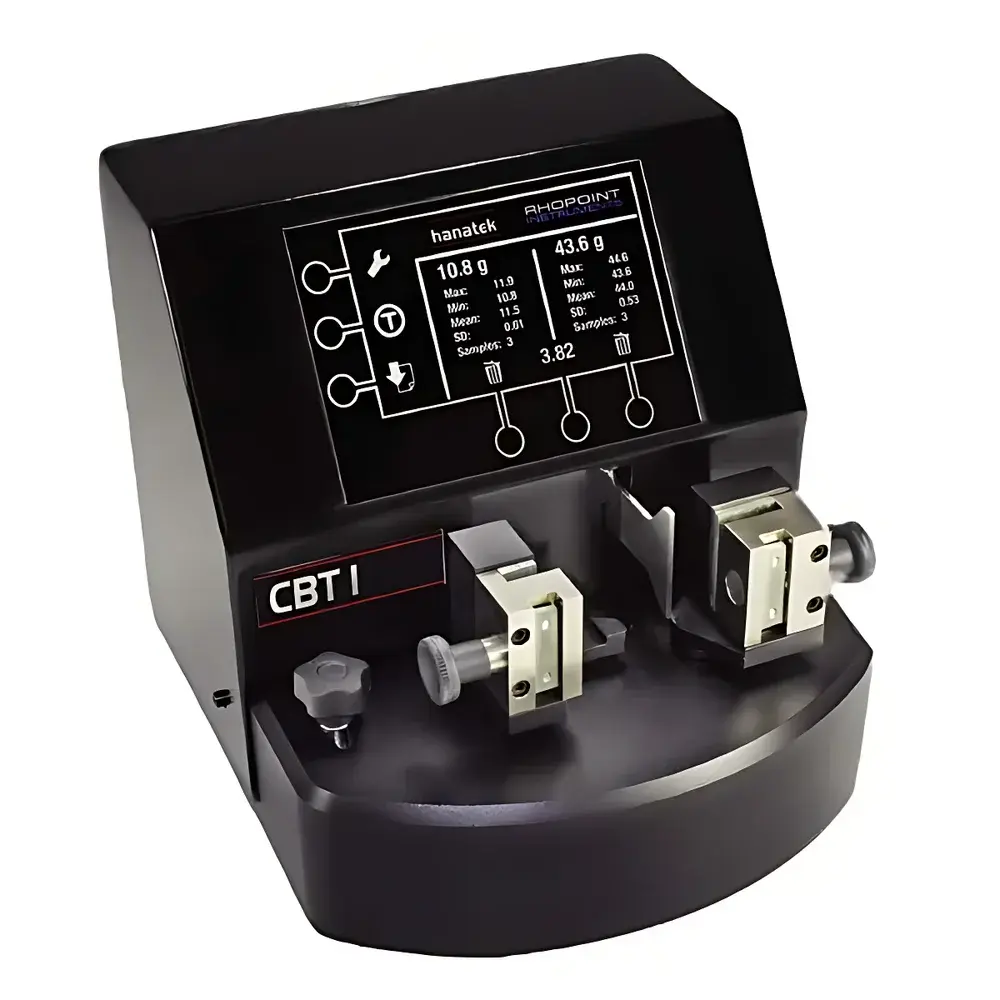
Hanatek CBT1 Crease Stiffness and Folding Resistance Tester
| Brand | Hanatek |
|---|---|
| Origin | United Kingdom |
| Manufacturer Type | Authorized Distributor |
| Origin Category | Imported Instrument |
| Model | CBT1 |
| Price | USD 13,500 (FOB UK) |
| Compliance Standards | BS 6965-1:1988, BS 3748, ISO 2493, TAPPI T556, DIN 53121, SCAN P29 |
| Resolution | 0.1 g |
| Accuracy | ±0.1 g |
| Measurement Range | 0–450 gf |
| Power Supply | 110/240 V AC, 50/60 Hz |
| Dimensions (H×W×D) | 230 × 175 × 250 mm |
| Net Weight | 7.6 kg |
| Packaging Weight | 10 kg |
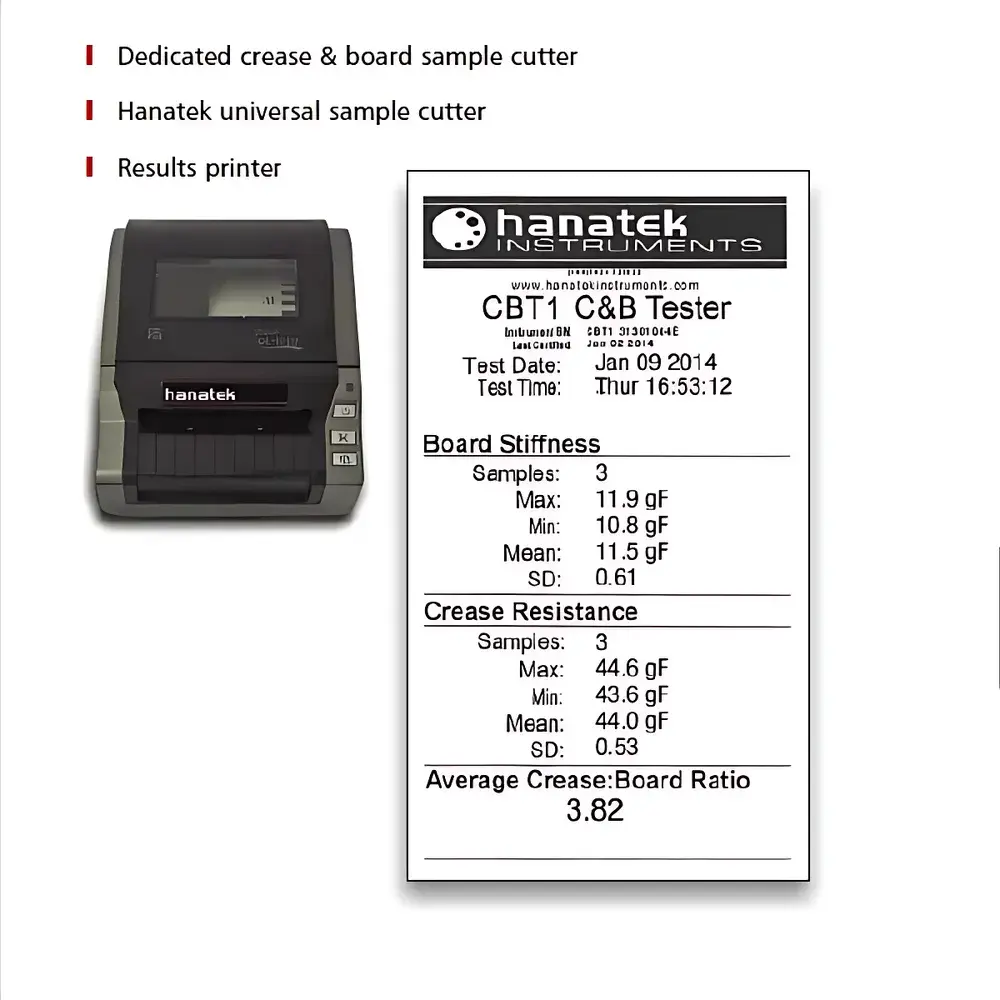
| Sample Preparation Tools | BS 6965–compliant dedicated crease sample cutter, universal sample cutter, label printer with custom interface cable and preloaded firmware |
Overview
The Hanatek CBT1 Crease Stiffness and Folding Resistance Tester is an engineered solution for quantitative evaluation of two interdependent mechanical properties critical to folding carton performance: board stiffness (bending resistance) and crease line folding resistance (crease recovery force). Operating on the principle of controlled angular deflection under calibrated load, the CBT1 applies a defined moment to a standardized specimen—cut per BS 6965-1:1988—while measuring the resulting force required to fold the creased edge through 90° and hold it for 15 seconds. This methodology directly correlates with real-world behavior on high-speed packaging lines, where insufficient crease compliance causes jamming or misfolding, while excessive stiffness leads to spring-back at glue flaps, compromising seal integrity and downstream automation reliability. Designed specifically for packaging R&D laboratories, quality control departments, and substrate suppliers, the CBT1 delivers repeatable, traceable data essential for predictive process validation prior to production ramp-up.
Key Features
- Automated 15-second dwell time post-folding to eliminate operator-induced variability in manual holding duration
- Integrated auto-zero and self-calibration routine enabling rapid setup without external weights or service visits
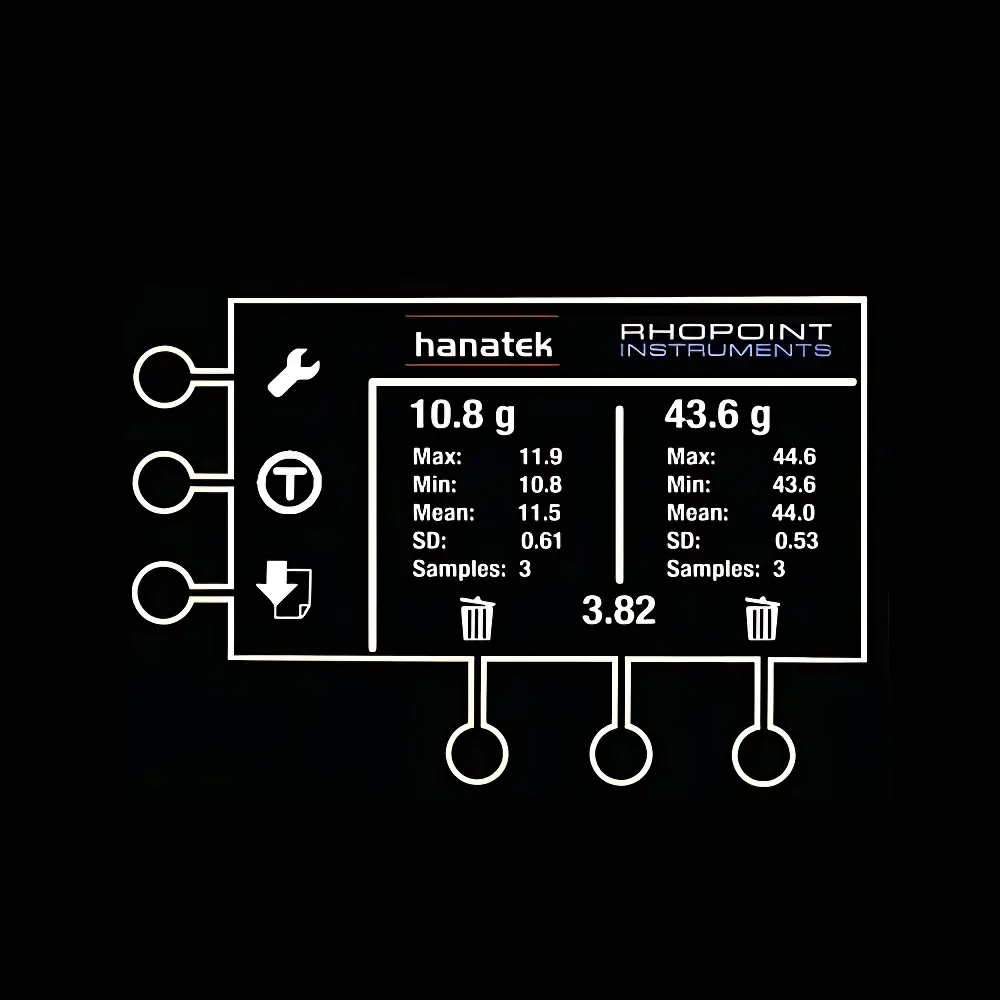
- Real-time calculation of crease force ratio (CFR), defined as the ratio of peak folding force to board bending stiffness—providing a dimensionless index for comparative runnability assessment
- Capacitive touchscreen interface with multilingual support (English, German, French, Spanish) and intuitive workflow navigation
- Direct USB export functionality: all raw measurements, calculated CFR values, timestamps, and user annotations saved as compliant .csv files for LIMS integration or statistical process control (SPC) analysis
- Modular accessory ecosystem including BS 6965–certified precision sample cutter, universal board cutter, and factory-integrated label printer with preconfigured template mapping
Sample Compatibility & Compliance
The CBT1 accommodates standard test specimens measuring 25 mm × 100 mm with a single pre-scored crease line positioned centrally per BS 6965-1:1988 requirements. It supports substrates ranging from solid bleached sulfate (SBS) and coated recycled board (CRB) to corrugated medium-facing laminates (up to 1.2 mm thickness). All measurement protocols align with internationally recognized standards: BS 6965-1:1988 (primary reference), BS 3748 (board stiffness), ISO 2493 (folding endurance), TAPPI T556 (creasing resistance), DIN 53121 (bending stiffness), and SCAN P29 (fold durability). The instrument’s mechanical architecture and firmware are designed to meet GLP documentation requirements—including full audit trail logging of calibration events, user logins, and parameter modifications—as validated per ISO/IEC 17025:2017 Annex A.2 for testing laboratories.
Software & Data Management
No proprietary software installation is required. The CBT1 operates as a standalone embedded system with internal flash memory storing ≥10,000 test records. Exported .csv files contain columns for test ID, date/time stamp, operator ID, sample ID, peak folding force (gf), bending stiffness (gf), CFR value, dwell time confirmation flag, and pass/fail status against user-defined thresholds. Files are compatible with Microsoft Excel, Minitab, JMP, and laboratory information management systems (LIMS) supporting CSV ingestion. Optional RS-232 or Ethernet interfaces (available upon request) enable remote monitoring and automated report generation within enterprise MES environments. All exported data retains full traceability to instrument serial number and firmware revision level.
Applications
- Pre-production validation of new board grades for pharmaceutical blister packaging, where crease consistency directly impacts child-resistant closure reliability
- Root cause analysis of line stoppages on rotary cartoners—correlating CBT1 CFR values with observed misfolds or glue flap separation rates
- Supplier qualification audits requiring objective evidence of batch-to-batch crease uniformity across multi-layer laminates
- Formulation development for water-based creasing adhesives, quantifying how adhesive rheology affects post-crease recovery kinetics
- Regulatory submission support for FDA 21 CFR Part 11–compliant packaging dossiers, where documented mechanical testing forms part of container closure integrity justification
FAQ
Does the CBT1 comply with FDA 21 CFR Part 11 requirements for electronic records?
Yes—the instrument logs all user actions, calibration events, and measurement metadata with immutable timestamps and operator authentication. Audit trails are exportable and retain digital integrity when archived in validated systems.
Can the CBT1 measure materials thicker than 1.2 mm?
No—specimen thickness is constrained by the fixed jaw geometry and torque limits defined in BS 6965-1. For thicker substrates such as rigid fiberboard, alternative test methods (e.g., ISO 5628) must be applied.
Is third-party calibration certification included with purchase?
A UKAS-accredited calibration certificate (traceable to NPL) is provided with each unit shipment. Annual recalibration services are available through Hanatek’s European service network.
How does the CBT1 handle environmental variability, such as changes in relative humidity?
While the instrument itself is insensitive to ambient RH, users are advised to condition samples per ISO 187 (23°C ±1°C, 50% RH ±2%) prior to testing—standard practice for paper-based material characterization.
What is the expected service life under typical QC lab usage?
With routine cleaning and biannual verification using certified reference weights, the CBT1’s load cell and actuation mechanism maintain specification compliance for ≥8 years based on field data from 120+ installed units across EU packaging facilities.