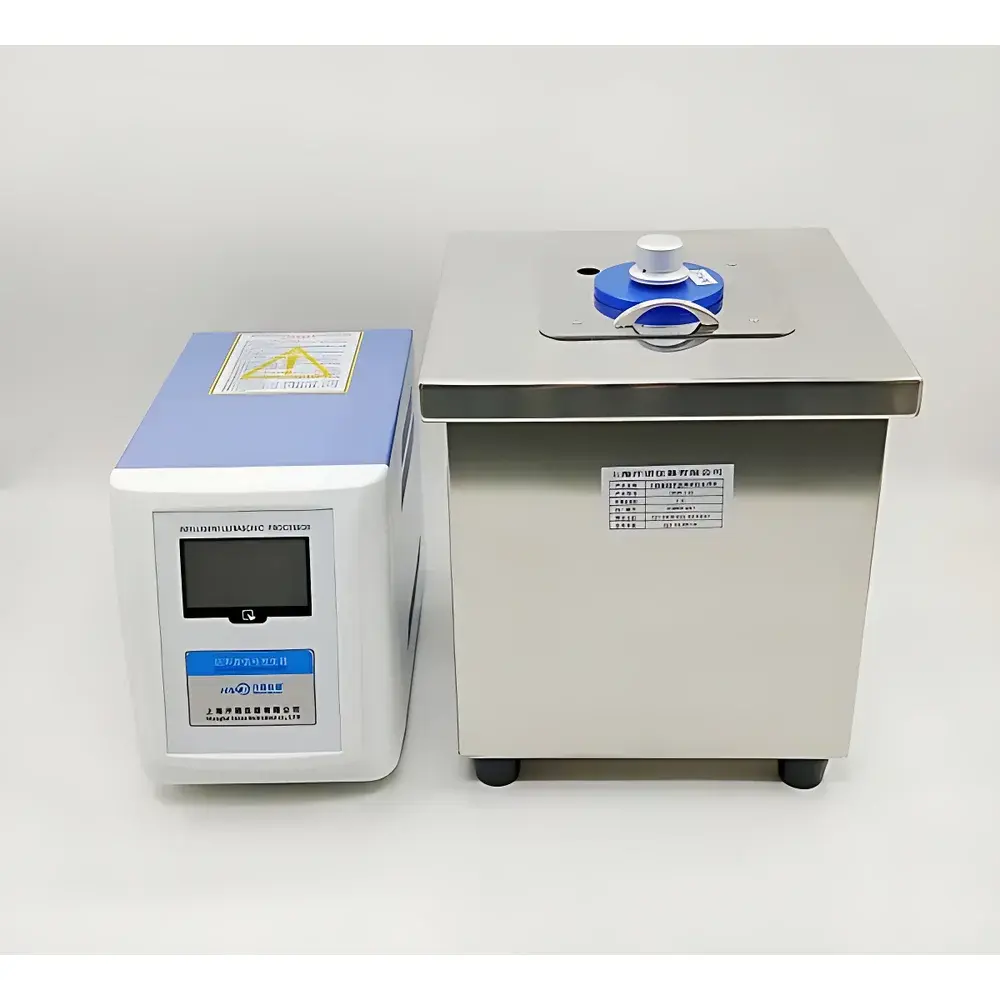
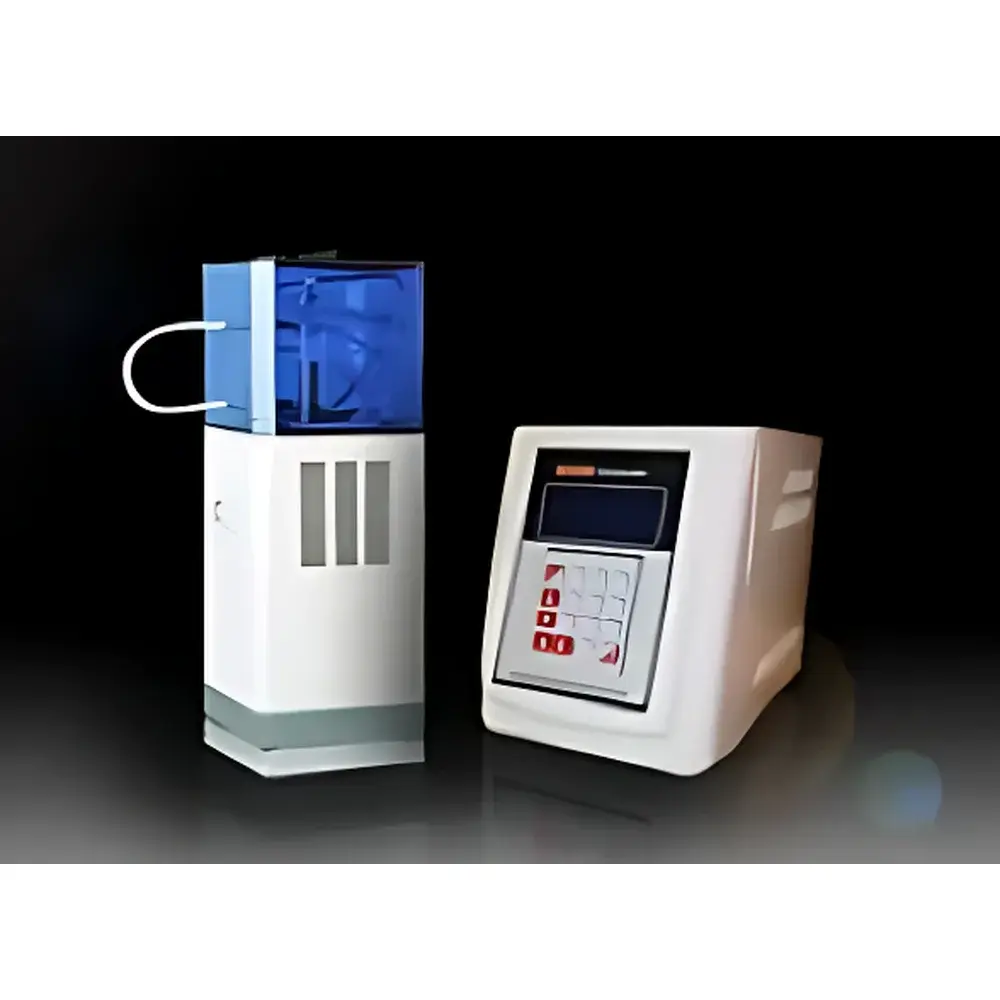
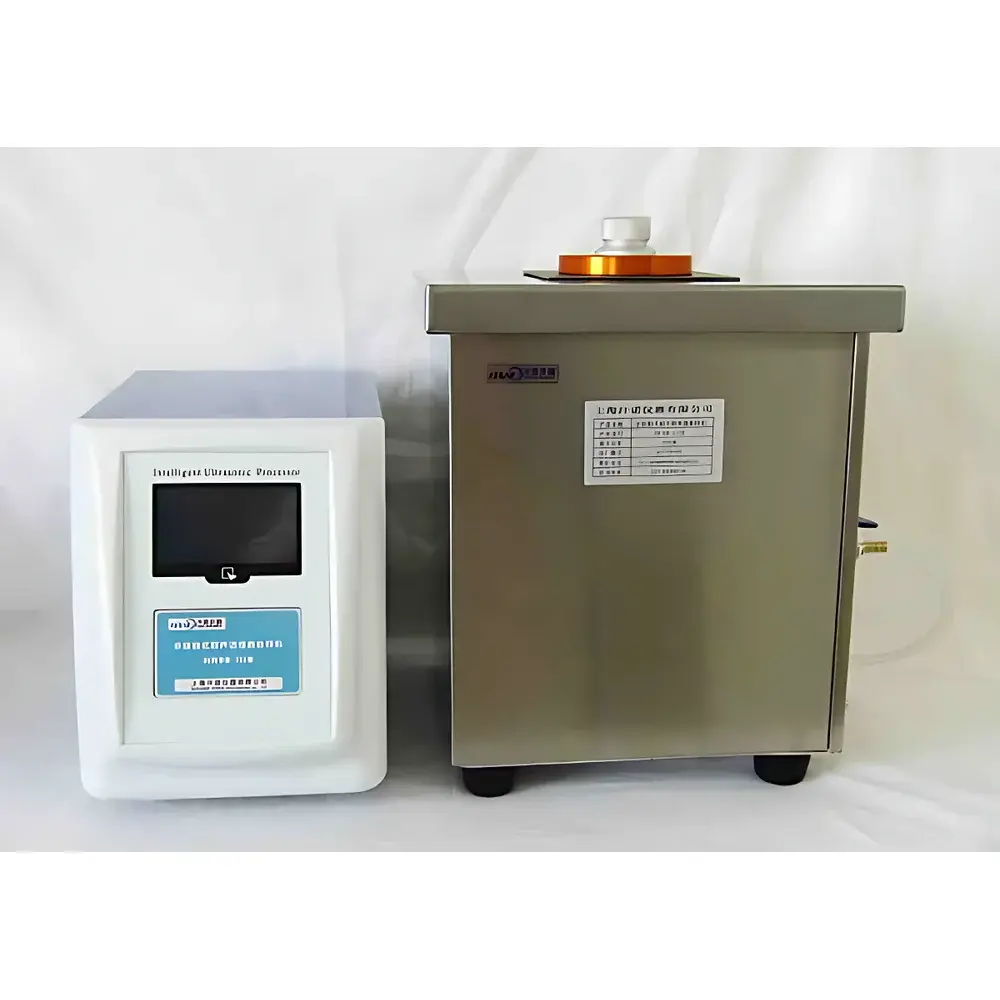
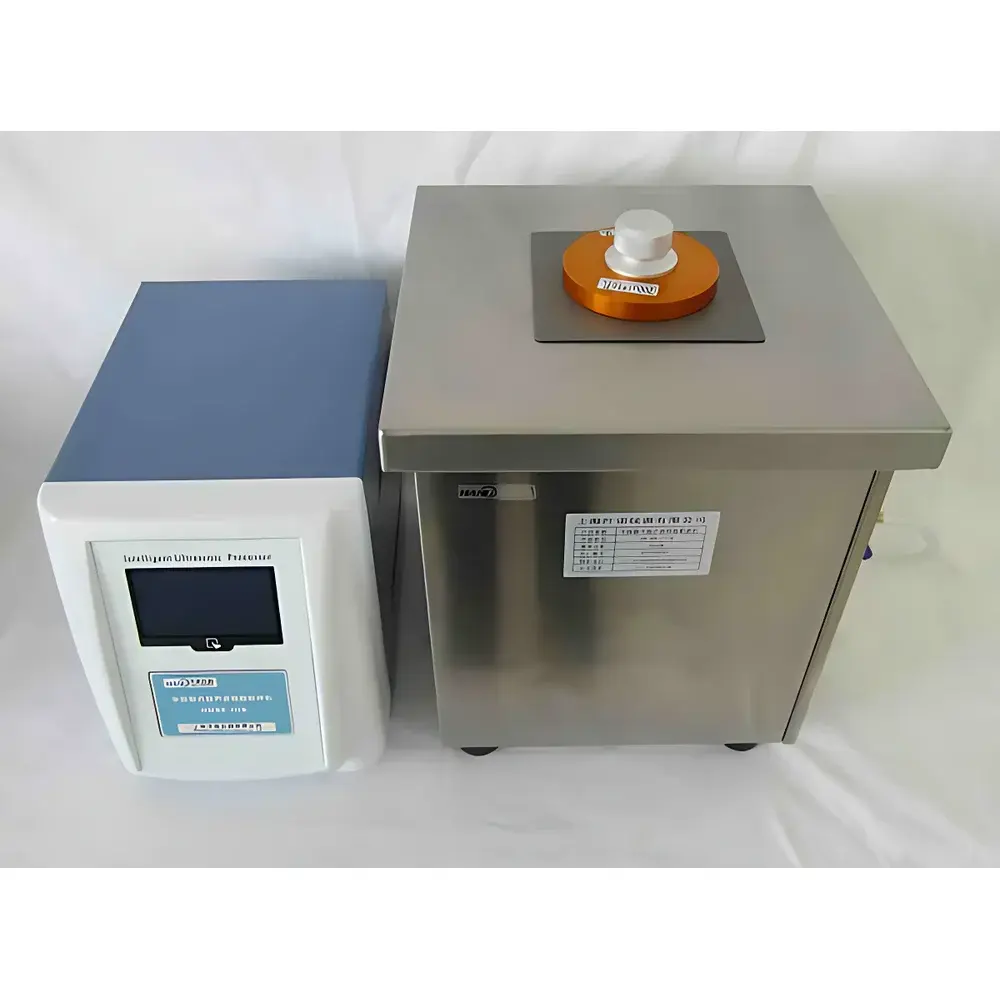
Hanuo HN98-I Non-Contact Ultrasonic Cell Disruptor
| Brand | Hanuo |
|---|---|
| Origin | Shanghai, China |
| Model | HN98-I |
| Instrument Type | Ultrasonic Cell Disruptor |
| Ultrasonic Power | 1200 W |
| Operating Frequency | 20 kHz |
| Temperature Range | Ambient to 90 °C |
| Sample Volume | (0.1–2) mL × 4 |
| Duty Cycle | 1–99.9% |
| Input Voltage | 220/110 V, 50/60 Hz |
| Cooling Interface | Yes (external chiller compatible) |
| Sample Throughput | Up to 4 tubes per cycle |
| Display | LCD |
Overview
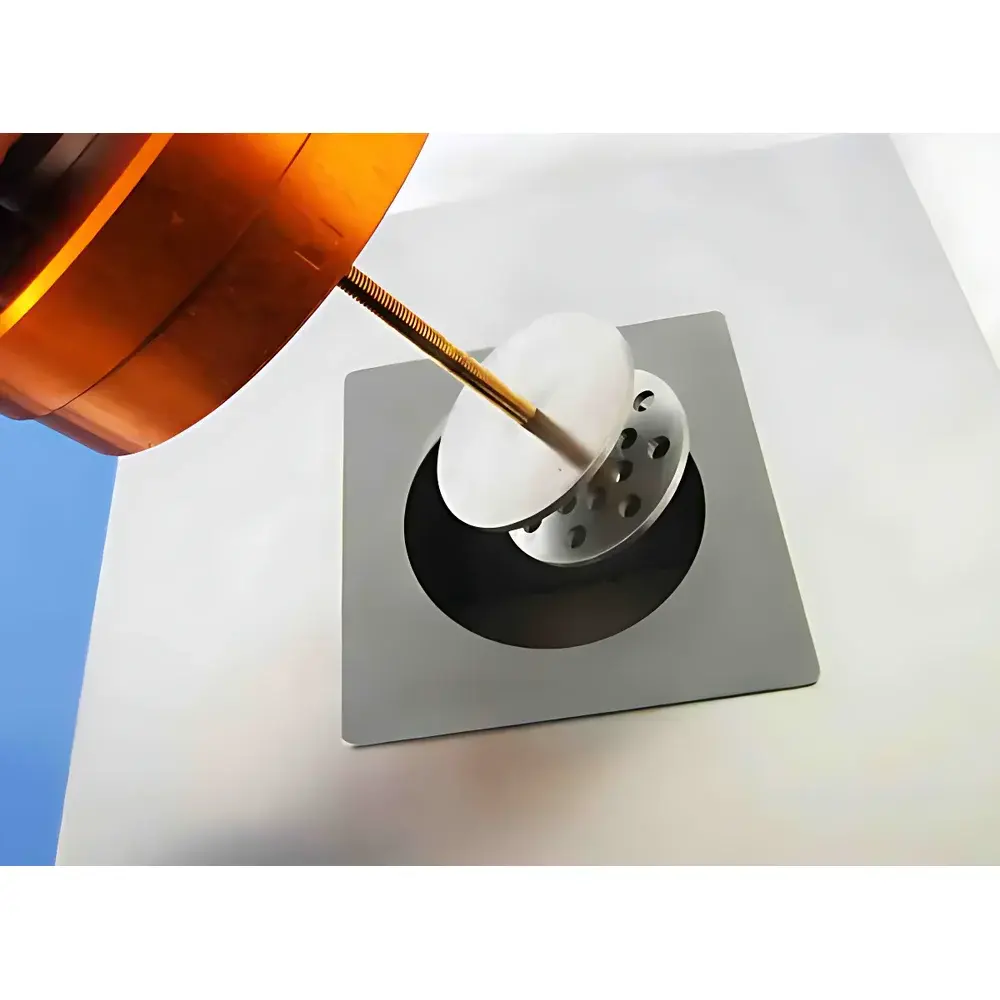
The Hanuo HN98-I Non-Contact Ultrasonic Cell Disruptor is an engineered solution for gentle, reproducible, and contamination-free lysis of biological samples under controlled conditions. Unlike conventional probe-based sonicators that introduce direct mechanical contact—and associated risks of sample heating, aerosol generation, and cross-contamination—this system employs focused ultrasonic energy transmitted through the walls of sealed microcentrifuge tubes immersed in a temperature-regulated water bath. The transducer operates at a nominal frequency of 20 kHz, generating acoustic cavitation within the liquid phase of each tube without physical penetration. This non-invasive approach preserves macromolecular integrity while enabling efficient disruption of bacterial, yeast, mammalian, and viral particles—including adenovirus capsid disassembly for terminal protein-DNA complex isolation. Its design supports biosafety Level 2 (BSL-2) workflows by eliminating airborne bioaerosols and maintaining full containment throughout the lysis process.
Key Features
- Non-contact ultrasonic energy delivery via water-bath coupling—no probe insertion, no tube piercing, no risk of sample carryover between runs
- Simultaneous processing of up to 4 individual 0.1–2 mL microcentrifuge tubes per cycle, ensuring parallelism and inter-sample consistency
- Adjustable duty cycle (1–99.9%) and programmable time settings enable precise control over cavitation intensity and cumulative energy input
- Integrated cooling interface compatible with external recirculating chillers (e.g., –10 to +25 °C range), critical for thermosensitive targets such as chromatin, ribonucleoprotein complexes, or labile viral particles
- Acoustic damping enclosure with hinged access door reduces operational noise to <65 dB(A) and facilitates safe handling of sealed tubes
- Large backlit LCD display provides real-time monitoring of elapsed time, remaining time, power level, and duty cycle; all parameters are stored in non-volatile memory
- Anti-foaming algorithm modulates burst patterns to suppress excessive bubble formation—preserving sample volume integrity and minimizing post-sonication centrifugation requirements
Sample Compatibility & Compliance
The HN98-I accommodates standard 1.5 mL and 2.0 mL conical-bottom microcentrifuge tubes (polypropylene or PCR-grade). It has been validated for use with Gram-negative and Gram-positive bacteria (e.g., E. coli, B. subtilis), budding yeast (S. cerevisiae), cultured mammalian cells (HEK293, CHO), and enveloped/non-enveloped viruses including adenovirus serotype 5 (Ad5). All processing occurs within fully closed vessels, meeting core requirements of ISO 15189:2022 for pre-analytical sample integrity and CLSI EP17-A2 guidelines on interference mitigation. While not certified to IEC 61000-4-3 or UL 61010-1 out-of-the-box, the unit complies with CE marking directives for laboratory equipment when operated with approved external chillers and grounded power supplies. Documentation supports audit readiness for GLP and GMP environments where traceability of lysis parameters (time, power, temperature) is required.
Software & Data Management
The HN98-I operates via embedded firmware with no PC dependency. However, optional RS-232 or USB-to-serial adapters allow connection to LIMS or ELN platforms for parameter logging. Each run generates a timestamped metadata record—including start time, total duration, average power output, and final bath temperature—which can be exported as CSV for integration into electronic lab notebooks. For regulated environments, the system supports 21 CFR Part 11-compliant audit trails when paired with validated third-party data acquisition software (e.g., LabArchives or Benchling configured with digital signature modules). No cloud connectivity or remote control is implemented, preserving network security boundaries common in academic core facilities and biopharma QC labs.
Applications
- Preparation of high-titer recombinant adenoviral stocks via controlled capsid disassembly and release of viral DNA-protein complexes
- Chromatin shearing for ChIP-seq without antibody masking or epitope denaturation
- Extraction of membrane proteins from E. coli inclusion bodies under native conditions
- RNA isolation from low-input clinical specimens where RNase inhibition and aerosol containment are critical
- Fragmentation of synthetic oligonucleotides and plasmid DNA prior to NGS library construction
- Disruption of biofilm-embedded microbes for antimicrobial susceptibility profiling
FAQ
Can the HN98-I process more than four samples simultaneously?
No—the HN98-I is configured for a maximum of four tubes per cycle. For higher throughput, consider the HN98-II (8-tube) or HN98-III (16-tube) variants, which share identical frequency and cooling architecture but differ in transducer array layout and bath geometry.
Is the system compatible with cryogenic sample handling?
The unit accepts external chillers capable of sub-zero coolant delivery; however, direct freezing of tubes inside the bath is not recommended due to potential thermal shock-induced tube fracture and inconsistent energy coupling.
Does it support validation protocols for pharmaceutical manufacturing?
Yes—when used with documented calibration procedures (e.g., calorimetric power verification using potassium iodide dosimetry) and integrated into a validated SOP, the HN98-I meets baseline requirements for Process Validation Stage 1 (Process Design) under ICH Q5A(R2) for viral vector lysis steps.
What maintenance is required for long-term reliability?
Annual inspection of transducer adhesion integrity, bath seal condition, and LCD backlight uniformity is advised. No routine lubrication or consumable replacement is necessary beyond periodic descaling of the water bath using 10% acetic acid solution.
Can I use non-standard tube formats, such as PCR strips or deep-well plates?
Only single-tube configurations (1.5–2.0 mL round-bottom or conical microcentrifuge tubes) are supported. Multi-well formats induce uneven acoustic field distribution and compromise reproducibility—validation data for alternative geometries is not available.