HARKE HK-O3 Oxygen Transmission Rate Tester
| Brand | HARKE |
|---|---|
| Model | HK-O3 |
| Application | Vacuum-Method Gas Permeability Testing for Packaging & Barrier Materials |
| Measurement Principle | Differential Pressure (Vacuum Method) per ISO 15105-1 & ASTM D1434 |
| Test Gases | O₂, N₂, CO₂, Air, He, H₂, CH₄, NH₃, etc. |
| OTR Range | 0.05–160,000 cm³/m²·24h·0.1MPa |
| Resolution | 0.001 cm³/m²·24h·0.1MPa |
| Vacuum Resolution | 0.1 Pa |
| Temperature Control Range | 5–95 °C (external chiller/heater required) |
| Temp. Stability | ±0.1 °C |
| Specimen Area | 48 cm² |
| Max. Thickness | ≤5 mm |
| Specimen Size | ≥150 mm × 94 mm or circular |
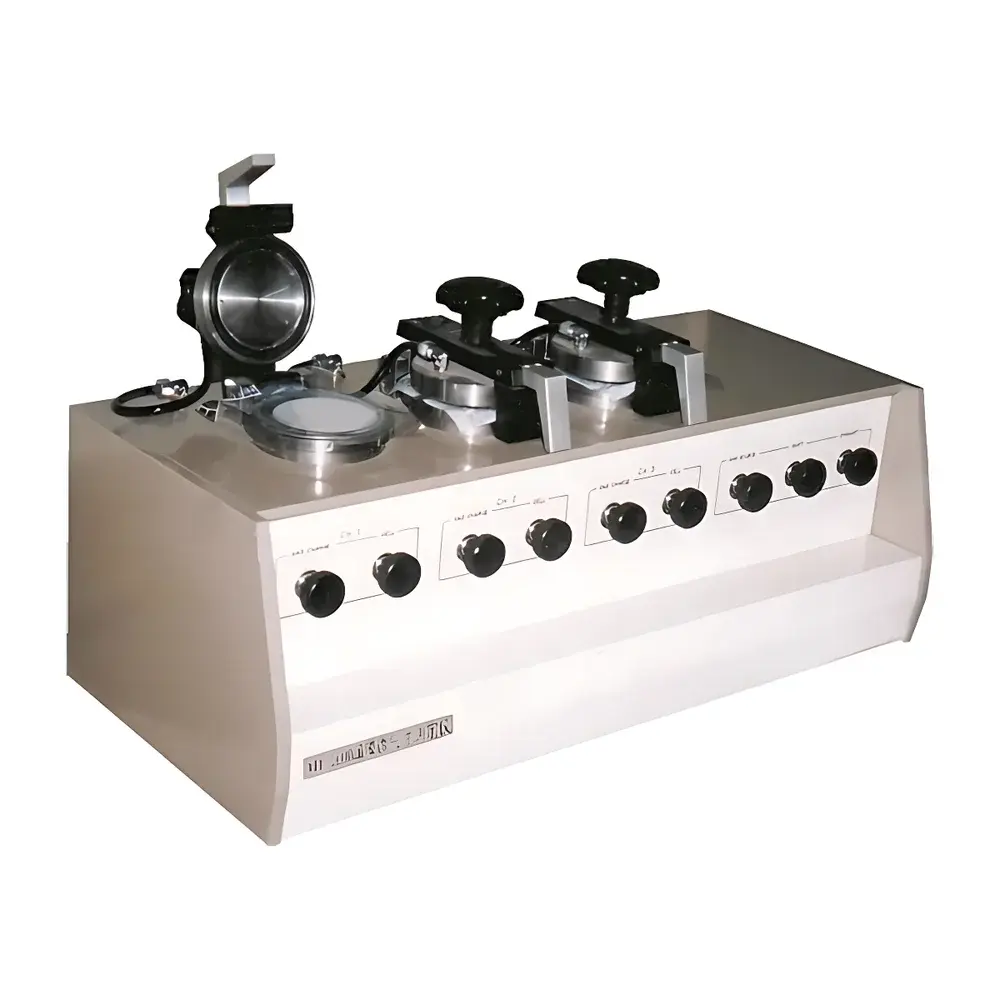
| Test Chamber | Single cavity, pneumatically clamped |
| Operating Pressure Range | –0.1 to +0.1 MPa |
| Supply Pressure | 0.3–1.0 MPa |
| Gas Inlet | Ø8 mm |
| Dimensions | 330 × 600 × 330 mm (L×D×H) |
| Weight | 28 kg |
| Power | AC 220 V, 50 Hz |
| Compliance | GB/T 1038, ISO 15105-1, ISO 2556, ASTM D1434, JIS K7126-1, YBB00082003 |
Overview
The HARKE HK-O3 Oxygen Transmission Rate (OTR) Tester is an engineered vacuum-method gas permeability analyzer designed for precise, reproducible determination of oxygen transmission rate, diffusion coefficient, solubility coefficient, and permeability coefficient in flexible packaging materials and high-barrier substrates. It operates on the principle of differential pressure measurement: a test specimen is sealed between two chambers — one evacuated (low-pressure side), the other maintained at atmospheric or controlled partial pressure of the test gas (e.g., O₂). The rate at which oxygen molecules permeate through the film under this gradient is quantified via high-resolution pressure transduction and real-time vacuum decay monitoring. This method aligns with gravimetric and manometric fundamentals defined in ISO 15105-1 and ASTM D1434, ensuring traceable, standards-compliant data generation for R&D, QC, and regulatory submission workflows.
Key Features
- Single-cavity architecture with pneumatic specimen clamping for rapid, repeatable sealing and minimal operator intervention
- High-fidelity vacuum sensing system with 0.1 Pa resolution, enabling accurate low-flux measurements down to 0.05 cm³/m²·24h·0.1MPa
- Three configurable test termination modes: proportional threshold, fuzzy logic-based stabilization detection, and fixed-duration timing — adaptable to both ultra-low and ultra-high permeability materials
- Modular temperature integration support: compatible with external precision chillers or heating circulators (sold separately) for stable thermal control from 5 °C to 95 °C (±0.1 °C stability)
- Expandable measurement range via optional flow calibration modules, accommodating OTR values up to 160,000 cm³/m²·24h·0.1MPa without hardware modification
- Gas-flexible design validated for O₂, N₂, CO₂, air, He, H₂, CH₄, C₃H₈, C₄H₁₀, and NH₃; hazardous gas configurations available upon pre-order specification and safety review
- Standardized 48 cm² test area with accommodated specimen dimensions ≥150 mm × 94 mm (or circular equivalents) and thickness ≤5 mm — customizable fixtures available for non-standard geometries
Sample Compatibility & Compliance
The HK-O3 supports a broad spectrum of planar barrier materials used across regulated and industrial sectors. Validated substrates include aluminum foil laminates, metallized PET/PP films, PVDC-coated webs, pharmaceutical PVC/PVDC hard sheets, LDPE/EVOH coextrusions, paper-plastic composites, cast films, biomedical membranes (e.g., artificial skin analogs), lithium-ion battery separators, fuel cell proton exchange membranes, aerospace-grade elastomeric seals, and biodegradable polyesters (PLA, PHA). All testing adheres strictly to referenced standards: GB/T 1038 (China), ISO 15105-1 (gas transmission rate — part 1), ISO 2556 (plastics — determination of gas transmission rate), ASTM D1434 (standard test method for determining gas permeability characteristics), JIS K7126-1 (Japanese Industrial Standard), and YBB00082003 (Chinese pharmaceutical packaging guidance). Instrument validation documentation supports GLP and GMP audit readiness, including full traceability of pressure sensors, temperature probes, and vacuum gauges.
Software & Data Management
Control and analysis are executed via HARKE’s proprietary OTR-Studio software, a Windows-based application compliant with FDA 21 CFR Part 11 requirements for electronic records and signatures. The software provides real-time permeation curve visualization, automatic calculation of OTR, D (diffusion), S (solubility), and P (permeability) coefficients using Fickian modeling, and batch reporting with customizable templates (PDF, Excel, CSV). Audit trails log all user actions, parameter changes, calibration events, and test interruptions. Raw sensor data — including absolute pressure vs. time, temperature drift, and chamber equilibration status — are stored with metadata tags (operator ID, sample ID, environmental conditions) to satisfy ISO/IEC 17025 and internal quality system requirements.
Applications
- Accelerated shelf-life prediction for food and beverage packaging by correlating OTR with oxidation kinetics of lipids and pigments
- Qualification of sterile barrier systems (SBS) per ISO 11607 for medical device packaging integrity
- Development and benchmarking of next-generation barrier coatings (SiOₓ, AlOₓ, graphene oxide dispersions)
- Quality conformance testing of pharmaceutical blister foils and pouch laminates against YBB specifications
- Characterization of membrane selectivity in gas separation and fuel cell applications
- Thermal dependence studies of polymer chain mobility and free volume via Arrhenius analysis across 5–95 °C
- Failure mode analysis of delamination, pinholes, or coating defects through localized permeation mapping (when paired with optional scanning stage)
FAQ
Does the HK-O3 require external temperature control equipment?
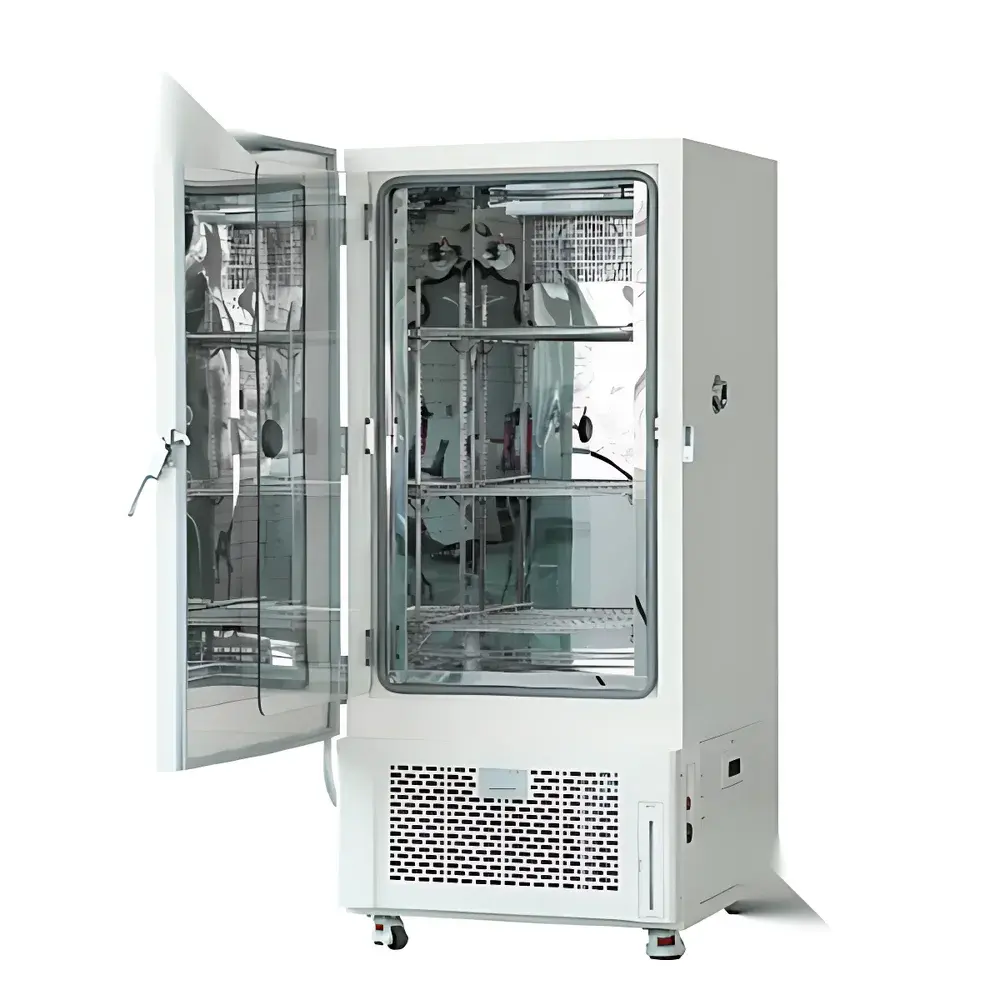
Yes — the instrument does not include an integrated thermal chamber. A certified external chiller/heater circulator is required to achieve and maintain test temperatures from 5 °C to 95 °C.
Can the HK-O3 measure gases other than oxygen?
Yes — it is fully configurable for N₂, CO₂, air, He, H₂, CH₄, C₃H₈, C₄H₁₀, and NH₃. Hazardous or reactive gases require prior consultation for gas-handling modifications and safety interlocks.
Is calibration traceable to national standards?
All pressure and temperature sensors are factory-calibrated against NIST-traceable references; calibration certificates and uncertainty budgets are provided with each unit.
What sample preparation tools are recommended?
HARKE supplies standardized die-cutting kits (ASTM D882-compliant) and vacuum desiccators for preconditioning; humidity-controlled conditioning chambers are advised for hygroscopic films.
How is data integrity ensured during long-duration tests (e.g., >7 days)?
The system logs sensor health metrics continuously; automatic power-loss recovery resumes interrupted tests from last valid data point, preserving temporal continuity and statistical validity.