
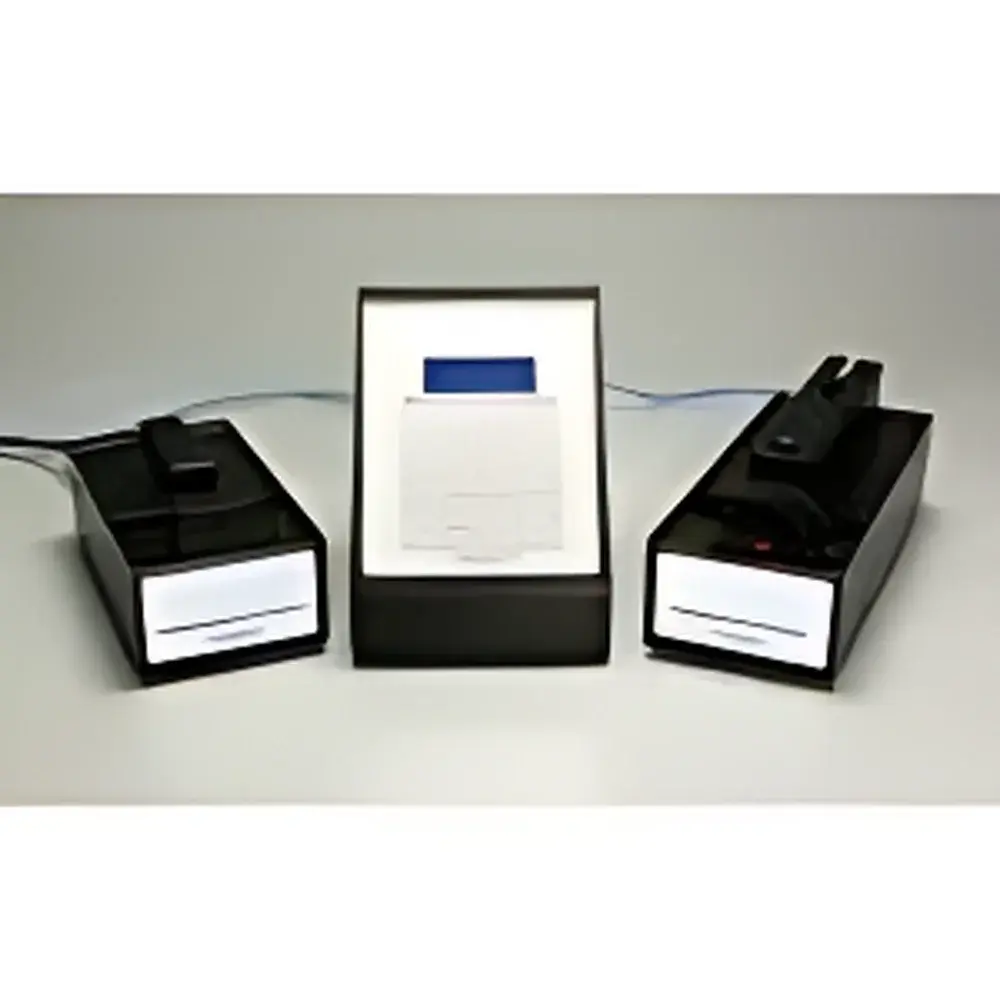
Harvard Apparatus SC100 Single-Channel Non-Invasive Blood Pressure Measurement System for Rodents
| Brand | Harvard Apparatus |
|---|---|
| Origin | USA |
| Model | SC100 |
| Certification | CE |
| Channel Configuration | Single-channel (upgradable to dual-channel with additional specimen platform) |
| Measurement Method | Oscillometric + Korotkoff-based non-invasive tail-cuff sphygmomanometry |
| Output Interfaces | BNC (BP, HR, ECG waveform), 9-pin serial (data logging & PC connectivity), Centronics printer port |
| Compatibility | Mice and rats (four standard tail-cuff balloon sizes included) |
| Data Acquisition | Digital signal processing, real-time pulse detection, configurable respiratory artifact filtering |
| Compliance | Designed for GLP-compliant preclinical research environments |
Overview
The Harvard Apparatus SC100 is a single-channel, non-invasive blood pressure measurement system engineered specifically for longitudinal cardiovascular phenotyping in murine models. It employs an integrated oscillometric–Korotkoff hybrid algorithm to determine systolic, diastolic, and mean arterial pressure (MAP) via tail-cuff occlusion, delivering results with ≤10 mmHg deviation from invasive intra-arterial reference measurements under standardized physiological conditions. Unlike standalone sphygmomanometers, the SC100 operates as a self-contained analytical platform—featuring an embedded microprocessor-controlled pneumatic pump, calibrated pressure transducer, and real-time digital signal processing architecture. Its design prioritizes experimental reproducibility, operator independence, and seamless integration into regulated preclinical workflows. The system is validated for use in chronic hypertension studies, pharmacological intervention trials, and genetic model characterization where repeated, stress-minimized hemodynamic assessment is required.
Key Features
- Fully automated tail-cuff inflation and deflation using an internal precision pump, eliminating manual pressure regulation errors
- Real-time acquisition and display of systolic blood pressure (SBP), diastolic blood pressure (DBP), mean arterial pressure (MAP), and heart rate (HR)
- Dual-mode operation: continuous monitoring mode (for trend analysis over extended periods) and single-measurement mode (for rapid screening)
- V-Notch sensor assembly ensures consistent tail positioning and cuff alignment across operators and sessions
- Four interchangeable tail-cuff balloon sizes (standardized for C57BL/6 mice, Sprague-Dawley rats, and other common strains) mounted on epoxy-coated metal frames for durability and thermal stability
- Analog BNC outputs for simultaneous recording of arterial pressure waveform, heart rate signal, and cardiac pulsatility trace
- Digital serial interface (9-pin RS-232) enabling direct connection to Windows-based acquisition software (SC1000 Comm for Windows®) or third-party DAQ systems
- Configurable digital filtering—including adjustable pulse acquisition thresholds and respiratory artifact suppression—to enhance signal fidelity in conscious, unrestrained animals
Sample Compatibility & Compliance
The SC100 is validated for use with both mice (18–35 g) and rats (200–500 g), accommodating a full range of commonly used laboratory rodent strains. Tail-cuff application requires acclimatization protocols aligned with NIH OLAW and AAALAC International guidelines to minimize stress-induced pressor responses. All firmware and data handling routines are structured to support Good Laboratory Practice (GLP) documentation requirements, including time-stamped event logging and audit-ready export formats (CSV, TXT). While the device carries CE marking for research-use-only (RUO) applications in the European Economic Area, it is not FDA-cleared for diagnostic use. For regulatory submissions involving chronic toxicity or efficacy studies, raw waveform data and processed metrics may be archived in accordance with 21 CFR Part 11–compliant software extensions (e.g., SC1000 Comm for Windows® with optional audit trail module).
Software & Data Management
Data acquisition and analysis are supported through two primary software packages: SC1000 Comm for Windows® (local real-time visualization, batch export, and report generation) and SC1000 Palm OS® Version (for field-based annotation and lightweight session logging). All measurements are timestamped at millisecond resolution and stored internally prior to transfer. Exported datasets include synchronized columns for pressure (mmHg), heart rate (bpm), pulse amplitude (mV), and acquisition status flags (e.g., “cuff leak,” “motion artifact”). Integration with MATLAB®, LabChart®, or custom Python-based pipelines is enabled via ASCII-delimited output protocols. Optional Centronics parallel port connectivity supports direct hardcopy output to legacy laboratory printers without host computer dependency.
Applications
- Chronic evaluation of antihypertensive drug efficacy in spontaneously hypertensive rats (SHR) and angiotensin II–infused models
- Baseline hemodynamic profiling in transgenic mouse lines (e.g., ACE2-knockout, eNOS-deficient)
- Longitudinal monitoring during metabolic syndrome induction (high-fat diet, streptozotocin treatment)
- Validation of telemetry-derived BP trends where implantation is contraindicated or cost-prohibitive
- Teaching laboratories requiring standardized, repeatable BP methodology compliant with IACUC-approved curricula
FAQ
What is the typical measurement repeatability between consecutive SC100 sessions in the same animal?
Under standardized ambient temperature (22–24°C), acclimatization (5 min), and consistent tail warming (32–34°C), inter-session coefficient of variation (CV) for SBP is typically ≤4.2% across five consecutive daily measurements.
Can the SC100 be used for conscious, unrestrained animals?
No—the system requires brief manual restraint during cuff placement and inflation; however, its rapid acquisition cycle (<90 sec per reading) minimizes handling stress relative to manual sphygmomanometry.
Is dual-channel operation possible with the base SC100 unit?
Yes—by adding a second specimen platform (sold separately), the system supports parallel measurement of two animals, though data acquisition remains sequential per channel to maintain signal integrity.
Does the SC100 support ISO 80601-2-51:2012 compliance for non-invasive blood pressure monitors?
The SC100 is designed for research use only and does not claim clinical-grade certification under ISO 80601-2-51; its validation is based on comparative intravascular correlation studies per ASTM E1064-22 standards for preclinical instrumentation.
How is calibration maintained over time?
The integrated pressure transducer is factory-calibrated against NIST-traceable deadweight standards; users are advised to perform annual verification using the included reference manometer kit or certified external test gauge.
Related Products




