
Hengyi HY(IC)TY7HN Dual-Directional Dynamic Bending and Torsion Tester for Smart Cards
| Brand | Hengyi / Hengyitest |
|---|---|
| Origin | Shanghai, China |
| Manufacturer Type | Direct Manufacturer |
| Country of Origin | China |
| Model | HY(IC)TY7HN |
| Pricing | Upon Request |
| Dimensions (L×W×H) | 670 × 380 × 220 mm |
| Weight | 70 kg |
| Power Supply | AC 220 V ±5% |
| Power Consumption | 35 W |
| Test Speed | Bending/Torsion at 30 rpm or 0.5 Hz |
| Cycle Count Range | 1–9999 cycles |
| Torsion Angle | ±15° ±1° (bidirectional, d = 86 mm |
| Long-Edge Displacement | Max 20 mm (0/−1 mm tolerance), Min 2 mm ±0.5 mm |
| Short-Edge Displacement | Max 10 mm (0/−1 mm tolerance), Min 1 mm ±0.5 mm |
| Fixture Mounting Dimensions | Compliant with ISO/IEC 7816 and GB/T 16649.1 standards |
| Counting Method | Non-contact optical encoder (replaces mechanical switch-based counting) |
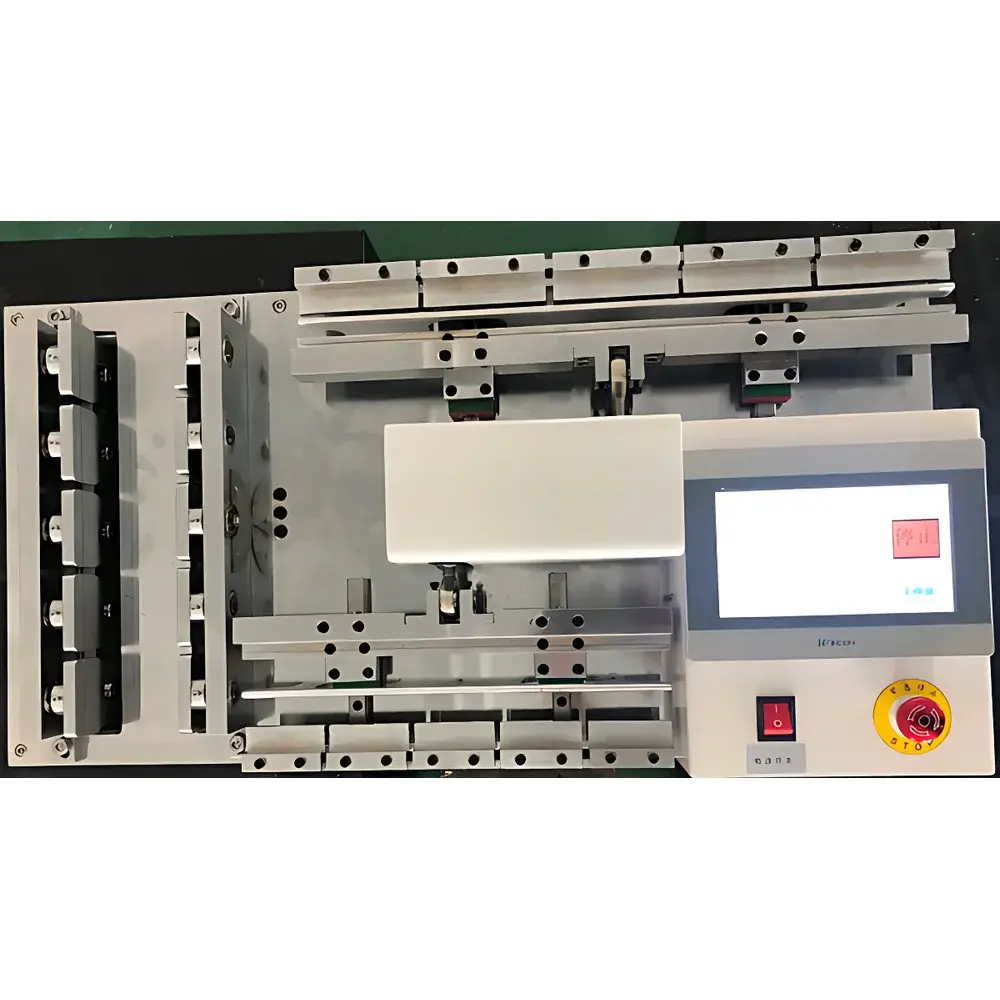
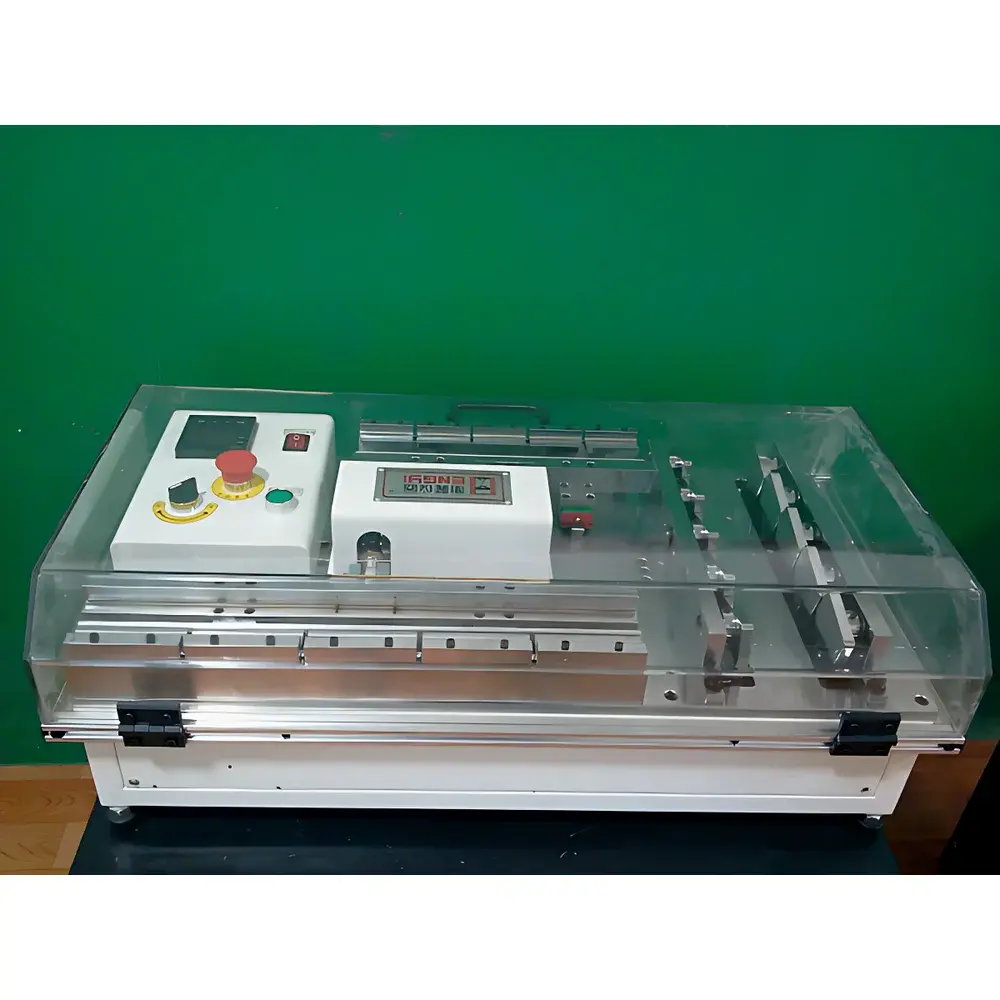
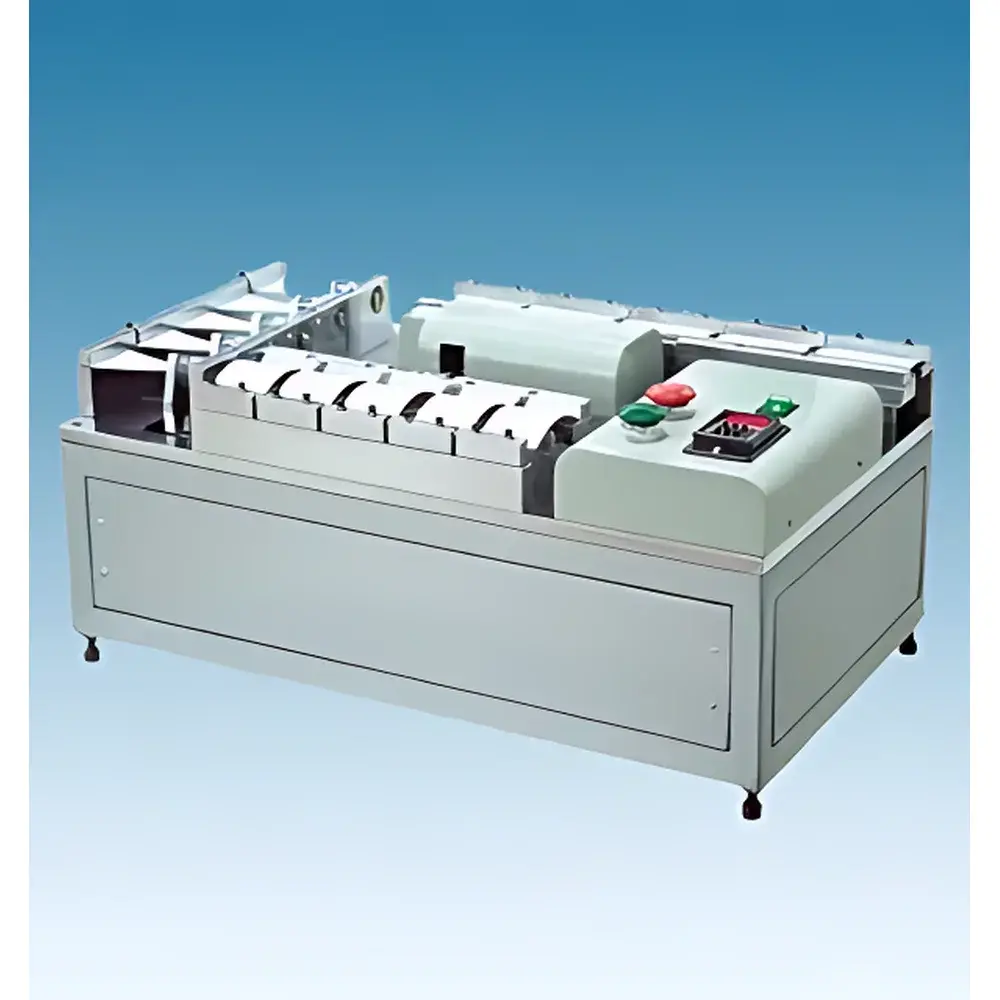
| Test Stations | 15 stations (5 long-edge bending, 5 short-edge bending, 5 torsion) |
Overview
The Hengyi HY(IC)TY7HN Dual-Directional Dynamic Bending and Torsion Tester is an electromechanical test system engineered specifically for the mechanical durability evaluation of contactless and contact smart cards—such as EMV-compliant IC cards, integrated circuit cards, and magnetic stripe cards—under standardized cyclic deformation. It operates on a precisely controlled servo-driven actuation principle, combining high-fidelity angular positioning with repeatable linear displacement to simulate real-world mechanical stress during card insertion, ejection, and pocket wear. The instrument implements dual-axis dynamic loading: uniaxial bending along the card’s long or short edge, and bidirectional torsional twisting about its central longitudinal axis. Its design adheres strictly to the mechanical test requirements defined in ISO/IEC 7816-1:2018 (Physical Characteristics), ISO/IEC 10373-6:2021 (Test Methods for Cards – Part 6: Mechanical Strength), GB/T 16649.1–2016 (Identification Cards – Integrated Circuit(s) Cards – Part 1: Physical Characteristics), and GB/T 17554.1–2006 (Identification Cards – Test Methods – Part 1: Mechanical Characteristics). Unlike static flexure testers, this system delivers true dynamic fatigue assessment over thousands of cycles under programmable amplitude, frequency, and directionality.
Key Features
- Fifteen independent test stations: five configured for long-edge bending, five for short-edge bending, and five for torsional twisting—enabling parallel, statistically robust multi-sample evaluation.
- Non-contact optical encoder-based cycle counting with resolution ≤1 count and near-zero failure rate—eliminating mechanical switch wear and signal bounce artifacts inherent in legacy systems.
- Adjustable displacement profiles: long-edge deflection range 2–20 mm (±0.5 mm repeatability), short-edge 1–10 mm (±0.5 mm), and torsional angle ±15° (±1° accuracy) with reversible 30° total swing about a fixed 86 mm diameter reference arc.
- Programmable test speed: fixed-frequency operation at 0.5 Hz (30 rpm equivalent) ensures compliance with ISO 10373-6 timing protocols for mechanical endurance validation.
- STK AC adjustable-speed motor coupled with high-ratio precision gear reduction delivers smooth torque transmission and stable low-speed motion without step loss or resonance.
- Fixture geometry conforms precisely to ISO/IEC 7816 Annex A dimensions—including card thickness (0.76 mm ±0.08 mm), corner radius (3.18 mm), and chamfer specifications—ensuring metrological traceability across laboratories.
Sample Compatibility & Compliance
The HY(IC)TY7HN accommodates standard ID-1 format cards (85.6 × 53.98 × 0.76 mm) per ISO/IEC 7816-1, including PVC, PET, polycarbonate, and composite substrate cards embedding silicon ICs, RFID antennas, or magnetic stripes. It supports both single-layer and laminated constructions used in banking, transportation, healthcare, and government ID applications. All test parameters—including displacement limits, angular tolerances, and cycle sequencing—are aligned with the pass/fail criteria specified in ISO/IEC 10373-6 Clause 7 (Bending Test) and Clause 8 (Torsion Test), as well as GB/T 17554.1–2006 Sections 4.2 and 4.3. The system satisfies pre-market conformity testing requirements for CE marking (under EN 14450 for secure document durability) and supports audit-ready documentation for ISO/IEC 17025-accredited labs conducting third-party certification.
Software & Data Management
While the base configuration operates via front-panel digital controls and manual parameter entry, optional PC-integrated firmware enables automated test sequencing, real-time cycle logging, and timestamped event capture. Data output complies with CSV and XML formats compatible with LIMS integration. For regulated environments—including those operating under GLP or GMP frameworks—the optional software package includes user access control, electronic signature support, and full audit trail functionality compliant with FDA 21 CFR Part 11 requirements. Calibration records, maintenance logs, and test reports are stored with immutable metadata (operator ID, date/time, environmental conditions if interfaced with external sensors), ensuring full traceability from raw data to final certificate.
Applications
- Pre-certification mechanical endurance screening for EMV Level 1 and Level 2 card issuers and personalization bureaus.
- Material qualification of new card substrates (e.g., bio-PVC, recycled PETG) against bending stiffness and torsional resilience benchmarks.
- Failure mode analysis of delamination, chip cracking, antenna fracture, or contact pad fatigue under repeated flexural stress.
- Validation of lamination bond strength between layers in multi-material smart cards subjected to asymmetric strain distributions.
- Supporting R&D efforts in next-generation flexible electronics, including bendable NFC tags and stretchable IC carriers.
- Contract testing services for national metrology institutes and accredited certification bodies performing inter-laboratory comparisons per ISO/IEC 17043.
FAQ
Does the HY(IC)TY7HN comply with ISO/IEC 10373-6:2021 for torsion testing?
Yes—the torsion station applies bidirectional angular displacement of ±15° at a nominal rate of 0.5 Hz, matching the exact waveform and dwell time specified in Clause 8.2.2.
Can the system be calibrated and certified to ISO/IEC 17025 standards?
Yes—Hengyi provides factory calibration certificates traceable to NIM (National Institute of Metrology, China); users may engage third-party accreditation bodies for on-site verification.
Is fixture customization available for non-ID-1 card formats?
Yes—custom tooling for mini-SIM, micro-SIM, or specialized industrial token geometries can be developed under NDA, subject to mechanical feasibility review.
What maintenance intervals are recommended for long-term reliability?
Gearbox lubrication every 12 months; optical encoder cleaning quarterly; full mechanical alignment check annually or after 50,000 cycles—documented in the included maintenance log template.
Does the tester support automated pass/fail decision logic based on cycle count and visual inspection input?
Not natively—but the optional software module accepts operator-entered pass/fail flags per station and generates summary statistics (e.g., median cycles-to-failure, Weibull distribution parameters) for statistical process control.



