
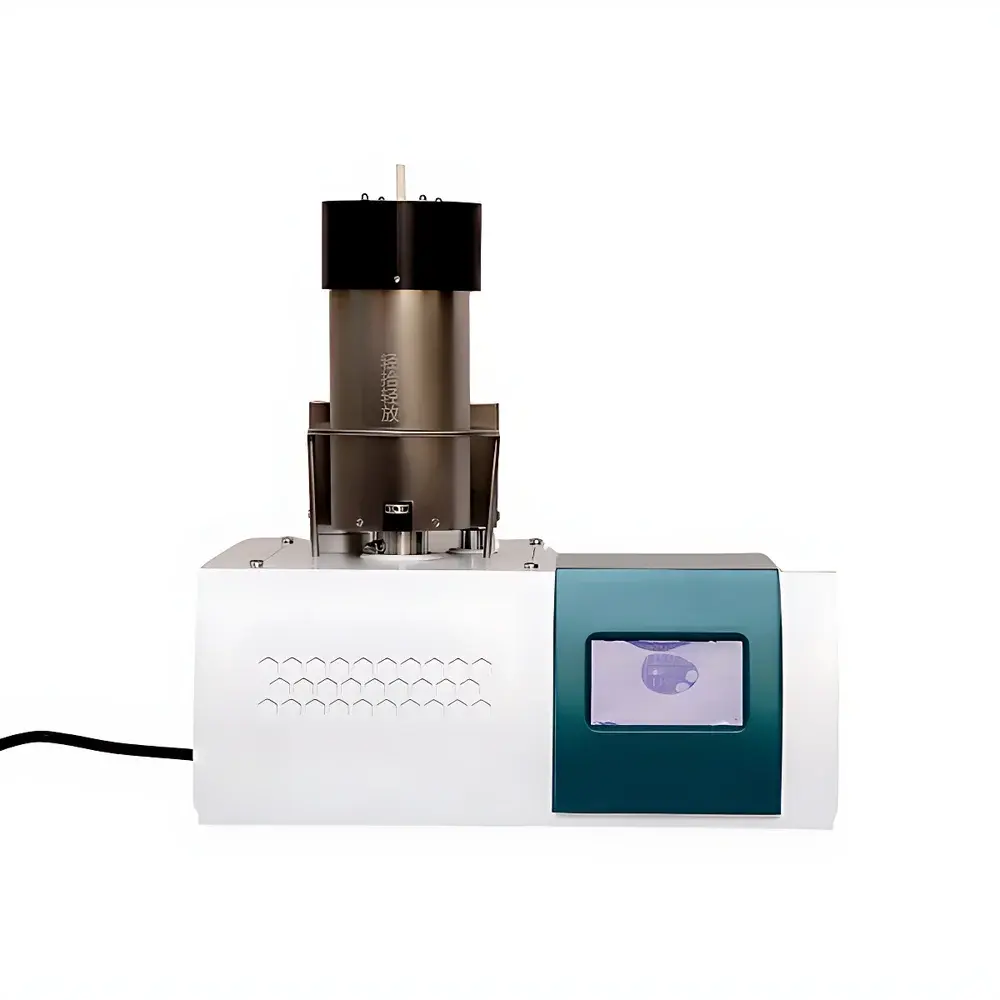
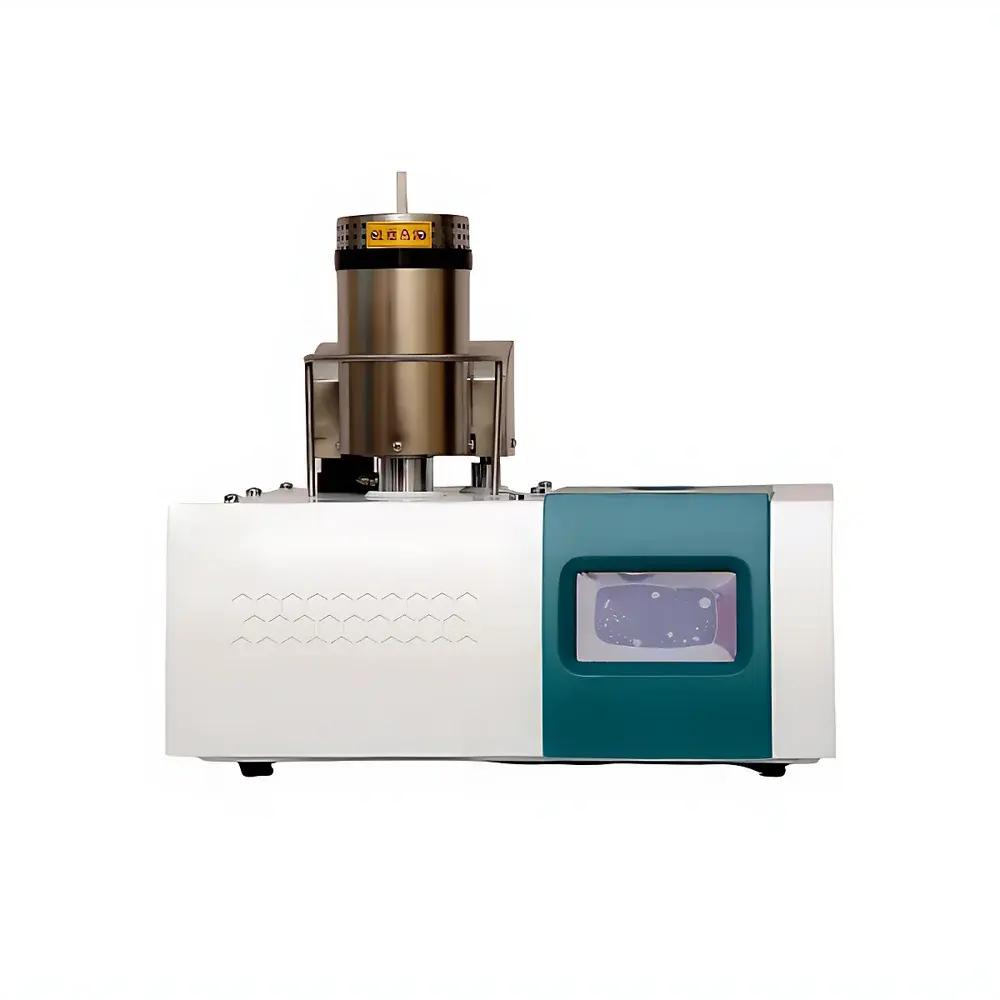

Henven HCR Series Differential Thermal Analyzer
| Brand | Henven |
|---|---|
| Origin | Beijing, China |
| Manufacturer Type | Direct Manufacturer |
| Regional Classification | Domestic (China) |
| Model | HCR |
| Price Range | USD 10,800–15,000 (FOB Beijing) |
| Sample Capacity | Single-sample configuration |
| Instrument Type | Differential Thermal Analysis (DTA) |
| Temperature Range | RT to 1150 °C (HCR-1), RT to 1250 °C (HCR-2), RT to 1450 °C (HCR-3), RT to 1550 °C (HCR-4) |
| Programmable Temperature Control | Heating and Isothermal Hold |
| Temperature Accuracy | ±0.1 °C |
| Operating Mode | Fully Automated |
| Heating/Cooling Rate | 0.1–100 °C/min |
| Scan Modes | Dynamic heating, isothermal stabilization |
| Temperature Precision | ±0.1 °C |
| DSC Signal Range | ±1 mW to ±500 mW |
| Temperature Stability (Drift) | ≤0.1 °C over 24 h |
| DTA Resolution | 0.01 µV |
| DTA Noise Level | <0.01 µV |
| Voltage Input Range | ±10 µV to ±2000 µV (auto-ranging) |
| Vacuum Capability (Optional) | 2.5×10⁻² Pa |
| Atmosphere Control | Dual-channel mass flow controller (MFC)-based gas delivery with automatic switching |
| Standard Crucibles | Al₂O₃ (0.06 mL or 0.12 mL) |
| Optional | Aluminum, graphite, quartz, platinum |
| Isothermal Duration | Up to 72 h at any setpoint within operating range |
| Calibration Standards Supported | Indium, tin, lead (for temperature and enthalpy calibration) |
Overview
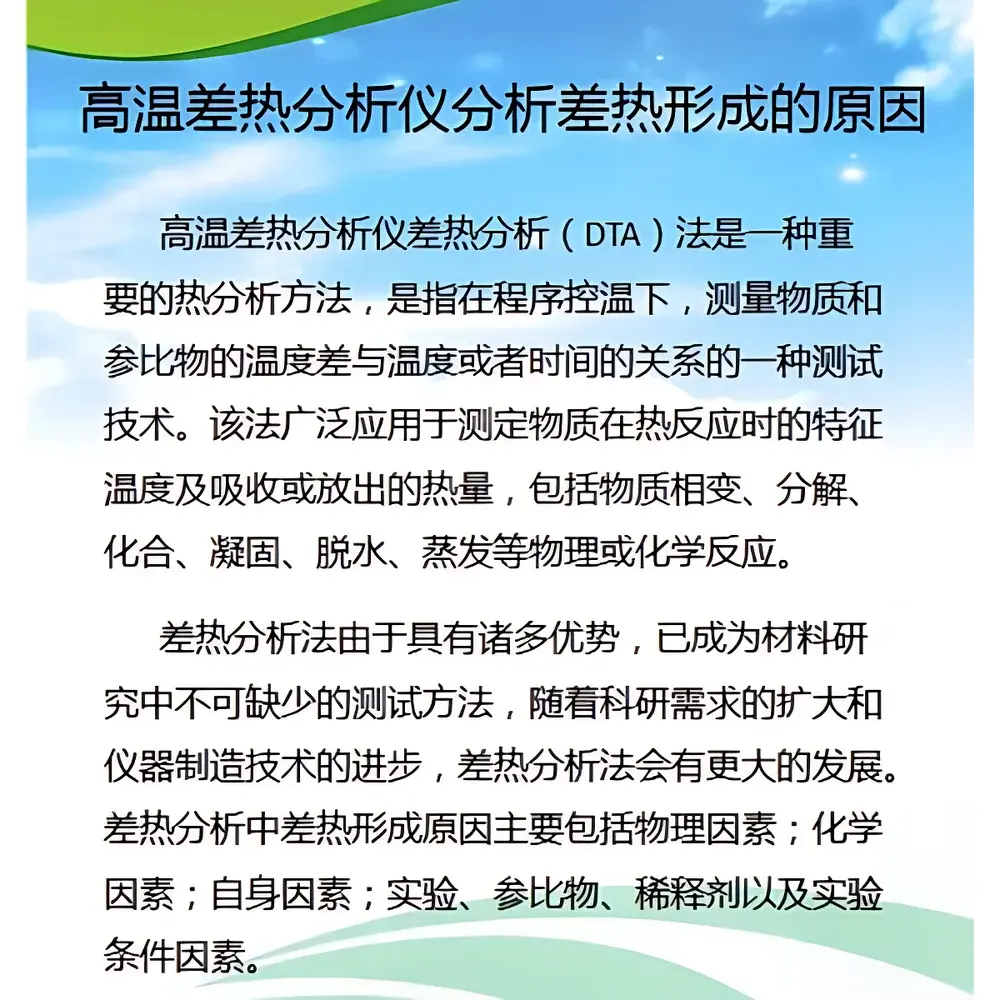
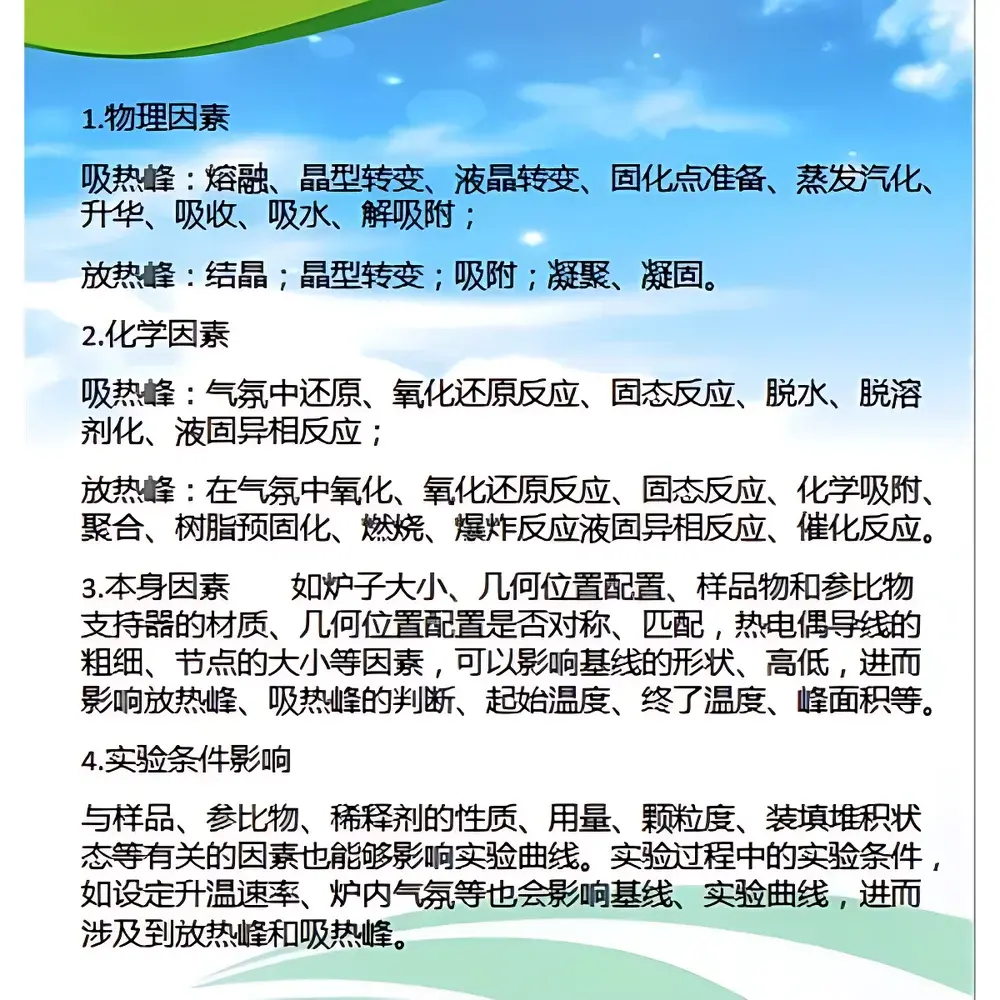
The Henven HCR Series Differential Thermal Analyzer (DTA) is a precision benchtop thermal analysis system engineered for quantitative measurement of temperature differentials between a sample and an inert reference material under controlled thermal programs. Operating on the fundamental principle of differential thermometry—where two thermocouples independently monitor sample and reference temperatures—the HCR delivers high-fidelity DTA signals reflecting endothermic and exothermic transitions without direct heat flow calibration. Unlike DSC instruments that quantify energy absorption or release, the HCR’s DTA architecture provides robust, drift-compensated thermal event detection ideal for phase transition identification, oxidation induction time (OIT) assessment, glass transition screening, and comparative thermal stability evaluation. Its modular furnace design supports four operational temperature tiers (up to 1550 °C), enabling routine characterization of ceramics, refractories, metallurgical alloys, and high-performance polymers across academic, quality control, and R&D laboratories.
Key Features
- Four configurable temperature models (HCR-1 to HCR-4) covering RT–1150 °C through RT–1550 °C, each with independent furnace calibration and thermal shielding
- Dual high-stability thermocouple system: one continuously monitors furnace block temperature (active or idle), the second measures real-time sample temperature during operation
- Auto-ranging analog input (±10 µV to ±2000 µV) with 0.01 µV resolution and sub-0.01 µV RMS noise floor ensures detection of subtle thermal events
- Integrated dual-gas atmosphere control using precision mass flow controllers (MFCs), supporting programmable switching between inert, oxidative, or reducing atmospheres during a single run
- 72-hour isothermal capability at any temperature within range—critical for long-term stability testing and oxidation induction period (OIP/OIT) determination per ASTM D3895 and ISO 11357-6
- Onboard crystallization kinetics module and step-cooling curve generation for nucleation/growth modeling in polymer and pharmaceutical systems
- Modular hardware interface for optional vacuum pump integration (2.5×10⁻² Pa base pressure) and GC/MS coupling via heated transfer line (RT–200 °C)
- Self-calibrating thermal baseline with user-accessible In, Sn, and Pb reference protocols for traceable temperature and enthalpy validation
Sample Compatibility & Compliance
The HCR accommodates standard ceramic crucibles (0.06 mL or 0.12 mL Al₂O₃), with optional crucible materials—including aluminum (for low-T polymer studies), graphite (for high-T carbonaceous samples), quartz (for UV-transparent or low-mass applications), and platinum (for corrosive or high-oxidation environments). All crucible interfaces are mechanically registered and thermally isolated to minimize parasitic conduction. The instrument complies with essential design requirements outlined in ISO 11357 (Plastics—Differential Scanning Calorimetry), ASTM E794 (Melting and Crystallization Temperatures by DTA), and ICH Q5C (Stability Testing of Biotechnological Products). While classified as a DTA system—not a regulated DSC—it supports GLP-compliant data acquisition when paired with audit-trail-enabled software (available as optional upgrade), including electronic signatures, metadata logging, and raw signal immutability per FDA 21 CFR Part 11 guidelines.
Software & Data Management
Henven’s proprietary HCR Analysis Suite runs on Windows-based workstations and provides full control of thermal programs, real-time signal visualization, and post-run quantitative analysis. Core functions include peak onset/offset detection, area integration (for relative enthalpy estimation), baseline subtraction (tangent, polynomial, or spline), OIT calculation (onset vs. extrapolated baseline), and multi-curve comparison overlays. Advanced modules support Avrami kinetic modeling, Ozawa-Flynn-Wall activation energy estimation, and comparative specific heat determination via the ASTM E1269 dual-step method. All data files are saved in vendor-neutral ASCII format (.txt) with timestamped metadata headers, facilitating third-party import into MATLAB, Origin, or Python-based analysis pipelines. Screen capture functionality allows annotation at any acquisition point, and auto-scale adjustment ensures optimal signal-to-noise utilization across wide dynamic ranges.
Applications
- Determination of melting points, eutectic temperatures, and solidus/liquidus boundaries in metal alloys and solder pastes
- Oxidation induction time (OIT) testing of polyolefins and stabilizer packages per ASTM D3895 and ISO 11357-6
- Thermal degradation profiling of composites, carbon fibers, and ceramic matrix precursors
- Crystallization behavior analysis in semi-crystalline polymers (e.g., PP, PET, PEEK) under varying cooling rates
- Phase transformation mapping in shape-memory alloys and ferroelectric ceramics
- Decomposition onset and reaction enthalpy estimation for energetic materials and catalysts
- Quality assurance screening of batch-to-batch consistency in pharmaceutical excipients and APIs
FAQ
Is the HCR compliant with ISO/IEC 17025 requirements for accredited testing labs?
Yes—when operated with documented calibration procedures (using NIST-traceable standards), validated software settings, and maintained environmental logs, the HCR meets technical competence criteria for thermal analysis under ISO/IEC 17025:2017 Annex B.
Can the HCR be used for quantitative DSC-like measurements?
No—it is a true DTA system. While it reports ΔT vs. T, it does not directly output heat flow (mW) or specific heat (J/g·K). However, relative enthalpy comparisons and OIT quantification are fully supported.
What maintenance is required for long-term stability?
Annual thermocouple verification, MFC recalibration, and furnace insulation inspection are recommended. No consumable sensors require replacement under normal operation.
Does the system support purge gas humidification or reactive gas mixing?
Standard configurations support dry gas switching only. Custom-engineered versions with humidity generators or gas blending manifolds are available upon technical specification review.
Is remote operation possible?
Yes—Ethernet-enabled control and data streaming are supported via TCP/IP protocol; integration with LabView or Python APIs is documented in the developer toolkit.
Related Products



