
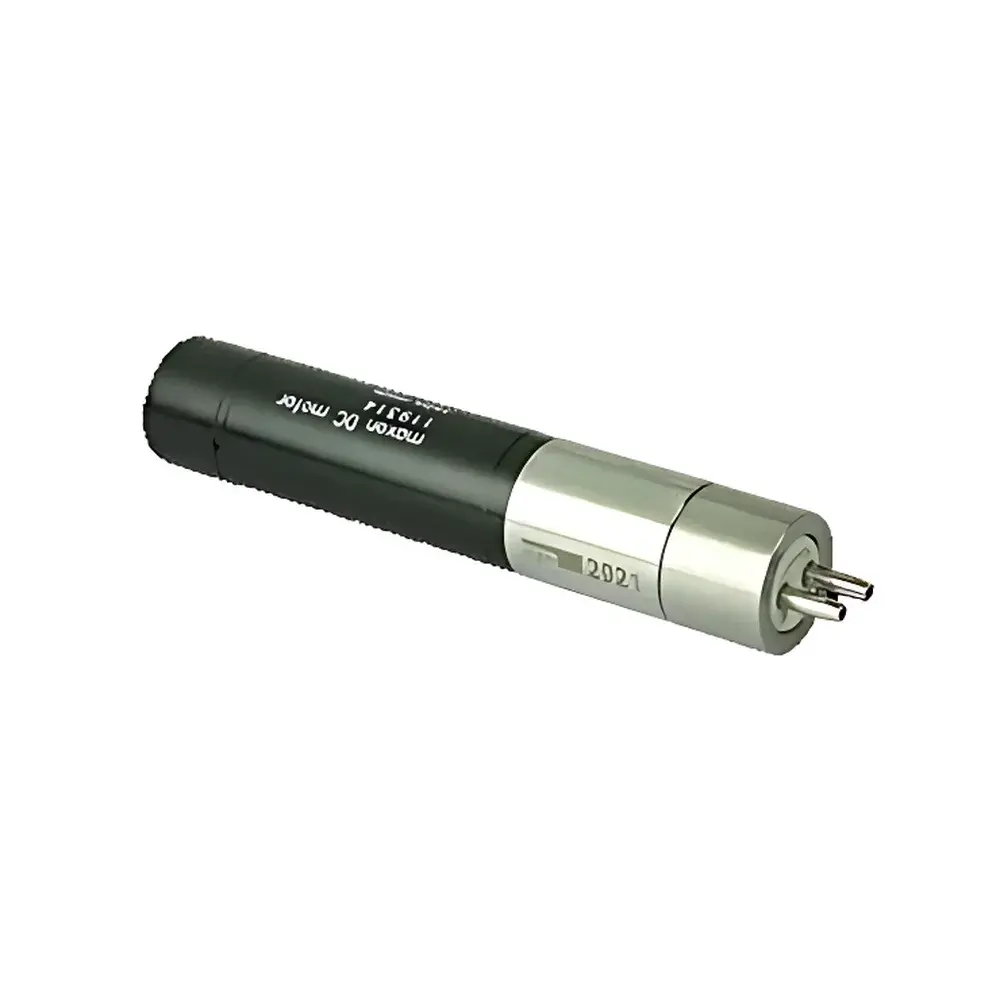
HNPM MZR-2921 Low-Pressure Micro-Dosing Peristaltic Pump
| Brand | HNPM |
|---|---|
| Origin | Germany |
| Model | MZR-2921 |
| Flow Rate | 0.3–18 mL/min |
| Speed Range | 100–6000 rpm |
| Precision (CV) | <1% |
| Displacement | 3 µL |
| Minimum Dose | 0.5 µL |
| Max Differential Pressure | 3 bar |
| Inlet Pressure Limit | 1 bar |
| Operating Temperature | −20 to +60 °C |
| Weight | ~56 g |
| Motor | Brushed DC, 18 V, Hall-effect encoder (16 pulses/rev) |
| Communication | RS-232, CANopen (DSP 301/DSP 402) |
| Wetted Materials | SS 316L, ceramic, tungsten carbide, nickel-based alloy, epoxy |
| Shaft Seal | graphite-reinforced PTFE/SS 316L |
| Static Seals | FPM (optional EPDM/FFPM) |
| Tubing Connection | 2 mm OD slip-fit (optional manifold M2.1) |
Overview
The HNPM MZR-2921 is a precision-engineered low-pressure micro-dosing peristaltic pump designed for integration into analytical instrumentation and automated laboratory systems where reproducible, pulse-minimized fluid delivery at microliter-scale resolution is critical. Unlike conventional peristaltic pumps relying on elastomeric tubing compression, the MZR-2921 employs a patented rotary micro annular gear displacement principle—achieving positive displacement via precisely machined ceramic and stainless steel gear sets rotating within a sealed chamber. This architecture eliminates pulsation-induced flow instability while maintaining exceptionally low shear stress (<0.1 Pa), making it suitable for shear-sensitive biological samples, calibration standards, and reactive solvents. Its compact cylindrical form factor (Ø13 mm × 75 mm) enables seamless OEM integration into space-constrained platforms such as HPLC autosamplers, fuel cell test rigs, IVD cartridge readers, and microfluidic assay workstations. The pump operates across a wide dynamic range—from ultra-low flow rates (down to 0.003 mL/min with optional firmware calibration) up to 18 mL/min—while sustaining volumetric accuracy with coefficient of variation (CV) consistently below 1% under GLP-compliant operating conditions.
Key Features
- Micro annular gear displacement mechanism ensures zero-pulse, laminar flow with minimal shear stress—critical for protein solutions, cell suspensions, and viscous organic solvents
- High-precision dosing capability: minimum dispense volume of 0.5 µL and repeatable displacement of 3 µL per revolution
- Robust wetted path constructed from chemically resistant materials: AISI 316L stainless steel, technical ceramics (Al₂O₃/ZrO₂), tungsten carbide, and nickel-based alloys
- Digital motor control with integrated 16-pulse-per-revolution magnetic encoder enables closed-loop speed regulation and traceable position feedback
- Standard communication interfaces: RS-232 for serial command control and CANopen (conforming to CiA DSP 301 and motion profile DSP 402) for real-time synchronization in distributed lab automation networks
- Low thermal mass design supports stable operation across −20 °C to +60 °C ambient environments without active cooling
Sample Compatibility & Compliance
The MZR-2921 is validated for continuous handling of low-to-medium viscosity fluids (0.3–100 mPa·s nominal; up to 1,000 mPa·s with reduced speed and pressure compensation). Compatible media include deionized water, aqueous buffers, methanol, acetonitrile, ethanol, light hydrocarbons, synthetic oils, and lubricants. Its fluid path complies with USP Class VI biocompatibility requirements when configured with FPM or FFPM seals. The pump meets electromagnetic compatibility (EMC) standards per EN 61326-1:2013 and carries CE marking for use in EU-based analytical instrumentation. For regulated environments—including clinical diagnostics and pharmaceutical QC labs—the device supports audit-trail-capable firmware logging when interfaced with compliant host software adhering to FDA 21 CFR Part 11 data integrity principles.
Software & Data Management
Control and configuration are managed via ASCII-based command protocol over RS-232 or CANopen object dictionary mapping. Host systems may execute calibrated flow rate setpoints, direction reversal, start/stop commands, and real-time status queries (e.g., actual speed, accumulated volume, fault codes). Optional firmware upgrades enable programmable multi-step dosing sequences with timestamped event logging. When deployed in networked lab infrastructures, the pump integrates with LabVIEW™, Python (via pySerial/pyCAN), and Beckhoff TwinCAT environments. All operational parameters—including motor current, temperature readings (via internal thermistor), and encoder counts—are accessible for trend analysis and preventive maintenance scheduling. Data export formats include CSV and JSON for LIMS ingestion and statistical process control (SPC) charting.
Applications
- Analytical instrumentation: solvent delivery in gradient HPLC, carrier gas humidification in GC-MS, reagent metering in flow-injection analysis (FIA)
- Fuel cell R&D: precise anolyte/catholyte dosing in PEM and SOFC test stations
- In vitro diagnostics: metered delivery of wash buffers, conjugates, and substrates in ELISA and lateral flow analyzers
- Lab automation: syringe-free liquid handling in robotic workcells requiring high cycle life (>10⁷ operations) and low maintenance intervals
- Microreactor feeding: controlled stoichiometric addition of catalysts or monomers in continuous-flow synthesis platforms
FAQ
What is the maximum allowable backpressure during operation?
The MZR-2921 is rated for differential pressures up to 3 bar. However, inlet pressure must not exceed 1 bar to prevent seal extrusion and ensure long-term reliability of the graphite-reinforced PTFE shaft seal.
Can the pump handle abrasive or particulate-laden fluids?
It is not recommended for slurries or fluids containing suspended solids >5 µm. Ceramic and tungsten carbide components provide excellent wear resistance against clean solvents but are vulnerable to third-body abrasion.
Is firmware update support available for custom dosing profiles?
Yes—HNPM provides documented API specifications and offers OEM firmware customization services, including user-defined ramp profiles, multi-phase dispensing logic, and error-handling routines compliant with IEC 62304.
How does the pump achieve CV <1% precision across its full flow range?
Through factory calibration against gravimetric reference standards at multiple speed points, combined with real-time encoder feedback and temperature-compensated motor drive algorithms.
Are explosion-proof variants available for hazardous area use?
Standard units are not ATEX-certified; however, intrinsically safe versions with galvanically isolated power and signal paths can be supplied upon request under customized engineering agreement.



