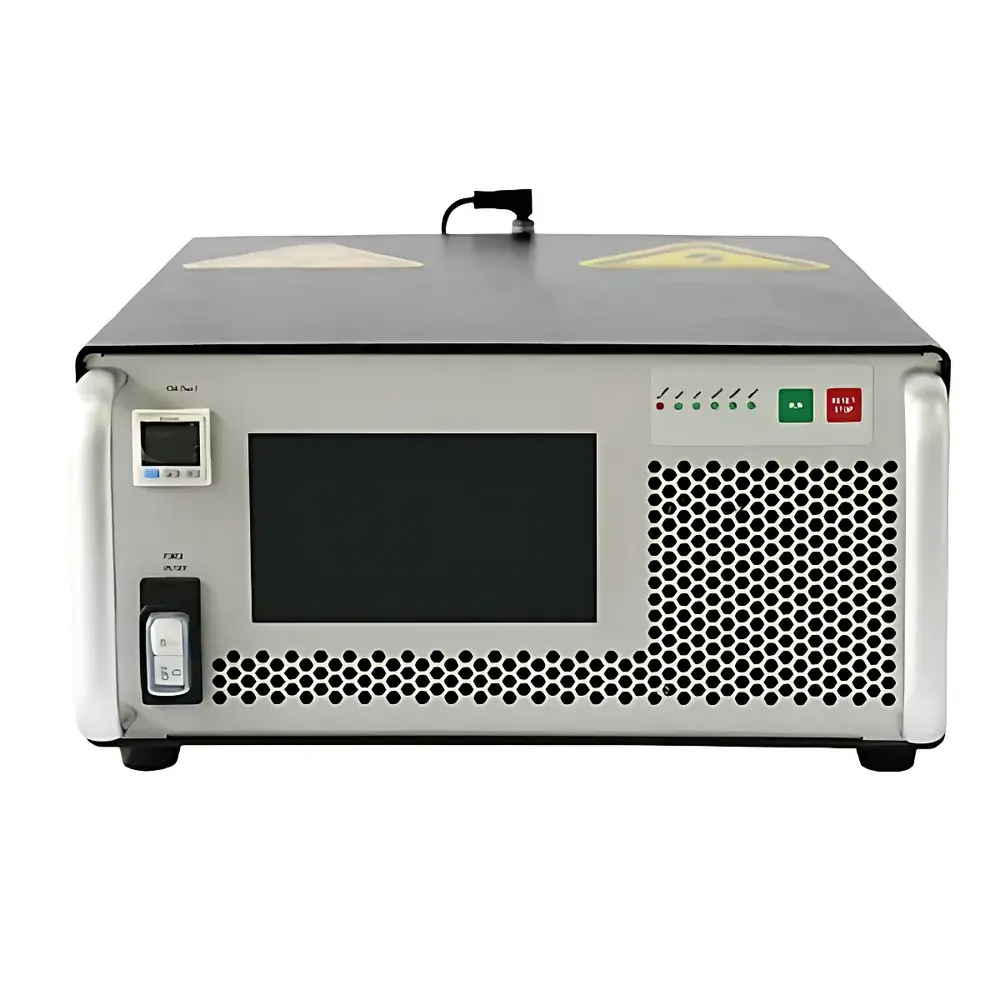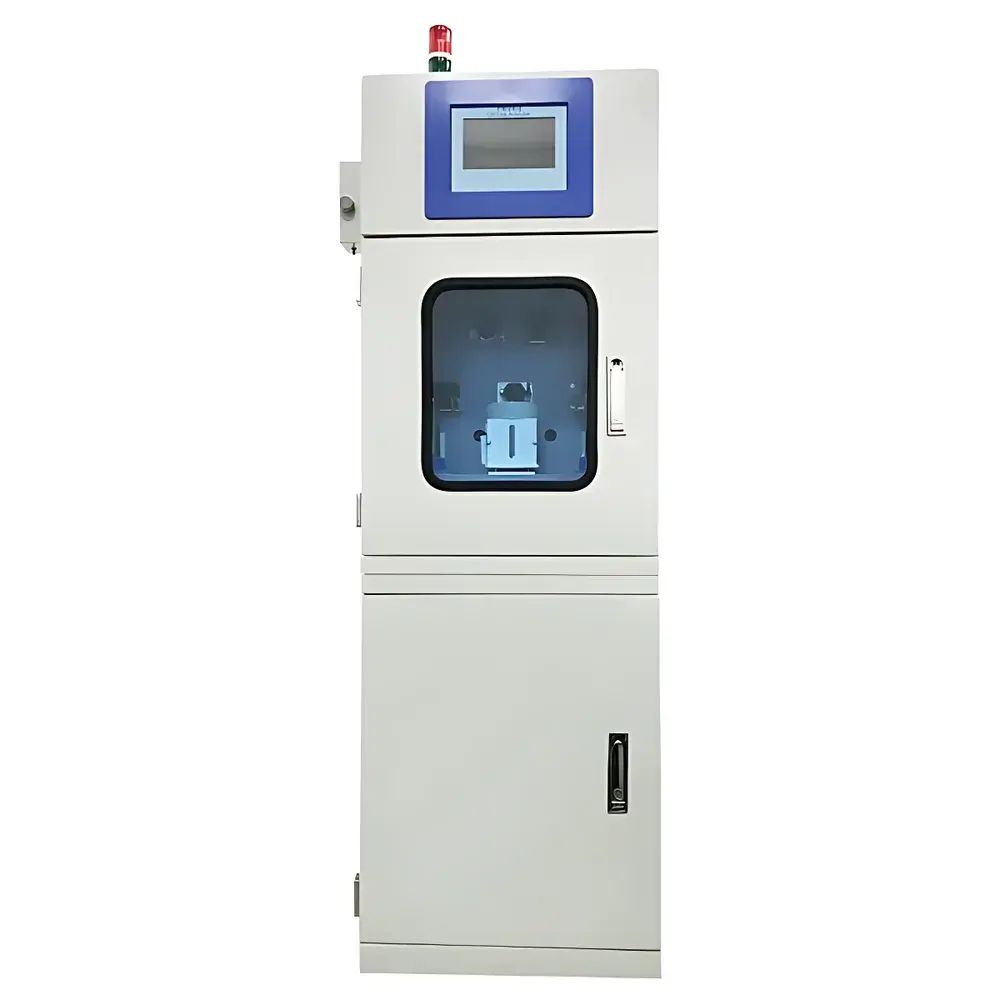
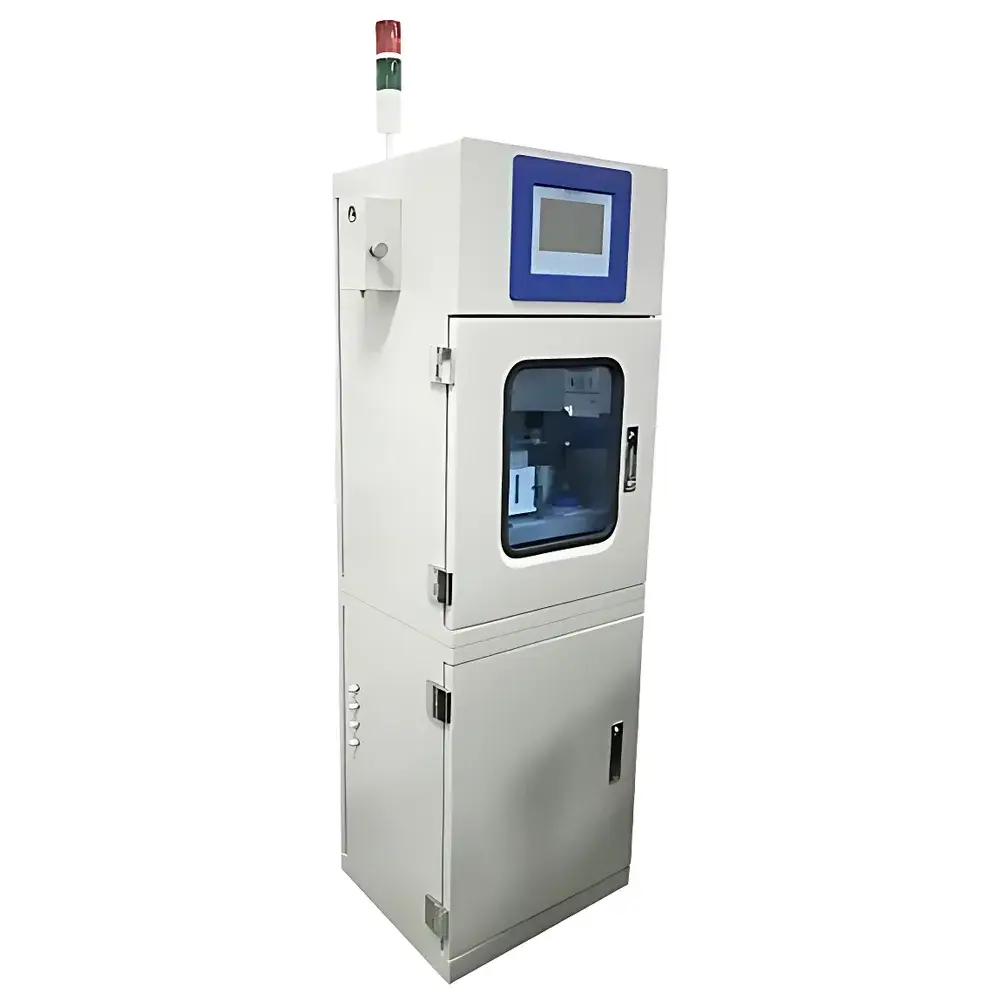
HOGON ALT Online Hydrogen Ion Concentration Analyzer for Saponification Liquor
| Brand | HOGON |
|---|---|
| Model | ALT Online Hydrogen Ion Concentration Analyzer for Saponification Liquor |
| Origin | Shanghai, China |
| Manufacturer | HOGON Scientific Instruments Co., Ltd. |
| Type | Automated Potentiometric & Colorimetric Online Titrator |
| Price Range | USD 14,000 – 42,500 (FOB Shanghai) |
| Compliance | CE-marked, ISO 9001–certified manufacturing |
| Processor | ARM Cortex-A8 |
| Display | 7-inch full-color capacitive touchscreen (Chinese/English UI) |
| Titration Modes | pH, redox, complexometric, precipitation, non-aqueous, and colorimetric titration |
| Detection Endpoints | Dual-mode endpoint recognition (potentiometric slope analysis + high-resolution RGB color transition detection) |
| Fluid Handling | Electromagnetic switching valves, long-life solvent pumps, precision burettes (±0.002 mL resolution) |
| Connectivity | RS-232, TCP/IP, Modbus RTU/TCP |
| Data Output | Structured CSV/JSON via Ethernet |
| Software | HOGON TitraLink™ v3.2 (supports GLP-compliant audit trail, user access levels, method versioning, and electronic signature per FDA 21 CFR Part 11) |
Overview
The HOGON ALT Online Hydrogen Ion Concentration Analyzer for Saponification Liquor is an industrial-grade, fully automated online titrator engineered for continuous, unattended monitoring and control of hydrogen ion activity (pH-related acidity) in alkaline saponification baths used in metal surface treatment, electroplating, and chemical manufacturing processes. Unlike conventional benchtop pH meters or single-parameter sensors, this system implements true analytical chemistry—performing standardized titrimetric quantification in situ. It operates on the principle of potentiometric and/or colorimetric endpoint detection during controlled reagent addition, delivering traceable, metrologically sound concentration values (expressed as acid number, free alkali content, or equivalent H⁺ activity) rather than inferred voltage signals. The analyzer is designed to replace manual grab-sample titration in production environments where real-time stoichiometric feedback is required to maintain bath composition within narrow operational windows—critical for consistent coating adhesion, corrosion resistance, and process yield.
Key Features
- Modular architecture enabling field-reconfigurable titration modules (pH, redox, colorimetric, complexometric) without hardware replacement
- Dual-endpoint detection: simultaneous real-time monitoring of electrode potential gradient and spectral reflectance shift (RGB-based color transition analysis at ±1.5 nm wavelength resolution)
- High-precision fluidics: dual independent burette units (0.002 mL minimum dispensing increment), electromagnetic valve manifolds rated for >500,000 cycles, and chemically resistant PTFE/NBR wetted materials
- ARM Cortex-A8 embedded controller with deterministic real-time OS; local method storage (≥50 preloaded SOPs), automatic calibration validation, and drift compensation algorithms
- Integrated process control interface: direct analog/digital I/O for proportional dosing pump activation, with configurable PID logic based on titration-derived concentration error
- Comprehensive alarm framework: multi-level fault detection covering sample flow interruption, electrode response timeout, reagent depletion, power anomaly, and out-of-spec result deviation
Sample Compatibility & Compliance
The ALT analyzer accommodates saponification liquors with total alkalinity ranging from 0.1 to 20 g/L NaOH-equivalent, suspended solids ≤50 ppm, temperature 10–50 °C, and viscosity <20 cP. It supports automatic dilution for high-concentration streams and handles samples containing surfactants, chelators, and organic solvents typical in metal cleaning formulations. All wetted components comply with USP Class VI and FDA 21 CFR 177.2600 material requirements. The system meets IEC 61000-6-2/6-4 for industrial electromagnetic compatibility and carries CE marking under the Machinery Directive 2006/42/EC and EMC Directive 2014/30/EU. Method validation documentation aligns with ASTM D974 (acid number), ISO 3630 (alkalinity titration), and ISO/IEC 17025–accredited laboratory practice guidelines.
Software & Data Management
HOGON TitraLink™ software provides a secure, role-based web interface accessible via Ethernet or local touchscreen. It enforces GLP/GMP data integrity through time-stamped audit trails, electronic signatures (per 21 CFR Part 11 Subpart B), and immutable method version control. Raw titration curves, derivative plots, endpoint coordinates, and final concentration values are stored in SQLite databases with optional synchronization to SQL Server or cloud-based MES platforms via RESTful API. Data export supports CSV, PDF reports (with digital signature), and OPC UA server integration for real-time SCADA ingestion. Remote diagnostics and firmware updates are supported over TLS-encrypted connections.
Applications
This analyzer is deployed in continuous-process environments including: zinc/phosphate conversion coating lines, aluminum anodizing pretreatment tanks, PCB alkaline etch regeneration systems, textile scouring bath control, and wastewater neutralization reactors. It enables closed-loop dosing of acetic acid, citric acid, or CO₂ to stabilize saponification equilibrium—reducing chemical consumption by up to 22% versus fixed-dose strategies (verified in third-party audits). Cross-industry use cases include monitoring hydroxide concentration in caustic soda recovery loops, tracking free lime in pulp mill white liquor, and quantifying residual alkali in food-grade cleaning-in-place (CIP) rinse water.
FAQ
What titration methods does the ALT system support?
It executes standardized pH, redox, complexometric, precipitation, non-aqueous, and colorimetric titrations—automatically selecting appropriate electrodes (e.g., double-junction Ag/AgCl, platinum, glass pH) and photometric sensors based on method configuration.
Can it integrate with existing PLC-based control systems?
Yes—via native Modbus TCP/RTU, analog 4–20 mA outputs, or digital dry-contact relays; custom protocol bridging (e.g., Profibus, EtherNet/IP) is available upon request.
How frequently does the system require maintenance?
Electrode recalibration is recommended every 72 hours of continuous operation; full fluidic system cleaning and valve inspection are scheduled every 3 months under typical industrial duty cycles.
Is remote monitoring and troubleshooting possible?
All units include embedded SSH/TLS-enabled remote access; HOGON’s technical support team can perform secure diagnostic sessions with customer authorization and audit-log recording.
Does the analyzer meet regulatory requirements for pharmaceutical or food-grade applications?
When configured with USP Class VI tubing, electropolished 316L stainless steel fittings, and validated cleaning protocols, it satisfies GMP Annex 11 and FSMA traceability mandates for critical process parameter monitoring.