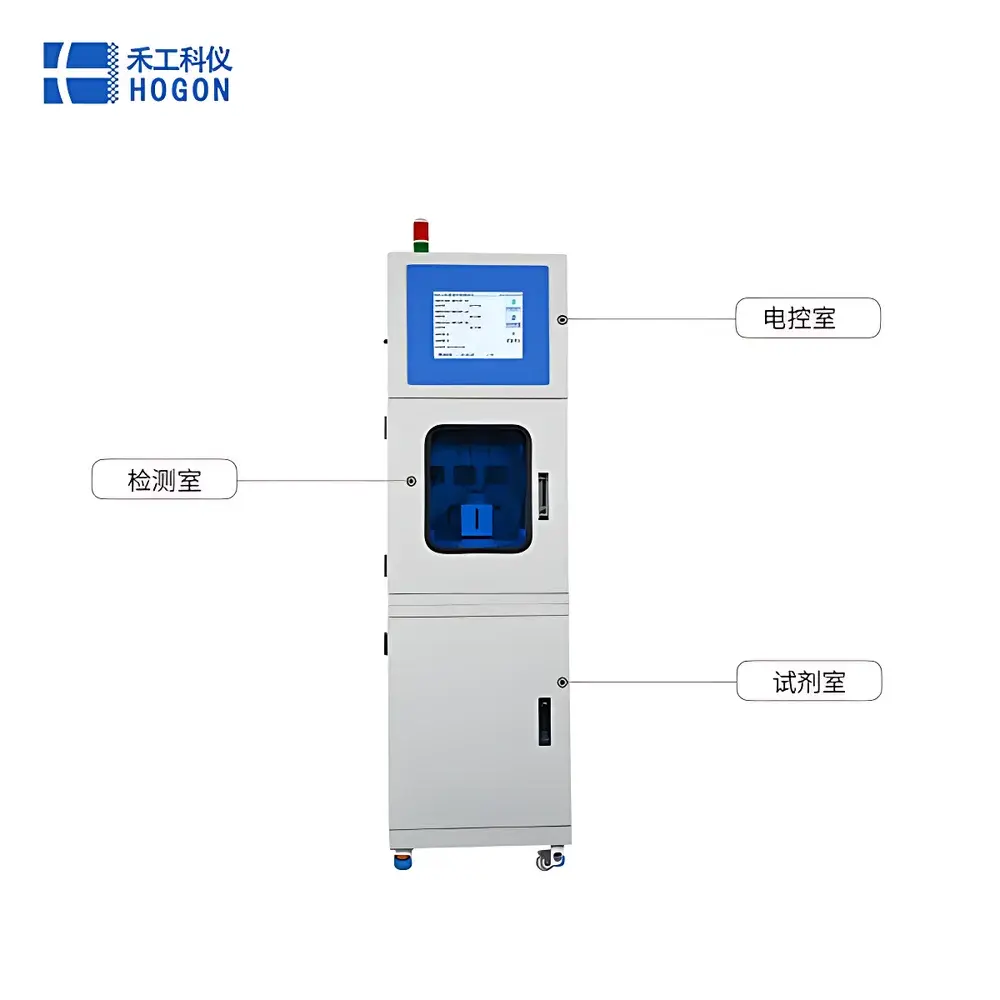
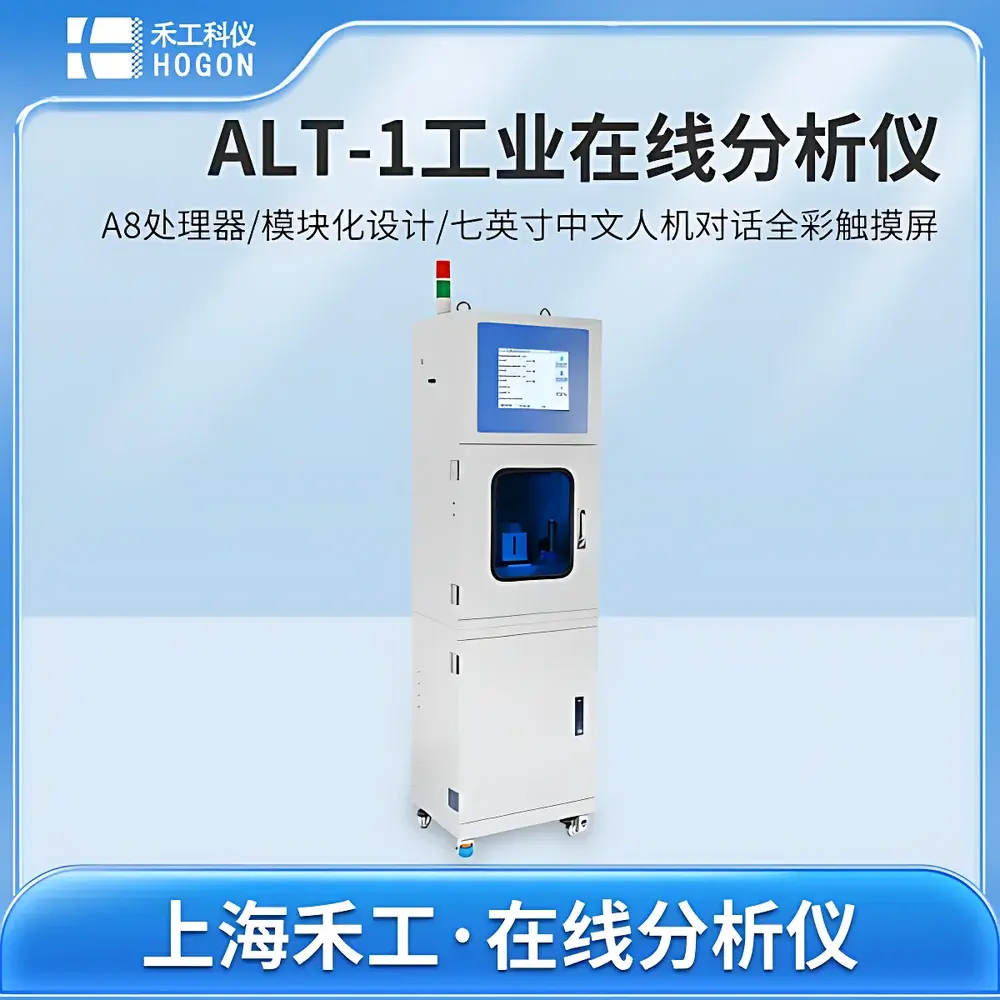
HOGON ALT-PH Series Online Sodium Carbonate Concentration & pH Analyzer for Developer Tanks
| Brand | HOGON |
|---|---|
| Origin | Shanghai, China |
| Manufacturer Type | Direct Manufacturer |
| Product Category | Domestic |
| Model | ALT-PH Series |
| Pricing | Upon Request |
| Output Signals | Modbus TCP, RS-232/485, CAN, 4–20 mA |
| Environmental Operating Conditions | ≤90% RH (non-condensing), 10 °C minimum |
| Resolution | Potentiometric input: 0.1 mV (−2000 to +2000 mV) |
| pH | 0.001 pH (0–20 pH) |
| Photometric absorbance | 0.003 Abs (0–1 Abs) |
| Enclosure Rating | IP55/IP65 (achieved when door is closed and latched) |
| Titration Precision | ±1 µL volumetric delivery accuracy (20 mL burette) |
Overview
The HOGON ALT-PH Series Online Sodium Carbonate Concentration & pH Analyzer is an industrial-grade, fully automated process analytical instrument engineered for continuous, real-time monitoring of sodium carbonate (Na2CO3) concentration and pH in developer tanks used in printed circuit board (PCB) manufacturing, semiconductor photolithography, and high-resolution printing processes. Unlike conventional offline titration or handheld pH meters, the ALT-PH integrates potentiometric pH sensing with precision acid-base titration—based on standardized ASTM D1293 (pH of water) and ISO 3696 (water for analytical laboratory use)—to deliver traceable, reproducible measurements directly within the process stream. The system operates on a dual-measurement principle: first, a calibrated pH composite electrode provides continuous alkalinity tracking; second, an onboard micro-titrator performs automatic, endpoint-determined titration using standardized hydrochloric acid (0.1 mol/L HCl) to quantify total alkalinity attributable to carbonate species. This dual-mode architecture ensures compliance with process-critical control limits defined by IPC-4552A (electroless nickel immersion gold plating) and JEDEC J-STD-020 (moisture sensitivity levels), where deviations in developer chemistry directly correlate with pattern resolution loss, undercutting, or resist delamination.
Key Features
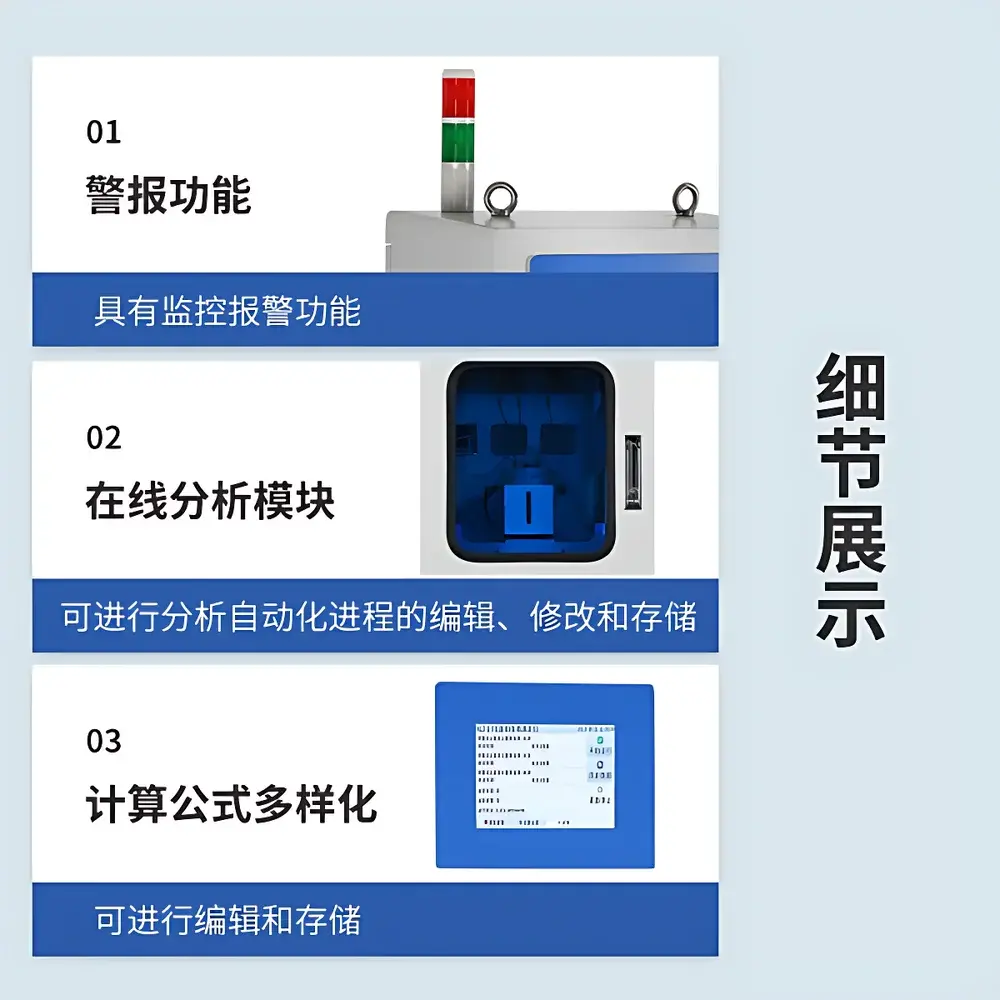
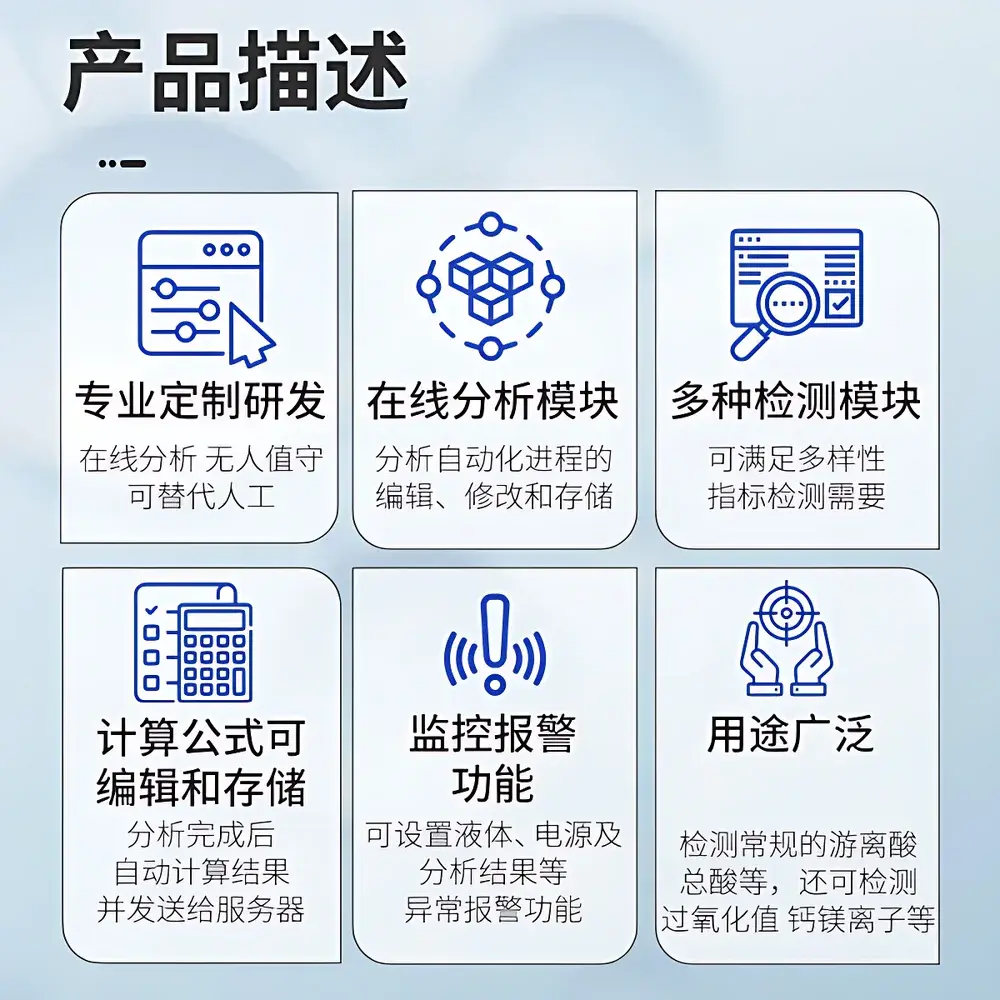
- Automated dual-parameter analysis: Simultaneous real-time pH measurement and sodium carbonate quantification via acid-base titration
- High-precision dispensing module with ±1 µL volumetric accuracy using a 20 mL glass syringe burette, meeting ISO 8655-3 requirements for piston burettes
- Triple-point pH electrode calibration support (pH 4.01, 6.86, 9.18 buffers) with NIST-traceable verification logs
- Robust enclosure rated IP55/IP65 (when door sealed), suitable for humid, chemically aggressive environments typical of wet-process bays
- Multi-protocol digital output: native Modbus TCP for SCADA integration, plus RS-232/485 and CAN bus for legacy PLC compatibility
- Analog 4–20 mA outputs configurable per parameter (pH, Na2CO3 g/L, or titration status)
- Onboard data logging with timestamped audit trail, supporting GLP-compliant record retention
Sample Compatibility & Compliance
The ALT-PH analyzer is validated for use with aqueous developer solutions containing sodium carbonate at concentrations ranging from 0.5 to 15 g/L and operating pH values between 10.2 and 12.8—a range aligned with standard PCB alkaline developer formulations (e.g., Na2CO3/NaOH blends). Sample handling employs chemically resistant PTFE and PVDF fluidic pathways, minimizing adsorption or cross-contamination. All measurement procedures adhere to ISO/IEC 17025:2017 general requirements for competence of testing and calibration laboratories. The system supports 21 CFR Part 11-compliant electronic signatures and audit trails when integrated with validated LIMS or MES platforms. It meets electromagnetic compatibility standards per IEC 61326-1 and safety requirements under IEC 61010-1 for electrical equipment for measurement, control, and laboratory use.
Software & Data Management
HOGON’s proprietary ProcessLink™ firmware enables remote configuration, diagnostic monitoring, and method validation through a secure web-based interface (HTTPS/TLS 1.2). Measurement data—including raw mV signals, titration curves, endpoint detection timestamps, and calculated Na2CO3 concentration (g/L or wt%)—are stored locally on industrial-grade SD card with cyclic overwrite protection. Historical datasets export in CSV or XML format for statistical process control (SPC) analysis. Alarms trigger automatically upon deviation from user-defined setpoints (e.g., pH < 10.5 or [Na2CO3] > 12.0 g/L), generating event logs with operator acknowledgments and initiating optional pump-control interlocks via dry-contact relay outputs. Firmware updates are performed over-the-air with cryptographic signature verification to ensure integrity.
Applications
- Real-time control of alkaline developer baths in PCB inner-layer and outer-layer imaging lines
- Process validation and drift correction in semiconductor photomask development systems
- Automated replenishment dosing control based on carbonate consumption rate modeling
- Root-cause analysis of resist development defects (e.g., scumming, bridging, line width variation)
- Supporting Industry 4.0 initiatives via OPC UA-enabled data federation into digital twin platforms
FAQ
How frequently does the system perform measurements?
The default cycle time is configurable from 5 minutes to 2 hours per analysis; typical deployment uses 15-minute intervals for dynamic bath monitoring.
Is manual calibration required during routine operation?
No—electrode calibration is scheduled automatically (e.g., daily), with results logged and compared against historical baselines; manual intervention is only needed after electrode replacement or drift exceeding ±0.05 pH units.
Can the analyzer distinguish between carbonate and bicarbonate alkalinity?
Yes—the two-step potentiometric titration protocol (per ASTM D1067) allows differentiation of CO32− and HCO3− contributions through inflection point analysis of the titration curve.
What maintenance is required for long-term reliability?
Quarterly replacement of pH electrode electrolyte and annual recalibration of the burette drive mechanism; no consumables beyond standard buffer solutions and titrant reagents.
Does the system support integration with Siemens S7 or Rockwell ControlLogix PLCs?
Yes—Modbus TCP and RS-485 protocols include preconfigured function block libraries and tag mapping templates for both platforms.