
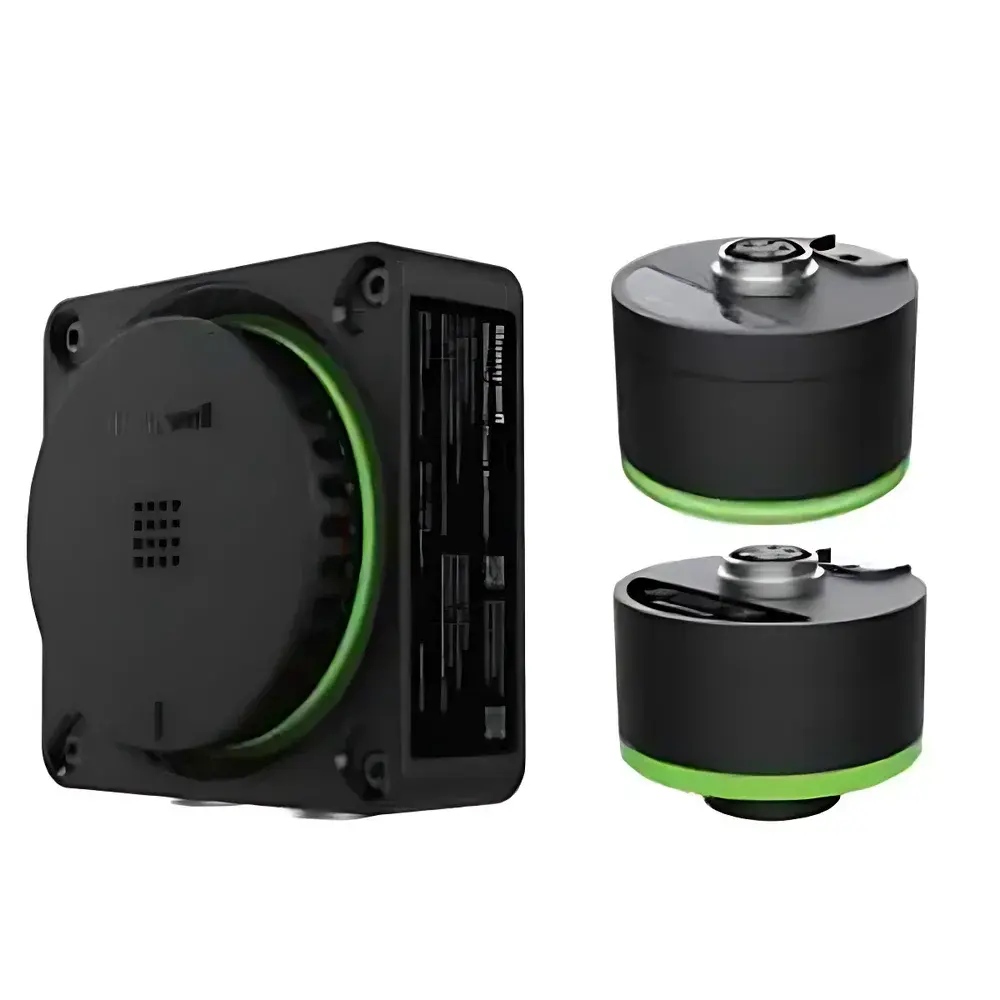
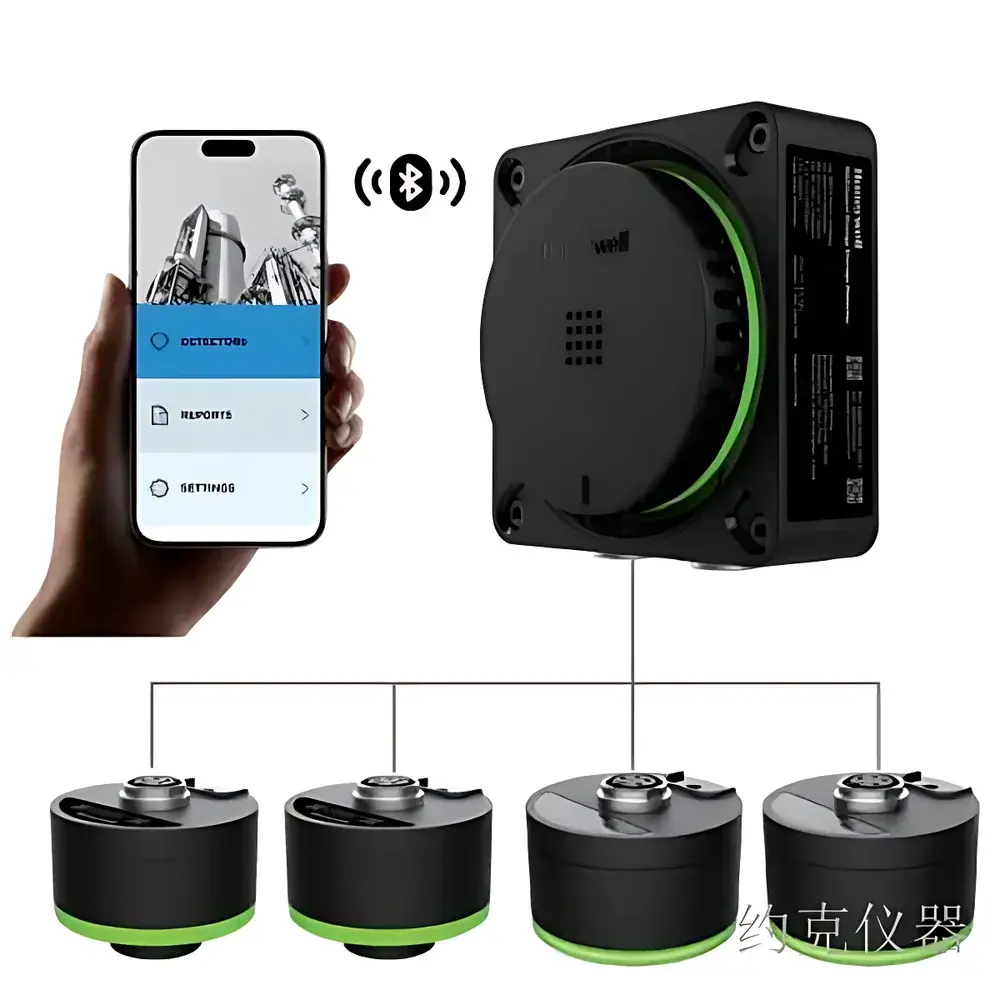

Honeywell RAEGUARD Energy Storage Gas Detector
| Brand | Honeywell |
|---|---|
| Origin | USA |
| Model | RAEGUARD |
| Detection Gases | H₂ (0–100% LEL), CO (50–1000 ppm) |
| Protection Rating | IP65 |
| Operating Temperature | −30°C to +60°C (H₂ units), −20°C to +50°C (CO unit) |
| Communication | Modbus RTU over RS-485, Bluetooth 5.0 (BLE) |
| Power Supply | 24 VDC (12–27 VDC) |
| Certifications | EN/IEC 61010-1, UL/CSA 61010-1, EN 50270, UL 2075, RED, FCC |
| Expected Service Life | 10 years (sensor life: 5 years) |
| Relay Outputs | 2 × 15 A @ 24 VDC (host), 1 × 1 A @ 24 VDC (host) |
| Enclosure Material | Carbon-black polycarbonate |
| Dimensions (Host) | 110 mm × 110 mm × 50 mm |
| Weight (Host) | 350 g |
| Wireless Range | ≤10 m (line-of-sight) |
Overview
The Honeywell RAEGUARD Energy Storage Gas Detector (RG ESGD) is a fixed-point, industrial-grade gas detection system engineered specifically for battery energy storage systems (BESS). It employs electrochemical sensing technology for carbon monoxide (CO) and catalytic bead or semiconductor-based sensing (per model variant) for hydrogen (H₂), operating on the principle of gas-induced changes in electrical resistance or current output proportional to target gas concentration. Designed to meet the stringent safety requirements of modern grid-scale and commercial BESS deployments, the RG ESGD delivers continuous, real-time monitoring of flammable (H₂) and toxic (CO) gases generated during thermal runaway, overcharging, or cell degradation events. Its architecture supports distributed deployment across rack-level, container-level, and room-level monitoring zones—enabling layered detection strategies aligned with NFPA 855, IEC 62933-5-2, and UL 9540A guidance.
Key Features
- Modular master-slave architecture: One host unit (H₂-dedicated) coordinates up to two slave units (CO or secondary H₂), minimizing wiring complexity and panel space requirements.
- Ruggedized environmental resilience: IP65-rated enclosure withstands dust ingress and water jets; validated for operation from −30°C to +60°C ambient, including high-altitude installations up to 4,000 meters above sea level.
- Dual communication pathways: Standard RS-485 interface with Modbus RTU protocol ensures seamless integration into SCADA, BMS, and PLC-based control systems; Bluetooth 5.0 Low Energy (BLE) enables secure local commissioning, calibration verification, and event log retrieval via mobile application.
- Low-maintenance lifecycle design: Rated for 10-year mechanical service life with field-replaceable sensors (5-year nominal sensor lifespan); no internal chamber access required for mounting—side-mount or top-mount installation supported via integrated L-bracket or optional adapter plate.
- Configurable alarm logic: Programmable LEL thresholds (H₂: default 10% LEL, adjustable), CO alarm setpoints (default 30 ppm, adjustable), and relay output behavior (latching/non-latching, fault-tolerant modes) comply with functional safety expectations per IEC 61508 SIL 2 capability claims.
Sample Compatibility & Compliance
The RAEGUARD ESGD is calibrated and verified for detection of hydrogen (H₂) at concentrations from 0–100% LEL (Lower Explosive Limit = 4% v/v) and carbon monoxide (CO) from 50–1000 ppm. It is not intended for use in inert atmospheres, oxygen-deficient environments (<19.5% O₂), or corrosive gas streams containing H₂S, Cl₂, or NOₓ beyond manufacturer-specified interference limits. All variants conform to electromagnetic compatibility standards EN 50270 and radio equipment directives (RED, FCC), with electrical safety certification to EN/IEC 61010-1 and UL/CSA 61010-1. The system carries UL 2075 listing for gas detectors used in commercial and industrial applications, supporting audit readiness under NFPA 72 and local fire code enforcement.
Software & Data Management
Configuration, diagnostics, and event history are managed via the Honeywell RAEGUARD Mobile App (iOS/Android), which communicates exclusively over encrypted BLE. The app supports zero-touch setup, firmware updates, span calibration validation using certified test gas, and export of CSV-formatted logs—including timestamped alarm events, sensor drift trends, and power-cycle history. While the detector itself does not store historical concentration data onboard, its Modbus RTU interface provides live register access to real-time gas readings, status flags (alarm/fault/suppress), relay states, and diagnostic codes. When integrated into a central monitoring platform compliant with FDA 21 CFR Part 11 or ISO/IEC 17025 requirements, full audit trails—including user actions, configuration changes, and calibration records—can be maintained externally.
Applications
- Grid-connected lithium-ion battery energy storage containers (e.g., Tesla Megapack, Fluence, Powin systems)
- Commercial BESS installations in data centers, microgrids, and renewable co-location sites
- EV charging station battery buffer systems requiring localized H₂ leak detection
- Stationary telecom backup power cabinets with sealed lead-acid or LiFePO₄ stacks
- Research laboratories conducting battery abuse testing (nail penetration, overcharge, thermal ramp)
FAQ
What gases does the RAEGUARD ESGD detect, and what are their measurement ranges?
The host unit detects hydrogen (H₂) from 0–100% LEL (4% v/v); CO-dedicated slave units measure 50–1000 ppm. A second H₂ slave unit is available for redundant or multi-zone coverage.
Is the detector suitable for outdoor installation?
Yes—its IP65 rating and −30°C to +60°C operating range support semi-outdoor deployment (e.g., under canopy or within ventilated enclosures), though direct UV exposure and condensation-prone locations require supplemental weather shielding.
Can the RAEGUARD integrate with third-party BMS platforms?
Yes—via standard Modbus RTU over RS-485, it interfaces natively with major BMS vendors including Schneider Electric EcoStruxure, Siemens Desigo CC, and Generac PWRview without proprietary gateways.
Does the device support remote calibration or bump testing?
Bluetooth-enabled bump testing and span verification are supported using certified calibration gas; however, full sensor calibration requires physical gas exposure and must be performed by authorized personnel per Honeywell Field Service Bulletin FS-ESGD-002.
What is the expected maintenance interval?
No routine maintenance is required beyond annual functional verification using test gas. Sensor replacement is recommended every five years or upon diagnostic flagging of sensitivity drift exceeding ±15% of initial response.
Related Products







