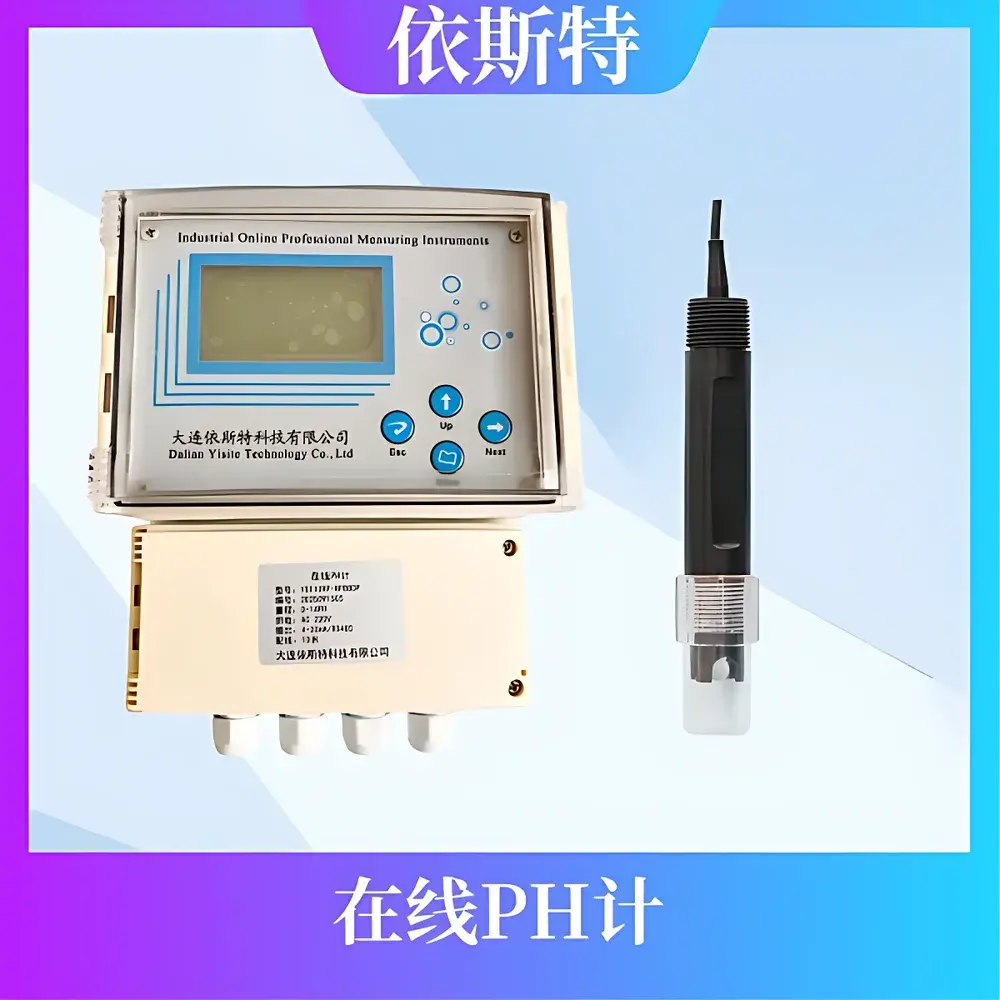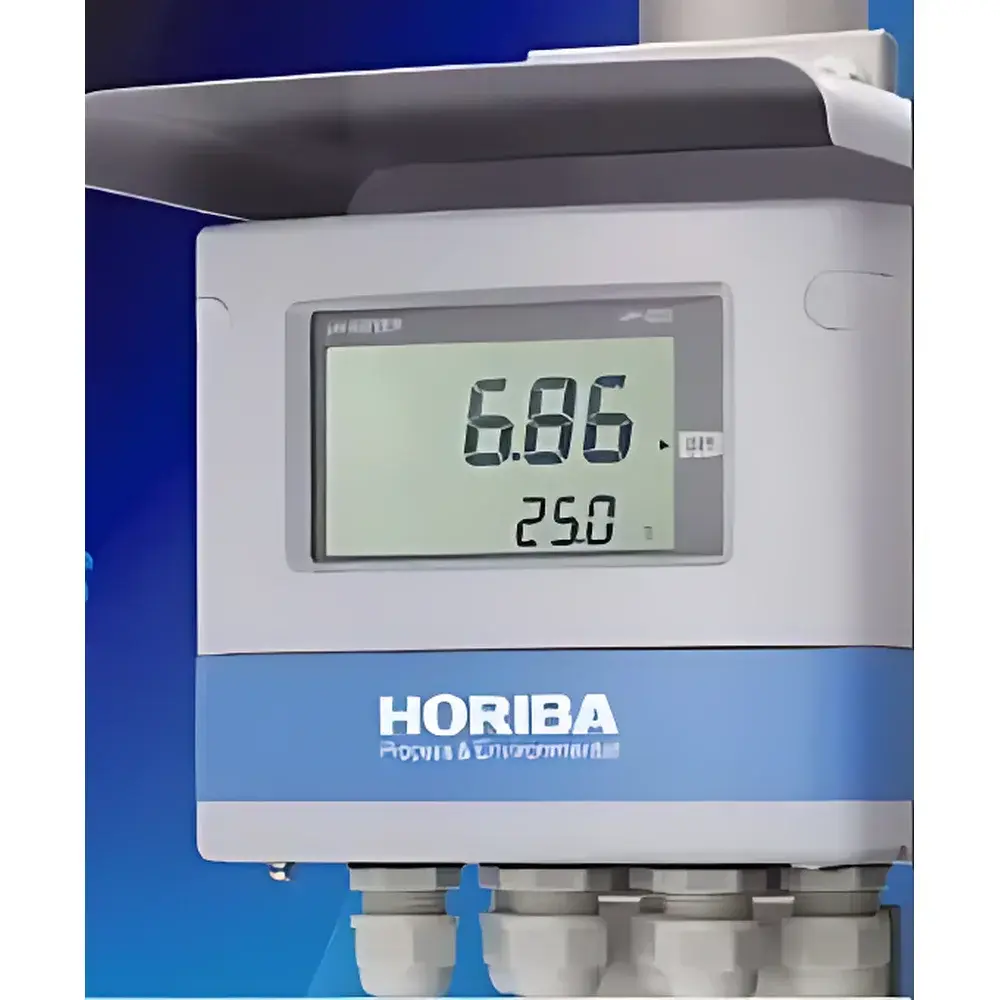
HORIBA H-1 Series Industrial Online pH/ORP/Conductivity/Turbidity Analyzer
| Brand | HORIBA |
|---|---|
| Origin | Japan |
| Model | H-1 Series |
| Measurement Parameters | pH, ORP, Dissolved Oxygen (DO), Resistivity, Conductivity, Residual Chlorine, Sludge Concentration, Turbidity |
| Compatible Electrodes | HP-100, HP-200, HP-300 pH Sensors |
| Compliance | Designed for continuous industrial process monitoring per ISO 5667-14, ASTM D1293, USP <791>, and EPA Method 150.1 |
Overview
The HORIBA H-1 Series is an integrated industrial online analyzer engineered for continuous, multi-parameter water quality monitoring in demanding process environments. Based on potentiometric measurement principles for pH and ORP, amperometric detection for dissolved oxygen, and four-electrode conductivity measurement with temperature compensation, the system delivers stable, drift-resistant readings under variable flow, pressure, and temperature conditions. Its modular architecture supports simultaneous real-time acquisition of up to eight parameters—including pH, oxidation-reduction potential (ORP), conductivity, resistivity, dissolved oxygen, residual chlorine, turbidity, and suspended solids concentration—making it suitable for regulatory-compliant effluent discharge monitoring, closed-loop process control in chemical and pharmaceutical manufacturing, aquaculture system management, and municipal wastewater treatment plant operations.
Key Features
- Multi-parameter platform with single-analyzer integration: eliminates need for separate dedicated instruments while maintaining independent calibration and diagnostic routines per sensor channel.
- Rugged IP66-rated enclosure with corrosion-resistant stainless steel (SUS316) housing and optional explosion-proof (Ex d IIB T4) certification for hazardous area deployment.
- Auto-compensated temperature sensing via integrated Pt1000 RTD or external probe input; supports linear, non-linear (e.g., NIST), and user-defined compensation curves.
- Intelligent electrode diagnostics including impedance monitoring, response time tracking, and asymmetry potential logging—enabling predictive maintenance and GLP-compliant sensor lifetime management.
- Configurable analog outputs (4–20 mA, isolated) with HART® 7 protocol support and dual RS-485 Modbus RTU ports for SCADA/DCS integration.
- Onboard data logging with 16 MB non-volatile memory, storing timestamped measurements at user-defined intervals (1 sec to 24 hr) with automatic rollover and CSV export capability.
Sample Compatibility & Compliance
The H-1 Series is validated for use with aqueous samples across a wide range of industrial matrices—including municipal and industrial wastewater, cooling tower water, boiler feedwater, pharmaceutical process streams, and recirculating aquaculture systems (RAS). It meets material compatibility requirements per ASTM F2102 for wetted components (EPDM, Viton®, and PEEK seals; glass pH electrodes; platinum ORP elements; graphite conductivity cells). The analyzer complies with ISO 5667-14 (water quality sampling—guidance on field instrumentation), ASTM D1293 (standard test method for pH of water), USP (pH measurement for pharmaceutical water systems), and EPA Method 150.1 (conductivity determination). All firmware and calibration records support audit-ready traceability for FDA 21 CFR Part 11 and EU Annex 11 compliance when deployed with HORIBA’s optional secure software package.
Software & Data Management
Configuration, calibration, and diagnostics are performed via HORIBA’s WebConfig web-based interface accessible through any modern browser—no proprietary client installation required. The embedded HTTP server enables remote access over secure TLS 1.2 connections. Data export supports CSV, XML, and OPC UA (via optional gateway module) for seamless ingestion into LIMS, MES, or cloud-based analytics platforms. Calibration logs include operator ID, timestamp, buffer values, slope/offset results, and electrode impedance—each digitally signed and tamper-evident. Audit trail functionality records all configuration changes, calibration events, and alarm acknowledgments with immutable timestamps, satisfying GLP and GMP documentation requirements.
Applications
- Effluent discharge compliance monitoring per local environmental regulations (e.g., China’s GB 8978, EU Urban Wastewater Treatment Directive, US Clean Water Act NPDES permits).
- Real-time pH and ORP feedback control in chemical dosing systems for coagulation, neutralization, and disinfection processes.
- Pharmaceutical water system validation (PW, WFI, SWFI) per USP and EU GMP Annex 1, including trending of conductivity against temperature-corrected limits.
- Automated water quality management in land-based RAS facilities, where concurrent pH, DO, and turbidity monitoring informs feeding cycles, biofilter loading, and UV dosing protocols.
- Monitoring of electroplating bath chemistry, semiconductor ultrapure water loops, and food & beverage CIP rinse validation.
FAQ
What pH electrode models are compatible with the H-1 Series?
The H-1 Series supports HORIBA’s HP-100 (general-purpose gel-filled), HP-200 (low-maintenance refillable), and HP-300 (high-temperature/pressure resistant) pH sensors—all featuring integrated temperature compensation and digital electrode identification.
Can the H-1 Series operate in explosive atmospheres?
Yes—when equipped with the optional Ex d IIB T4 certified enclosure and intrinsically safe sensor interfaces, it meets ATEX and IECEx standards for Zone 1 hazardous locations.
Is remote calibration supported?
Calibration must be performed locally using standard buffers or certified reference solutions; however, remote initiation, parameter adjustment, and result verification are fully supported via WebConfig.
Does the system meet FDA 21 CFR Part 11 requirements?
With the Secure Mode firmware option enabled, the H-1 Series provides electronic signatures, role-based access control, and full audit trail functionality required for regulated pharmaceutical and biotech applications.
How often does the system require maintenance?
Under typical industrial conditions, scheduled maintenance—including electrode cleaning, calibration verification, and seal inspection—is recommended every 3–6 months; diagnostic alerts notify users of performance deviations prior to drift exceedance.