
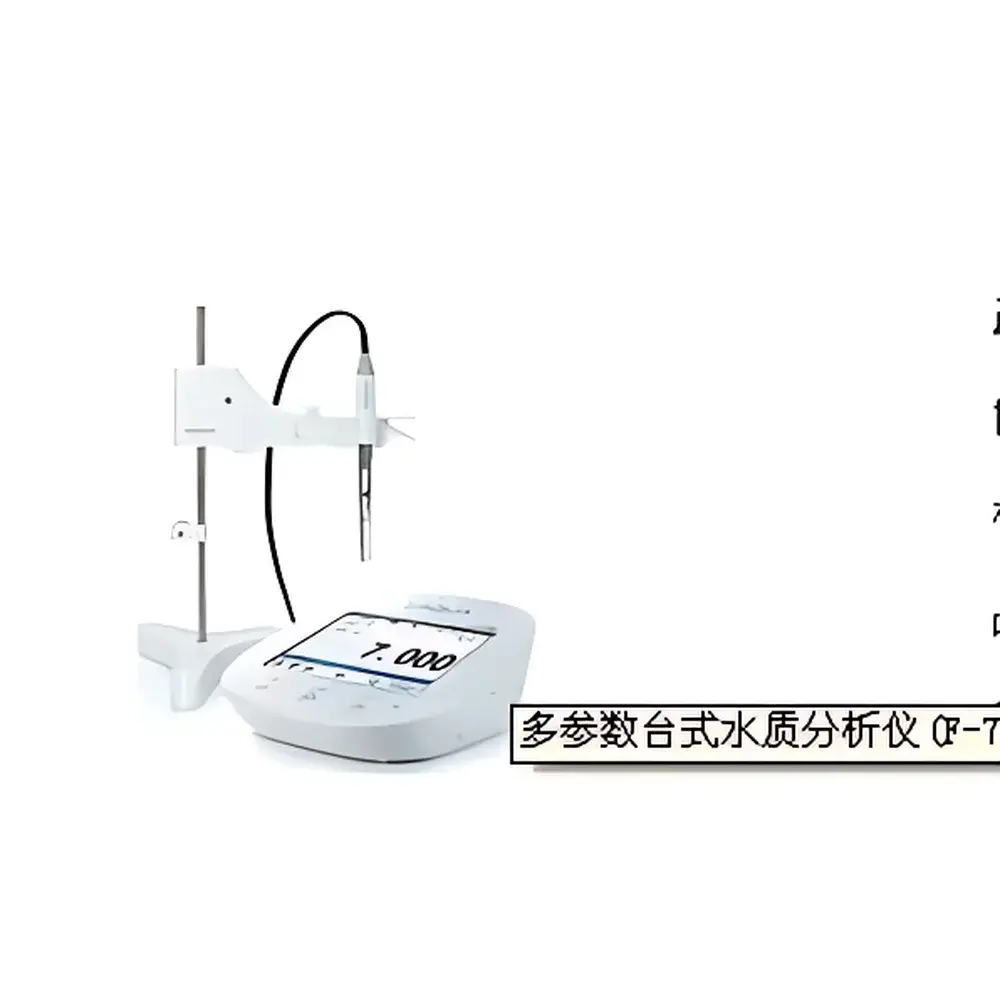
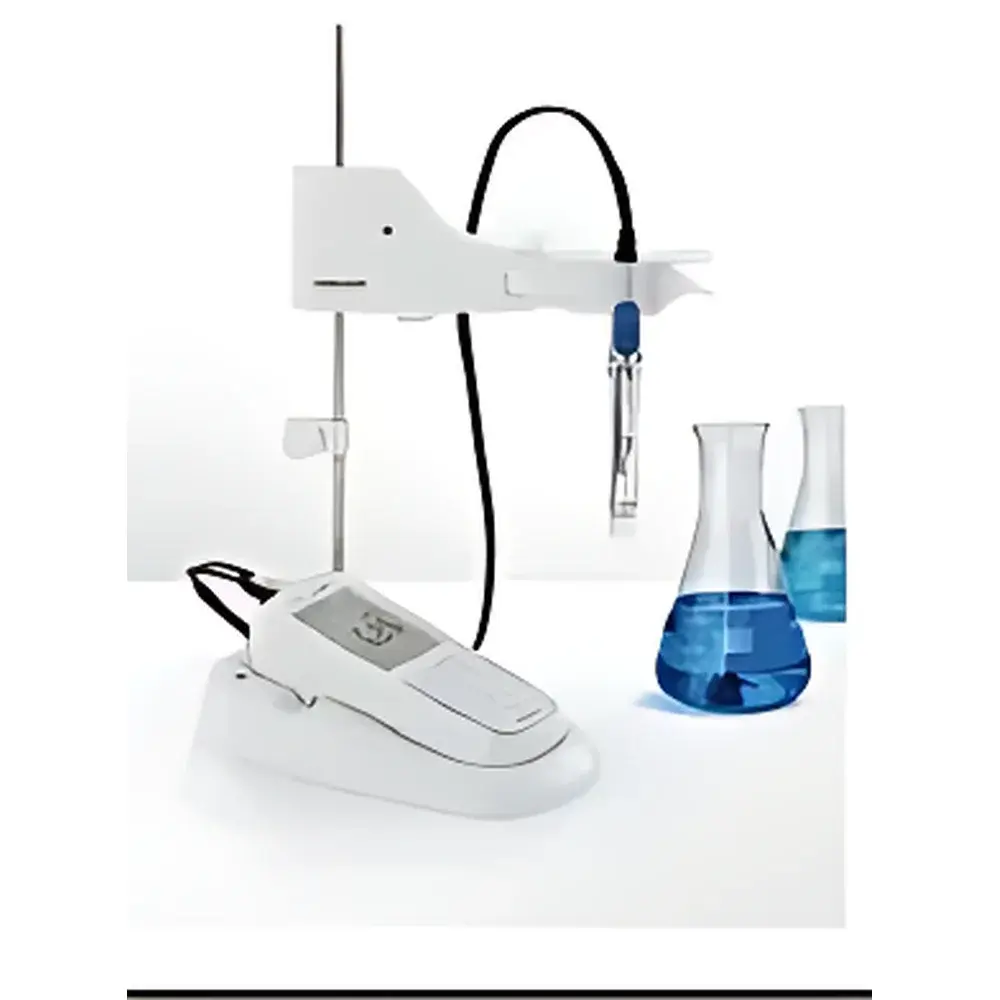
HORIBA DS-71 Benchtop Multiparameter Conductivity Analyzer
| Brand | HORIBA |
|---|---|
| Origin | Japan |
| Model | DS-71 |
| Instrument Type | Laboratory Water Quality Analyzer |
| Power Supply | 100–240 V AC, 50/60 Hz |
| Power Consumption | ~0.7 VA |
| Weight | ~500 g |
| Data Storage Capacity | 999 measurement records |
| Display | Capacitive Touchscreen (English, Chinese, Japanese, Korean) |
| Compliance | JIS, USP <645>, EP 2.2.38, JP XVIII, CP 2020 |
| Measurement Principles | Dual-electrode AC conductivity (2-electrode alternating current method) |
Overview
The HORIBA DS-71 Benchtop Multiparameter Conductivity Analyzer is a precision-engineered laboratory instrument designed for accurate, traceable, and compliant measurement of key water quality parameters—including electrical conductivity (EC), resistivity, salinity, total dissolved solids (TDS), and temperature—using standardized electrochemical principles. Built on HORIBA’s legacy of metrological rigor, the DS-71 employs a dual-electrode AC excitation method to eliminate polarization effects and minimize electrode fouling, ensuring high reproducibility across diverse aqueous matrices—from ultrapure water in pharmaceutical manufacturing to process water in industrial QA/QC labs. Its architecture conforms to the foundational requirements of pharmacopeial standards (USP , EP 2.2.38, JP XVIII, CP 2020) and Japanese Industrial Standards (JIS Z 8809), making it suitable for environments requiring audit-ready documentation and regulatory alignment. The instrument operates without pH or redox capability (dedicated to conductivity-based parameters only), optimizing signal integrity and calibration stability through dedicated sensor electronics and temperature-compensated algorithms.
Key Features
- Capacitive touchscreen interface with intuitive, context-sensitive navigation—enabling real-time access to setup menus, maintenance logs, self-diagnostic prompts, and step-by-step troubleshooting guidance.
- Dual-electrode AC conductivity measurement with selectable cell constants (0.01 cm⁻¹, 0.1 cm⁻¹, 1.0 cm⁻¹), supporting wide dynamic ranges: 0.000 mS/m to 199.9 S/m (depending on cell constant).
- Integrated temperature compensation (0.0–100.0 °C; extended range –30.0 to 130.0 °C) with ±0.1 °C repeatability and 0.1 °C resolution, critical for accurate EC-to-resistivity conversion.
- Automated calculation of derived parameters: resistivity (0.000 Ω·m to 1.999 MΩ·m), salinity (0.00–80.00 ppt; 0.001% resolution), and TDS (0.01 mg/L to 100 g/L; 0.01 mg/L resolution), all traceable to NIST-traceable conductivity standards.
- GLP/GMP-ready functionality including user-accessible audit trail metadata (date/time stamp, operator ID placeholder, calibration status), USB host port for direct connection to certified printers or PCs, and secure local storage of up to 999 measurement records with timestamp and parameter set.
- Modular electrode design with quick-release glass-body conductivity cells—facilitating cleaning, verification, and replacement without recalibration drift.
Sample Compatibility & Compliance
The DS-71 is validated for use with deionized water, purified water (PW), water for injection (WFI), boiler feedwater, environmental surface water, and low-conductivity industrial process streams. It does not support high-viscosity or suspended-solids-laden samples without filtration or dilution. Regulatory compliance includes full alignment with USP “Electrical Conductivity of Water” for pharmaceutical water systems—including stage-specific conductivity limits, temperature correction protocols, and system suitability criteria. It also satisfies EP 2.2.38 (Conductivity of Purified Water and Water for Injection), JP XVIII General Tests “Conductivity”, and China Pharmacopoeia CP 2020 Volume IV General Chapter 0681. All measurements adhere to JIS Z 8809 (Methods for Determination of Electrical Conductivity of Water), and the device supports periodic verification modes per JIS-defined check procedures (e.g., F-72/F-73/F-74 simulator compatibility).
Software & Data Management
Data acquisition and reporting are managed via embedded firmware with no external software dependency. Each stored record contains measured values, temperature reading, cell constant used, date/time stamp, and operator identifier field (manually entered). USB communication enables export of CSV-formatted data files compatible with LIMS, Excel, or statistical analysis platforms. While the DS-71 itself does not implement FDA 21 CFR Part 11 electronic signature controls, its output format and metadata structure support integration into validated Part 11–compliant enterprise systems when paired with appropriate middleware and procedural controls. Audit trails are retained locally and exportable; no cloud connectivity or remote access is provided—ensuring data sovereignty and network isolation in regulated environments.
Applications
- Pharmaceutical water system qualification and routine monitoring (PW, WFI, clean steam condensate).
- QC release testing of purified water in biotech and API manufacturing facilities under GMP conditions.
- Calibration and verification of inline conductivity sensors in distribution loops using grab-sample correlation.
- Environmental lab analysis of freshwater, estuarine, and treated wastewater effluents per ISO 7888 or ASTM D1125.
- Educational laboratories requiring metrologically sound, standards-aligned instrumentation for teaching conductivity theory and pharmacopeial compliance protocols.
- Industrial boiler and cooling tower water management where rapid, repeatable EC/TDS assessment informs blowdown scheduling.
FAQ
Does the DS-71 support automatic temperature compensation (ATC) during conductivity measurement?
Yes—the instrument applies NIST-referenced linear and non-linear temperature compensation algorithms based on the selected cell constant and sample type (e.g., pure water vs. saline solution), with user-selectable β-coefficients per USP Annex tables.
Can the DS-71 be used for USP Stage 1, Stage 2, and Stage 3 testing?
Yes—its measurement accuracy, temperature resolution, and built-in conductivity limit alerts enable full implementation of all three stages, including real-time pass/fail indication against pharmacopeial thresholds.
Is calibration traceable to national standards?
Calibration is performed using certified KCl standard solutions (e.g., 84 μS/cm, 1413 μS/cm, 12.88 mS/cm) traceable to NIST SRM or equivalent national metrology institutes; certificate of calibration is provided upon request.
What electrode types are compatible with the DS-71?
HORIBA’s standardized glass-body, platinized two-electrode conductivity cells (e.g., 3551-10D, 3552-10D) with BNC connectors and defined cell constants (0.01, 0.1, 1.0 cm⁻¹) are fully supported.
Does the DS-71 meet GLP data integrity requirements?
It provides timestamped, operator-annotated records and supports external printing for hard-copy archiving; however, full GLP compliance requires site-specific procedural controls (e.g., password protection, change control, backup policy) as the device lacks built-in electronic signatures or role-based access.
Related Products







