
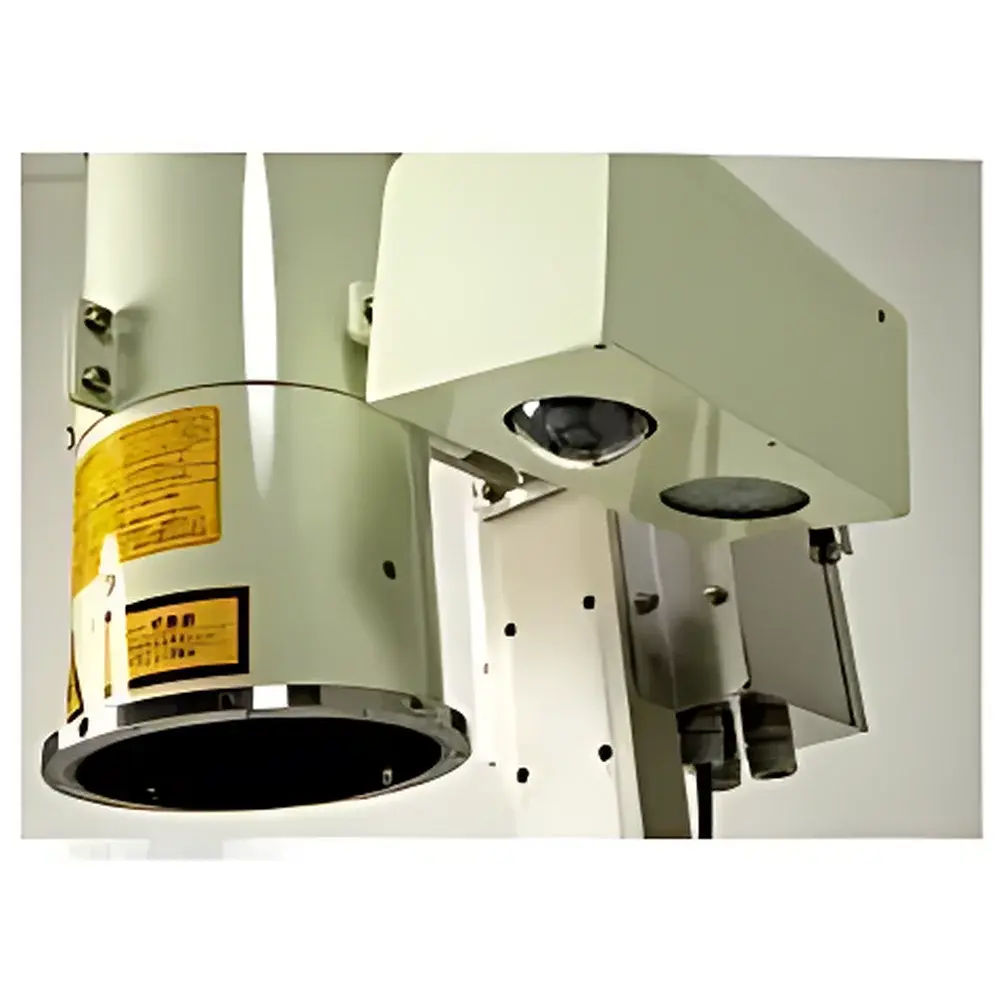
HORIBA LO-300 Online Oil Film Monitor
| Brand | HORIBA |
|---|---|
| Origin | Japan |
| Model | LO-300 |
| Instrument Type | Online |
| Detection Principle | Laser Circular Area Scanning Reflectometry |
| Detection Range | 0.3–4.0 m (up to 6.0 m on still water) |
| Oil Detection Target | Floating/Adherent hydrocarbon films (gasoline, kerosene, diesel, heavy fuel oil, insulating oil, lubricating oil) |
| Output | 4–20 mA analog signal (reflected light intensity), 2 dry contact alarms (oil film presence, system level anomaly) |
| Display | Touchscreen interface showing oil coverage (%), threshold setting, real-time received light level, status indicators |
| Power Supply | AC 100 V ±10%, 50/60 Hz, ≤100 VA |
| Enclosure Rating | IP66 |
| Operating Temperature | −10 to +50 °C |
| Dimensions | Ø185 × 547 mm (H) |
| Weight | ~11 kg |
| Optional | Surveillance camera module (MP4 video recording at 1 or 3 fps |
Overview
The HORIBA LO-300 Online Oil Film Monitor is an industrial-grade, non-contact optical instrument engineered for continuous, real-time surveillance of hydrocarbon oil films on water surfaces in environmental and industrial effluent monitoring applications. It operates on the principle of laser circular area scanning reflectometry: a Class 2 semiconductor laser (≤1 mW output) projects a rotating conical beam onto the monitored surface, and the system analyzes spatially resolved variations in reflected light intensity across the scan field. Unlike point-sensor or UV-fluorescence methods, this approach enables robust discrimination of thin oil layers (down to sub-micron thicknesses) based on characteristic specular reflection enhancement and surface-area coverage ratio—rather than bulk concentration—making it highly effective for early-stage leak detection, stormwater runoff monitoring, and containment dike surveillance. Its fixed-mount, maintenance-free architecture eliminates consumables, wetted parts, or calibration drift associated with immersed probes or extractive analyzers.
Key Features
- Laser-based circular scanning optics provide uniform 360° coverage over distances from 0.3 to 4.0 meters—with extended reach up to 6.0 meters on calm, non-turbulent water surfaces.
- Automatic vertical alignment between emitter and receiver modules simplifies field installation and ensures consistent optical geometry without manual leveling tools.
- IP66-rated sealed enclosure enables direct outdoor deployment in harsh industrial or municipal environments, including exposure to rain, dust, and temperature extremes (−10 to +50 °C).
- Intuitive 7-inch color touchscreen interface supports multilingual menu navigation, real-time visualization of oil coverage percentage (0–100%), reflected light intensity (4–20 mA), and configurable alarm thresholds.
- Configurable alarm logic includes dual-parameter validation: minimum oil coverage area AND minimum persistence duration—reducing false positives from transient reflections or wave glint.
- No sample extraction, no reagents, no moving parts in contact with water—resulting in exceptionally long service intervals and minimal operational overhead.
Sample Compatibility & Compliance
The LO-300 detects floating or adherent hydrocarbon films—including gasoline, jet fuel, diesel, marine fuel oil, transformer insulating oil, and industrial lubricants—on freshwater, seawater, and wastewater surfaces. It does not respond to water-soluble oils (e.g., certain synthetic coolants or emulsified cutting fluids), ensuring specificity where regulatory compliance hinges on petroleum hydrocarbon identification. The instrument meets IEC 60825-1 for Class 2 laser safety and complies with electromagnetic compatibility standards per EN 61326-1. Its analog (4–20 mA) and relay outputs support integration into existing SCADA, DCS, or PLC systems conforming to ISA-84 or IEC 61511 functional safety frameworks. While not certified under EPA Method 1664 or ISO 9377-2 (which govern laboratory-based gravimetric/extraction procedures), the LO-300 serves as a validated screening tool aligned with ISO 22192 (water quality — detection of surface oil films) and supports GLP-aligned operational logging when paired with optional video recording.
Software & Data Management
The base unit operates autonomously via embedded firmware with local data retention for alarm events and system diagnostics. When equipped with the optional surveillance camera module, the LO-300 captures synchronized MP4 video clips (1 or 3 frames per second) triggered by alarm conditions—recording 10 seconds before and 10 seconds after each event. Each clip is timestamped, geotagged (if GPS-enabled external module is integrated), and stored locally (6 MB per clip at 3 fps). Video archives are accessible via standard HTTP/HTTPS protocols over Ethernet (LAN), enabling remote review using common media players or integration into centralized video management systems (VMS). Audit trails—including configuration changes, alarm timestamps, and user login logs—are retained for ≥90 days and exportable in CSV format to support FDA 21 CFR Part 11–aligned recordkeeping where required.
Applications
- Industrial outfall monitoring at refineries, petrochemical plants, and power generation facilities to comply with NPDES permit limits and prevent unauthorized discharge.
- Stormwater retention pond surveillance in transportation corridors, airports, and logistics hubs to detect fuel spills before overflow events.
- Secondary containment dike inspection around aboveground storage tanks (ASTs) and underground storage tank (UST) interstitial spaces.
- Municipal wastewater treatment plant influent channels to identify upstream illicit discharges or grease trap failures.
- Marine terminal and port authority operations for real-time detection of bilge water leaks or tank cleaning runoff.
- Environmental remediation sites where long-term passive monitoring of residual oil migration across groundwater seepage faces is required.
FAQ
Does the LO-300 require periodic calibration or consumables?
No. As a non-contact optical sensor with solid-state laser and photodetector components, it requires no recalibration, reagents, filters, or replacement parts under normal operating conditions.
Can it distinguish between oil types (e.g., diesel vs. lubricating oil)?
No. It detects presence and surface coverage of hydrocarbon films but does not perform chemical speciation. Identification of oil type requires complementary lab analysis (e.g., GC-MS).
Is the laser safe for continuous operation near personnel?
Yes. The Class 2 laser (≤1 mW) complies with IEC 60825-1 and poses no hazard under accidental momentary exposure; no interlocks or safety enclosures are mandated.
What happens during high-wind or turbulent water conditions?
The circular scanning methodology inherently mitigates wave-induced false positives by evaluating spatial coverage rather than instantaneous intensity—validated in field trials with wave heights up to 15 cm.
Can video recordings be streamed live to a central control room?
Live streaming is not supported natively; however, recorded clips are retrievable on-demand via LAN. Integration with third-party VMS platforms enables scheduled pull-based retrieval and playback.







