
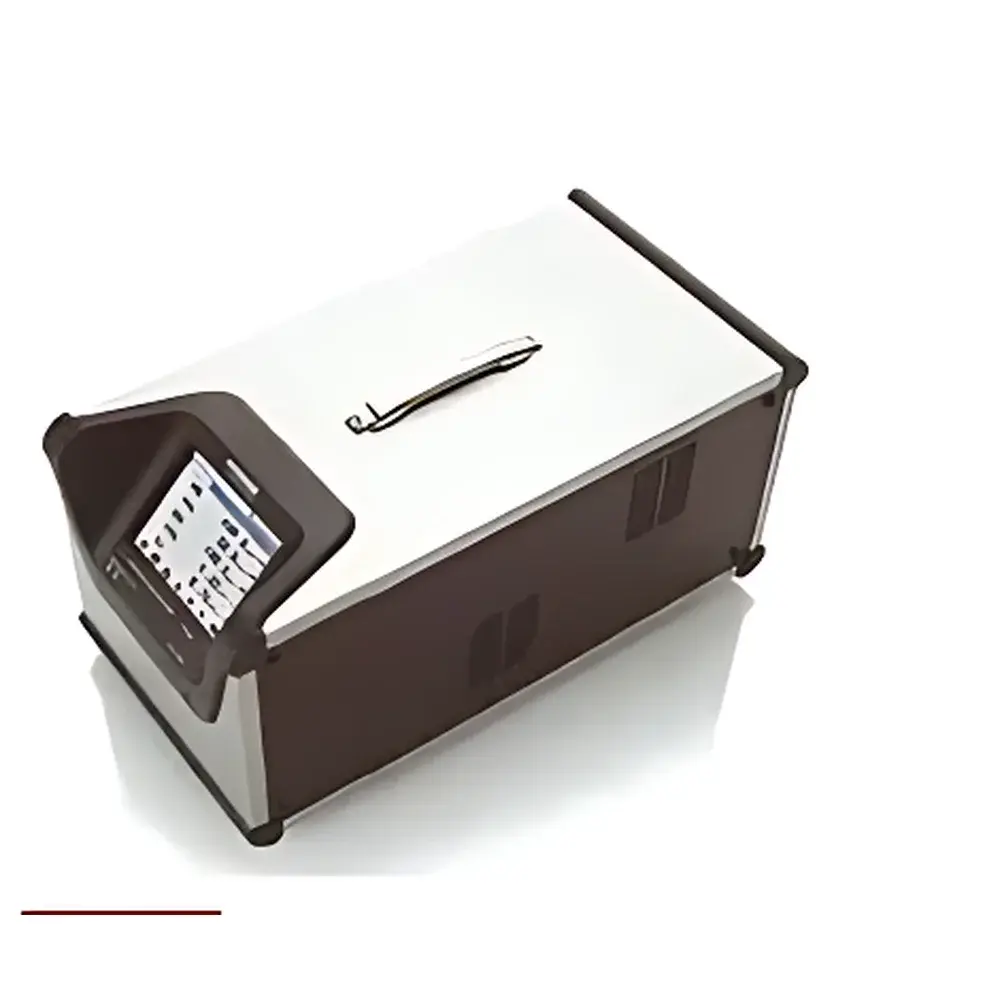
HORIBA PG-350 Portable Multi-Gas Analyzer
| Brand | HORIBA |
|---|---|
| Origin | Japan |
| Model | PG-350 |
| Instrument Type | Portable |
| Target Gases | NOₓ, SO₂, CO, CO₂, O₂ |
| Measurement Ranges | 0–5/10/25 vol% (O₂, CO₂) |
| Repeatability | ±1.0% F.S. |
| Response Time (T₉₀) | ≤45 s (all gases except SO₂), ≤180 s (SO₂) |
| Zero/Span Drift | ±1.0% F.S./day (SO₂: ±2.0% F.S./day) |
| Linearity Error | ±2.0% F.S. |
| Sample Flow Rate | ~0.5 L/min |
| Power Supply | 100–120 VAC / 200–240 VAC, 50/60 Hz |
| Dimensions | 226 × 265 × 510 mm (W×H×D) |
| Weight | ~14 kg |
| Operating Environment | 5–40 °C, ≤85% RH |
Overview
The HORIBA PG-350 Portable Multi-Gas Analyzer is an engineered field-deployable solution for simultaneous, real-time quantification of five critical combustion and environmental gases: nitrogen oxides (NOₓ), sulfur dioxide (SO₂), carbon monoxide (CO), carbon dioxide (CO₂), and oxygen (O₂). Designed to meet the rigorous demands of continuous emission monitoring system (CEMS) backup, stack testing, catalyst evaluation, engine development, and academic research, the PG-350 integrates multiple gas-specific detection principles within a single, ruggedized platform. Its measurement architecture employs modulated alternating-flow non-dispersive infrared (NDIR) spectroscopy for CO, CO₂, CH₄, and SO₂; pulsed chemiluminescence detection (CLD) with flow modulation for NOₓ; and galvanic electrochemical sensing for O₂. This hybrid optical–electrochemical approach ensures high selectivity, minimal cross-sensitivity, and laboratory-grade accuracy under variable ambient conditions—without requiring external calibration gases during routine operation.
Key Features
- True multi-component analysis: Simultaneous measurement of NOₓ, SO₂, CO, CO₂, and O₂ in a single pass—no gas switching or sequential sampling required.
- Modulated flow NDIR and CLD technology: Eliminates zero drift from water vapor and particulate interference; enables stable baseline performance across humidity gradients (≤85% RH).
- Integrated electronic condensate management: Automatic and manual drainage modes, coupled with thermoelectric cooling, maintain consistent sample dew point control without external chillers.
- Touch-enabled color LCD interface: Supports real-time trend plotting, on-screen step-by-step operation guidance, and intuitive menu navigation—even with gloved hands.
- Ruggedized mechanical design: Shock- and vibration-resistant housing (IP54-rated enclosure), optimized weight distribution (~14 kg), and reduced preheat time (≤30 min to ±2.0% F.S. stability) enhance field operability.
- Comprehensive data integrity tools: Built-in audit trail for calibration events, alarm logs, and automatic timestamped SD card storage (user-configurable interval); supports GLP/GMP-aligned record retention.
Sample Compatibility & Compliance
The PG-350 accepts hot, wet, or filtered flue gas streams directly at ambient pressure, accommodating sample temperatures up to 180 °C when used with optional heated probe accessories. It complies with international regulatory frameworks governing portable emissions verification, including MCERTS (UK), TÜV-certified EN 15267-3 (EU), GOST R (Russia), ETV (US EPA Environmental Technology Verification Program), and China’s JJG 968–2022 metrological verification regulations for portable gas analyzers. All internal optical paths are temperature-stabilized, and sensor modules undergo factory traceable calibration against NIST-traceable reference standards. The instrument meets IEC 61000-4 electromagnetic compatibility requirements and operates reliably within 5–40 °C ambient ranges—making it suitable for both indoor lab validation and outdoor stack access points.
Software & Data Management
Data acquisition and reporting are managed via embedded firmware supporting dual-output protocols: isolated 4–20 mA analog outputs (per gas channel) and Ethernet-based TCP/IP communication (Modbus TCP and HTTP API). Raw concentration values, flow rate, system status flags, and diagnostic codes are logged to removable SD cards with FAT32 formatting—enabling offline review, third-party integration, and regulatory submission preparation. Firmware includes configurable auto-calibration scheduling, remote firmware updates over LAN, and secure user-level access control (operator/admin tiers). Exported CSV files contain ISO 8601 timestamps, measurement units, uncertainty indicators, and metadata fields required for QA/QC documentation per ISO/IEC 17025 and US FDA 21 CFR Part 11 compliance workflows.
Applications
- CEMS redundancy and periodic verification in power plants, waste incinerators, and industrial boilers.
- In-situ catalyst efficiency testing during lean-burn engine development and aftertreatment system validation.
- Field-based emissions auditing for environmental consultancies and regulatory agencies.
- Combustion optimization studies in university energy labs and national research institutes.
- Fuel cell exhaust characterization, including CO slip detection and O₂ utilization profiling.
- Stack gas surveys for fugitive emission source identification and permit compliance reporting.
FAQ
What gases does the PG-350 measure simultaneously, and can CH₄ be added?
The standard PG-350 configuration measures NOₓ, SO₂, CO, CO₂, and O₂ concurrently. Methane (CH₄) is available as an optional sixth channel via NDIR extension—requiring factory configuration and separate range selection.
Is the PG-350 certified for use in regulated CEMS environments?
Yes—it holds MCERTS certification (UK), TÜV EN 15267-3 Type Approval (EU), and China’s Class A metrological verification certificate (JJG 968–2022), qualifying it for legally binding backup monitoring and periodic performance audits.
How is zero and span stability maintained during extended field deployment?
The analyzer features automated zero-check cycles using internal purge air and programmable span checks with certified calibration gases; drift compensation algorithms adjust for thermal and aging effects in real time, maintaining ±1.0% F.S./day stability (±2.0% F.S./day for SO₂).
Does the PG-350 require external gas supplies or consumables during normal operation?
No external zero/span gases are needed for daily operation. The galvanic O₂ sensor has a typical service life of 24 months; all optical components are solid-state with no consumable lamps or filters—reducing total cost of ownership and logistical burden.
Can historical data be exported for third-party analysis or regulatory submission?
Yes—CSV-formatted logs include full metrological metadata (timestamps, units, uncertainty estimates, calibration history) and comply with ISO/IEC 17025 data integrity requirements for accredited laboratories.
Related Products







