
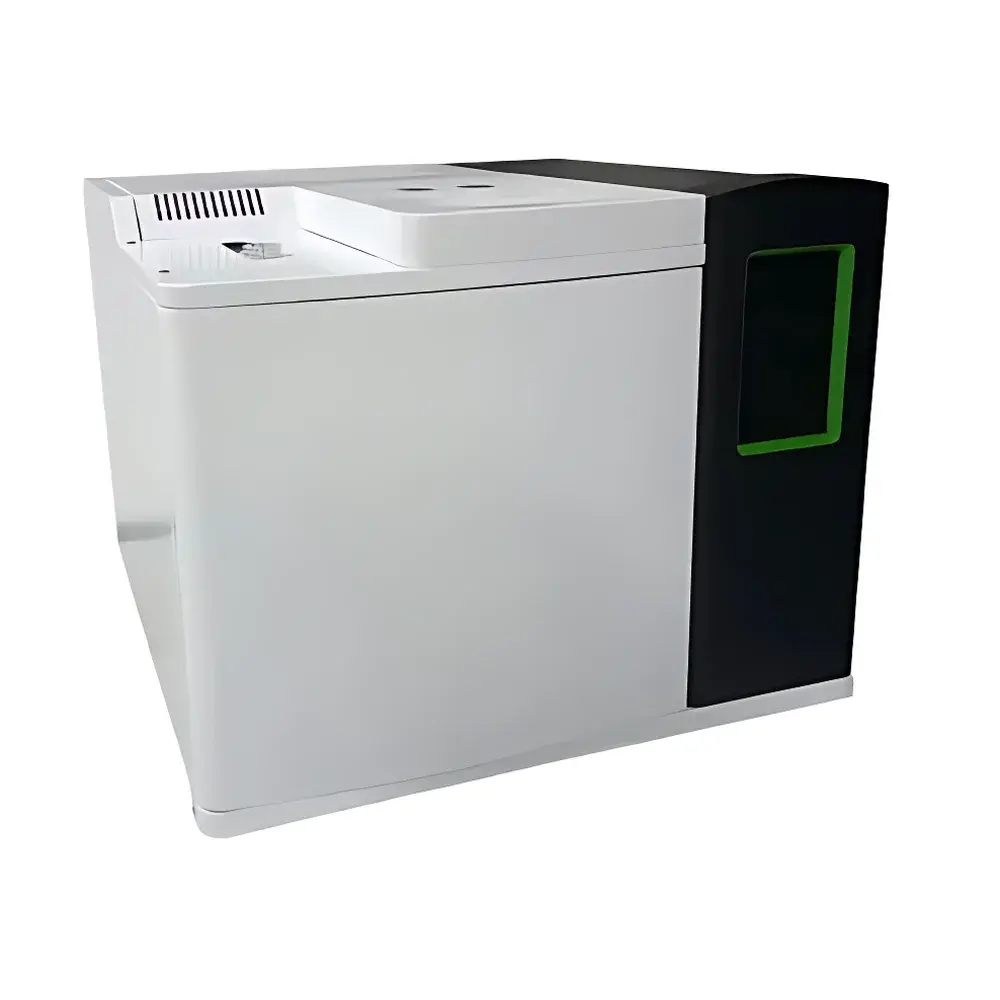
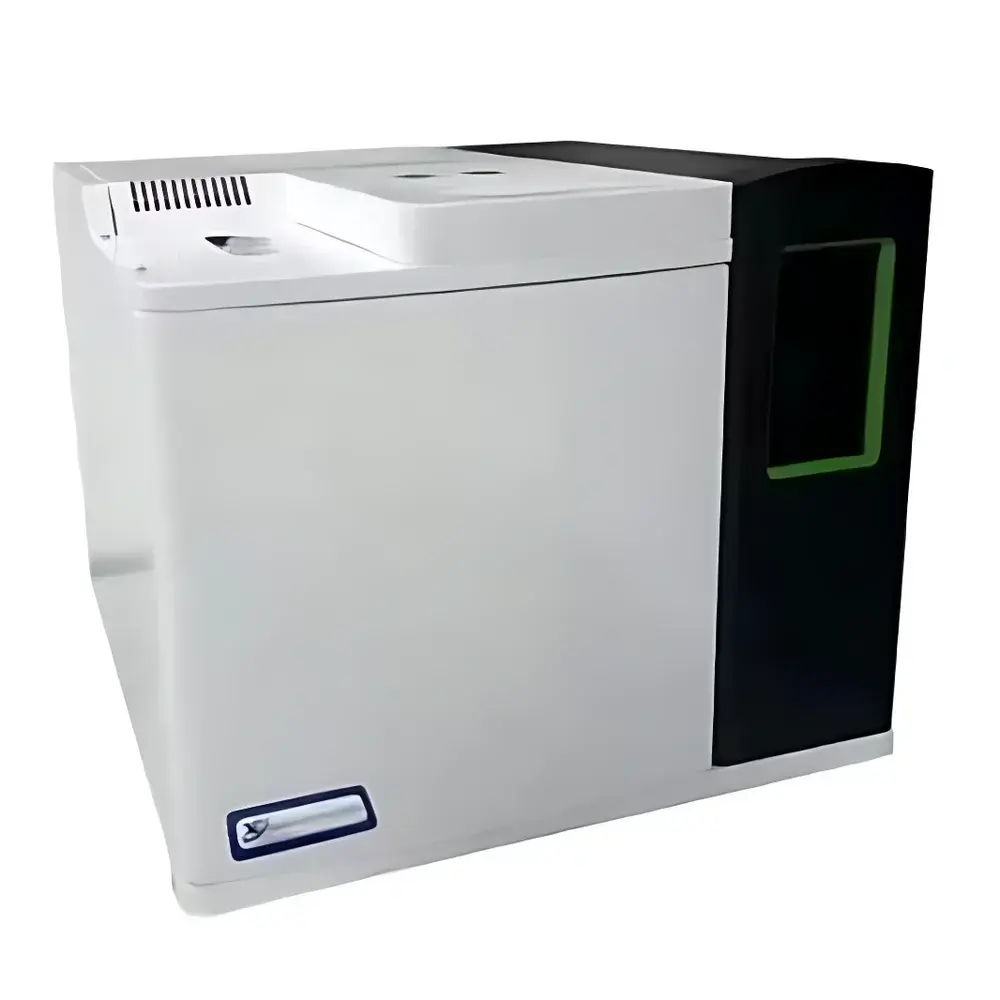
HuaShengPuXin GC-9100A Gas Chromatograph for Ethylene Oxide Residue Analysis
| Brand | HuaShengPuXin (HSPX) |
|---|---|
| Origin | Beijing, China |
| Manufacturer Type | Direct Manufacturer |
| Instrument Type | Laboratory Gas Chromatograph |
| Application Field | Medical Device Sterilization Validation & Clinical Diagnostics |
| Temperature Control Range | Ambient +4 °C to 450 °C (1 °C increment, ±0.01 °C accuracy) |
| Oven Ramp Rate | 0.1–39 °C/min (standard), 0.1–80 °C/min (high-speed option) |
| Cooling Rate | 450 °C → 50 °C in ~6 min |
| Carrier Gas Flow Range & Control | 0–1000 mL/min |
| Carrier Gas Pressure Range & Control | 0–970 kPa |
| Injector Max Operating Temperature | 400 °C |
| Injector Pressure Setting Range | 0–970 kPa |
| Injector Total Flow Setting Range | 0–1200 mL/min |
| Temperature Zones | 8 independently controlled zones |
| Programmable Temperature Ramping | Up to 16 steps |
| External Event Inputs | 6 channels |
| Auxiliary Control Outputs | 2 channels |
| Injector Compatibility | Packed column, capillary column, 6-port gas valve, automated thermal desorption, purge-and-trap, and headspace sampling (HS-20A, HS-10A, or HS-12A optional) |
Overview
The HuaShengPuXin GC-9100A Gas Chromatograph is a dedicated analytical platform engineered for the precise quantification of residual ethylene oxide (EO) in sterilized medical devices, pharmaceutical packaging materials, and single-use healthcare products. It operates on the principle of gas chromatography with flame ionization detection (GC-FID), optimized for trace-level EO analysis following standardized headspace sampling protocols. EO—widely used as a low-temperature sterilant for heat-sensitive equipment—is classified as a Group 1 human carcinogen by IARC; regulatory compliance (e.g., ISO 10993-7, USP , ASTM F1980, and FDA Guidance for Industry) mandates rigorous validation of residual levels ≤ 10 µg/g (or lower, depending on device class and exposure duration). The GC-9100A integrates thermally stable oven architecture, high-fidelity pressure/flow control, and multi-zone temperature management to ensure method robustness across complex matrixes such as polymeric catheters, syringes, gowns, and implant packaging.
Key Features
- Eight independently programmable temperature zones—including oven, up to three injectors, and up to four detectors—enabling simultaneous optimization of sample volatilization, column separation, and detector response stability.
- Ultra-precise oven temperature control (±0.01 °C) over a wide range (ambient +4 °C to 450 °C), supporting both conventional and fast-ramp EO elution profiles on dedicated polar capillary columns (e.g., DB-624, CP-Volamine, or equivalent).
- Dual ramp rate capability: standard mode (0.1–39 °C/min) for method transfer compatibility and high-speed mode (0.1–80 °C/min) for throughput-critical QC environments—both with linear reproducibility verified per ISO 8573-1 calibration traceability.
- Integrated carrier gas delivery system with digital mass flow controllers (MFCs) and electronic pressure control (EPC) across 0–970 kPa and 0–1200 mL/min ranges, ensuring retention time stability < 0.05% RSD over 24-hour sequences.
- Modular injector support: configurable for split/splitless capillary injection, packed-column analysis, or direct coupling to automated headspace samplers (HS-20A, HS-10A, HS-12A), minimizing manual intervention and carryover risk.
- Industrial-grade 7-inch color LCD interface with real-time chromatogram display, event logging, and embedded method storage—designed for unattended overnight operation in GLP-compliant laboratories.
Sample Compatibility & Compliance
The GC-9100A is validated for use with aqueous and solid-phase samples extracted via headspace equilibration (per ISO 10993-7 Annex B and USP ). Compatible matrices include PVC, polyethylene, polypropylene, silicone elastomers, Tyvek® pouches, and lyophilized drug product vials. Its hardware architecture supports full audit trail functionality when paired with compliant chromatography data systems (CDS), meeting requirements for 21 CFR Part 11 electronic records and signatures. All temperature and pressure parameters are calibrated against NIST-traceable references; system suitability testing includes resolution of EO from acetaldehyde and ethylene chlorohydrin—key interferents specified in ISO 10993-7.
Software & Data Management
Controlled via HSPX ChromaLink™ software (Windows-based), the GC-9100A supports method development, sequence scheduling, peak integration using tangent skim or valley-to-valley algorithms, and customizable reporting templates aligned with ISO/IEC 17025 documentation standards. Raw data files (.cdf) are stored with embedded metadata—including instrument configuration, calibration history, and operator ID—facilitating retrospective review during internal audits or regulatory inspections. Optional CDS integration enables automated pass/fail evaluation against pre-defined EO acceptance criteria and electronic signature workflows compliant with GMP Annex 11 and FDA Data Integrity Guidance.
Applications
- Quantitative determination of EO residuals in Class II and III medical devices prior to market release.
- Stability-indicating analysis of EO degradation products (e.g., ethylene glycol, diethylene glycol) in sterilization process validation studies.
- Method verification and transfer between QC labs in contract manufacturing organizations (CMOs) and notified bodies.
- Supporting biocompatibility assessments under ISO 10993-1 and ISO 10993-17 for extractables and leachables profiling.
- Environmental monitoring of EO emissions in sterilization facility exhaust streams (when coupled with appropriate sampling traps and cryo-focusing).
FAQ
Is the GC-9100A compliant with ISO 10993-7 for medical device EO testing?
Yes—the instrument’s temperature precision, retention time stability, and detector linearity meet the performance criteria outlined in ISO 10993-7:2023, particularly Sections 6.3 (system suitability) and Annex B (headspace-GC method).
Can it be integrated with third-party LIMS or ELN platforms?
Yes—via standard OPC UA or ASCII file export protocols; full API support is available through optional ChromaLink™ Enterprise Edition.
What is the recommended maintenance interval for the FID and inlet liner?
FID nozzle cleaning every 100 injections; liner replacement every 250–500 injections depending on sample cleanliness—documented in the included GLP-aligned maintenance log template.
Does the system support unattended 24/7 operation for batch testing?
Yes—when configured with HS-20A autosampler and scheduled method sequences, the GC-9100A achieves >98% uptime over 168-hour validation runs under continuous load.




