
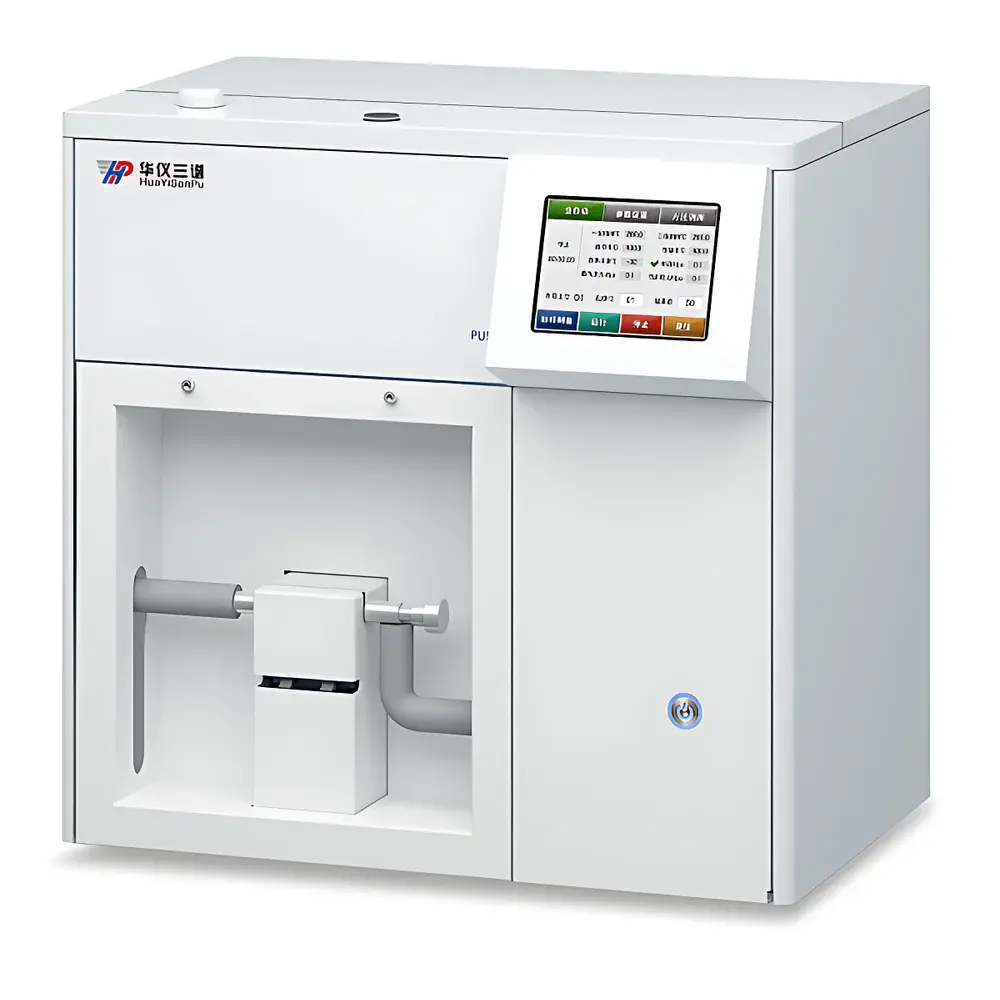
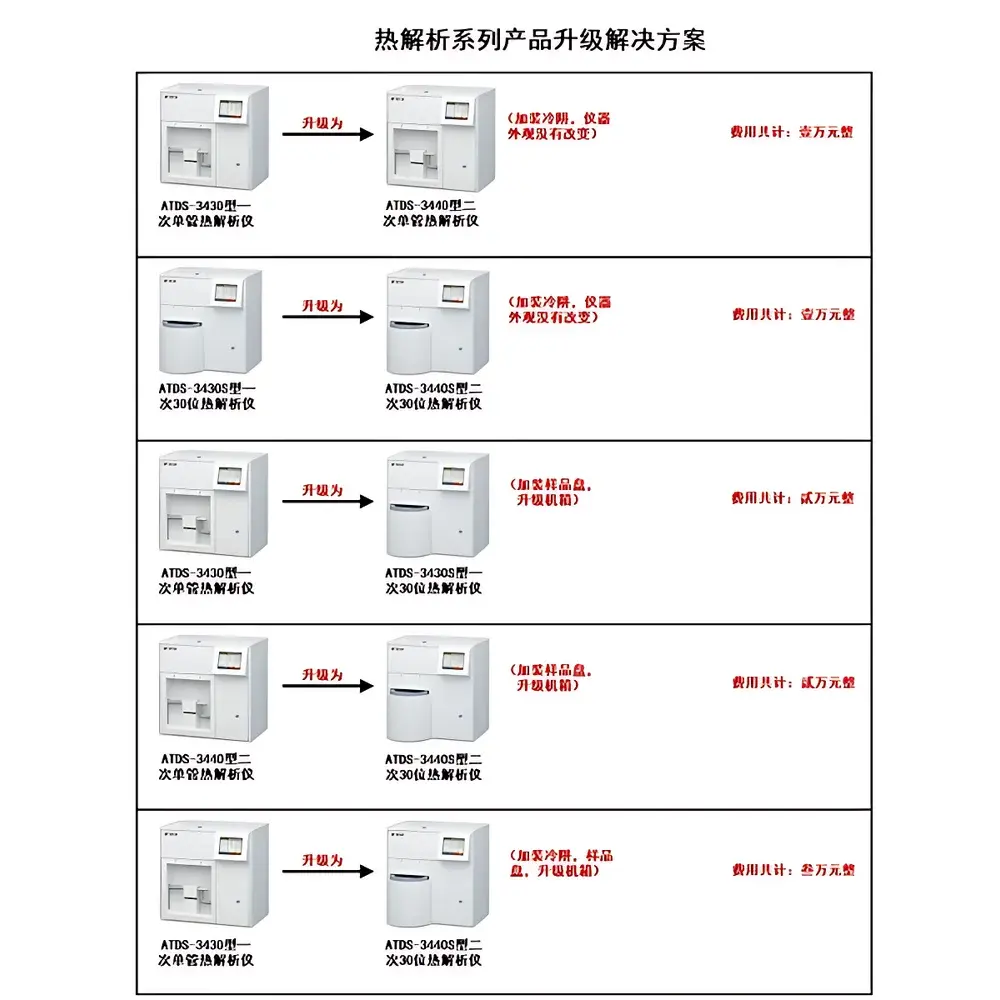
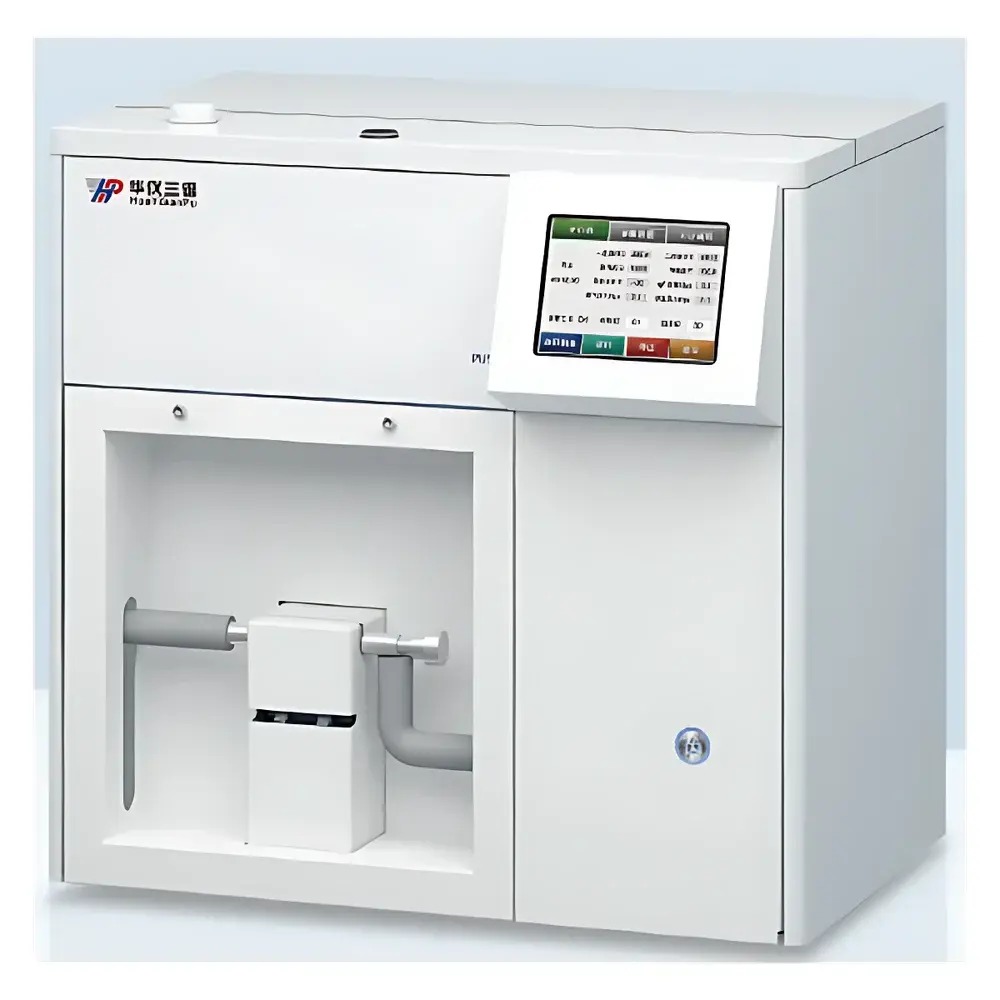
Huayisanpu ATDS-3440 Semi-Automatic Two-Stage Thermal Desorber
| Brand | Beijing Huayisanpu |
|---|---|
| Origin | Beijing, China |
| Model | ATDS-3440 |
| Instrument Type | Two-Stage Thermal Desorber |
| Automation Level | Semi-Automatic |
| Primary Desorption Temp Range | Ambient to 380 °C (±0.5 °C accuracy, 1 °C increment) |
| Secondary Desorption Temp Range | Ambient to 380 °C (±0.5 °C accuracy, 1 °C increment, >3000 °C/min ramp rate) |
| Cold Trap Temp Range | Ambient to −40 °C (±1 °C accuracy, 1 °C increment) |
| Valve & Transfer Line Temp Range | Ambient to 260 °C (±1 °C accuracy, 1 °C increment) |
| Sample Capacity | 1 tube per run |
| Desorption Recovery | >98% (toluene, 0.1 µL, 10:1 split) |
| Peak Width (FWHM) | <3 s |
| RSD | <2.5% (GC-dependent) |
| Carrier Gas Flow | 0–100 mL/min (adjustable, visual indicator) |
| Pneumatic Actuation Pressure | <0.4 MPa (adjustable) |
| System Pressure Rating | >0.4 MPa |
| External Event Control | 15 programmable events |
| Event Timing Range | 0.1–99 min (<0.1% timing error) |
| Tube Materials | Stainless steel, quartz glass, fused silica capillary (optional) |
| Power Consumption | <1000 VA |
| GC Trigger Latency | <2 s |
| Dimensions (H×W×D) | 470×500×380 mm |
| Weight | ~35 kg |
Overview
The Huayisanpu ATDS-3440 is a semi-automatic two-stage thermal desorber engineered for high-fidelity volatile organic compound (VOC) and semi-volatile organic compound (SVOC) analysis in conjunction with gas chromatography (GC) or GC–mass spectrometry (GC–MS). It implements sequential thermal desorption—first-stage desorption from the sorbent tube followed by cryofocusing in a cooled trap, then rapid second-stage desorption directly into the GC inlet—enabling quantitative recovery of trace analytes while minimizing breakthrough and band broadening. Designed for laboratories requiring method flexibility without full automation overhead, the ATDS-3440 supports rigorous environmental monitoring (e.g., EPA TO-17), indoor air quality assessment, occupational hygiene testing, and polymer off-gassing studies. Its architecture prioritizes thermal stability, precise event synchronization with GC systems, and robust pneumatic control—critical for reproducible peak shape, retention time alignment, and low detection limits.
Key Features
- Two-stage desorption workflow with independently programmable temperature zones: primary desorption oven (ambient to 380 °C, ±0.5 °C), secondary desorption heater (ambient to 380 °C, ±0.5 °C, ramp rate >3000 °C/min), cryogenic cold trap (ambient to −40 °C, ±1 °C), valve manifold (ambient to 260 °C), and transfer lines (ambient to 260 °C).
- High-recovery desorption performance: >98% recovery for toluene (0.1 µL, 10:1 split), full-width half-maximum (FWHM) <3 seconds—indicative of sharp, well-focused analyte bands entering the GC column.
- Programmable sample handling: configurable back-flush, tube conditioning (baking/aging), and multi-step flow control (0–100 mL/min, visualized via integrated flow indicator).
- Fifteen user-defined external event triggers with timing resolution of 0.1 minutes and <0.1% timing error—enabling precise coordination with GC oven ramps, detector acquisition windows, or auxiliary hardware.
- Pneumatically actuated six-port valve with pressure-controlled operation (0.4 MPa—ensuring leak-free, repeatable switching under carrier gas flow.
- Modular tube compatibility: accepts stainless steel, quartz glass, and fused silica capillary traps; supports standard 1/4″ OD sorbent tubes (single-tube capacity per run).
Sample Compatibility & Compliance
The ATDS-3440 accommodates a wide range of sorbent materials—including Tenax TA, Carbopack B/C, Carboxen, and multi-bed configurations—enabling method development for C2–C16 hydrocarbons, oxygenates, halogenated compounds, and polar SVOCs. Its thermal control fidelity and low carryover design support compliance with ASTM D6196, ISO 16017-1, and EPA Method TO-17 for ambient and workplace air sampling. While not inherently 21 CFR Part 11–compliant (as a stand-alone hardware module), the instrument integrates seamlessly with LIMS- or chromatography data system (CDS)-controlled workflows where audit trails, electronic signatures, and change control are managed at the software layer. All temperature and timing parameters are traceable to internal calibration routines, and thermal stability meets GLP-aligned validation requirements for routine QC/QA use.
Software & Data Management
The ATDS-3440 operates via front-panel keypad and LCD interface with non-volatile memory for storing up to 20 user-defined methods. Each method includes independent setpoints for all temperature zones, flow profiles, valve sequencing, cold trap equilibration times, and external event scheduling. GC trigger output is TTL-compatible with sub-2-second latency, ensuring precise synchronization with injection events. Raw operational logs—including actual vs. setpoint temperatures, valve actuation timestamps, and flow confirmation signals—are retained onboard for troubleshooting. For regulated environments, method export/import (via USB) enables version-controlled archiving and cross-instrument method portability. No proprietary PC software is required; however, ASCII-formatted log files can be parsed into third-party laboratory informatics platforms supporting CSV ingestion.
Applications
- Ambient and indoor air VOC profiling per EPA TO-17 and ISO 16017-1 protocols.
- Workplace exposure monitoring for OSHA- and NIOSH-listed compounds (e.g., benzene, formaldehyde, styrene).
- Material emission testing (e.g., carpets, adhesives, automotive interiors) under ASTM D5116 and ISO 16000-9.
- Pharmaceutical residual solvent analysis (ICH Q3C) when coupled with headspace-GC or direct desorption-GC–MS.
- Forensic ignitable liquid residue (ILR) identification using narrow-band cryofocusing to preserve diagnostic hydrocarbon patterns.
- Research-scale method development for novel sorbents or multi-analyte panels requiring precise thermal programming and flow modulation.
FAQ
Is the ATDS-3440 compatible with all GC and GC–MS systems?
Yes—it provides standardized TTL-level trigger outputs and analog flow/temperature status signals, supporting integration with Agilent, Thermo Fisher, Shimadzu, PerkinElmer, and other major GC platforms. Valve timing and cold trap release are synchronized to GC injection commands.
What maintenance is required for long-term thermal stability?
Routine verification includes annual thermocouple calibration against NIST-traceable references, periodic replacement of O-rings in the valve manifold, and quarterly cleaning of the cold trap surface to prevent frost accumulation that may affect focusing efficiency.
Can the instrument perform tube aging or reconditioning cycles?
Yes—its programmable flow, temperature, and timing parameters allow full customization of tube bake-out protocols (e.g., 320 °C for 30 min under 50 mL/min helium), including optional back-flush steps to remove non-volatile residues.
Does it support split or splitless injection modes?
The ATDS-3440 itself does not define injection mode; rather, it delivers a focused analyte plug to the GC inlet. Split/splitless selection is configured on the GC side—the instrument’s 10:1 split capability (validated with toluene) confirms compatibility with common split injection setups.
Is remote operation or network connectivity available?
No native Ethernet or Wi-Fi interface is included. Remote control requires external relay-based hardware interfacing or integration via the GC’s CDS, which manages the ATDS-3440 as an auxiliary device through digital I/O or RS-232 (with optional adapter).






