
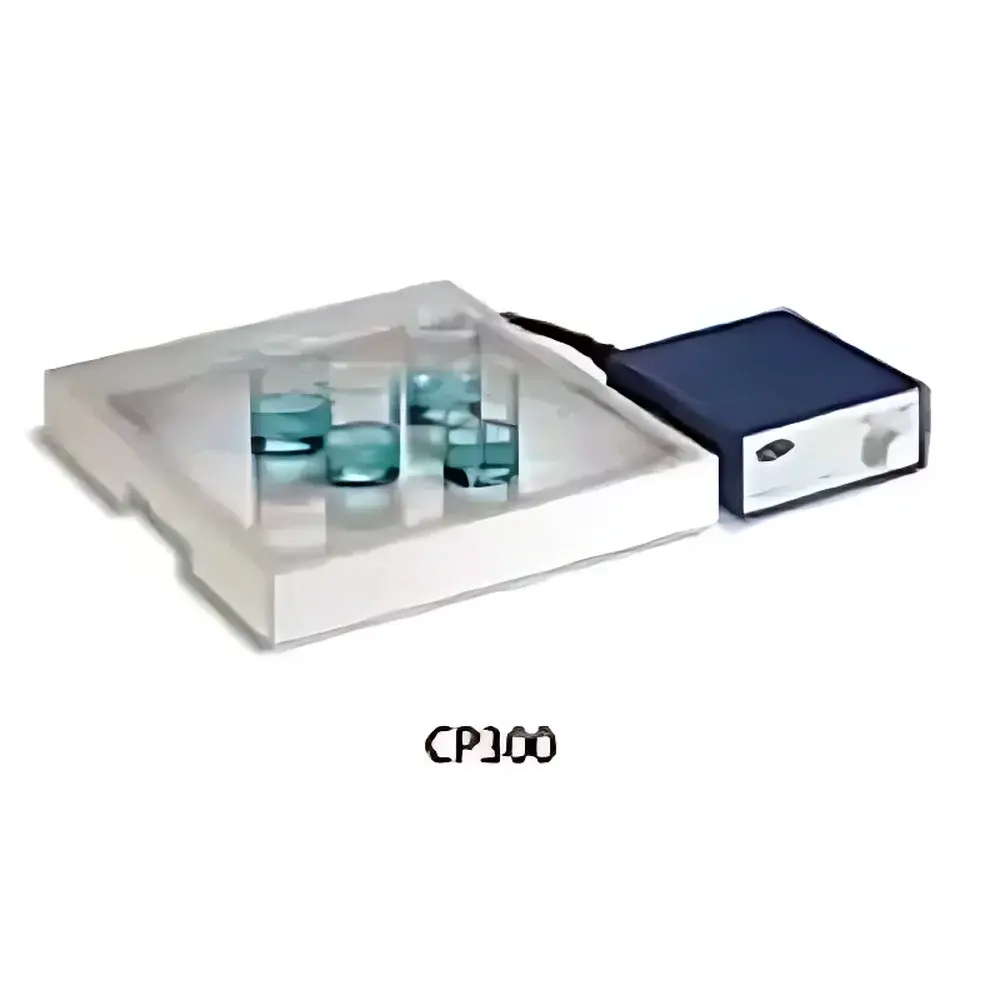
IKA CP300 PTFE-Coated Glass Ceramic Electric Heating Plate
| Origin | Germany |
|---|---|
| Manufacturer Type | Authorized Distributor |
| Origin Category | Imported |
| Model | CP300 |
| Price | Upon Request |
| Heating Surface Material | Glass Ceramic |
| Housing Material | PTFE-Coated Stainless Steel |
| Heating Plate Dimensions (mm) | 300 × 300 |
| Effective Heating Area (mm) | 200 × 200 |
| Maximum Temperature | 400 °C |
| Power Rating | 900 W |
| Voltage/Frequency | 230 V / 50 Hz |
| Weight | 11 kg |
| Control Unit Dimensions (mm) | 150 × 160 × 65 |
| Main Unit Dimensions (mm) | 320 × 360 × 60 |
| Temperature Safety Indicator | “HOT” LED (activates ≥50 °C, remains active as long as mains power is connected) |
Overview
The IKA CP300 PTFE-Coated Glass Ceramic Electric Heating Plate is an engineered solution for laboratories requiring robust thermal stability, exceptional chemical resistance, and safe operation in aggressive sample preparation workflows. Designed specifically for acid digestion, trace metal analysis, and hydrolysis protocols, the CP300 employs a dual-material architecture: a smooth, non-porous glass ceramic heating surface bonded to a fully PTFE-coated stainless steel housing. This construction eliminates crevices where corrosive residues—especially HF, HNO₃, HCl, or aqua regia vapors—can accumulate, thereby preventing degradation of structural integrity and minimizing cross-contamination risk. The device operates on resistive heating principles, delivering uniform thermal distribution across its 200 × 200 mm effective zone, with precise temperature control up to 400 °C. Its modular design separates the heating module from the electronic control unit via PTFE-insulated cabling, enabling placement inside fume hoods while maintaining operator accessibility and ergonomic control outside hazardous environments.
Key Features
- Chemically inert glass ceramic top plate resistant to thermal shock, scratches, and strong oxidizing agents—including concentrated nitric acid cleaning protocols.
- Full PTFE encapsulation of internal heating elements and external housing surfaces, ensuring long-term corrosion resistance against halogenated acids and organic solvents.
- Dedicated high-temperature safety system: a persistent “HOT” LED indicator activates at ≥50 °C and remains illuminated whenever mains power is connected—even if the unit is powered off—providing unambiguous thermal hazard awareness per ISO 13857 and IEC 61000-6-4 guidelines.
- Modular configuration with PTFE-sheathed interconnect cable (standard length: 1.5 m), facilitating compliance with laboratory ventilation standards (e.g., ANSI Z9.5) by allowing physical separation of heat source and operator interface.
- Stable mechanical platform with reinforced base geometry (320 × 360 × 60 mm) supporting multiple vessels simultaneously—including tall-form digestion tubes, 500 mL Erlenmeyer flasks, and parallel micro-digestion blocks.
Sample Compatibility & Compliance
The CP300 is routinely deployed in accredited environmental, geochemical, and pharmaceutical laboratories performing EPA Method 3050B, ISO 11466, and USP heavy metal testing. Its surface compatibility extends to borosilicate glass, quartz, PFA, and quartz-lined digestion vessels. The absence of metallic exposed components prevents catalytic interference during low-level Cd, Pb, or As quantification by ICP-MS or GF-AAS. All materials comply with EU RoHS Directive 2011/65/EU and REACH Annex XIV restrictions. The unit meets electromagnetic compatibility requirements per EN 61326-1:2013 and carries CE marking for Class A laboratory equipment. No calibration certificate is supplied ex-factory; however, the unit supports external verification using NIST-traceable PT100 probes per ISO/IEC 17025 procedures.
Software & Data Management
The CP300 operates as a standalone analog-controlled instrument without embedded firmware or digital connectivity. Temperature regulation is achieved via a precision bimetallic thermostat with ±5 °C accuracy across the 0–400 °C range. While it does not support data logging or PC interfacing, its design aligns with GLP-compliant documentation practices: the fixed “HOT” indicator provides auditable evidence of residual thermal energy, and the physical separation of control unit enables secure placement within controlled-access zones. Laboratories implementing 21 CFR Part 11 workflows may integrate the CP300 into broader SOPs by pairing it with external digital thermometers equipped with audit trail functionality (e.g., Fluke 1524 or Omega HH309A).
Applications
- Open-vessel acid digestion of soil, sediment, and biological tissues prior to ICP-OES or ICP-MS analysis.
- Controlled hydrolysis of polymers and pharmaceutical excipients under reflux conditions.
- Pre-concentration steps in water analysis workflows (e.g., evaporation of 1 L samples to 10 mL for trace element determination).
- Heating baths for dissolution testing apparatus (USP Apparatus I & II) when paired with PTFE-coated immersion sleeves.
- Pre-heating of GC vials and autosampler trays in regulated QC labs where metallic contamination must be excluded.
FAQ
Can the CP300 be used inside a fume hood without compromising control functionality?
Yes—the PTFE-insulated cable allows full operational separation between the heating plate (placed inside the hood) and the control unit (located outside), preserving both safety and usability.
Is the glass ceramic surface resistant to hydrofluoric acid exposure?
No—while highly resistant to nitric, sulfuric, and hydrochloric acids, glass ceramic is etched by HF; use only PFA or quartz vessels when handling HF-containing mixtures.
Does the unit include overtemperature protection beyond the “HOT” indicator?
No independent thermal cutoff is integrated; users must rely on procedural controls and external monitoring per ISO/IEC 17025 method validation requirements.
What maintenance is required to sustain chemical resistance over time?
Routine cleaning with 30% HNO₃ followed by deionized water rinse is recommended after each acid digestion cycle; inspect PTFE coating annually for micro-cracking using 10× magnification.
Is calibration traceable to national standards supported by IKA?
IKA supplies no factory calibration certificate; however, the unit’s dimensional and electrical specifications are verified against DIN EN 61000-4-3 during production, and third-party calibration is achievable using certified reference thermometers.



