
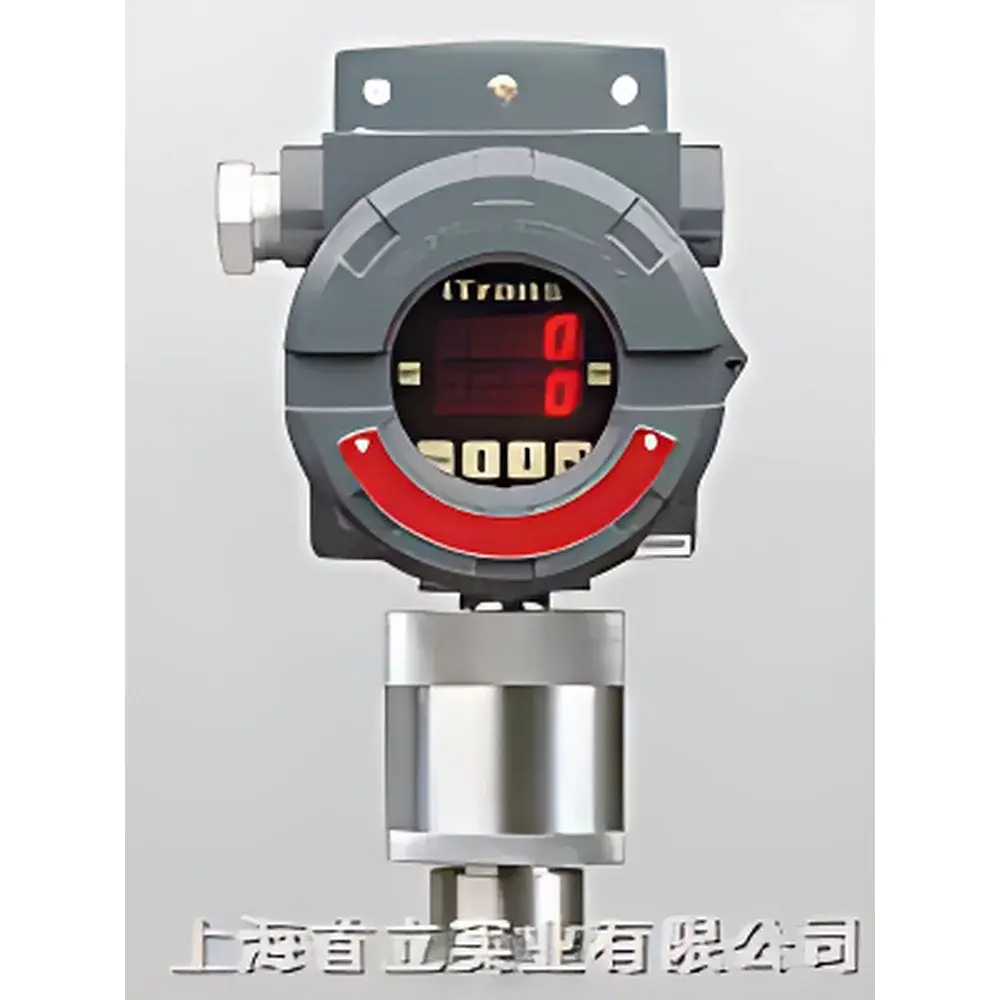
iTrans iTrans Fixed Gas Monitoring System
| Origin | USA |
|---|---|
| Manufacturer Type | Distributor |
| Origin Category | Imported |
| Model | iTrans iTrans |
| Price | Upon Request |
Overview
The iTrans iTrans Fixed Gas Monitoring System is a microprocessor-controlled, intrinsically safe (or explosion-proof, depending on configuration) ambient air quality monitor engineered for continuous, real-time detection of toxic, combustible, and oxygen-deficient or enriched atmospheres in industrial, municipal, and hazardous environments. Based on proven electrochemical, catalytic bead (pellistor), infrared (IR), and paramagnetic sensor technologies—selected per gas species—the system operates on the principle of selective electrochemical oxidation (for H2S, CO, NH3, Cl2, NO2, HCN, HCl, PH3, SO2), thermal conductivity or catalytic combustion (for LEL and H2), and non-dispersive infrared absorption (for hydrocarbons and CO2 where applicable). Designed to meet stringent occupational health and process safety requirements, it delivers stable, repeatable measurements across a wide dynamic range while maintaining compliance with international functional safety standards including IEC 61508 SIL 2 (for selected configurations) and ISO 14001-aligned monitoring workflows.
Key Features
- Modular single- or dual-channel architecture supporting up to two independent gas measurements from one transmitter housing—reducing footprint, cabling, and commissioning time.
- Explosion-proof enclosure options: die-cast aluminum with multi-layer corrosion-resistant coating or 316 stainless steel; certified to NEMA 4X and IP66 for outdoor and harsh-environment deployment.
- Intelligent sensor recognition: automatic identification and configuration of installed sensor modules upon insertion—eliminating manual calibration coefficient entry and reducing commissioning errors.
- Dual-output interface: isolated 4–20 mA analog output (linear, HART-compatible) plus Modbus RTU over RS-485 (9600 baud), enabling seamless integration into DCS, PLC, SCADA, and centralized EMS platforms.
- Onboard diagnostics and fault management: continuous self-monitoring of sensor health, power integrity, and signal stability; configurable alarm thresholds with latching/non-latching behavior.
- Three programmable relays: two user-configurable SPST (normally open) relays for local alarm actuation (e.g., sirens, ventilation shutdown, valve isolation); one dedicated fault relay (SPST, normally closed) for system-level failure indication.
- DS2 Docking Station compatibility: enables automated zero/span calibration, bump testing, data logging, and audit-trail generation without field technician intervention—supporting GLP/GMP traceability requirements.
Sample Compatibility & Compliance
The iTrans iTrans supports detection of 15+ target gases—including HCl, Cl2, ClO2, CO, H2S, HCN, NO2, NH3, O2, PH3, SO2, LEL hydrocarbons, NO, and H2—with measurement ranges spanning from 0.01 ppm (PH3) to 100% LEL, and resolutions as fine as 0.01 ppm. All sensor modules are factory-calibrated and individually serialized. Certifications include CSA C22.2 No. 142 (Class I, Div. 1 & 2, Groups B, C, D), UL 913 (Class I, Div. 1), ATEX II 2G Ex d IIB + H2 T5, IECEx Ex d IIB + H2 T5, and GB 3836.1–2010 / GB 15322.1–2019 (China). The system architecture supports compliance with OSHA 29 CFR 1910.120 (HAZWOPER), EPA Method TO-15/TO-17 (when used with appropriate sampling accessories), and ISO 8573-1 (compressed air purity verification when configured for O2/CO monitoring).
Software & Data Management
The iTrans platform integrates natively with iNet®, a cloud-enabled instrument lifecycle management service. iNet provides automated report generation (daily calibration logs, alarm summaries, sensor drift trends), predictive maintenance alerts (based on historical response decay), cylinder change tracking, and remote firmware updates. All data is timestamped, digitally signed, and stored with full audit trail per FDA 21 CFR Part 11 Annex 11 requirements—ensuring data integrity for regulated industries. Local configuration and diagnostics are supported via front-panel keypad or optional USB-to-RS485 adapter using vendor-provided configuration software compliant with Windows 10/11 and TLS 1.2 encryption.
Applications
- Chemical manufacturing facilities: continuous monitoring of chlorine, ammonia, hydrogen sulfide, and phosgene release points near reactors, storage tanks, and loading docks.
- Wastewater treatment plants: H2S and CH4 monitoring in headworks, digesters, and sludge handling areas to prevent exposure and explosion hazards.
- Pharmaceutical cleanrooms and API synthesis suites: low-level HCl, ClO2, and NH3 leak detection during sterilization and purification processes.
- Refineries and petrochemical terminals: LEL and H2S monitoring at flare stacks, pump stations, and vapor recovery units.
- Municipal infrastructure: tunnel ventilation control (CO, NOx, O2), landfill gas monitoring (CH4, H2S), and subway station air quality assurance.
FAQ
What sensor technologies are supported by the iTrans iTrans system?
Electrochemical (for toxic gases), catalytic bead (for combustibles), infrared (for hydrocarbons and CO2), and paramagnetic (for O2)—all housed in interchangeable, auto-recognized modules.
Can the system operate independently without a central controller?
Yes. With onboard relays and programmable alarm logic, it can trigger local audible/visual alarms, activate exhaust fans, or initiate emergency shutdowns autonomously.
Is the DS2 Docking Station required for routine calibration?
No—it is optional but strongly recommended for auditable, repeatable calibration in regulated environments; manual calibration via handheld gas standard remains possible.
Does the system support Modbus TCP or only Modbus RTU?
Only Modbus RTU over RS-485 is natively supported; Modbus TCP requires an external protocol gateway.
What is the maximum number of iTrans units supported on a single RS-485 bus?
Up to 200 devices, enabled by 8-bit address selection via onboard DIP switches and proper termination/resistance matching.







