
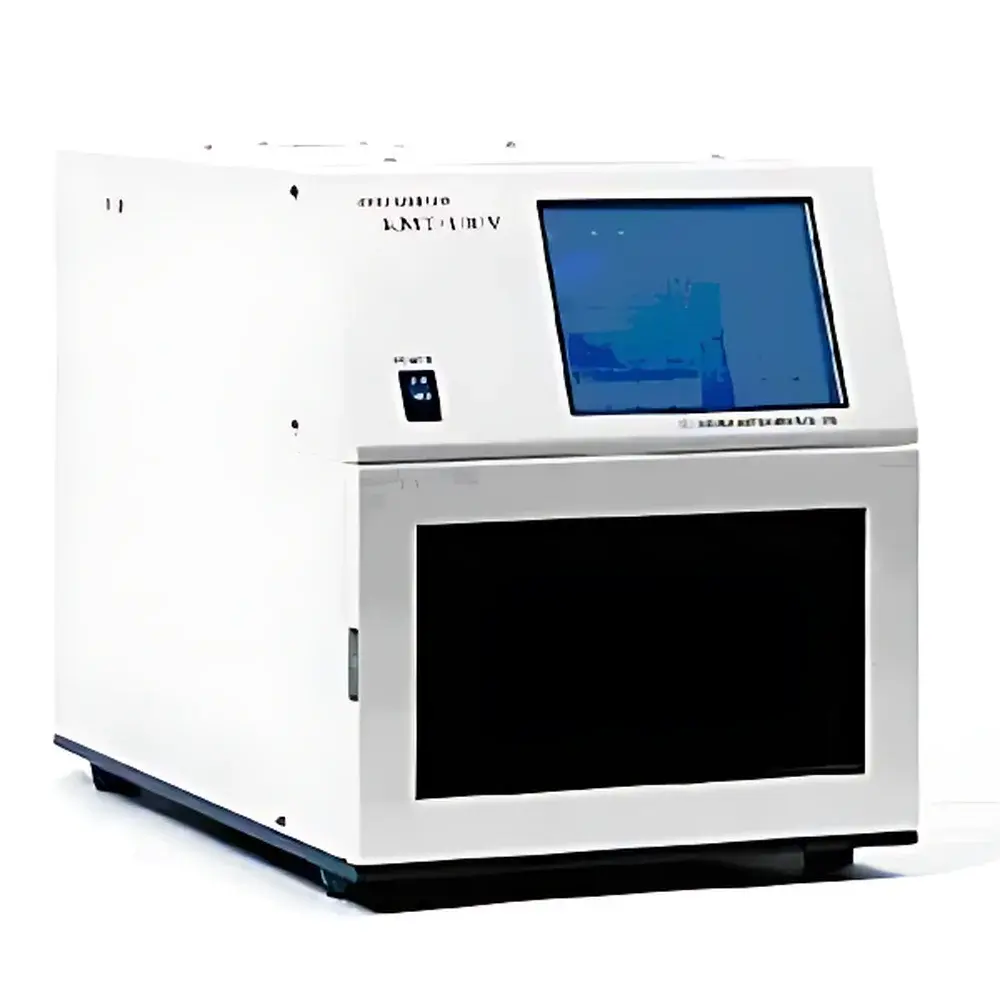
JAI JSP-20 Multifunctional High-Pressure Autosampler for Preparative HPLC
| Brand | JAI |
|---|---|
| Origin | Japan |
| Model | JSP-20 |
| Sample Capacity | 1–20 vials |
| Injection Volume Range | 0.1–5.0 mL |
| Injection Precision | CV ≤ 1% |
| Maximum Operating Pressure | 20 MPa |
| Injection Repetition | 1–99 times per vial |
| Sequence Programmability | 1–20 order |
| Maximum Run Time | 999 minutes |
| Wash Mode | Dual solvent/air flush |
| Vial Type | 5 mL screw-thread glass vials |
| Sealing Materials | Silicone and PTFE |
| Needle Design | Dual-side-port stainless steel needle |
| Power Supply | AC 100 V / 3 A |
| Control Interface | Touchscreen LCD panel |
| Dimensions (W×H×D) | 250 × 300 × 435 mm |
| Weight | 15 kg |
Overview
The JAI JSP-20 Multifunctional High-Pressure Autosampler is an engineered solution designed for integration with preparative liquid chromatography systems, particularly high-pressure recycling and multi-column preparative HPLC platforms. It operates on a precision syringe-driven sampling mechanism coupled with a dual-side-port stainless steel injection needle, enabling robust, contamination-minimized sample introduction under sustained backpressures up to 20 MPa. Unlike standard analytical autosamplers, the JSP-20 is specifically calibrated for the mechanical and fluidic demands of preparative-scale separations—where larger injection volumes (0.1–5.0 mL), repeated cycle injections, and extended run durations (up to 999 minutes) are routine. Its architecture supports seamless synchronization with JAI’s full line of preparative LC modules, including fraction collectors, UV detectors, and gradient pump controllers, forming a fully automated, traceable separation workflow.
Key Features
- High-pressure compatibility: Rated for continuous operation at 20 MPa, ensuring stable performance in demanding preparative HPLC applications involving viscous solvents or packed columns with small particle sizes.
- Precision volumetric control: Injection volume adjustable in 0.1 mL increments across the full 0.1–5.0 mL range, validated to deliver ≤1% coefficient of variation (CV) under GLP-compliant conditions.
- Flexible sequencing logic: Supports programmable injection order (1–20), repeat injections per vial (1–99), and total runtime scheduling up to 999 minutes—enabling unattended overnight or multi-day purification campaigns.
- Dual-mode cleaning protocol: Integrated solvent + compressed air flush cycles minimize carryover between samples; configurable wash steps can be inserted before or after each injection.
- Intuitive human-machine interface: 7-inch resistive touchscreen LCD provides direct access to method setup, real-time status monitoring, and error diagnostics without external PC dependency.
- Chemically inert fluid path: Wetted components include PTFE and silicone seals, borosilicate glass vial compatibility, and corrosion-resistant stainless steel needle—ensuring stability with organic solvents, acids, and basic mobile phases.
Sample Compatibility & Compliance
The JSP-20 accommodates standard 5 mL screw-thread glass vials (e.g., Agilent 5182-0715 or equivalent), eliminating the need for custom consumables. Its mechanical design conforms to ISO 8573-1 (compressed air purity) for purge gas delivery and meets IEC 61010-1 safety requirements for laboratory equipment. While not certified as standalone 21 CFR Part 11 compliant, the system supports audit-trail-capable data logging when interfaced with JAI’s proprietary ChromaControl software (v4.2+), enabling electronic signatures, user access levels, and method versioning—key prerequisites for GMP/GLP-regulated environments. All sealing materials comply with USP Class VI biocompatibility standards.
Software & Data Management
The JSP-20 communicates via RS-232 and TTL-level digital I/O to synchronize timing and status signals with external HPLC controllers. When paired with JAI’s ChromaControl software suite, it enables centralized method storage, injection log export (CSV/TXT), and event-triggered actions (e.g., initiate fraction collection upon injection pulse). Software-generated reports include timestamped injection records, pressure logs, and wash cycle verification—fully traceable for internal QA review or regulatory submission. Optional Ethernet-to-RS232 gateway modules allow integration into LIMS environments supporting ASTM E1384 or ISO/IEC 17025 workflows.
Applications
- Preparative purification of natural products, peptides, and synthetic intermediates requiring milligram-to-gram scale recovery.
- Recycling HPLC workflows where repeated injection of partially resolved fractions improves peak capacity and resolution.
- Stability-indicating assays under ICH Q5C guidelines, where reproducible large-volume injection ensures representative sampling from heterogeneous formulations.
- Method development studies involving systematic variation of injection volume, sequence order, or dwell time—supported by built-in parameter scripting.
- Automated QC release testing in pharmaceutical manufacturing, where batch-wise injection of reference standards and test samples must meet ISO 17025 repeatability criteria.
FAQ
Is the JSP-20 compatible with non-JAI preparative HPLC systems?
Yes—via configurable TTL trigger inputs and RS-232 command protocol (ASCII-based), it interfaces with third-party pumps and detectors that support external start/stop signaling.
Can the injection volume be calibrated in-house?
Yes—built-in calibration mode allows users to perform gravimetric verification using certified weights and analytical balance; procedure documented in the Operation Manual Section 4.3.
What maintenance intervals are recommended for the syringe and needle assembly?
JAI recommends syringe seal replacement every 10,000 injections and needle inspection after every 500 injections; consumable part numbers are listed in Appendix B of the Service Guide.
Does the system support temperature-controlled sample storage?
No—the JSP-20 is ambient-temperature only; for chilled storage, integration with an external refrigerated rack (e.g., JAI CTS-20) is required and supported via auxiliary power and CAN bus handshake.
How is carryover quantified during validation?
Carryover is assessed per USP using a high-concentration standard followed by blank injection; typical results are <0.05% for reversed-phase solvents when dual-wash protocol is enabled.





