
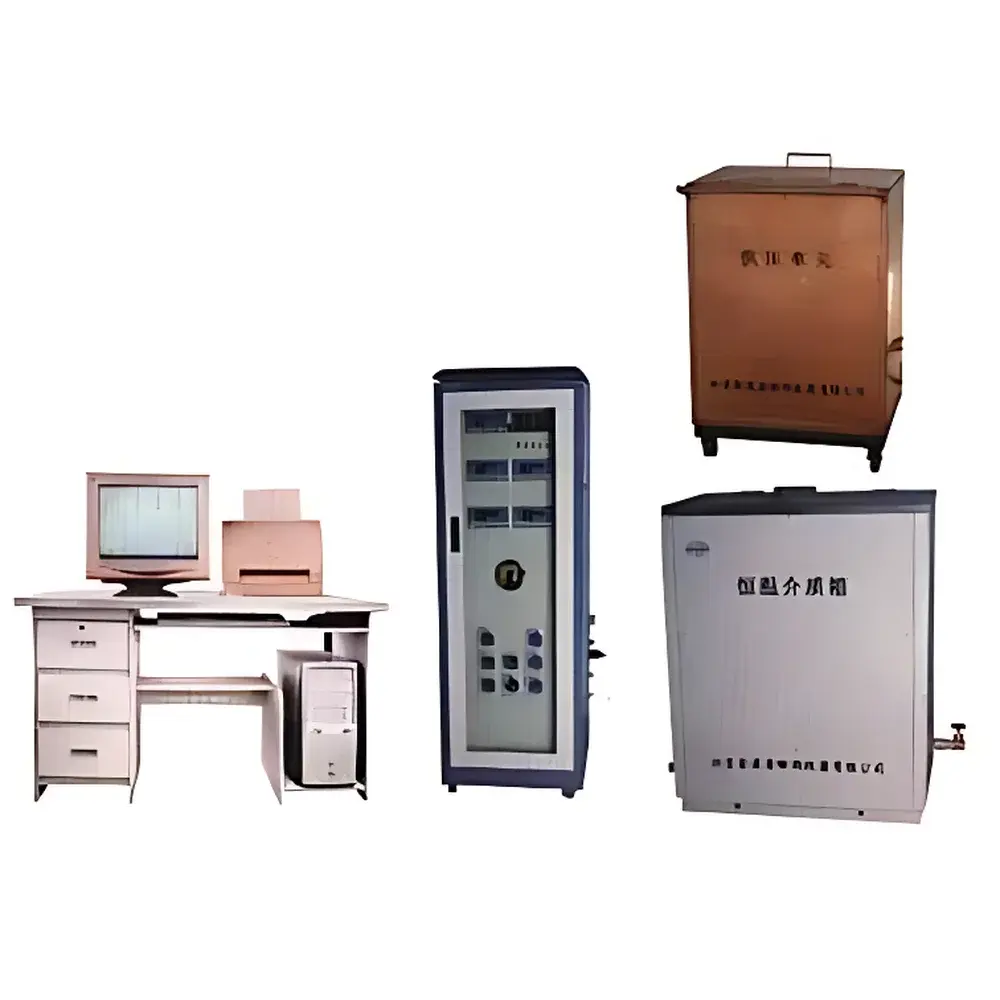
JC2000A Static Droplet Contact Angle Analyzer Series (XJY6/XJY10/XJY16/XJY20 Platform Configurations)
| Origin | Imported |
|---|---|
| Manufacturer Type | Authorized Distributor |
| Model | XJY6 / XJY10 / XJY16 / XJY20 |
| Pricing | Available Upon Request |
| Measurement Range | 0–180° |
| Angular Resolution | <0.25° |
| Image Magnification | 266 pixels/mm |
| Measurement Methods | Sessile Drop, Pendant Drop |
| Temperature Control | Integrated Thermostatic Stage with External Circulating Bath Interface |
Overview
The JC2000A Static Droplet Contact Angle Analyzer is a precision optical instrument engineered for quantitative characterization of solid–liquid interfacial wettability under controlled environmental conditions. It operates on the fundamental principle of optical silhouette imaging combined with geometric contour analysis: a precisely dispensed liquid droplet is deposited onto a solid substrate, and its profile is captured via high-resolution CCD imaging. The contact angle—defined as the angle formed between the tangent to the liquid–vapor interface and the solid surface at the three-phase contact line—is computed using advanced edge-detection algorithms based on Young’s equation and axisymmetric drop shape analysis (ADSA). Designed for rigorous materials science research and industrial quality control, the system supports both sessile drop (solid-substrate–liquid–air) and pendant drop (liquid–air–solid or liquid–liquid–solid) configurations, enabling comprehensive surface energy estimation, critical surface tension determination, and dynamic hysteresis evaluation (advancing and receding angles).
Key Features
- High-fidelity optical path: Optimized telecentric lens assembly coupled with a progressive-scan CCD camera delivering stable, low-noise image acquisition at 266 pixels/mm magnification.
- Dual-mode measurement capability: Simultaneous support for static sessile drop and pendant drop methodologies—essential for characterizing hydrophobic/hydrophilic surfaces, soft polymers, and immiscible liquid–liquid systems.
- Motorized precision dispensing: Computer-controlled micro-syringe actuation (10 µL and 5 µL calibrated syringes included) ensures repeatable droplet volume delivery with sub-nanoliter resolution.
- Thermostatically regulated sample stage: Sealed, temperature-stabilized platform compatible with external recirculating chillers or heaters (±0.1 °C stability), enabling isothermal or variable-temperature contact angle studies per ASTM D7334 and ISO 19403-2.
- Modular mechanical design: Interchangeable fixtures accommodate diverse sample geometries—including flat substrates, fibers, textiles, pressed powder compacts, and irregularly shaped components—without requiring sample repositioning or recalibration.
- Real-time hardware synchronization: Onboard single-board controller manages stage leveling, Z-axis focus adjustment, XY translation, and thermal feedback loops independently of host PC performance, ensuring deterministic timing for time-resolved measurements.
Sample Compatibility & Compliance
The JC2000A accommodates a broad spectrum of solid-phase materials: rigid planar substrates (glass, silicon wafers, metals), flexible films (PET, PDMS), fibrous assemblies (carbon fiber mats, nonwovens), porous media (ceramic filters, sintered metals), and consolidated particulate samples (cold-pressed ceramic or polymer powders). All measurements adhere to internationally recognized standards including ISO 27448 (photocatalytic activity assessment), ASTM D5725 (surface wettability of coated fabrics), and ISO 19403-1 through -4 (contact angle determination for surface energy calculation). The system architecture supports GLP-compliant operation through audit-trail-enabled software logging, user-access controls, and electronic signature readiness in accordance with FDA 21 CFR Part 11 requirements when deployed in regulated environments.
Software & Data Management
The proprietary JC2000A Analysis Suite provides a validated, intuitive interface for real-time image capture, automated droplet contour fitting (using ellipse, Young–Laplace, or polynomial curve models), and statistical reporting. Raw images, metadata (timestamp, temperature, syringe volume, operator ID), and derived parameters (θadv, θrec, hysteresis Δθ, surface free energy components) are stored in vendor-neutral HDF5 format. Batch processing workflows enable comparative analysis across multiple samples or time points. Export options include CSV, PDF reports, and MATLAB-compatible matrices. Software validation documentation (IQ/OQ protocols) and source code traceability are available upon request for regulated laboratory implementation.
Applications
This instrument serves critical roles across academic and industrial domains: surface modification R&D (plasma treatment, silanization, graft polymerization), formulation development in coatings and adhesives, quality assurance of medical device packaging materials, optimization of membrane hydrophilicity in water purification, evaluation of anti-fouling behavior in marine composites, and fundamental studies of nanomaterial–biomolecule interactions. In teaching laboratories, it functions as a core pedagogical tool for illustrating interfacial thermodynamics, capillary phenomena, and colloidal stability principles.
FAQ
What types of liquids can be measured with the JC2000A?
Water, glycerol, ethylene glycol, diiodomethane, formamide, and other Newtonian or weakly viscoelastic liquids with known surface tension values are routinely used. Non-Newtonian fluids require caution due to potential time-dependent spreading artifacts.
Can the system measure contact angles on curved or rough surfaces?
Yes—provided the local curvature radius exceeds ~1 mm and surface roughness RMS is below 1 µm, accurate baseline definition remains feasible using manual or semi-automated profile alignment tools.
Is calibration traceable to national standards?
Angular calibration employs certified glass reference slides with engraved fiducial marks; spatial calibration uses NIST-traceable stage micrometers. Full calibration certificates are issued with each instrument shipment.
Does the software support GMP/GLP audit trails?
Yes—the optional Compliance Edition includes electronic signatures, role-based access control, immutable log files, and change history tracking aligned with FDA 21 CFR Part 11 and EU Annex 11 expectations.
What maintenance is required for long-term accuracy?
Annual verification of syringe volumetric accuracy, CCD sensor dark-current drift, and stage thermal uniformity is recommended. Optical components require only periodic dust-free cleaning with lens-grade solvents.



