
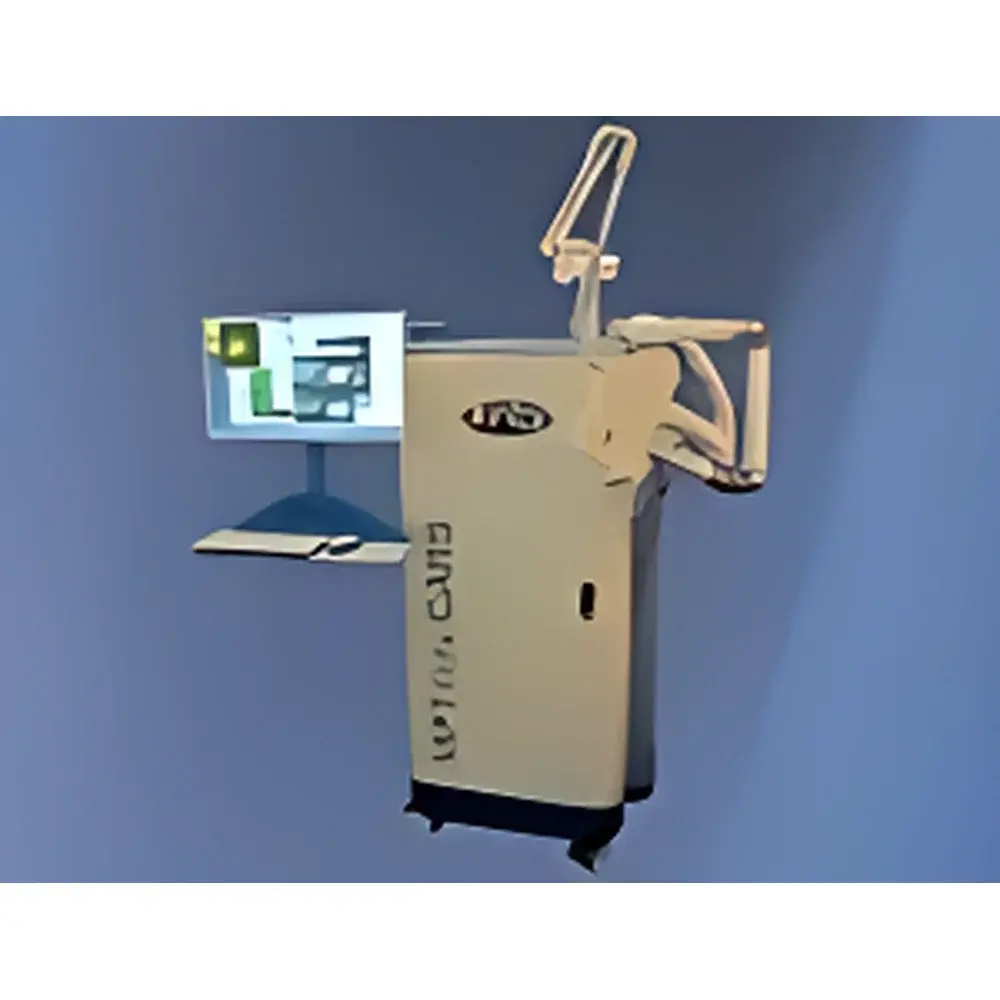
JenLab MPTflex CARS Multiphoton Tomography System with Coherent Anti-Stokes Raman Scattering
| Brand | JenLab |
|---|---|
| Origin | Germany |
| Model | MPTflex CARS |
| Detection Principle | Multiphoton Excitation + Coherent Anti-Stokes Raman Scattering (CARS) |
| Spatial Resolution | Subcellular (~0.5 µm lateral, ~1.5 µm axial) |
| Laser Wavelengths | Tunable near-infrared (700–1100 nm for excitation |
| Imaging Depth | Up to 200 µm in human skin *in vivo* |
| Real-time Chemical Contrast | Label-free molecular vibrational fingerprinting (e.g., lipids, proteins, melanin, water, collagen) |
| Regulatory Compliance | CE-marked for clinical research use |
| compliant with IEC 60825-1 | 2014 (laser safety) |
| Software Platform | MPTconsole v5.x with FDA 21 CFR Part 11–ready audit trail and GLP-compliant data archiving |
Overview
The JenLab MPTflex CARS Multiphoton Tomography System is an advanced, non-invasive optical imaging platform engineered for label-free, chemically specific, three-dimensional tissue analysis at subcellular resolution. It integrates multiphoton excitation fluorescence (MPEF) with coherent anti-Stokes Raman scattering (CARS) — a nonlinear optical process that generates contrast based on intrinsic molecular vibrational signatures. Unlike conventional histopathology or fluorescence microscopy requiring exogenous dyes or tissue sectioning, the MPTflex CARS system enables real-time, *in vivo*, depth-resolved acquisition of spatially registered structural morphology and quantitative chemical composition. Its near-infrared (NIR) ultrafast laser architecture minimizes photodamage and maximizes penetration depth in scattering biological tissues — particularly validated in human skin up to 200 µm. The system is designed for translational research environments where regulatory traceability, reproducible spectral calibration, and longitudinal monitoring are essential.
Key Features
- Simultaneous dual-modal imaging: MPEF for cellular architecture (NAD(P)H, FAD, elastin) and CARS for vibrationally resonant chemical mapping (C–H stretch bands at ~2840 cm⁻¹ for lipids, ~2930 cm⁻¹ for proteins)
- Automated, motorized XYZ stage with piezo-driven Z-scanning for high-speed volumetric acquisition (up to 10 volumes/s at 512 × 512 × 64 voxels)
- Integrated spectral calibration reference using polystyrene beads and certified Raman standards traceable to NIST SRM 2241
- Modular laser engine: Dual-output femtosecond oscillator (1040 nm) + optical parametric amplifier (OPA) enabling precise tuning of pump (700–950 nm) and Stokes (1000–1300 nm) beams for resonant CARS targeting
- Rugged optomechanical design with active thermal stabilization and air-bearing vibration isolation — optimized for long-term operation in shared core facilities
- Compliance-ready firmware: Audit trail logging, user role-based access control, electronic signature support, and data encryption aligned with FDA 21 CFR Part 11 and ISO/IEC 17025 requirements
Sample Compatibility & Compliance
The MPTflex CARS system supports native, unprocessed biological specimens including human skin *in vivo*, excised murine tissue, 3D organotypic skin models, corneal explants, and live zebrafish embryos. No fixation, embedding, or staining is required. Sample interfaces include ergonomic handheld probes (for dermatological applications), motorized immersion chambers (for *ex vivo* tissue), and custom vacuum-compatible stages (for space medicine simulations). All optical components meet ISO 13485:2016 design controls for medical device development. The system is CE-marked under Directive 2014/30/EU (EMC) and 2014/53/EU (Radio Equipment), and its software architecture supports GLP/GMP-aligned validation protocols per ASTM E2500-13 and ICH GCP guidelines.
Software & Data Management
MPTconsole v5.x provides an integrated environment for instrument control, spectral processing, and quantitative image analysis. Core capabilities include real-time CARS spectral deconvolution using constrained non-negative matrix factorization (cNMF), automated melanin index quantification (MIQ), lipid-to-protein ratio mapping, and time-lapse drift correction. Raw data is stored in HDF5 format with embedded metadata (laser power, dwell time, PMT gain, spectral calibration coefficients). The software includes built-in export modules for MATLAB, Python (via h5py), and FIJI/ImageJ, and supports DICOM-SR export for integration into PACS-based clinical research workflows. All user actions — from parameter adjustment to ROI annotation — are logged with timestamp, operator ID, and hash-verified integrity for audit purposes.
Applications
- Cosmetic science: Quantitative assessment of stratum corneum barrier integrity, transepidermal water loss (TEWL) correlation, and active ingredient penetration kinetics
- Dermatologic oncology: Discrimination of benign melanocytic nevi vs. early-stage melanoma via CARS-based melanin polymerization state analysis
- Pharmaceutical QA/QC: Real-time tablet coating uniformity evaluation and API crystallinity mapping without sample destruction
- Tissue engineering: Non-destructive longitudinal monitoring of extracellular matrix remodeling in bioprinted constructs
- Neurobiology: Label-free myelin sheath visualization in live brain slices and demyelination kinetics tracking in EAE mouse models
- Space medicine: Microgravity-induced cytoskeletal reorganization studies in human endothelial cells aboard parabolic flight platforms
FAQ
Is the MPTflex CARS system suitable for clinical diagnostic use?
It is CE-marked for clinical research use only. Regulatory clearance for *in vitro* diagnostic (IVD) or point-of-care deployment requires additional local submission (e.g., FDA 510(k), CE-IVDR) and site-specific validation.
Can CARS signals be quantitatively correlated with absolute concentration?
Yes — when combined with calibrated reference phantoms and internal standard normalization, the system supports semi-quantitative concentration estimation within ±12% CV for major biomolecules (lipids, keratin, melanin) across biological replicates.
What maintenance is required for long-term stability?
Annual wavelength recalibration and PMT quantum efficiency verification are recommended. Laser cavity alignment is factory-locked and does not require user intervention.
Does the system support multi-user network operation?
Yes — MPTconsole supports concurrent remote access via secure TLS-encrypted VNC, with project-level permissions and centralized license management through JenLab’s FlexNet server.
How is data integrity ensured during long-duration acquisitions?
All acquisitions include cyclic redundancy checksums (CRC-32) for each frame; interrupted scans resume from last verified voxel stack without data loss.






