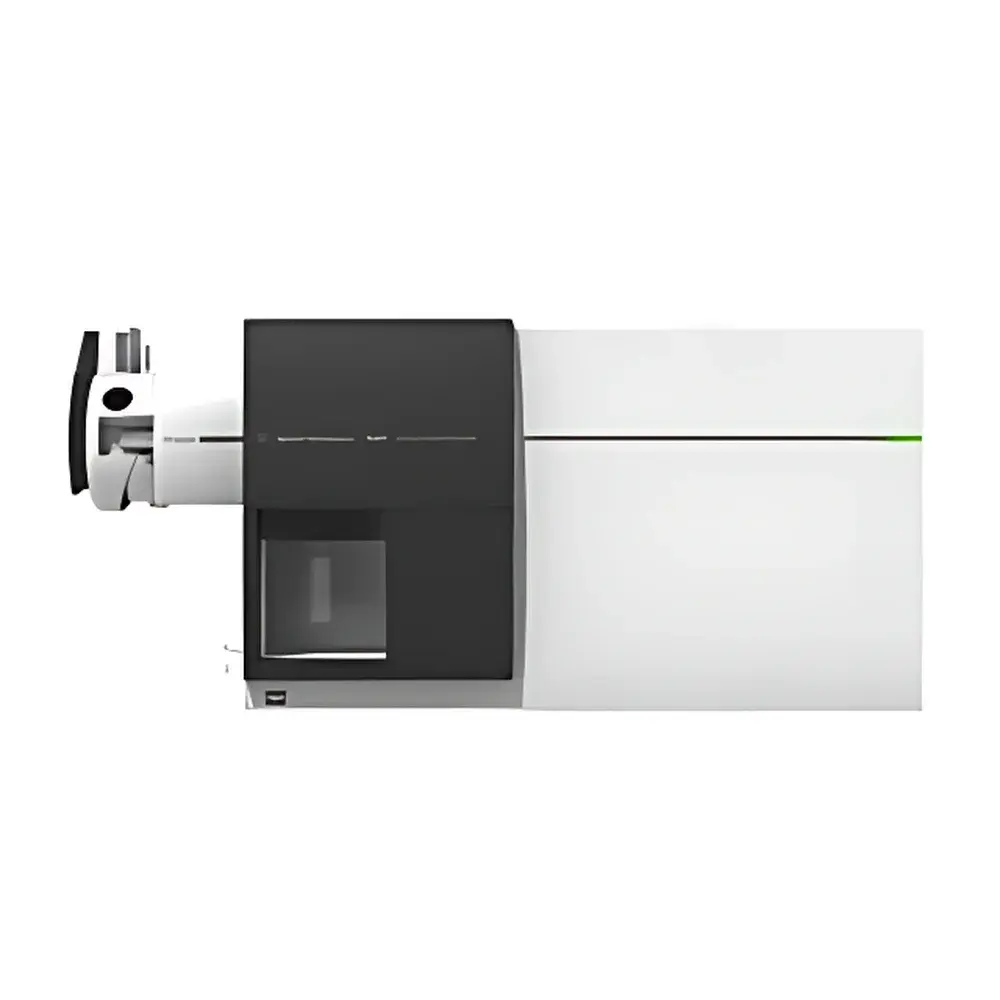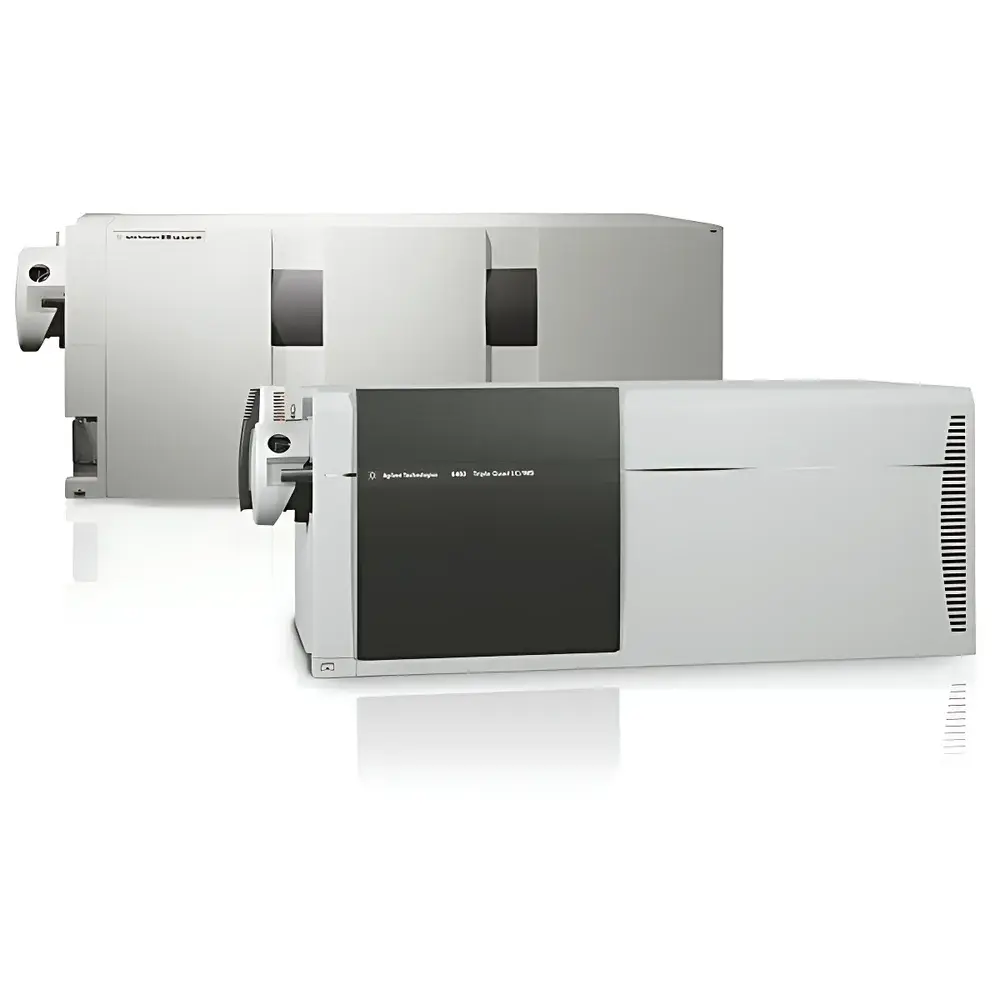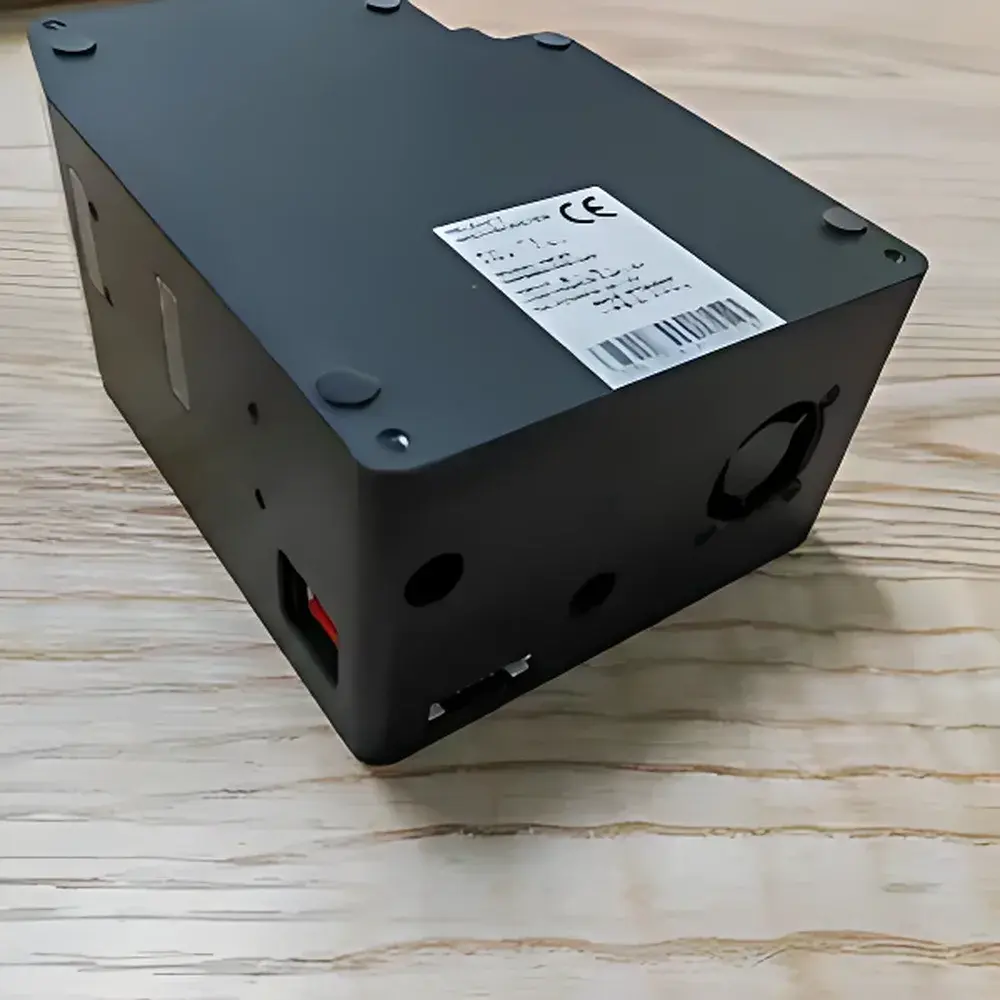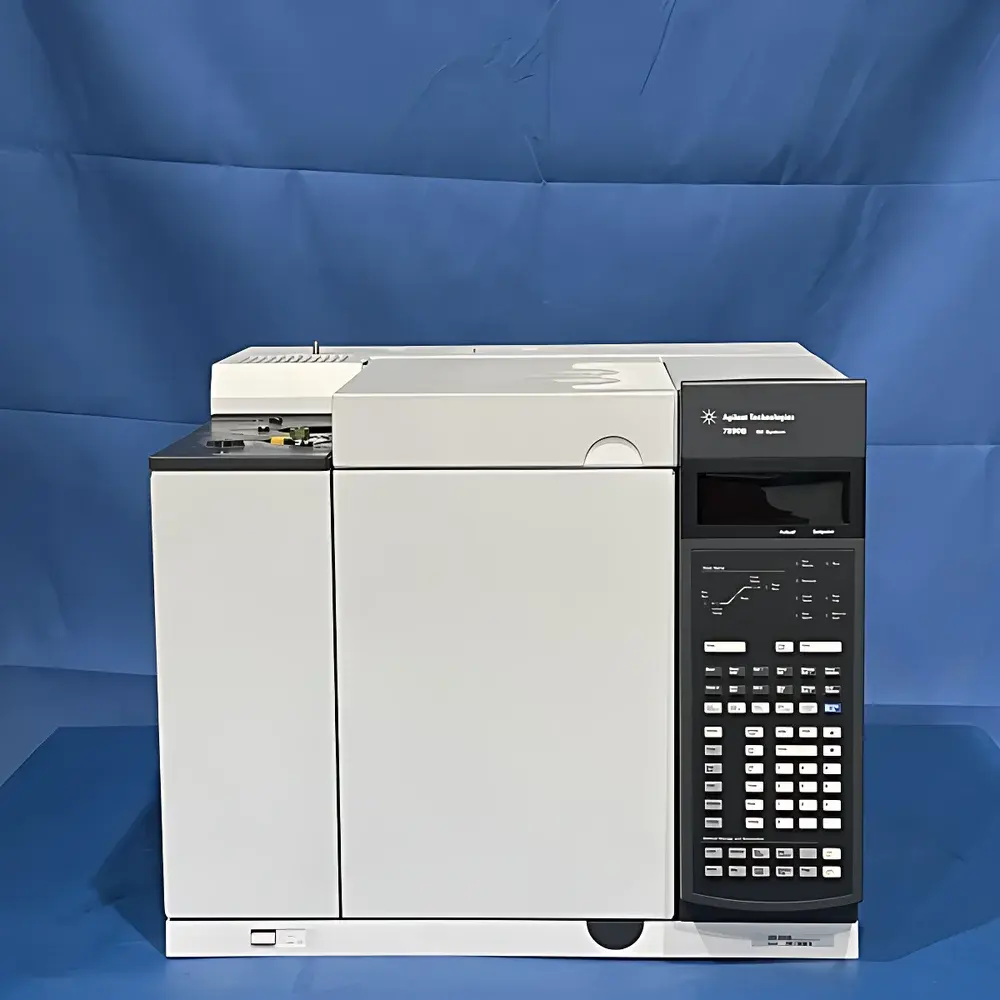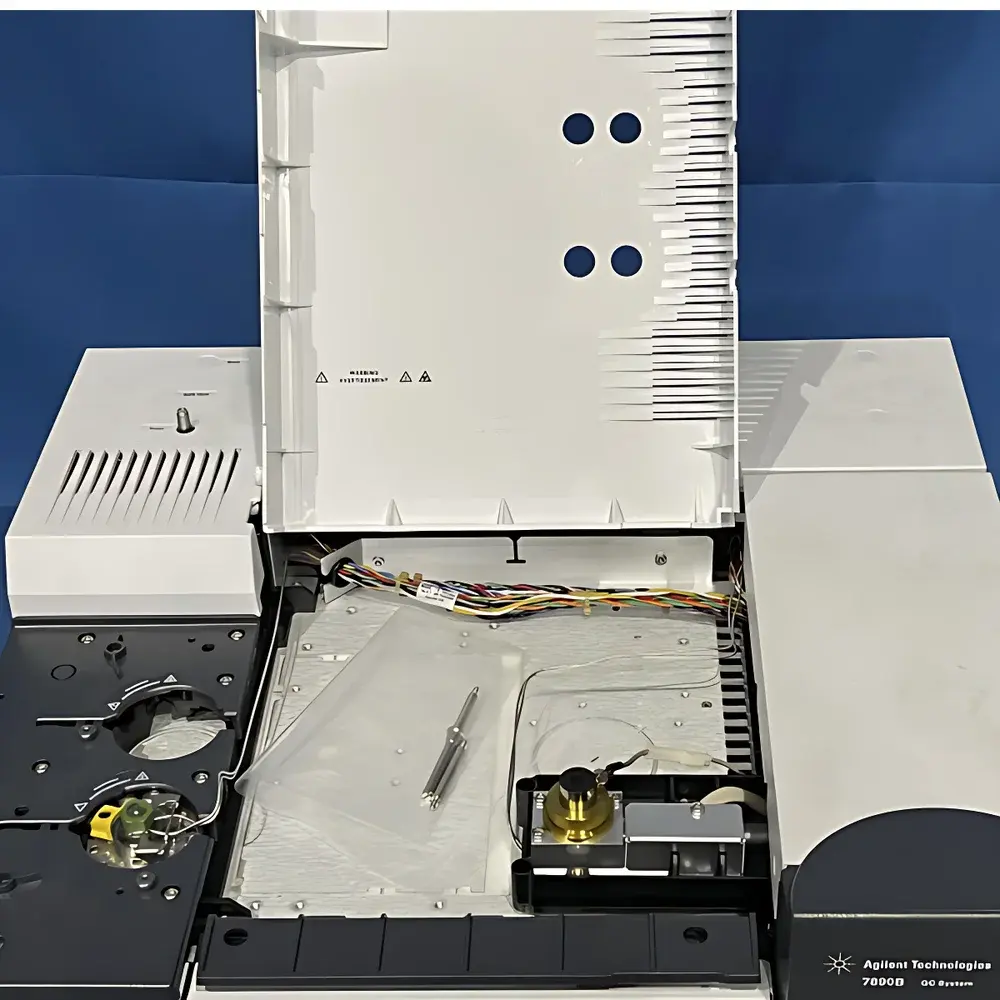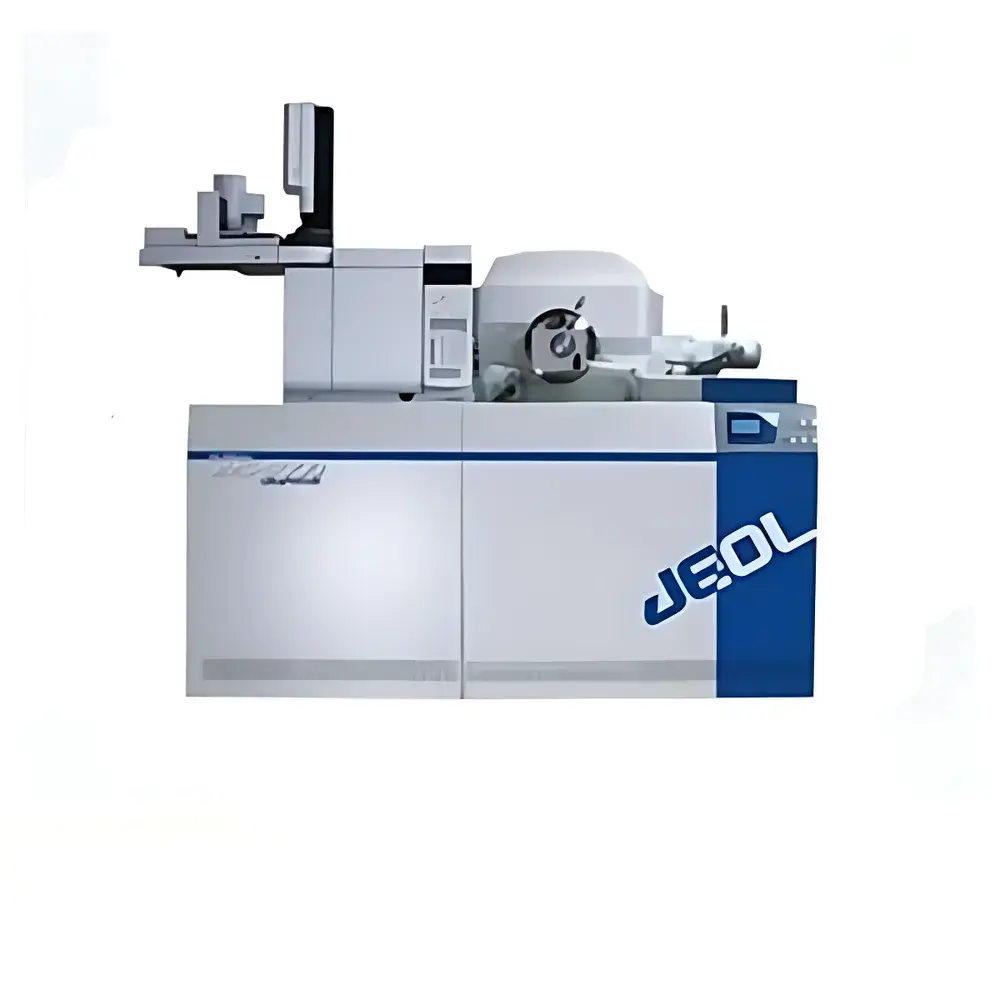
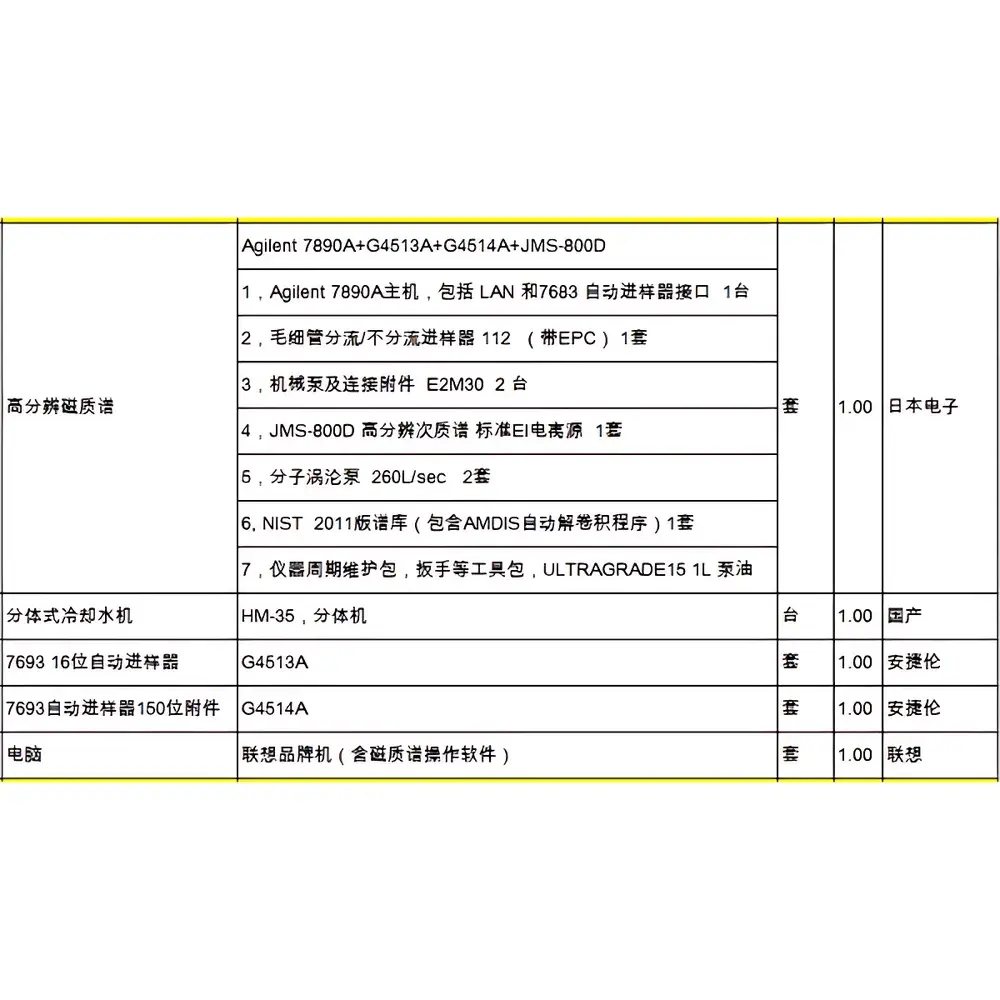
JEOL JMS-800D High-Resolution Magnetic Sector Mass Spectrometer (Refurbished)
| Brand | JEOL |
|---|---|
| Origin | Japan |
| Model | JMS-800D |
| Configuration | Magnetic Sector GC-MS System for Dioxin Analysis |
| Detector Type | Photomultiplier Tube (PMT) |
| Software | Diok Suite for Dioxin/Furan Quantitation |
| Vacuum System | Oil-diffusion or Turbo-molecular Pumping (Typical for JMS-800D Era) |
| Mass Resolution | >10,000 (10% Valley) at m/z 320 |
| Mass Range | Up to m/z 1000 |
| Ion Source | Electron Ionization (EI), Dual-Channel Design |
Overview
The JEOL JMS-800D is a high-resolution magnetic sector gas chromatography mass spectrometry (GC-MS) system originally engineered for ultra-trace analysis of polychlorinated dibenzo-p-dioxins (PCDDs) and dibenzofurans (PCDFs) in environmental, regulatory, and food safety laboratories. Its double-focusing magnetic sector architecture—comprising an electrostatic analyzer (ESA) and a 90° magnetic sector—delivers mass resolution exceeding 10,000 (10% valley definition) and exceptional mass accuracy (10⁴ for 2,3,7,8-TCDD at sub-femtogram levels), and reproducibility across multi-day sequences are mandatory.
Key Features
- Dual-column interface: Allows simultaneous connection of two capillary GC columns to the ion source without venting the high-vacuum region—minimizing downtime during method development or column optimization.
- Photomultiplier tube (PMT) detector: Offers superior long-term gain stability and reduced susceptibility to saturation compared to electron multiplier detectors, critical for quantitative analysis over extended acquisition periods and high-dynamic-range dioxin profiling.
- Dedicated Diok software suite: Pre-configured for EPA 1613 workflows, including automated congener integration, isotope dilution calibration (¹³C-labeled internal standards), toxic equivalency factor (TEF)-weighted summation, and audit-ready reporting aligned with GLP documentation requirements.
- Robust magnetic sector platform: Features temperature-stabilized magnet yoke and precision-machined ion optics designed for operational consistency across ambient lab temperature fluctuations (±2 °C).
- Ion source dual-channel design: Enables rapid switching between sample introduction and tuning modes while preserving vacuum integrity—facilitating routine maintenance without full system shutdown.
Sample Compatibility & Compliance
The JMS-800D is validated for solid-phase extraction (SPE), gel permeation chromatography (GPC), and multilayer silica column cleanup workflows prior to GC injection. It accepts standard 0.25 mm ID fused-silica capillary columns (e.g., DB-5ms, HT-8) and supports both splitless and large-volume injection (LVI) protocols. The instrument meets analytical performance criteria defined in EPA Method 1613 Revision B (1994), ISO/IEC 17025:2017 for testing laboratories, and EU Regulation (EC) No 1881/2006 for dioxin limits in foodstuffs. All refurbished units undergo full functional verification per JEOL’s legacy OEM service protocols—including mass calibration with perfluorotributylamine (PFTBA), resolution validation at m/z 320 and 640, and sensitivity testing using 2,3,7,8-TCDD standard at 1 fg on-column.
Software & Data Management
The Diok software provides a dedicated, locked-down environment for dioxin/furan analysis, minimizing operator-induced error. It enforces strict sequence control, automatic peak identification based on retention index windows and isotope ratio filtering (e.g., ¹²C/¹³C ratios within ±5%), and integrated uncertainty propagation for final TEQ calculations. Raw data files are stored in proprietary .DAT format with embedded metadata (instrument parameters, calibration history, user ID, timestamp). Audit trails comply with FDA 21 CFR Part 11 requirements when deployed on validated Windows-based workstations with role-based access controls and electronic signature functionality. Data export supports CSV, PDF, and XML formats for LIMS integration.
Applications
- Regulatory monitoring of PCDD/Fs in municipal waste incinerator emissions and fly ash (EN 1948-1)
- Food and feed safety screening per EU Commission Regulation 2017/644 and FDA Total Diet Study protocols
- Forensic environmental forensics—source apportionment of dioxin contamination using congener pattern analysis
- Method validation studies supporting ISO/IEC 17025 accreditation for accredited testing laboratories
- Reference laboratory participation in interlaboratory comparison exercises (e.g., WHO-IRMM proficiency tests)
FAQ
Is the JMS-800D compliant with current EPA or EU regulatory methods?
Yes—the system satisfies all instrumental performance criteria in EPA Method 1613 Revision B and EN 1948 Parts 1–3 when operated with verified Diok software and calibrated using certified reference materials (CRM 178, CRM 179, or NIST SRM 1941c).
What vacuum configuration is typical for refurbished JMS-800D units?
Most field-installed units retain the original oil-diffusion pump backed by a mechanical forepump; however, modern refurbishments may include retrofit options with dry turbo-molecular pumps to eliminate oil backstreaming risks.
Can the JMS-800D be interfaced with modern GC platforms?
Yes—it supports standard GC transfer line interfaces (70 °C to 350 °C programmable) and is compatible with Agilent, Thermo, and Shimadzu GC systems via analog voltage output synchronization and TTL trigger signals.
Does the refurbishment include replacement of critical ion optics or magnet components?
No—magnet cores and ESA plates are not replaced during refurbishment due to inherent calibration stability; however, ion source assemblies, filament sets, PMT housings, and vacuum gauges are fully renewed or reconditioned to OEM specifications.
Is remote diagnostics support available post-installation?
Limited remote access is supported via secure VPN for firmware-level troubleshooting; however, all performance verifications and preventive maintenance require on-site service by JEOL-certified engineers or authorized third-party specialists trained on legacy magnetic sector platforms.