
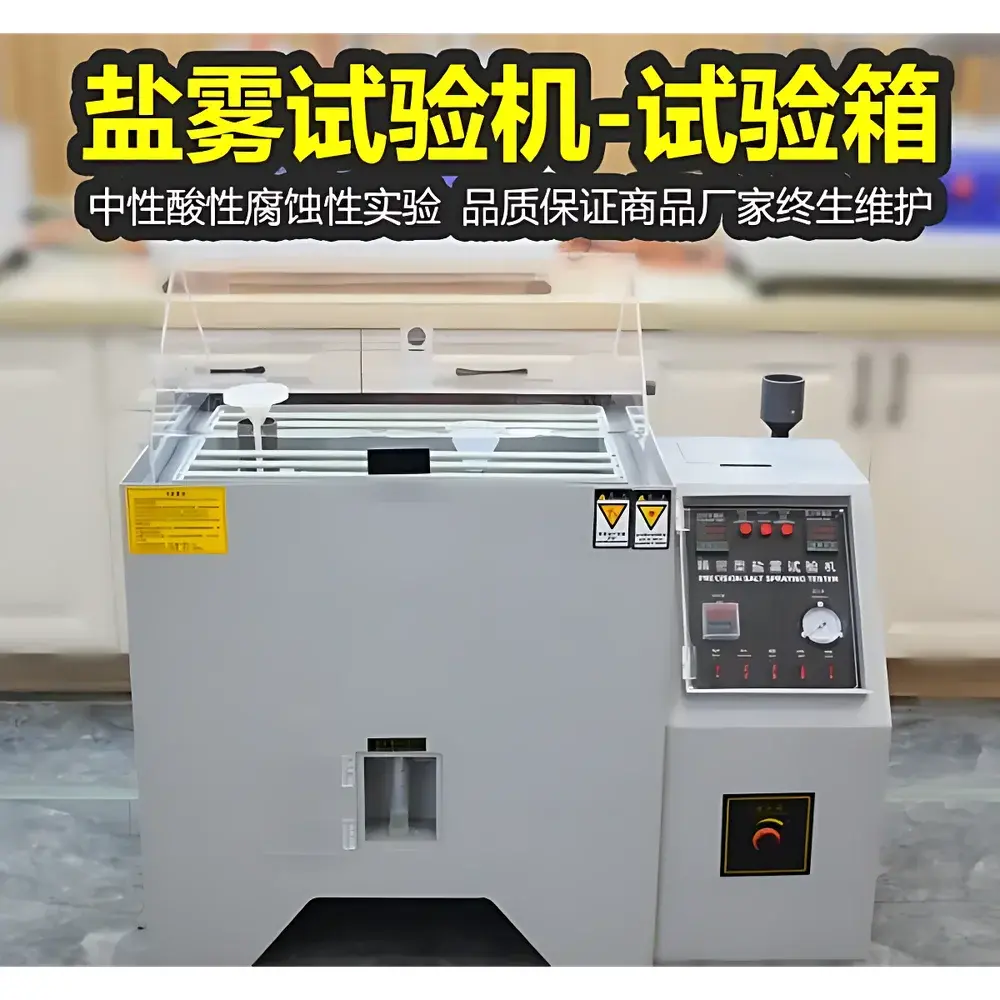
JianHu JH-Composite Salt Spray Corrosion Test Chamber
| Brand | JianHu |
|---|---|
| Origin | Shanghai, China |
| Model | JH-Composite Salt Spray Corrosion Test Chamber |
| Chamber Volume | 6 m³ |
| Spray Mode | Continuous Atomization |
| Spray Rate | 1–2 mL / 80 cm²·hr |
| Nozzle Pressure | 0.7–1.0 kg/cm² |
| Fog Removal Method | Air-Pressure Exhaust System |
| Construction Material | Interior – ASTM A240 Grade 316L Stainless Steel |
| Compliance | ISO 9227, ASTM B117, ASTM G85 (Annex A2–A5), IEC 60068-2-11, GB/T 2423.17, GB/T 2423.18 |
| Control Accuracy | Temperature ±0.1°C, Humidity ±2% RH |
| Configuration | Multi-Zone Independent Spray Control, Modular Environmental Simulation |
Overview
The JianHu JH-Composite Salt Spray Corrosion Test Chamber is an engineered environmental simulation system designed for accelerated corrosion testing under rigorously controlled multi-factor conditions. Unlike conventional single-mode salt spray chambers governed solely by ISO 9227 or ASTM B117, this 6 m³ chamber integrates programmable synergistic stressors—including neutral salt fog (NSS), acetic acid salt spray (AASS), copper-accelerated acetic acid salt spray (CASS), sulfur dioxide–laden acidic atmospheres (per ASTM G85 Annex A2), UV radiation exposure (IEC 60068-2-5), and high-humidity cyclic conditioning—within a unified, sealed test volume. Its operational principle relies on precision-controlled aerosol generation via calibrated pneumatic nozzles, real-time feedback-regulated climate control, and zone-specific spray distribution to replicate complex field degradation mechanisms observed in marine, industrial, automotive, and aerospace service environments. The chamber serves as a critical tool for evaluating coating integrity, metallic substrate passivation, galvanic compatibility, and long-term material stability under combined electrochemical and environmental stress.
Key Features
- 6 m³ ultra-large working volume—enables simultaneous testing of full-scale components (e.g., automotive body panels, aerospace structural assemblies, or solar panel frames) without geometric scaling artifacts.
- Multi-zone independent spray delivery system—four configurable spray zones with individual pressure regulators and flow meters allow differential salt concentration, pH, and droplet size distribution across the test space, supporting comparative corrosion mapping studies.
- 316L stainless steel interior (ASTM A240 compliant)—electropolished surface finish minimizes crevice corrosion initiation and ensures long-term resistance to chloride-induced pitting and stress corrosion cracking.
- High-fidelity climate control—PID-driven temperature regulation (range: +10°C to +55°C, ±0.1°C stability) and humidity control (30–98% RH, ±2% RH repeatability) integrated with real-time sensor fusion (Pt100, capacitive RH, optical fog density monitoring).
- Air-pressure fog removal mechanism—eliminates residual mist via positive-pressure exhaust without thermal shock or condensation reintroduction, preserving sample surface condition during transition phases.
- Structural integrity assurance—double-wall insulated construction with vibration-damped mounting, acoustic absorption lining (<45 dB(A) operating noise), and triple-seal door gasketing compliant with ISO 10648-2 containment requirements.
Sample Compatibility & Compliance
The chamber accommodates metallic substrates (steel, aluminum alloys, magnesium, zinc-coated steels), organic coatings (epoxy, polyurethane, powder coatings), polymer composites, electronic enclosures, and soldered PCB assemblies. It supports standardized test protocols including ISO 9227 (NSS, AASS, CASS), ASTM B117, ASTM G85 (Annexes A2–A5), IEC 60068-2-11/14/52, and GB/T 2423.17–2423.18. All control parameters—including spray rate (1–2 mL/80 cm²·hr), nozzle pressure (0.7–1.0 kg/cm²), solution pH (6.5–7.2 for NSS; 3.1–3.3 for AASS), and collection uniformity (verified per ASTM B117 section 7.2)—are traceable to NIST-traceable calibration records. The system architecture conforms to GLP audit requirements, with hardware-enforced data integrity, user-access logging, and configurable electronic signatures meeting FDA 21 CFR Part 11 criteria when paired with validated software.
Software & Data Management
Equipped with JianHu’s proprietary TestMaster™ v4.2 control suite, the chamber provides dual-mode operation: local HMI (10.1″ capacitive touchscreen, IP65-rated) and remote web-based interface (HTTPS/TLS 1.2 secured). Software features include programmable multi-step test profiles with conditional branching (e.g., “if T > 45°C, activate UV lamps”), real-time trend visualization (temperature, humidity, spray pressure, chamber pH), automated report generation (PDF/CSV/XLSX) compliant with ISO/IEC 17025 documentation standards, and audit trail retention (>18 months). Data export supports direct integration with LIMS platforms via OPC UA or MODBUS TCP. Firmware updates are digitally signed and validated prior to installation to ensure system integrity.
Applications
This chamber is deployed in R&D laboratories for corrosion mechanism studies (e.g., chloride-induced pitting kinetics, cathodic disbondment of pipeline coatings), QC/QA validation of surface treatments (electroplating, anodizing, conversion coatings), qualification testing per OEM specifications (e.g., Ford WDK 2210, GMW 14872, Boeing BAC 5015), and regulatory submission support for medical device housings (ISO 10993-15), EV battery enclosures (UN 38.3 Section 38.3.4), and photovoltaic module backsheet materials (IEC 61215-2 MQT 16). Its modular design enables retrofitting with optional UV-A/UV-B lamp arrays, SO₂ gas dosing modules, or humidity freeze-thaw cycling units to extend test methodology coverage.
FAQ
What standards does this chamber fully support out-of-the-box?
It natively executes ISO 9227, ASTM B117, ASTM G85 Annex A2–A5, IEC 60068-2-11, and GB/T 2423.17–2423.18 test methods with preloaded parameter templates and automatic compliance verification reports.
Can the multi-zone spray system be calibrated independently per zone?
Yes—each zone includes a dedicated calibrated flow meter, pressure transducer, and adjustable nozzle assembly, with calibration certificates provided per IEC 61240 and traceable to national metrology institutes.
Is the 316L stainless steel interior certified to ASTM A240 with mill test reports?
Yes—material certification (MTR) per ASTM A240 Type 316L, including tensile strength, yield strength, elongation, and intergranular corrosion test results (ASTM A262 Practice E), is supplied with each unit.
How is data integrity maintained for regulatory audits?
The system implements write-once-read-many (WORM) storage for raw sensor logs, immutable timestamping, role-based access controls, and electronic signature workflows aligned with 21 CFR Part 11 Annex 11 requirements.
What maintenance intervals are recommended for sustained accuracy?
Preventive maintenance is scheduled at 500 operational hours or biannually—covering nozzle inspection/cleaning, pH electrode recalibration, seal integrity verification, and sensor drift validation against reference standards.



