
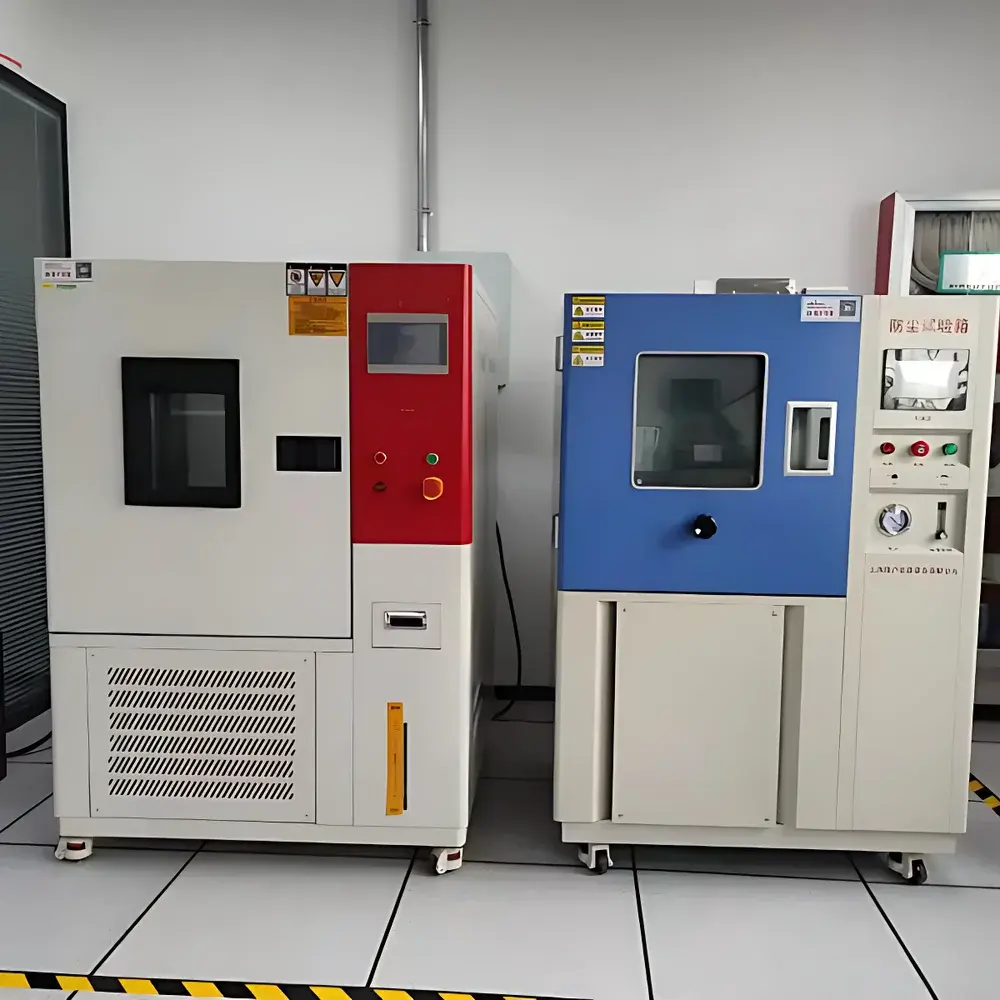
Jianhu JH-OZ Series Ozone Aging Test Chamber for Rubber, Plastic, Wire & Cable, and Coating Materials
| Brand | Jianhu |
|---|---|
| Origin | Shanghai, China |
| Model | JH-OZ Series |
| Temperature Range | Ambient to 70°C |
| Ozone Concentration Range | 50–500 pphm (parts per hundred million) |
| Control Accuracy | ±10 pphm ozone, ±0.5°C temperature |
| Dynamic Stress Capability | Adjustable sample rotation/tension fixture |
| Compliance | Designed to meet ASTM D1149, ISO 1431-1, GB/T 7762, IEC 60811-502 |
| Software | Embedded microprocessor controller with data logging, USB export, real-time graphing |
| Power Supply | 220 VAC ±10%, 50/60 Hz |
Overview
The Jianhu JH-OZ Series Ozone Aging Test Chamber is an engineered environmental test system designed to accelerate and quantify the oxidative degradation of elastomeric and polymeric materials under controlled ozone exposure. It operates on the fundamental principle of simulating atmospheric ozone-induced cracking—specifically targeting unsaturated carbon–carbon bonds in rubber (e.g., EPDM, CR, NR) and thermoplastic elastomers used in wire & cable insulation, automotive seals, coatings, and industrial hoses. Unlike natural aging—which may require years and yields non-reproducible results—the JH-OZ chamber replicates decades of field exposure in days or weeks by maintaining precise, traceable ozone concentrations (50–500 pphm), regulated temperature (ambient to 70°C), and optional dynamic mechanical stress (rotation, bending, or tensile strain). This enables laboratories to evaluate material resistance at the formulation, compounding, and manufacturing stages—supporting failure prevention rather than post-failure analysis.
Key Features
- Stable ozone generation via silent corona discharge method—ensuring long-term concentration stability without UV lamp degradation or mercury hazards.
- Independent dual-loop control: ozone concentration regulated via feedback-controlled ozone generator and electrochemical sensor; temperature/humidity managed by PID-controlled heating/humidification system.
- Dynamic stress module with programmable rotational speed (0–60 rpm) and adjustable sample tension (0–50 N), enabling simulation of installed cable geometry and operational strain conditions.
- Embedded 7-inch color touchscreen interface with real-time parameter visualization, multi-step test programming, and alarm-triggered shutdown for safety-critical deviations.
- Robust stainless-steel interior chamber (304 SS) with ozone-resistant gaskets and exhaust catalytic converter to ensure operator safety and environmental compliance.
- Calibration traceability: ozone sensor certified to NIST-traceable standards; temperature sensors calibrated per ISO/IEC 17025 guidelines.
Sample Compatibility & Compliance
The JH-OZ Series accommodates standard dumbbell specimens (ASTM D1149 Type A/B), wire segments (up to 2 m length), coated panels (max. 300 × 300 mm), and molded elastomer parts. Fixture design conforms to ISO 1431-1 Annex B for static testing and ASTM D1149 Section 7.2 for dynamic strain protocols. The system supports full compliance with international material aging standards—including ASTM D1149 (Ozone Cracking of Elastomers), ISO 1431-1 (Rubber—Resistance to Ozone Cracking—Part 1: Static Strain), GB/T 7762 (Chinese national standard for rubber ozone resistance), and IEC 60811-502 (for electric cable insulation evaluation). All test reports generated include timestamped, audit-ready logs suitable for GLP/GMP environments and FDA 21 CFR Part 11–compliant validation packages when paired with optional software modules.
Software & Data Management
The integrated microprocessor controller records ozone concentration, chamber temperature, relative humidity, and elapsed time at user-defined intervals (1–60 sec resolution). Data is stored internally (≥30-day buffer) and exportable via USB to CSV or Excel-compatible formats. Optional PC-based software (JH-OZ LabSuite) adds advanced functionality: automated pass/fail evaluation against crack initiation thresholds, curve-fitting of elongation retention vs. exposure time, Arrhenius-based lifetime extrapolation, and comparative overlay of multiple material datasets. Audit trails include operator ID, calibration history, and system event logs—fully compliant with ISO 17025 documentation requirements and supporting laboratory accreditation workflows.
Applications
- Material Development: Screening antioxidant packages (e.g., waxes, p-phenylenediamines) and polymer blends for improved ozone resistance in EPDM cable jackets.
- Process Validation: Correlating vulcanization time/temperature profiles with surface crack onset time under dynamic strain—enabling optimization of extrusion and curing parameters.
- Quality Assurance: Incoming inspection of raw rubber compounds and finished cable reels per IEC 60502-2 acceptance criteria.
- Failure Analysis: Reproducing field-observed cracking patterns (e.g., circumferential vs. axial fissures) to isolate root causes—such as residual catalysts, filler dispersion issues, or inadequate crosslink density.
- Regulatory Submissions: Generating standardized aging data required for UL 1581, CSA C22.2 No. 0.3, and EN 50363 certification dossiers.
FAQ
How does the JH-OZ chamber differentiate between static and dynamic ozone testing—and why does it matter?
Static testing holds specimens under fixed strain while exposing them to ozone—ideal for ranking intrinsic material resistance. Dynamic testing applies cyclic mechanical deformation (e.g., rotation or bending) during exposure, revealing synergistic degradation mechanisms that dominate in real-world installations like overhead lines or flexing robotics cables. The JH-OZ supports both modes via interchangeable fixtures and programmable motion profiles.
Can ozone concentration be validated independently during a test run?
Yes. The electrochemical ozone sensor is field-calibratable using zero-air and certified span gas (e.g., 200 ± 5 pphm NIST-traceable standard). Sensor drift compensation algorithms are applied in real time, and calibration certificates are generated automatically upon completion of each verification cycle.
Is the system suitable for use in accredited testing laboratories?
Absolutely. The JH-OZ Series includes factory-issued uncertainty budgets for all critical measurements, documented maintenance logs, and firmware version traceability—meeting ILAC-G8 and ISO/IEC 17025 clause 6.4.2 requirements for measurement equipment management. Optional IQ/OQ/PQ documentation packages are available for GxP environments.



