
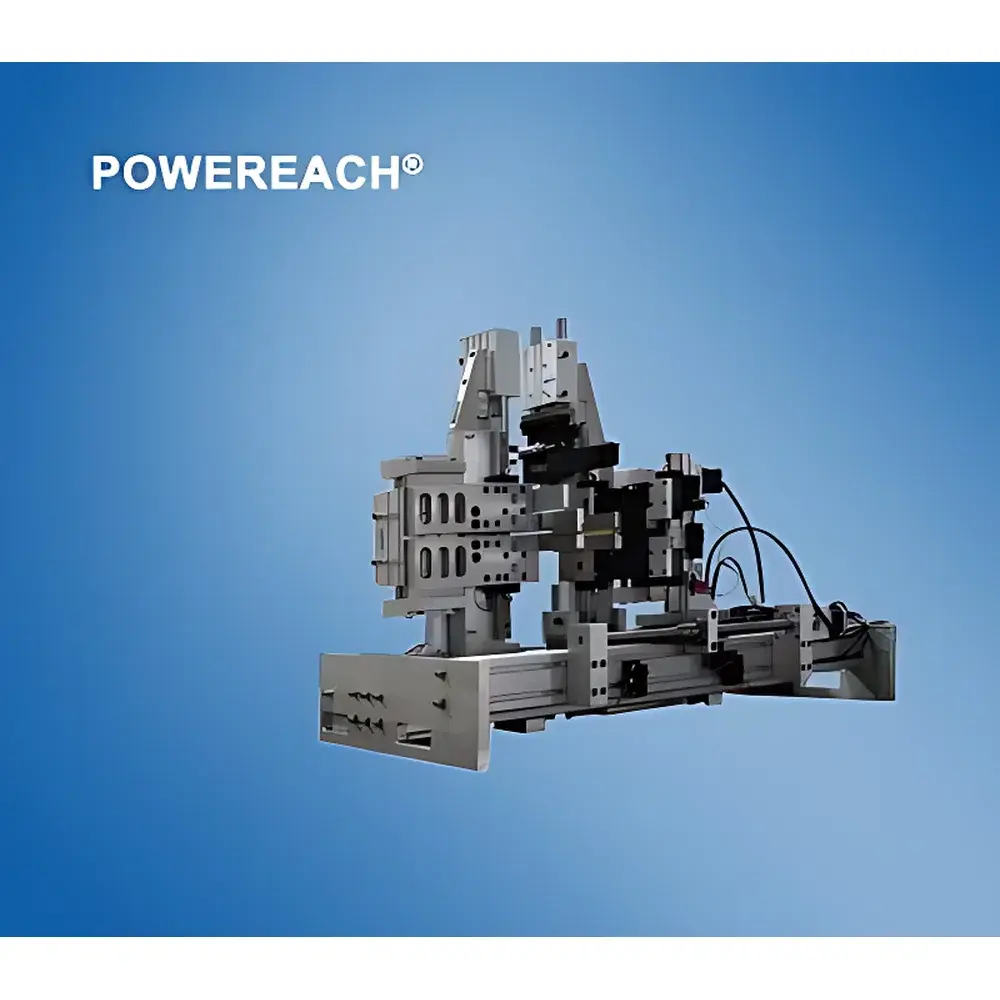
JQ05 Bundle Fiber Tensile Strength Tester
| Origin | Beijing, China |
|---|---|
| Manufacturer Type | Authorized Distributor |
| Origin Category | Domestic (PRC) |
| Model | JQ05 |
| Price Range | USD 7,000 – 14,000 |
Overview
The JQ05 Bundle Fiber Tensile Strength Tester is an automated mechanical testing system engineered for standardized evaluation of tensile properties in fiber bundles—primarily used in textile R&D laboratories, quality control departments of spinning mills, and academic research centers focused on natural, regenerated, and synthetic fiber development. Unlike single-fiber testers based on capillary or micro-gripper clamping, the JQ05 employs a dual-pneumatic jaw architecture specifically optimized for cohesive multi-filament assemblies (typically 10–50 mm gauge length, 1–10 mg mass per specimen), where inter-fiber friction and bundle slippage must be minimized during loading. Its operation conforms to core principles of uniaxial quasi-static tensile testing per ASTM D3822, ISO 5079, and GB/T 14337, delivering reproducible measurements of breaking force (N), elongation at break (%), initial modulus (cN/tex), and energy-to-break (mJ). The instrument integrates synchronized digital imaging to capture real-time morphological evolution—including fiber alignment shift, localized necking, and bundle disintegration onset—enabling correlation between macroscopic mechanical response and mesoscale structural behavior.
Key Features
- Automated specimen preparation module: integrated fiber alignment comb, precision cutting station (±0.1 mm repeatability), and analytical balance (0.01 mg resolution) for batched conditioning and mass normalization
- Dual pneumatic clamping system with adjustable pressure (0.2–0.6 MPa) and self-centering jaws to ensure uniform stress distribution across heterogeneous bundle cross-sections
- High-resolution digital observation system: 5-megapixel CMOS camera with 10×–50× optical zoom, LED coaxial illumination, and real-time video recording (up to 120 fps) synchronized with force-displacement data acquisition
- Programmable crosshead speed range: 1–500 mm/min (±0.5% accuracy), compliant with both slow-strain-rate (e.g., wool, silk) and rapid-extension (e.g., high-tenacity polyester, aramid) test protocols
- Load cell calibrated to ISO 376 Class 0.5: capacity options include 50 N, 100 N, and 500 N full-scale, with temperature-compensated strain gauge technology
- Modular software interface supporting GLP-compliant audit trails, user-defined test templates, and automatic report generation in PDF/CSV formats
Sample Compatibility & Compliance
The JQ05 is validated for testing staple fiber bundles derived from cotton, wool, flax, viscose, modal, PET, nylon 6/6, polypropylene, and bamboo pulp fibers. It accommodates specimens with linear densities ranging from 1.0 to 100 dtex per filament and bundle masses between 0.5 mg and 15 mg. All mechanical and optical subsystems comply with electromagnetic compatibility (EMC) requirements per IEC 61326-1 and safety standards per IEC 61010-1. Test methodology aligns with internationally recognized textile standards including ASTM D3822 (tensile properties of single textile fibers), ISO 5079 (determination of breaking force and elongation of textile fibers), and GB/T 14337 (chemical fiber tensile property testing methods). Optional validation packages support 21 CFR Part 11-compliant electronic signatures and audit-ready data archiving for regulated environments.
Software & Data Management
The proprietary TensilePro v3.2 software provides a deterministic, traceable workflow—from specimen ID assignment and environmental condition logging (temperature/humidity input fields) to post-test curve analysis. Force–elongation curves are processed using adaptive noise-filtering algorithms; key parameters (breaking force, % elongation, initial modulus slope over 0.1–2.0% strain, work-of-fracture integration) are extracted automatically with configurable tolerance thresholds. Raw image sequences are time-stamped and embedded in test records; users may annotate frames with measurement overlays (e.g., diameter tracking, gap displacement). Data export supports hierarchical folder structures compliant with ISO/IEC 17025 documentation requirements. Backup and restore functions operate via encrypted local storage or network-mapped drives; no cloud dependency or third-party telemetry is implemented.
Applications
- Quality assurance of staple fiber batches prior to carding and drawing processes
- Comparative evaluation of fiber modification treatments (e.g., plasma etching, enzymatic hydrolysis, polymer grafting)
- Development of blended yarn systems—quantifying synergistic or antagonistic bundle-level reinforcement effects
- Correlation studies between microscopic morphology (via SEM/AFM) and bulk tensile metrics
- Validation of fiber recycling efficiency—assessing mechanical degradation after multiple reprocessing cycles
- Supporting technical documentation for OEKO-TEX® Standard 100 or GOTS certification through repeatable, auditable test records
FAQ
What is the minimum recommended bundle mass for reliable JQ05 measurements?
For statistical robustness and reduced coefficient of variation (CV < 5%), a minimum bundle mass of 2.0 mg is advised—corresponding to ~200–500 filaments depending on fiber denier.
Can the JQ05 accommodate non-standard gauge lengths?
Yes—the crosshead travel range supports adjustable test spans from 10 mm to 50 mm via motorized positioning; custom fixtures for extended gauges (up to 100 mm) are available under OEM agreement.
Is calibration certification included with shipment?
Each unit ships with a factory-issued calibration certificate traceable to NIM (National Institute of Metrology, China), covering load cell, displacement encoder, and timing circuitry; annual recalibration services are offered with ISO/IEC 17025-accredited documentation.
Does the system support ASTM D5035 (strip method for fabrics)?
No—the JQ05 is purpose-built for bundle-level fiber testing only; fabric strip tensile requires dedicated fabric testers meeting ASTM D5035 or ISO 13934-1 specifications.
How is fiber slippage at the clamps mitigated during high-force tests?
The pneumatic clamping system incorporates serrated tungsten-carbide jaw faces and programmable pre-tension hold (0.1–1.0 N) prior to ramp initiation, minimizing interfacial creep and ensuring consistent grip integrity across all tested materials.




