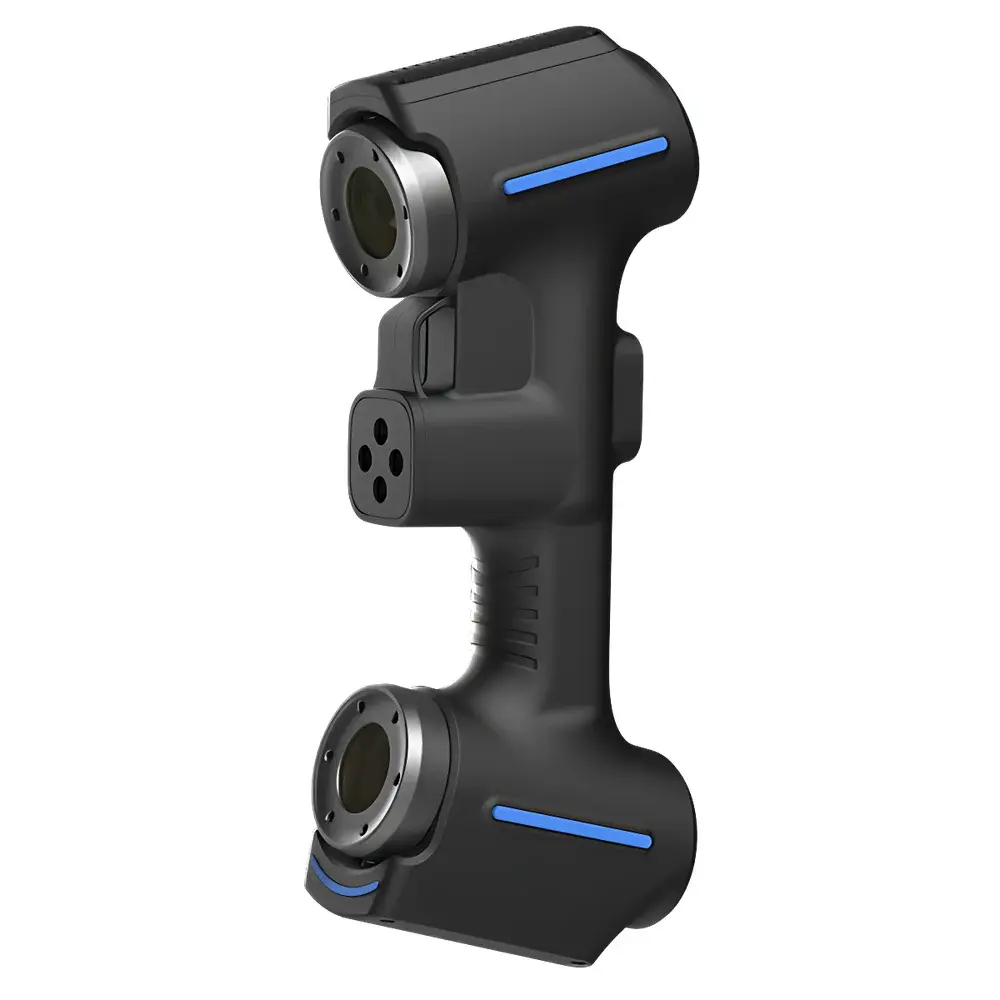
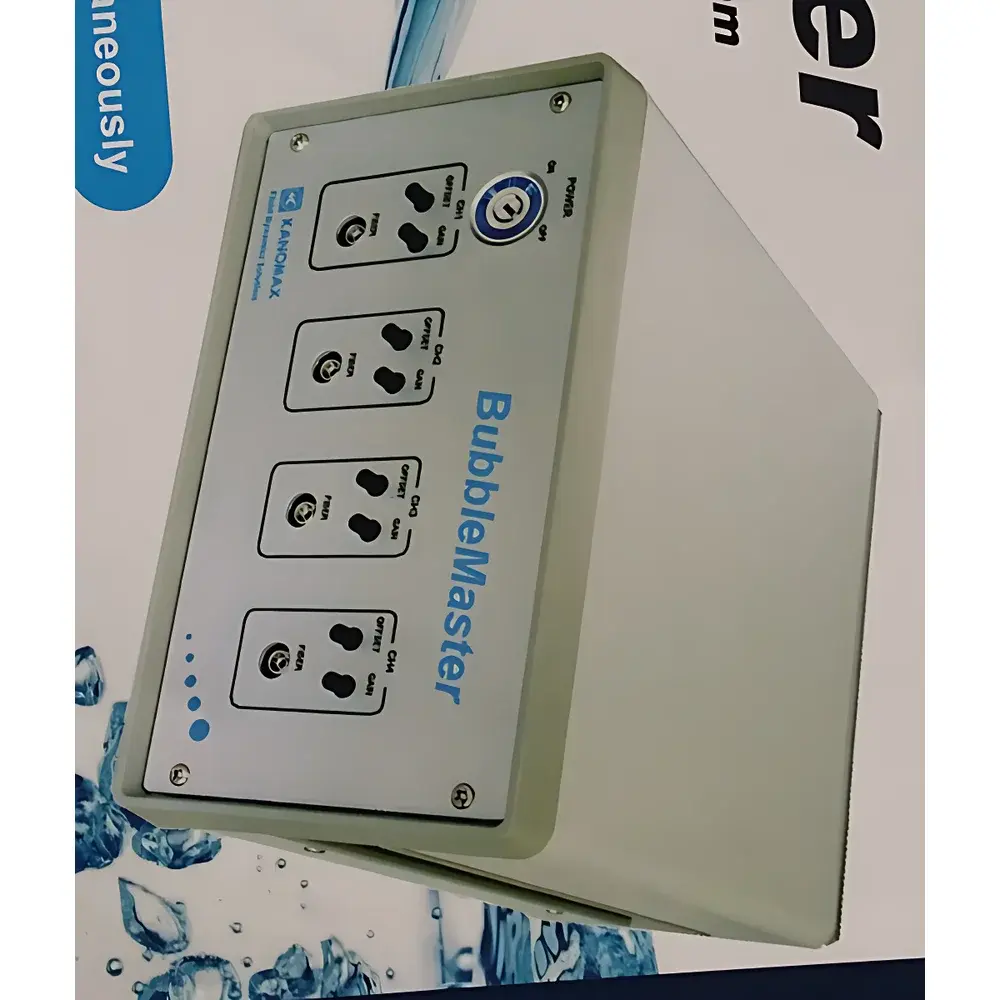
KANOMAX BubbleMaster Bubble Detection System
| Brand | KANOMAX |
|---|---|
| Origin | Japan |
| Model | BubbleMaster |
| Sensor Type | Optical Fiber (Wedge-Tip, F-Top Configuration) |
| Measurement Principle | Optical Intensity Modulation at Bubble-Transit Interface |
| Output | Individual Bubble Diameter & Transit Velocity |
| Fluid Compatibility | Electrically Insulating Liquids |
| Compliance | Designed for Research-Grade Bubble Characterization in Nuclear and Chemical Engineering Environments |
| Price Range | USD 13,500 – 40,500 (FOB Japan) |
Overview
The KANOMAX BubbleMaster Bubble Detection System is a precision optical instrumentation platform engineered for real-time, non-intrusive characterization of discrete gas bubbles in electrically insulating liquid media. Unlike conventional gas flowmeters—such as thermal mass or vortex-based devices—the BubbleMaster operates on a fundamentally distinct physical principle: it detects transient intensity modulation of reflected light at the interface between a wedge-shaped optical fiber probe (F-Top sensor) and individual rising or flowing bubbles. As each bubble traverses the precisely polished fiber tip, it induces a characteristic step-change in the reflected optical signal due to refractive index discontinuity and total internal reflection perturbation. This enables deterministic identification, sizing, and velocity calculation of *individual* bubbles—not ensemble-averaged gas holdup or volumetric flow rate. The system is explicitly designed for research-critical applications where bubble size distribution (BSD), chord length distribution (CLD), and local interfacial velocity are primary parameters—such as nuclear reactor coolant loop diagnostics, cavitation inception mapping, and gas–liquid mass transfer optimization in bubble column reactors.
Key Features
- Single-bubble resolution: Detects and quantifies individual bubbles with diameters ranging from ~50 µm to several millimeters, depending on fluid optical properties and probe calibration.
- F-Top wedge-tip optical fiber sensor: Engineered for high signal-to-noise ratio and minimal flow disturbance; incorporates contact-angle correction algorithms to compensate for meniscus deformation at the fiber–liquid interface.
- Synchronized dual-parameter acquisition: Simultaneously outputs bubble equivalent spherical diameter (ESD) and transit velocity derived from time-of-flight analysis across dual photodetector channels.
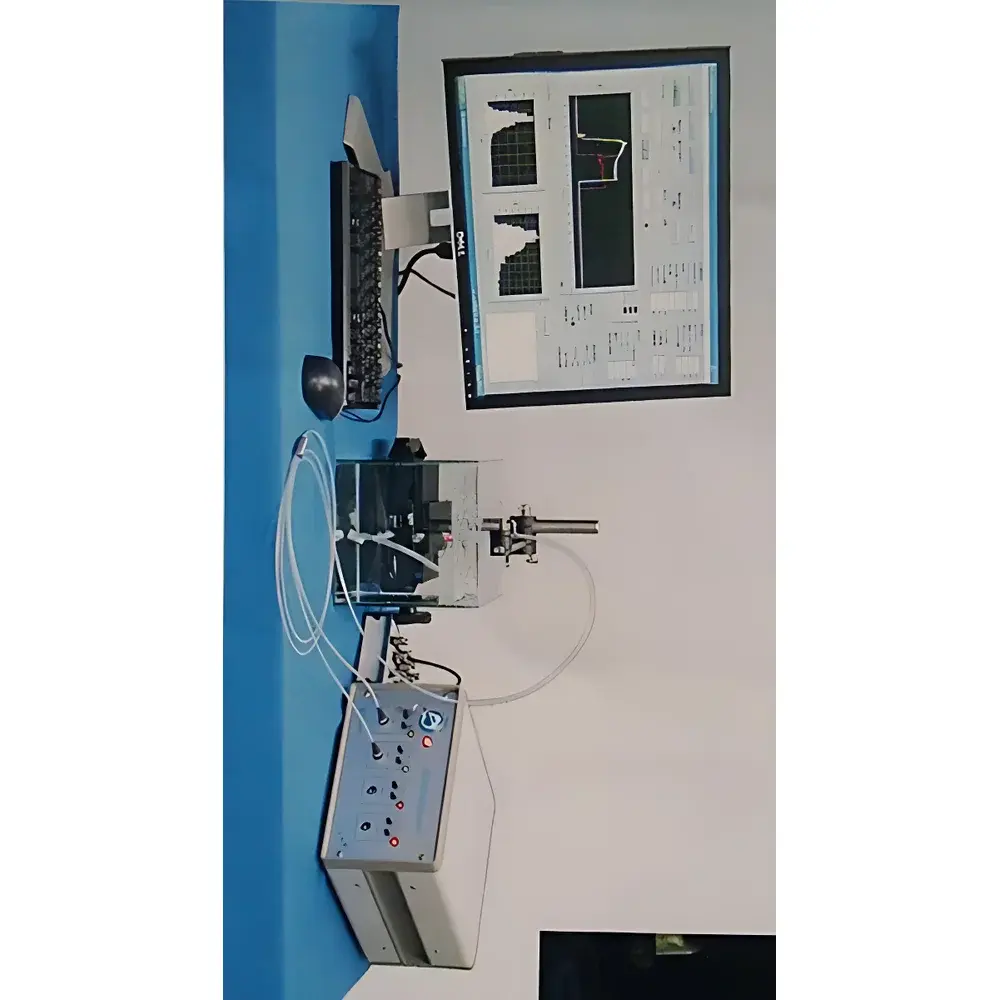
- Modular hardware architecture: Comprises a field-deployable fiber-optic probe head, a high-resolution 4-channel analog-to-digital converter unit (16-bit, ≥1 MHz sampling), and low-noise signal conditioning electronics.
- Robust mechanical design: Stainless-steel probe housing rated for pressures up to 10 MPa and temperatures from −10 °C to +80 °C, suitable for pressurized nuclear cooling loops and industrial-scale bioreactors.
Sample Compatibility & Compliance
The BubbleMaster is validated for use exclusively in electrically non-conductive liquids—including deionized water, organic solvents (e.g., kerosene, silicone oils), molten salts (in inert atmosphere configurations), and liquid metal coolants (e.g., NaK, when paired with quartz-clad fiber). It is incompatible with conductive aqueous electrolytes or slurries containing suspended solids that may abrade or coat the fiber tip. While not certified to IEC 61508 or ASME NQA-1 out-of-the-box, the system’s modular signal chain supports integration into safety-classified environments via third-party validation. Its measurement methodology aligns with ASTM E2972–22 (Standard Guide for Characterization of Gas-Liquid Two-Phase Flow) and supports GLP-compliant data traceability when used with audit-trail-enabled software configurations.
Software & Data Management
The proprietary BubbleMaster Analysis Platform (v4.2+) runs on Windows 10/11 and provides real-time visualization of bubble event streams, histogram-based BSD generation, and temporal velocity autocorrelation analysis. Raw A/D data is stored in HDF5 format with embedded metadata (timestamp, probe ID, calibration coefficients, environmental conditions). The software supports export to CSV, MATLAB (.mat), and Python-compatible NumPy arrays. For regulated environments, optional 21 CFR Part 11 compliance modules are available—including electronic signatures, role-based access control, and immutable audit logs for all parameter changes and data exports.
Applications
- Nuclear engineering: In-situ monitoring of void fraction and bubble dynamics in pressurized water reactor (PWR) and sodium-cooled fast reactor (SFR) secondary loops.
- Cavitation research: Quantification of microbubble nucleation frequency, growth kinetics, and collapse-induced pressure transients in hydraulic machinery test rigs.
- Chemical process engineering: Validation of CFD simulations in bubble column reactors, sparged fermenters, and absorbers by providing boundary-condition-relevant local interfacial data.
- Materials science: Study of bubble behavior during additive manufacturing of metal foams and foam-glass synthesis under controlled thermal gradients.
- Environmental fluid mechanics: Investigation of air entrainment mechanisms at hydraulic jumps and spillway aerators.
FAQ
Can the BubbleMaster measure bubbles in conductive fluids such as seawater or acidic solutions?
No. The optical detection principle requires electrical insulation between the fiber probe and surrounding medium to prevent stray current paths and signal drift. Conductive fluids necessitate alternative techniques (e.g., impedance tomography or high-speed imaging).
Is calibration traceable to national metrology institutes?
Yes. KANOMAX provides NIST-traceable calibration reports for probe sensitivity and timebase accuracy upon request, with annual recalibration recommended for research-grade reproducibility.
Does the system support multi-point spatial profiling?
Yes—up to eight F-Top probes can be synchronized via a master clock module, enabling cross-sectional void mapping in vertical pipes or planar bubble plumes.
What is the minimum detectable bubble transit time?
With standard 1 MHz sampling, the theoretical resolution is 1 µs; practical lower limit is ~10 µs, corresponding to bubble velocities >10 m/s for 100 µm-diameter bubbles.
Can raw optical waveforms be accessed for custom algorithm development?
Yes. The SDK includes documented C++ and Python APIs for direct memory-mapped access to unprocessed A/D buffers and real-time event triggers.