
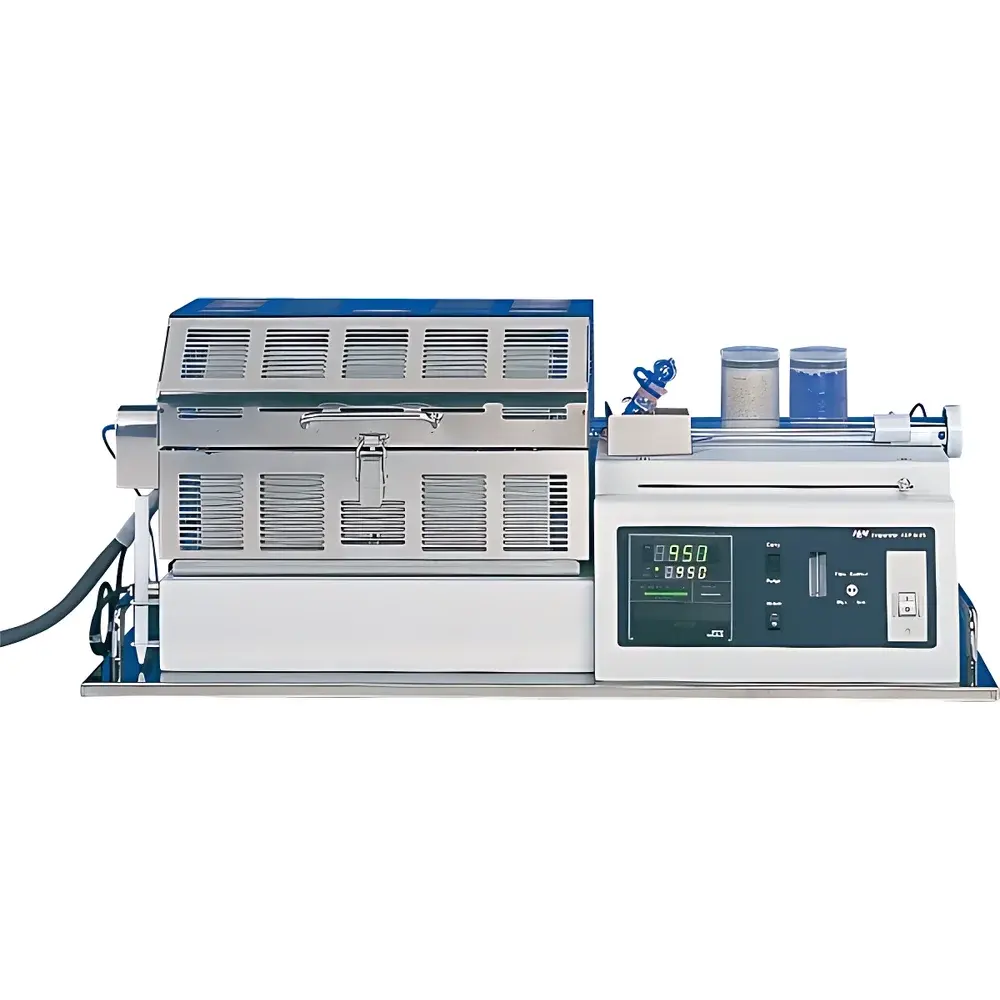
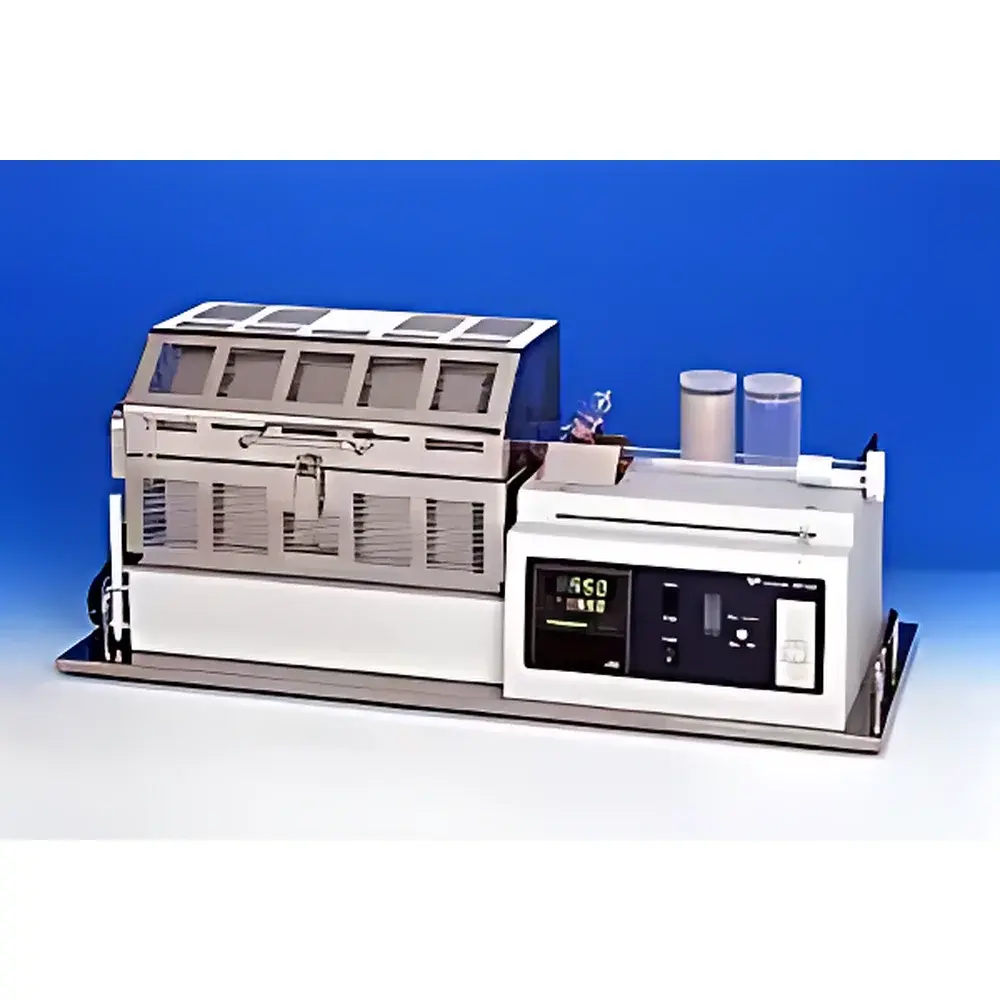
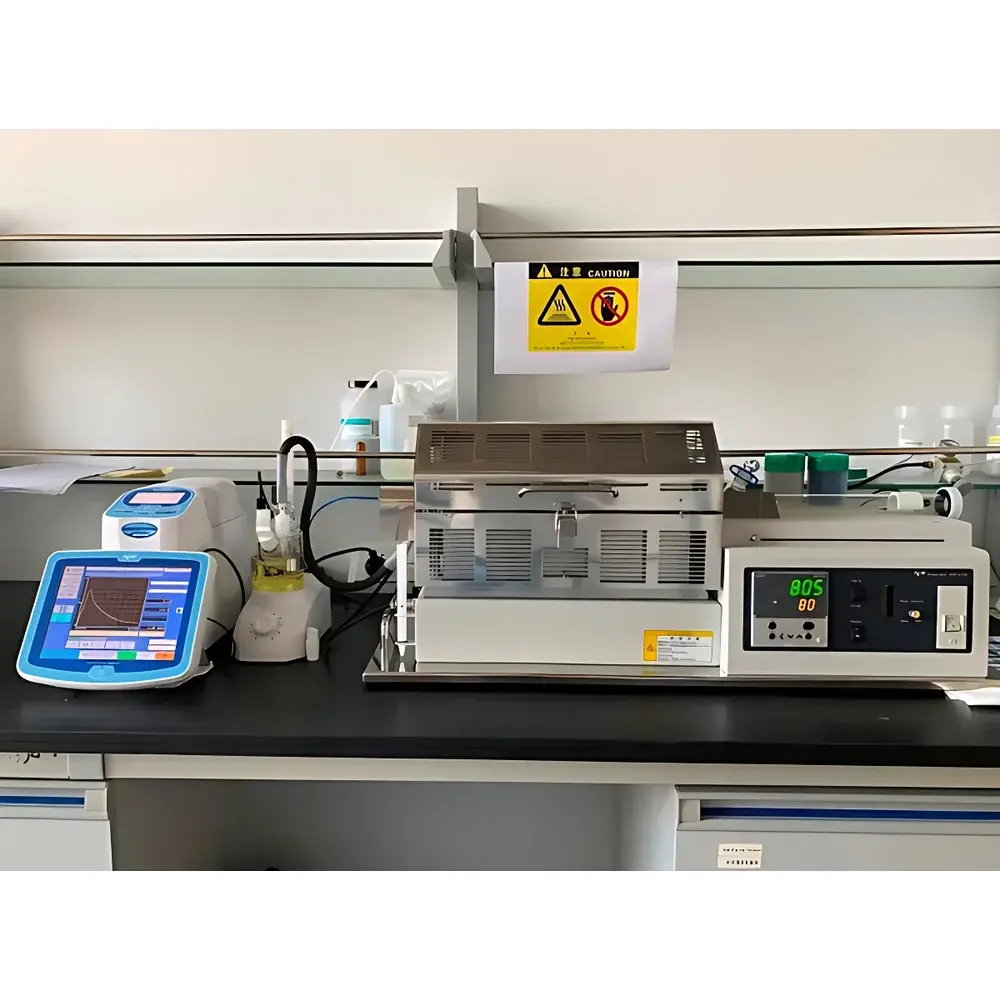
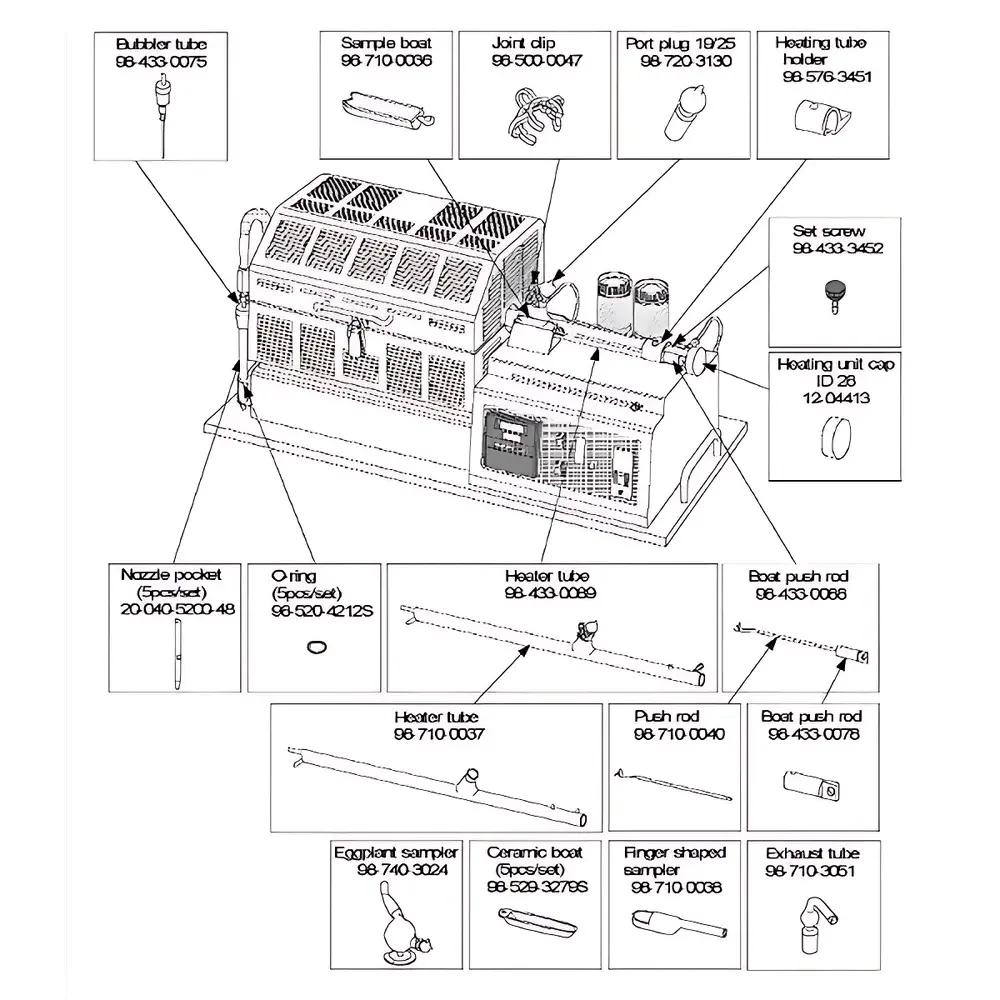
KEM ADP-512S High-Temperature Karl Fischer Moisture Evaporator System
| Brand | KEM (Kyoto Electronics Manufacturing) |
|---|---|
| Origin | Japan |
| Manufacturer | Yes |
| Import Status | Imported |
| Model | ADP-512S |
| Titration Mode | Fully Automatic |
| Instrument Type | Volumetric & Coulometric Karl Fischer Moisture Analyzer |
| Measurement Resolution | 0.1 µg |
| Water Content Range | 10 µg – 300 mg H₂O |
| Accuracy | ≤0.3% |
| Minimum Dispensing Volume | 0.1 µg |
| Titration Control Precision | ±0.3% |
| Power Supply | AC 100–240 V, 50/60 Hz, ~600 W |
| Heating Temperature Range | 50–1000 °C |
| Evaporation Tube Material | Quartz |
| Sample Boat Material | Quartz |
| Sample Capacity | 10 mL |
| Dimensions | 835(W) × 340(D) × 345(H) mm |
| Weight | 18 kg |
Overview
The KEM ADP-512S High-Temperature Karl Fischer Moisture Evaporator System is an integrated thermal desorption and coulometric Karl Fischer titration platform engineered for precise quantification of trace to macro-level water content in thermally stable solid and powdered materials. Unlike conventional volumetric or coulometric analyzers limited to soluble or volatile samples, the ADP-512S employs controlled high-temperature pyrolysis (up to 1000 °C) within a sealed quartz furnace to fully liberate bound, structural, and lattice-associated water—particularly critical in refractory inorganic matrices such as metal powders, ceramic precursors, sintered oxides, and mineral ores. Moisture released under inert nitrogen purge is swept directly into a dual-electrode coulometric titration cell, where electrogenerated iodine reacts stoichiometrically with water (H₂O + I₂ + SO₂ + 3RN + CH₃OH → 2RN·HI + RN·HSO₄CH₃). The system calculates absolute water mass (in µg) from Faraday’s law using total charge passed—ensuring direct traceability to SI units without calibration curves.
Key Features
- Programmable high-temperature quartz furnace (50–1000 °C) with ±1 °C thermal stability and ramp rate control for optimized moisture release kinetics.
- Quartz evaporation tube and sample boat—chemically inert, low-background, and resistant to thermal shock up to 1000 °C.
- Coulometric detection module with dual platinum electrodes, enabling measurement down to 0.1 µg water with ≤0.3% relative standard deviation across repeated analyses.
- Fully automated sequence: furnace heating, gas purging, electrolysis initiation, endpoint detection, and result reporting—all synchronized via embedded microcontroller.
- Compliance-ready architecture supporting audit trails, user access levels, and electronic signature functionality per FDA 21 CFR Part 11 requirements when paired with KEM’s optional compliant software suite.
- Modular design allows seamless integration with KEM’s MKC-710 series coulometric titrators or third-party compatible coulometric cells meeting ISO 760 and ASTM E203 specifications.
Sample Compatibility & Compliance
The ADP-512S is validated for use with non-volatile, high-melting-point solids requiring thermal decomposition prior to moisture liberation—including iron ores (per ISO 2596 and ISO 7335), uranium dioxide fuel pellets (GB 11840-1989), metal powders (GB/T 4164-2008, GB/T 5158.3-2011), and advanced ceramics (JIS M8211). Its quartz-based evaporation path eliminates catalytic interference and carbon residue formation common in ceramic or metallic heaters. All operational parameters—including temperature setpoint, hold time, gas flow rate (N₂, 50–200 mL/min), and electrolysis current limit—are configurable and logged with timestamps. The system supports GLP/GMP documentation workflows through exportable CSV reports containing raw charge integrals, temperature profiles, and operator metadata.
Software & Data Management
Control and data acquisition are managed via KEM’s proprietary PC-based software (compatible with Windows 10/11), which provides real-time visualization of electrolysis current, cumulative charge, furnace temperature, and endpoint confirmation. Each analysis generates a structured data file containing method ID, sample ID, weight, temperature program, start/end times, water mass (µg), water concentration (wt%), RSD%, and instrument status flags. Data integrity safeguards include automatic backup, write-protection for archived results, and password-protected method editing. Optional 21 CFR Part 11 compliance package adds electronic signatures, role-based permissions, and immutable audit logs for regulated QC laboratories.
Applications
- Determination of hygroscopic and combined water in iron ore concentrates and pellets per ISO 2596 and ISO 7335.
- Quantification of residual moisture in hydrogen-reducible metal powders (e.g., tungsten, molybdenum, nickel) per GB/T 5158.3-2011.
- Quality control of nuclear-grade UO₂ sintered pellets where sub-100 ppm moisture impacts sintering behavior and cladding compatibility.
- Moisture assessment in battery cathode precursors (e.g., LiCoO₂, NMC), where trace water induces HF generation during cell assembly.
- Research on hydration states in zeolites, clays, and MOFs where stepwise thermal desorption correlates with structural water binding energy.
FAQ
What types of samples are suitable for analysis with the ADP-512S?
Solid, powder, or granular inorganic materials that require thermal decomposition (50–1000 °C) to liberate bound water—such as metal powders, ceramic oxides, mineral ores, and nuclear fuels.
Can the ADP-512S be used with volumetric Karl Fischer titrators?
No—it is specifically designed for coulometric detection; the evolved moisture stream is quantified by electrogenerated iodine, not by burette dispensing.
Is quartz the only compatible furnace tube material?
Yes—quartz is mandatory due to its thermal stability, chemical inertness toward halogens and SO₂, and minimal blank contribution at elevated temperatures.
How is system performance verified?
Using certified water standards (e.g., sodium tartrate dihydrate, disodium tartrate dihydrate, or gravimetrically prepared aqueous standards) analyzed across the full temperature range and water mass span.
Does the system support method validation per ICH Q2(R2)?
Yes—linearity, accuracy, precision, LOD/LOQ, and robustness testing protocols are supported via configurable temperature and gas-flow parameters, with full data traceability for regulatory submissions.




