
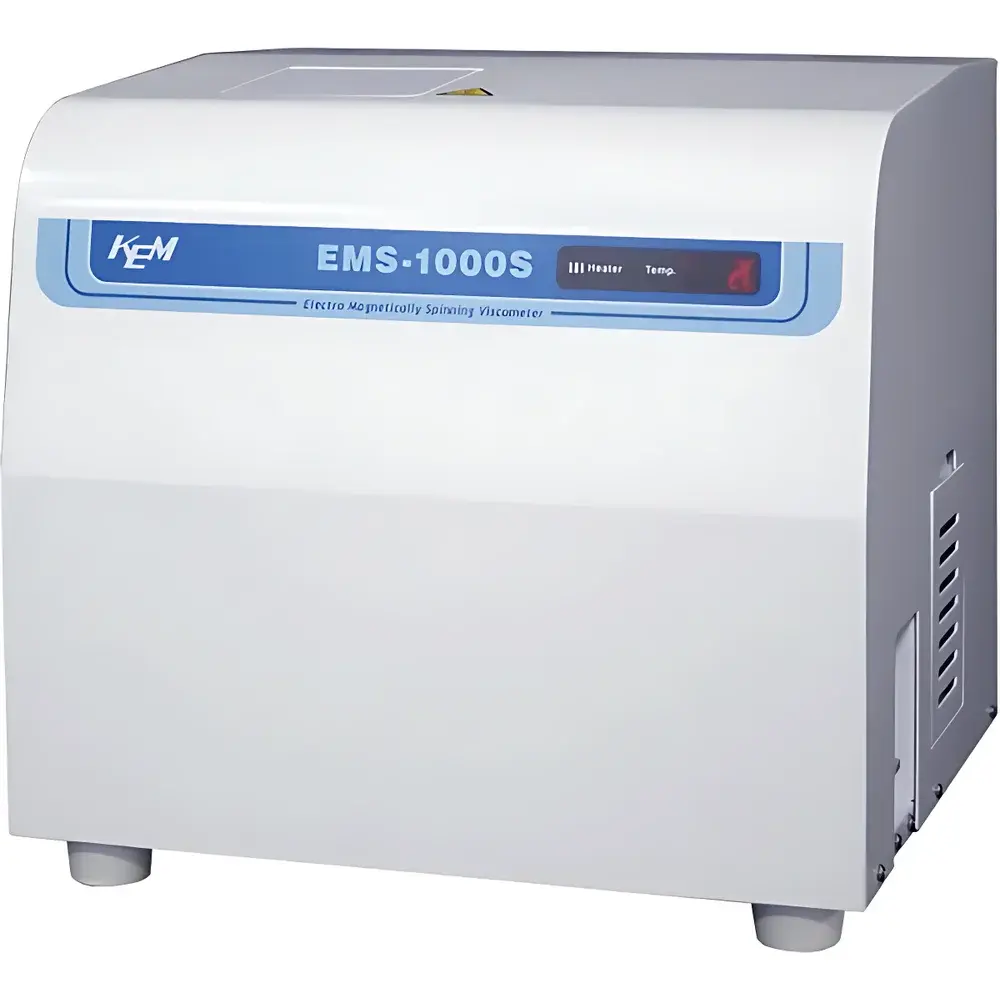
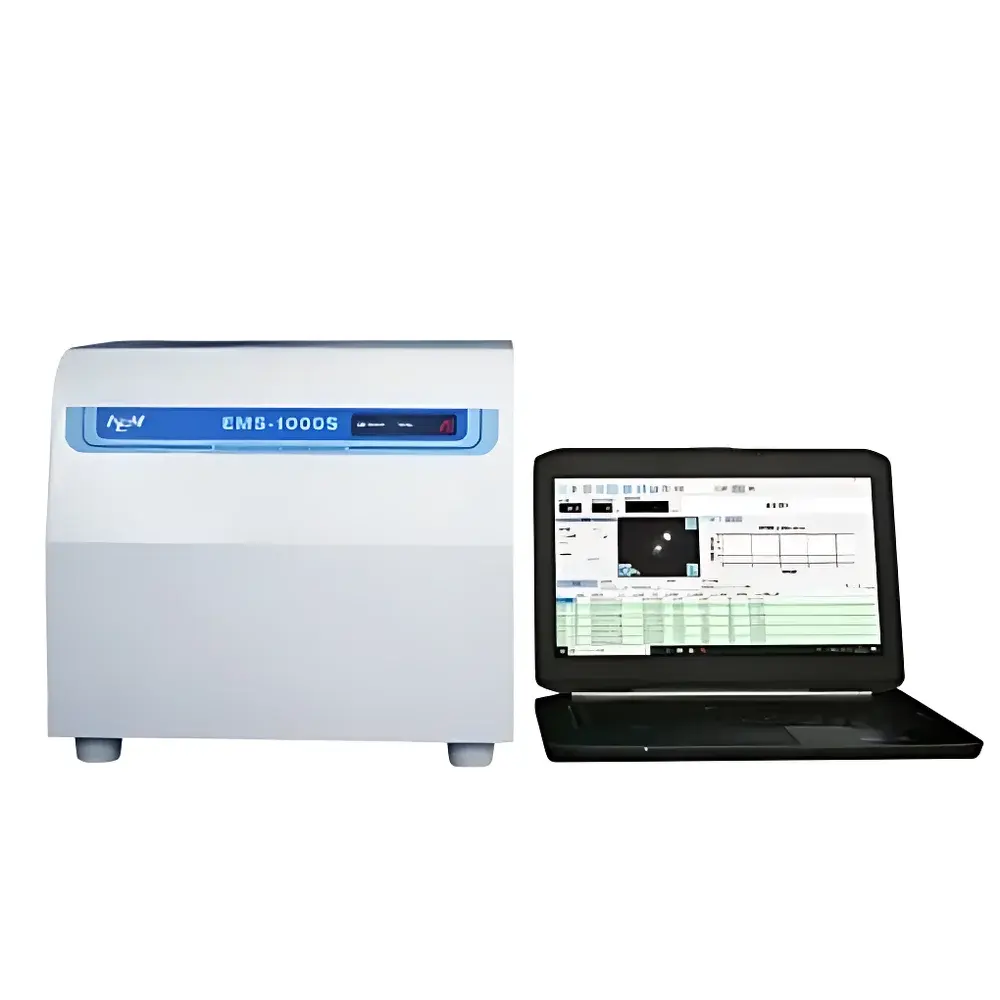
KEM EMS-1000S Electromagnetically Spinning Viscometer
| Brand | KEM (Kyoto Electronics Manufacturing) |
|---|---|
| Origin | Japan |
| Manufacturer Type | Original Equipment Manufacturer (OEM) |
| Origin Category | Imported |
| Model | EMS-1000S |
| Instrument Type | Rotational Viscometer (Fixed-Base, Non-Contact) |
| Operating Environment | Ambient Temperature (10–30°C), ≤85% RH (non-condensing) |
| Viscosity Range | 0.1–1,000,000 mPa·s (dependent on sphere diameter and material) |
| Temperature Range | 0–200°C |
| Temperature Resolution | 0.1°C |
| Temperature Accuracy | ±0.1°C |
| Minimum Sample Volume | 90 µL (with optional micro-cell & 2 mm sphere) |
| Rotational Speed Range | 500–1000 rpm |
| Speed Stability | ±3% |
| Viscosity Repeatability | RSD ≤3% (per KEM standard test conditions) |
Overview
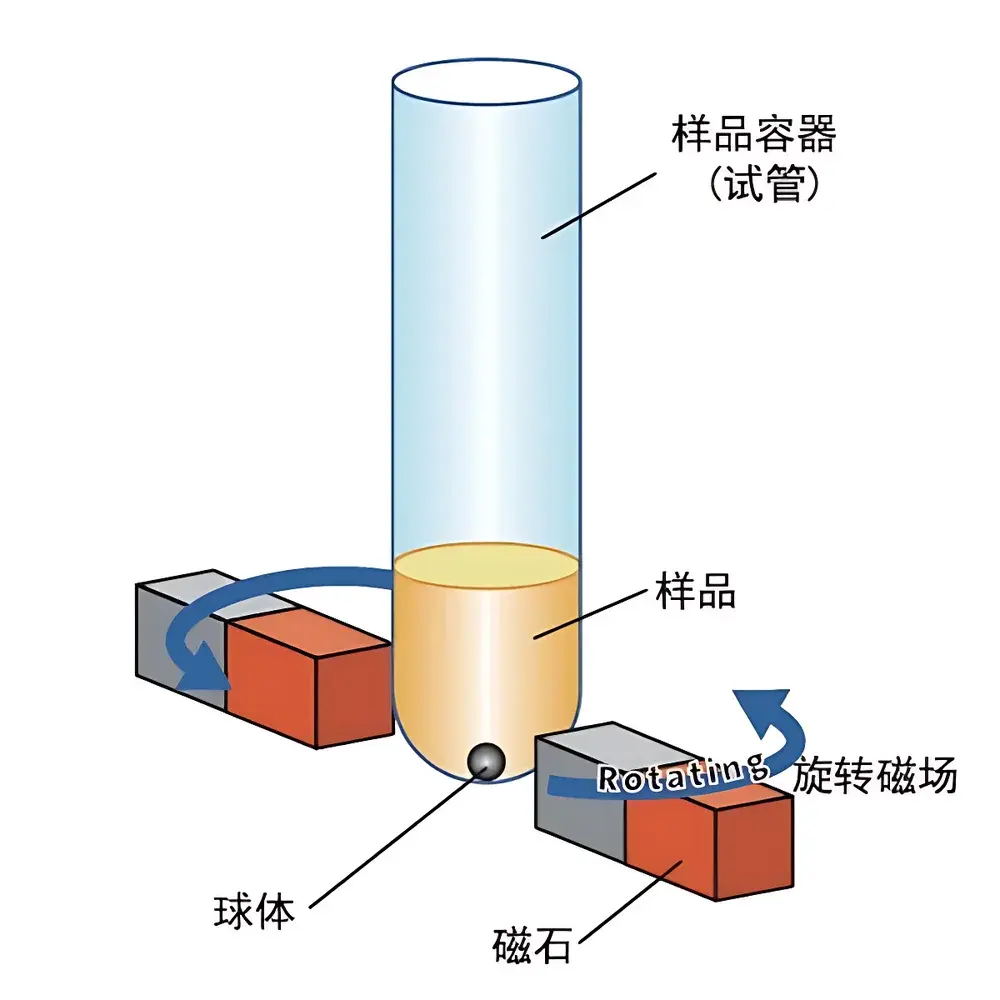
The KEM EMS-1000S Electromagnetically Spinning Viscometer is a non-contact, torque-free rotational viscometer engineered for high-precision viscosity measurement across an exceptionally broad dynamic range—from ultra-low-viscosity liquids (0.1 mPa·s) to highly viscous melts and gels (up to 1,000,000 mPa·s). Unlike conventional rotational viscometers relying on mechanical shafts or concentric cylinders, the EMS-1000S employs electromagnetic induction to drive a spherical rotor suspended within the sample. This patented method—co-developed by the Institute of Industrial Science, The University of Tokyo, and the Japan Science and Technology Agency (JST)—eliminates mechanical coupling, friction, and wall-slip artifacts, enabling true bulk-phase rheological assessment under controlled thermal conditions. The instrument operates on the principle of Lorentz-force-driven rotation: two permanent magnets mounted on a rotating stator generate a time-varying magnetic field; this induces eddy currents in a conductive spherical rotor (e.g., stainless steel, titanium), resulting in a torque that spins the sphere at equilibrium angular velocity inversely proportional to the surrounding fluid’s dynamic viscosity. Real-time video tracking of rotational speed provides direct, calibration-free viscosity calculation via fundamental magnetohydrodynamic relationships.
Key Features
- Non-contact measurement architecture eliminates mechanical wear, torque transmission errors, and cleaning-related cross-contamination.
- Wide temperature control range (0–200°C) with ±0.1°C stability and rapid thermal equilibration (≤10 min from 25°C to 200°C).
- Multi-sphere compatibility: interchangeable spherical rotors (Φ1.5 mm, Φ2 mm, Φ4.7 mm, and Φ5 mm titanium) enable optimized sensitivity across distinct viscosity regimes.
- Ultra-low sample consumption: as little as 90 µL using the optional micro-volume cell—ideal for precious, hazardous, or synthetically limited materials.
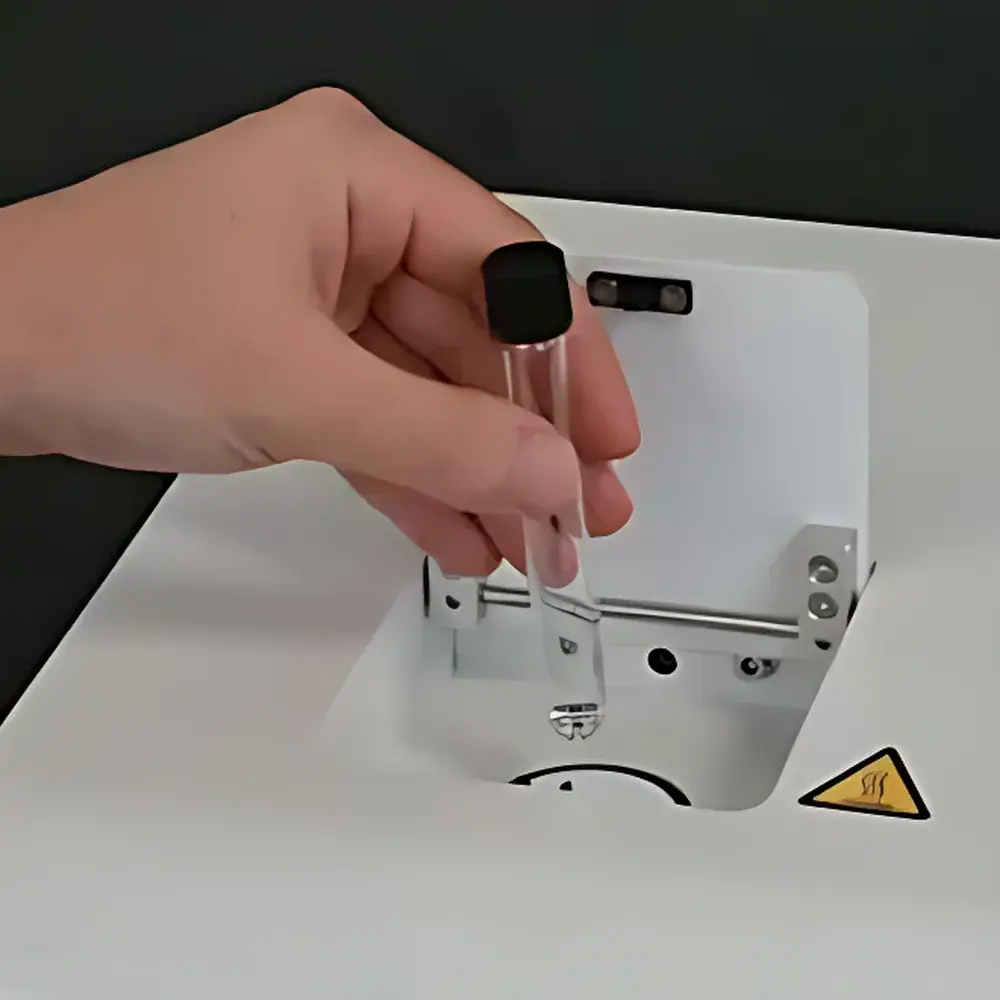
- Hermetically sealed disposable sample tubes prevent solvent evaporation, oxidation, or moisture ingress during measurement—ensuring data integrity and enabling post-test sample recovery.
- Shear-rate programmability: rotational speed control (500–1000 rpm) allows derivation of apparent shear rates from 0.01 s⁻¹ to ~150 s⁻¹, supporting basic flow curve analysis without external rheological modeling.
- Integrated high-resolution video capture system tracks sphere rotation with sub-frame temporal resolution, ensuring robust speed detection even in opaque or scattering media.
Sample Compatibility & Compliance
The EMS-1000S accommodates a wide spectrum of Newtonian and mildly non-Newtonian fluids—including solvents, polymer solutions, pharmaceutical suspensions, edible oils, molten thermoplastics, and battery electrolytes—without requiring geometry-specific calibration. Its sealed-tube design complies with GLP-compliant handling protocols for volatile or air-sensitive samples. While not inherently ISO 2555 or ASTM D2196 certified (as those standards govern capillary or spindle-based methods), the EMS-1000S supports traceable viscosity reporting through NIST-traceable temperature calibration and documented rotor dimensional specifications. Data acquisition meets FDA 21 CFR Part 11 readiness requirements when paired with KEM’s optional compliant software package, including electronic signatures, audit trails, and user-access controls.
Software & Data Management
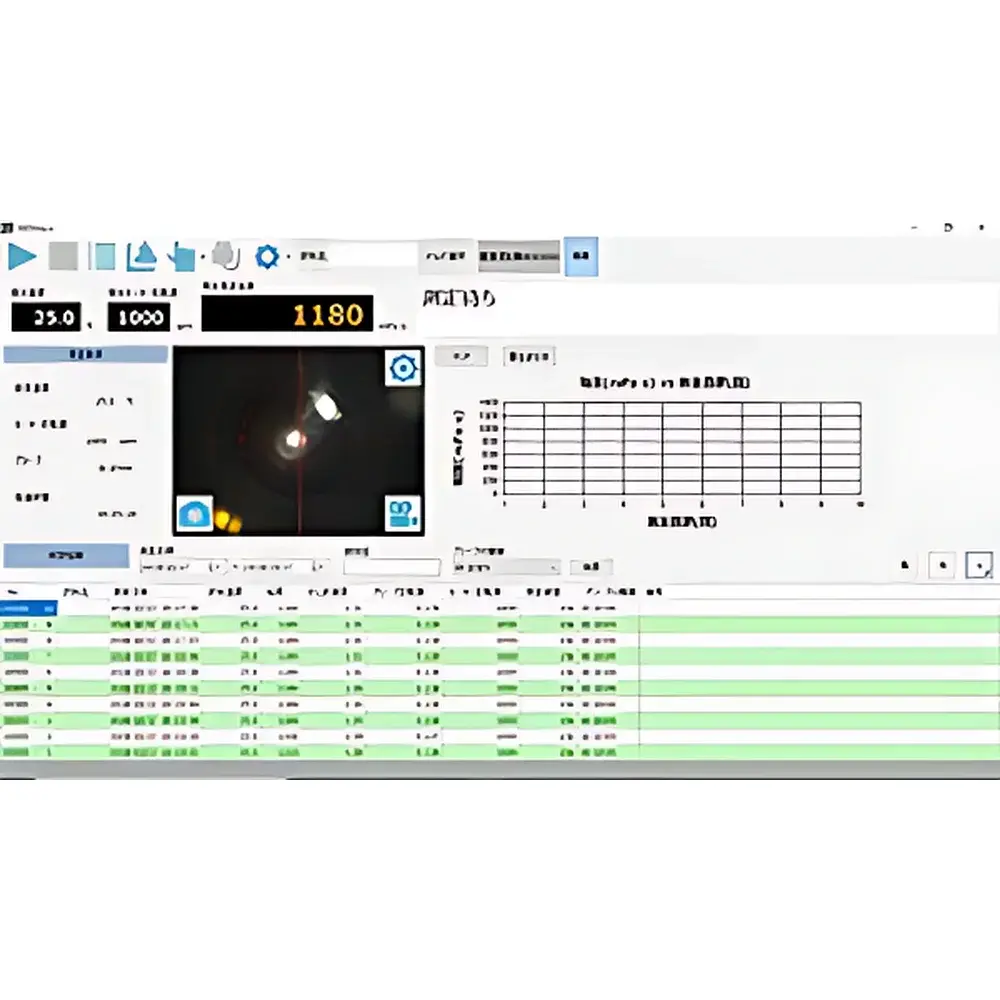
KEM’s proprietary EMS Control Software (v3.x) provides intuitive, wizard-guided operation—from method setup and temperature ramping to real-time viscosity plotting and export. All raw video frames, temperature logs, speed traces, and calculated viscosity values are timestamped and stored in structured .csv and .xml formats. Batch processing, statistical summary (mean, SD, RSD), and comparative overlay of multiple runs are supported. Exported datasets integrate seamlessly with LIMS platforms and third-party analysis tools (e.g., MATLAB, Origin, Python pandas). Optional software modules provide enhanced compliance features: full electronic audit trail, role-based permissions, and 21 CFR Part 11–compliant electronic records.
Applications
- Quality control of heat-sensitive formulations (e.g., biologics, enzyme solutions) where minimal thermal history and no shear degradation are critical.
- Rapid screening of polymer melt viscosity during extrusion or injection molding process development.
- Viscosity profiling of lithium-ion battery electrolytes across operational temperature ranges (−20°C to 60°C simulated via extrapolation from 0–200°C data).
- Stability assessment of colloidal dispersions and nanoemulsions via time-resolved low-shear viscosity monitoring.
- Academic research in soft matter physics, where contactless interrogation of weakly structured fluids avoids boundary-induced artefacts.
- Regulatory submissions requiring documentation of viscosity behavior under defined thermal histories—particularly where traditional spindle methods yield inconsistent results due to slip or sedimentation.
FAQ
How does the EMS-1000S differ fundamentally from conventional rotational viscometers?
It uses electromagnetic induction—not mechanical torque—to rotate a spherical rotor, eliminating shaft drag, bearing friction, and wall effects.
Can the EMS-1000S measure non-Newtonian behavior?
Yes—by varying rotational speed and calculating corresponding shear rates, users can construct basic flow curves and assess shear-thinning or thickening tendencies.
Is calibration required before each measurement?
No—viscosity is derived from first-principles physics (Lorentz force, eddy current dynamics) and calibrated rotor geometry; only temperature calibration is traceably maintained.
Are sample tubes and spheres reusable?
No—both are single-use, disposable components to ensure contamination-free operation and eliminate cleaning validation burdens.
What regulatory standards does the EMS-1000S support?
It facilitates compliance with GLP, GMP, and FDA 21 CFR Part 11 when used with KEM’s validated software and documented SOPs.
Does the system support automated temperature ramps?
Yes—the integrated Peltier-based temperature controller enables programmable heating/cooling profiles with dwell steps and real-time feedback logging.



