
KEM MKC-710S + ADP-611 Coulometric Karl Fischer Moisture Analyzer for Rubber and Plastics
| Brand | KEM (Kyoto Electronics Manufacturing) |
|---|---|
| Origin | Japan |
| Manufacturer Type | Original Equipment Manufacturer (OEM) |
| Product Category | Imported Instrument |
| Model | MKC-710S + ADP-611 |
| Price Range | USD 14,000 – 70,000 |
Overview
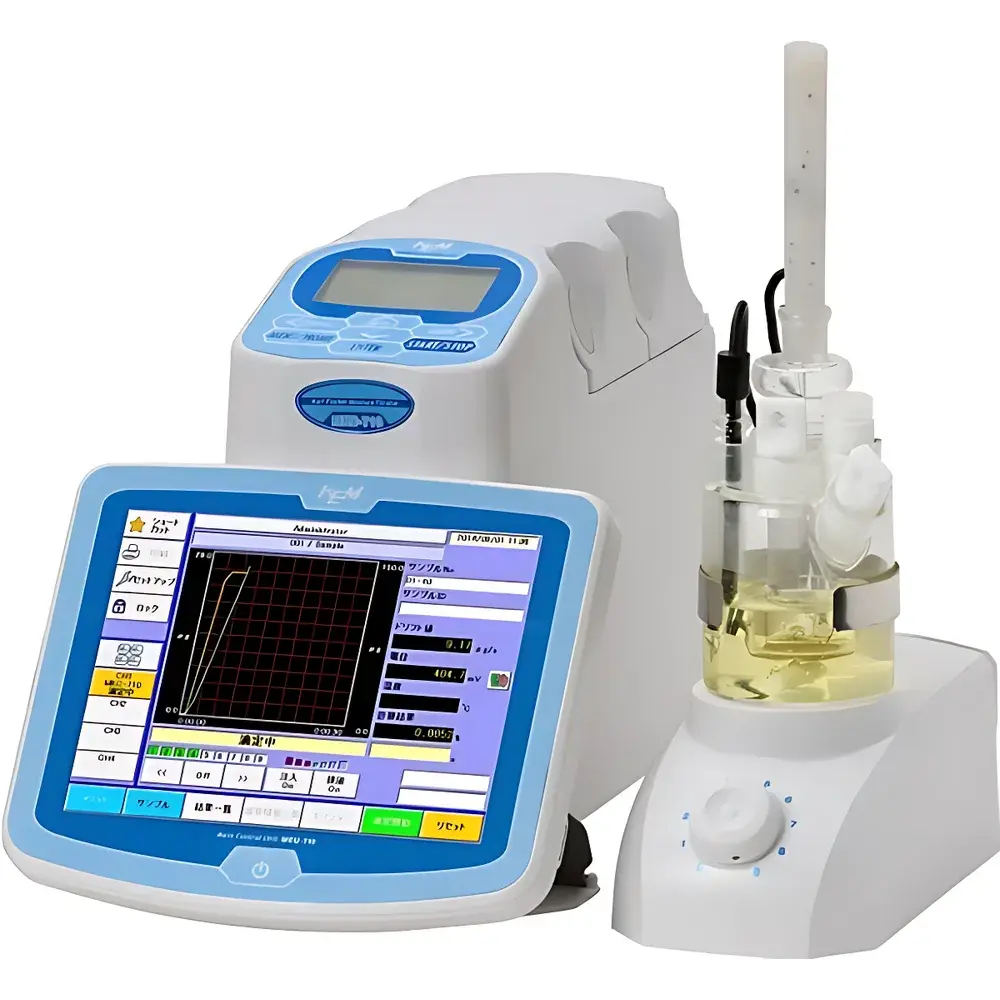
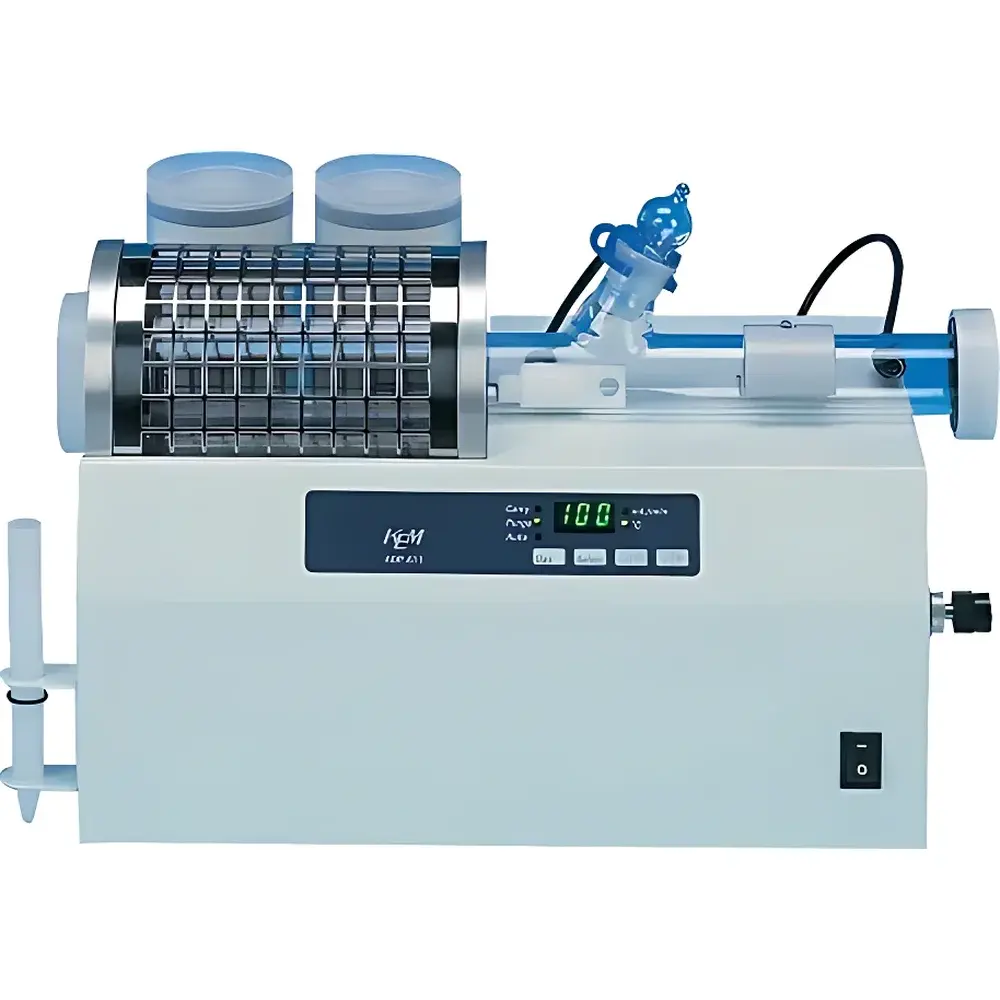
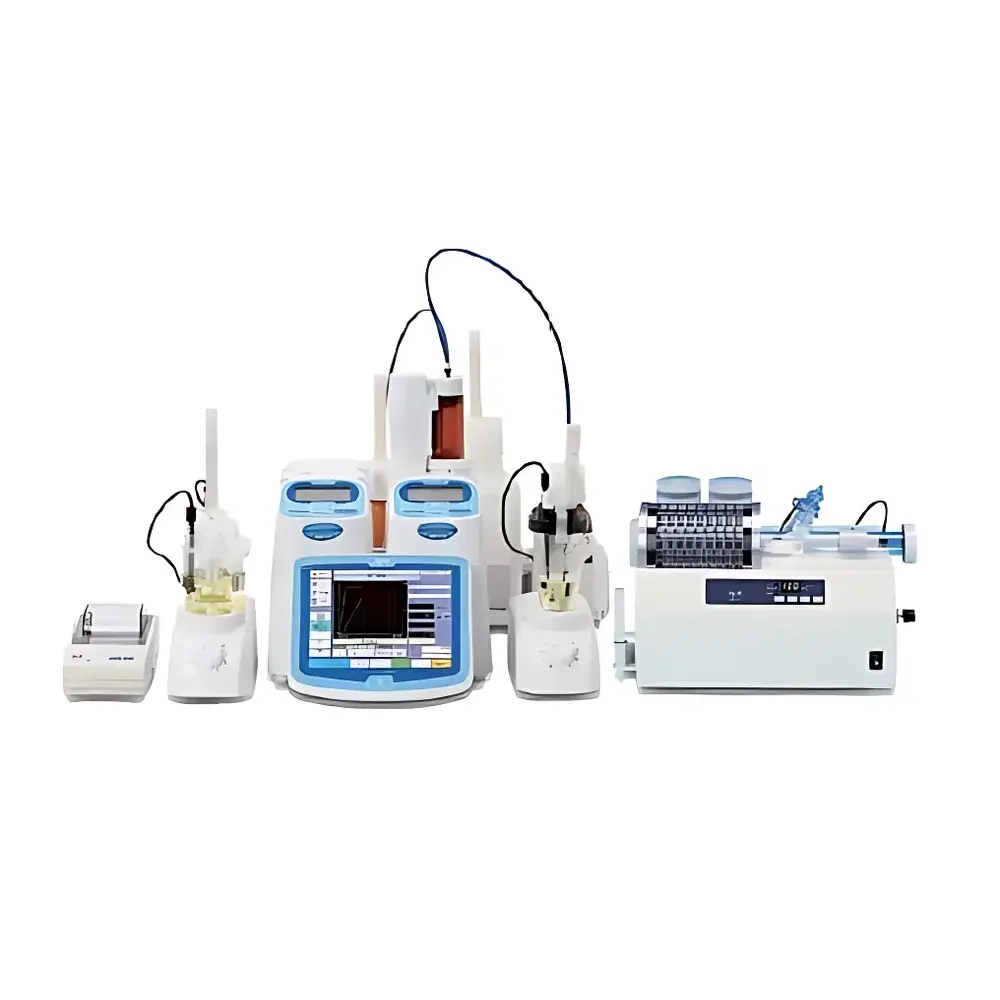
The KEM MKC-710S + ADP-611 is a fully integrated coulometric Karl Fischer moisture analyzer engineered for precise, trace-level water quantification in thermally stable and hygroscopic polymer and elastomer matrices. It operates on the electrochemical principle of coulometric titration, wherein iodine—generated in situ via controlled electrolysis of iodide ions—is stoichiometrically consumed in the Karl Fischer reaction with water (I₂ + SO₂ + H₂O → 2HI + SO₃). According to Faraday’s law, 1 mg of water corresponds to 10.71 coulombs of charge, enabling direct, absolute quantification without reagent standardization. Unlike volumetric systems, this method eliminates reagent calibration drift and delivers high reproducibility at sub-microgram detection levels (1 µg H₂O minimum). The system couples the MKC-710S coulometric titrator with the ADP-611 programmable sample evaporator, enabling automated thermal release of bound water from solid, granular, or powdered rubber and plastic specimens—including polyolefins, polyamides, polyesters, thermoplastic elastomers, carbon black, and curatives—under inert nitrogen purge. This architecture conforms to the core analytical logic of GB/T 45128–2025 (Method B1: tube furnace evaporation; Method B2: sample vial evaporation), while maintaining full compatibility with ISO 15512, ASTM D6869–25, ASTM D5460–02(2025), and BS ISO 12492.
Key Features
- 8.4-inch full-color capacitive touchscreen interface with multi-language support (English, Chinese, Japanese, Korean, Russian, Spanish, German, French) and Bluetooth-enabled remote operation for enhanced lab safety.
- Coulometric electrolysis cell with dual-platinum electrode AC polarization endpoint detection, delivering <0.3% RSD (n=10) using certified water standards.
- Real-time graphical display of titration curve, moisture accumulation (µg), and cumulative charge (C) during analysis.
- ADP-611 evaporator featuring transparent conductive glass heating tube (Pyrex®), K-type thermocouple feedback, and ±2 °C temperature accuracy across 50–300 °C range.
- Automated sample introduction via magnetic sample boat transport, minimizing ambient moisture ingress during loading.
- Intelligent heating profile optimization: ADP-611 performs automatic temperature scanning to identify optimal evaporation temperature per sample type, preventing decomposition or incomplete water release.
- Integrated GLP-compliant audit trail: operator ID logging, reagent batch tracking, calibration history, and performance verification records stored internally and exportable via USB.
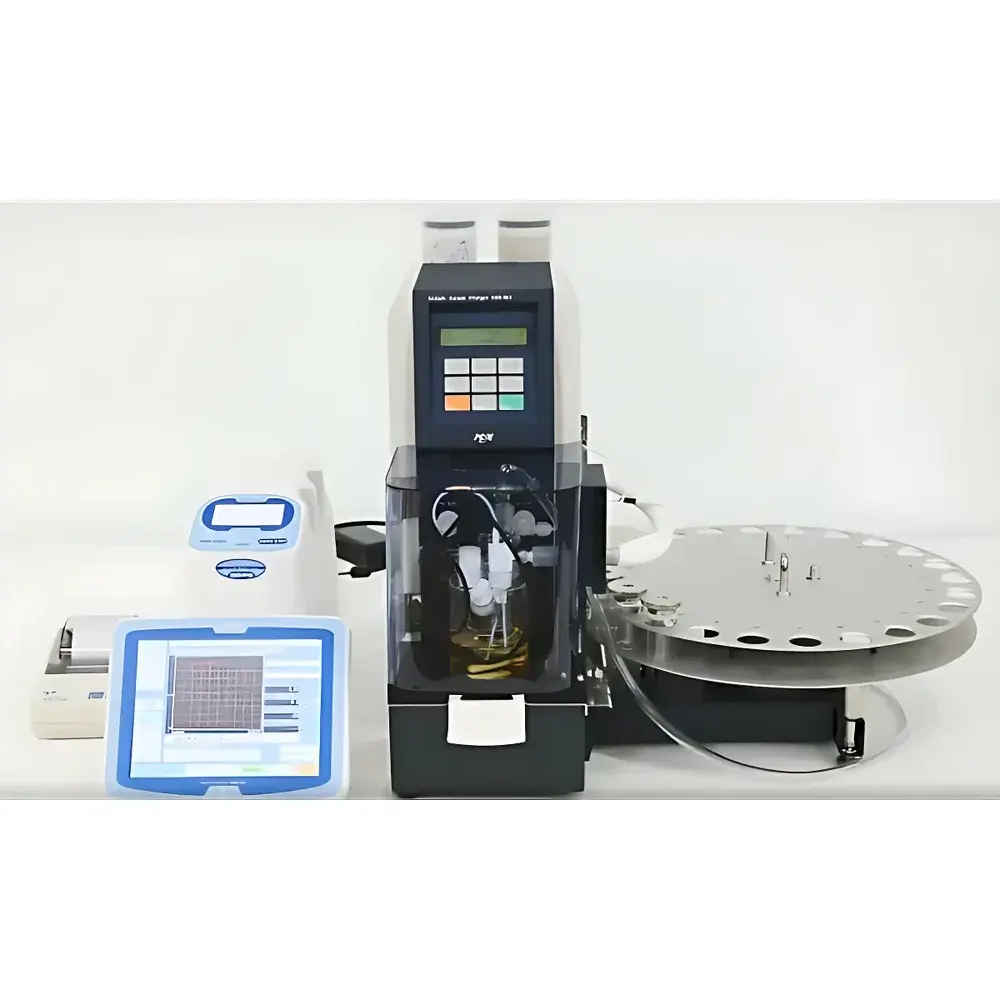
- Modular expandability: supports optional solvent exchange unit (SEU), CHK-501 multi-sample auto-sampler, and external balance integration via RS-232C or USB.
Sample Compatibility & Compliance
The MKC-710S + ADP-611 is validated for heterogeneous solid-phase materials common in rubber and plastics manufacturing and quality control. Compatible sample forms include pellets (e.g., PE, PP, PA6, PET, PLA, PGA), powders (carbon black, CaCO₃, ZnO), compounded elastomers, raw rubber (NR, SBR, EPDM), and additives (antioxidants, vulcanizing agents). Its thermal desorption capability addresses water bound in crystalline lattices, surface adsorption, and micro-pores—critical for specifications governed by SH/T 1770, GB/T 37191, GB/T 38138 (Method B), and GB/T 45676 (for metal powders in AM). The system satisfies regulatory data integrity requirements under FDA 21 CFR Part 11 when configured with user access controls, electronic signatures, and immutable PDF report generation. All measurement protocols align with ISO/IEC 17025 technical competence criteria for moisture testing laboratories.
Software & Data Management
Data acquisition and reporting are managed through KEM’s proprietary MCU-710S firmware, supporting up to 120 pre-programmed methods with customizable parameters (temperature ramp, hold time, gas flow rate, endpoint sensitivity). Measurement results—including sample ID, date/time stamp, operator ID, weight, water mass (µg), % moisture, and statistical summaries—are stored in non-volatile memory (500-sample capacity) and exportable to USB drive as CSV or printer-ready PDF reports with embedded GLP metadata. The system logs all critical events (electrolysis start/stop, temperature deviations, reagent exhaustion warnings) with timestamps. External connectivity includes RS-232C for balance synchronization and USB host ports for thermal/A4 printers, barcode scanners, and keyboard input—enabling seamless integration into LIMS environments.
Applications
This instrument serves as a reference-grade solution for moisture specification enforcement across polymer supply chains. Key use cases include: verifying incoming resin dryness prior to extrusion or injection molding (e.g., <50 ppm for polyamide processing); quantifying residual monomer or catalyst hydration in synthetic rubber compounds; assessing shelf-life stability of moisture-sensitive biopolymers (PLA, PGA); validating drying efficacy in pellet drying hoppers; certifying low-moisture content in medical-grade polymers (per YY 1116–2020 Annex C); and supporting R&D studies on hydrolytic degradation kinetics in polyurethane prepolymers (per GB/T 22313). Its compliance with ASTM D7785–21 also permits cross-material validation in blended systems containing natural fibers or fillers.
FAQ
What is the minimum detectable water mass?
The system achieves a lower limit of quantification of 1 µg H₂O, with a typical measurement range of 1–300 mg H₂O per sample.
Can the ADP-611 accommodate irregularly shaped samples?
Yes—the Pyrex® sample boat (68 × 25 × 15 mm, ~16 mL capacity) accepts granules, chips, or ground solids; powder samples should be evenly distributed to ensure uniform heating.
Is nitrogen gas mandatory?
Dry nitrogen (99.998% purity, dew point ≤ –40 °C) is required as carrier gas to prevent atmospheric moisture interference; compressed air may be used only with integrated synthetic zeolite dryers and validated for background moisture <1 ppm.
How does the system handle samples that decompose below 300 °C?
The ADP-611’s automated temperature scan function identifies the lowest effective evaporation temperature, minimizing thermal degradation while ensuring complete water release—critical for heat-labile polymers like PVA or certain bio-based resins.
Does the MKC-710S support volumetric Karl Fischer titration?
No—this is a dedicated coulometric system; volumetric analysis requires the separate KF-2000 series titrators from KEM.





