
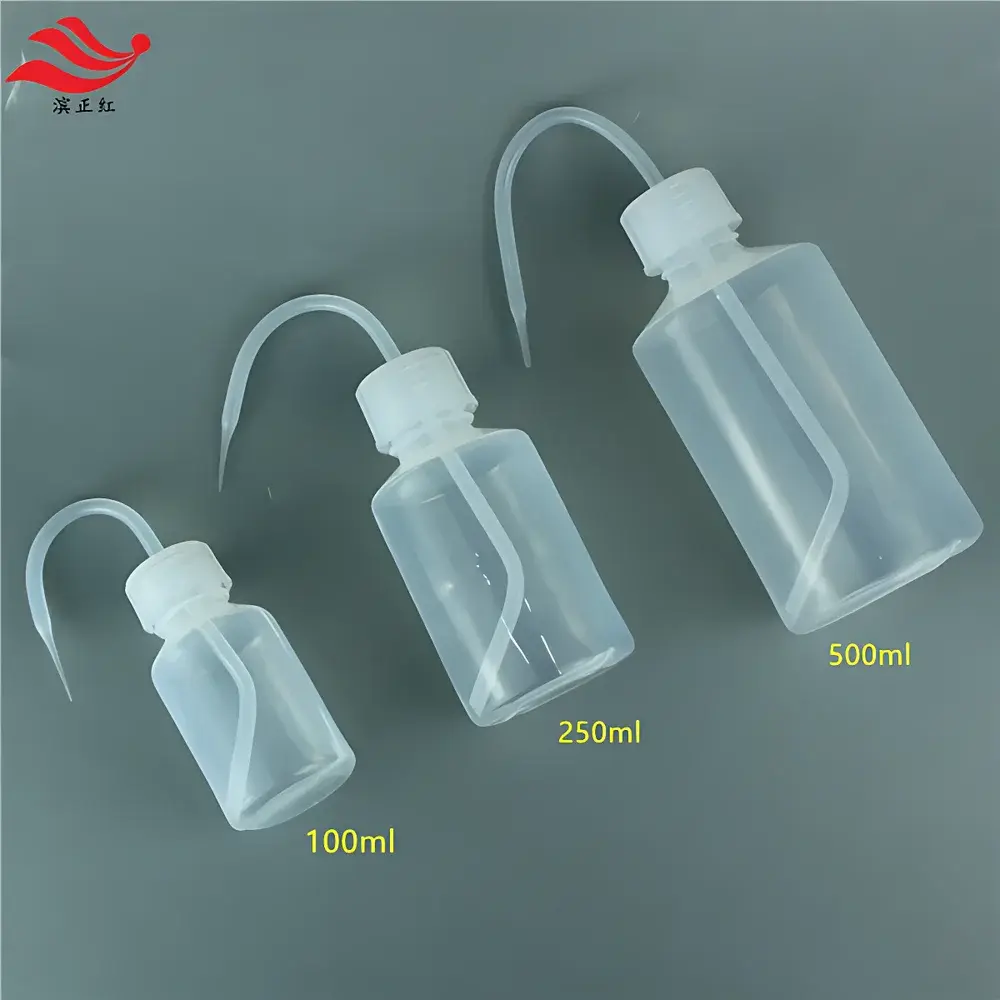
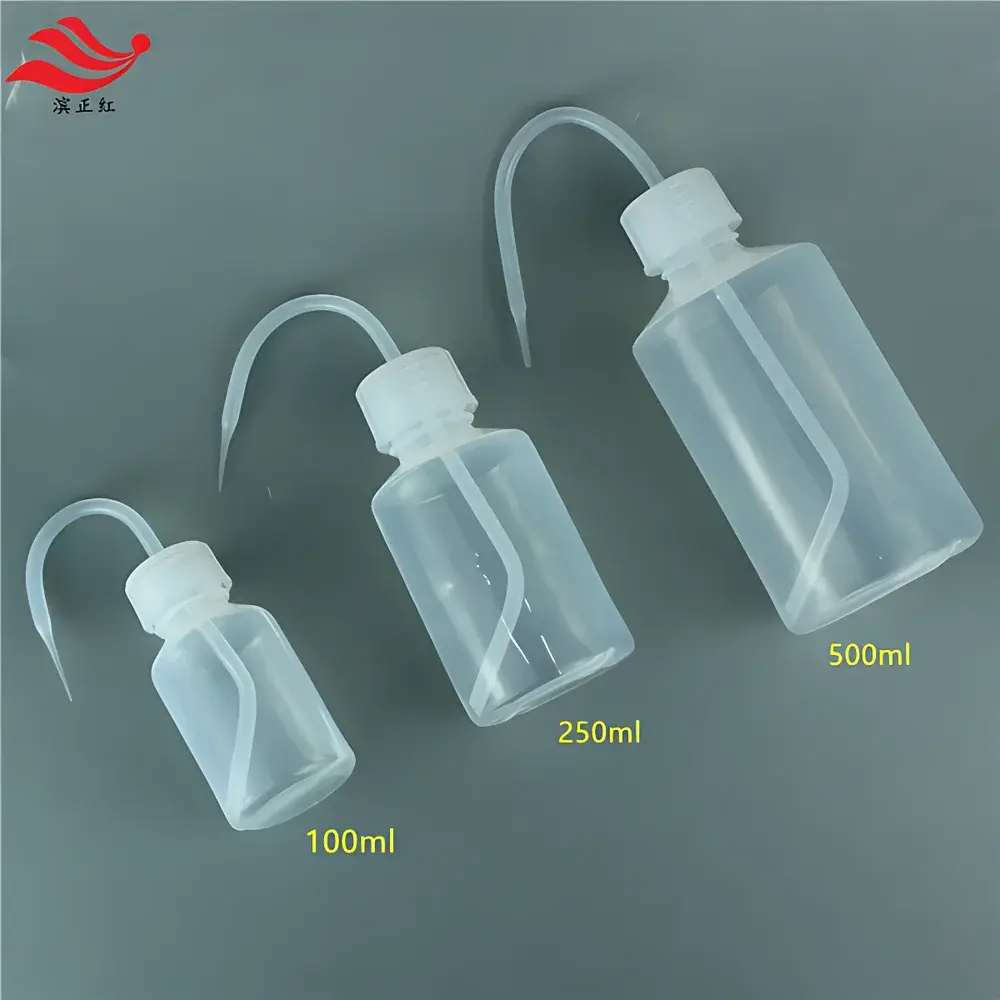
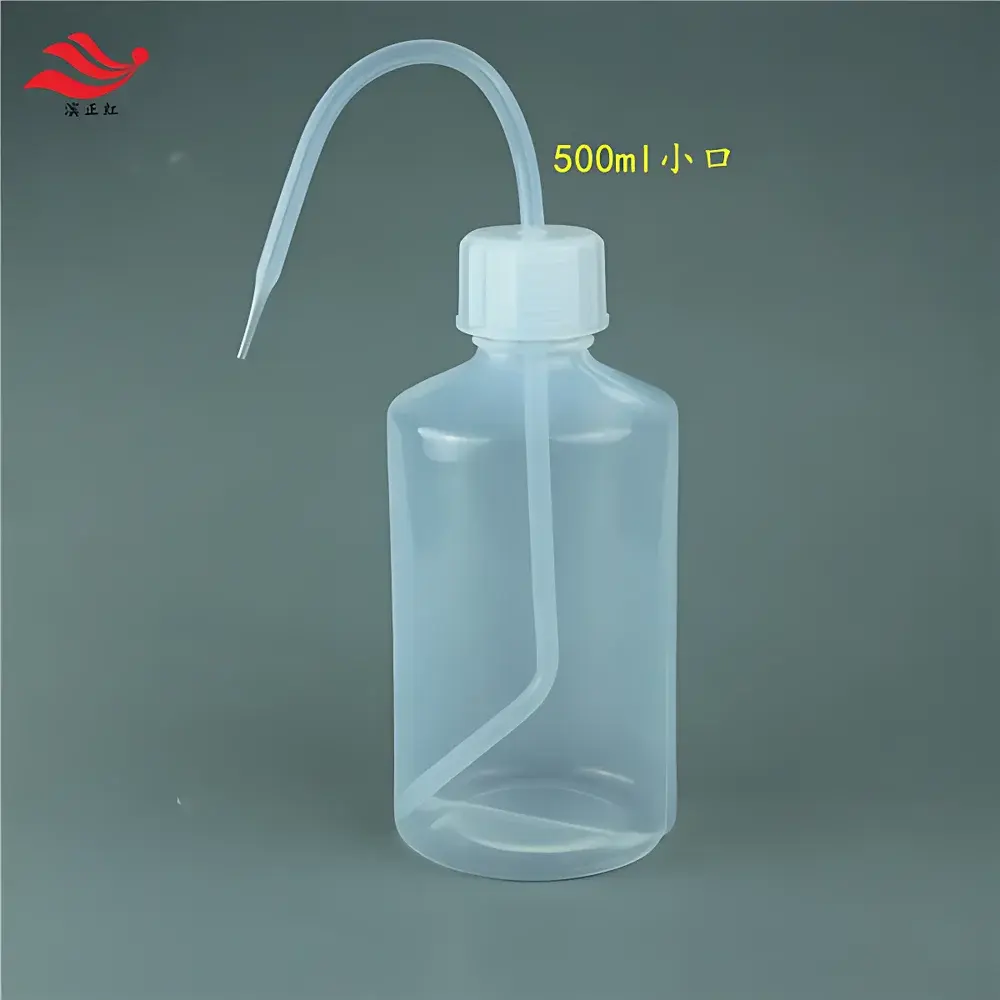
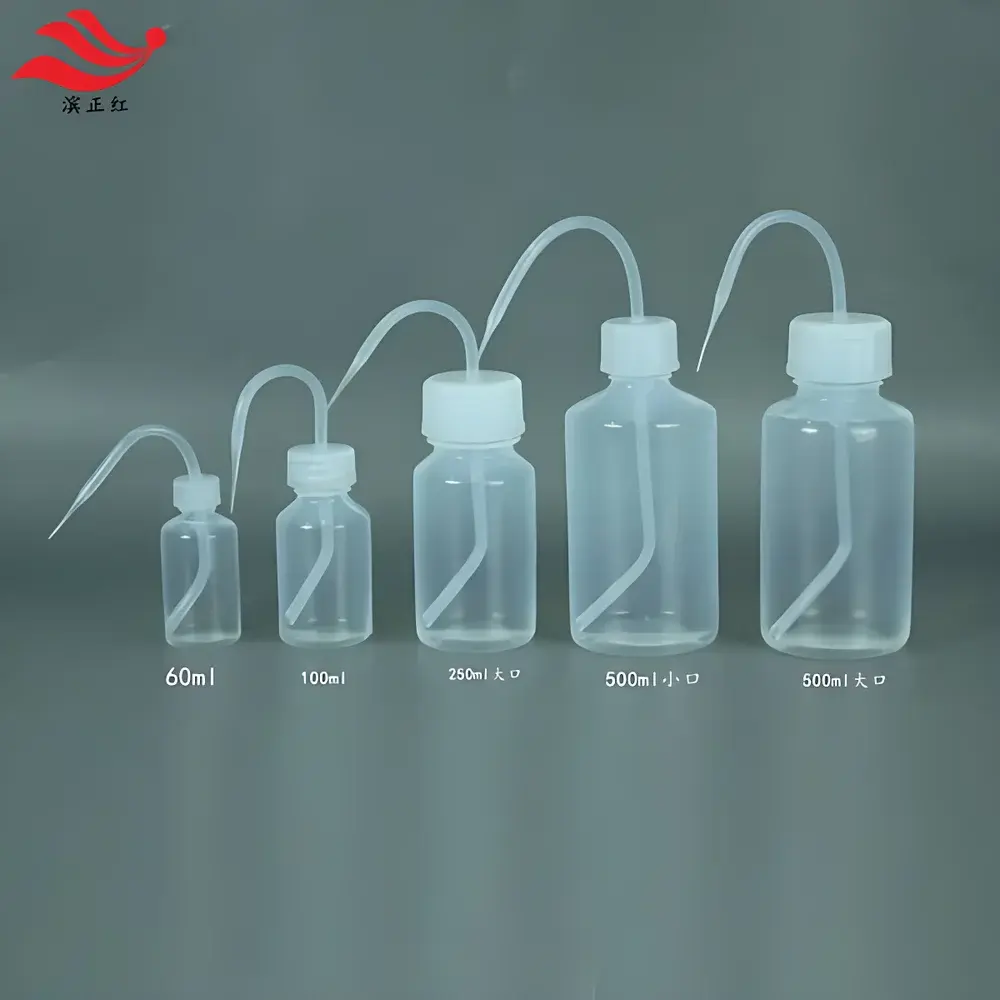
Shimadzu-Compatible Precision FEP Wash Bottle – 250 mL & 500 mL (NJ-ZH-XP)
| Brand | Binzhenghong |
|---|---|
| Origin | Jiangsu, China |
| Manufacturer Type | OEM/ODM Producer |
| Origin Category | Domestic (China) |
| Model | NJ-ZH-XP |
| Pricing | Available Upon Request |
Overview
The Shimadzu-Compatible Precision FEP Wash Bottle (Model NJ-ZH-XP) is a high-purity, chemically inert laboratory dispensing tool engineered for trace-level analytical workflows requiring ultra-low extractables, thermal stability, and precise droplet control. Constructed entirely from fluorinated ethylene propylene (FEP), this wash bottle operates on positive-pressure squeeze-and-release mechanics to deliver consistent, residue-free liquid delivery—ideal for rinsing sample vials, calibration standards, autosampler ports, and critical instrument interfaces in ICP-MS, GC-MS, HPLC, and ion chromatography systems. Its seamless, one-piece molded nozzle and cap design eliminates crevices where contaminants or residues may accumulate, while its optical clarity enables real-time volume monitoring without compromising chemical integrity. Designed to meet the stringent fluid handling requirements of Shimadzu instrumentation environments—including LC-MS/MS sample introduction modules and AA spectrometer rinse stations—the NJ-ZH-XP ensures compatibility with standard Shimadzu reagent bottle neck dimensions (e.g., GL45, GL32), facilitating direct integration into existing lab workflows without adapters.
Key Features
- Monolithic FEP construction: No adhesives, welds, or gaskets—entire bottle body, cap, and narrow/standard bore nozzle formed in a single molding cycle for zero particle shedding and minimal surface area contact.
- Ultra-broad thermal tolerance: Certified operational range from −200 °C to +205 °C; fully autoclavable at 121 °C (15 psi, 20 min) when cap is fully loosened to prevent pressure buildup.
- Droplet-level dispensing precision: Optimized nozzle geometry enables controlled, repeatable single-drop delivery (≈20–30 µL/drop) with immediate valve resealing—critical for volumetric standard preparation and solvent blanking protocols.
- Negligible extractables: Meets ASTM D4987-21 specifications for fluoropolymer extractables; total organic carbon (TOC) leachate < 0.5 ppb after 72-h aqueous extraction at 60 °C.
- Universal chemical resistance: Resistant to concentrated mineral acids (including aqua regia and ≥49% hydrofluoric acid), strong bases, halogenated solvents, and peroxides—validated per ISO 17025 internal method IN-CH-FEP-003.
- Optical transparency & low refractive index (n = 1.34): Enables visual meniscus reading without parallax error; compatible with automated fill-level detection systems using infrared or laser sensors.
Sample Compatibility & Compliance
The NJ-ZH-XP supports storage and dispensing of high-purity reference standards (NIST-traceable), certified reference materials (CRMs), and Class A reagents per ISO 648 and ISO 10721. It complies with ISO/IEC 17025:2017 clause 6.4.6 (equipment suitability for intended use) and is routinely validated in laboratories operating under GLP (OECD Principles) and GMP (ICH Q7) frameworks. The FEP material conforms to USP and EP 3.1.11 for plastic packaging components used in pharmaceutical analysis. Narrow-neck variants (250 mL, 500 mL) match Shimadzu’s standard reagent bottle threading (GL45), ensuring leak-tight sealing with original equipment caps and minimizing cross-contamination during mobile phase or standard solution handling.
Software & Data Management
While inherently hardware-based, the NJ-ZH-XP integrates seamlessly into digital lab infrastructure via compatibility with electronic lab notebook (ELN) systems such as LabArchives and Benchling. Users log bottle lot numbers, sterilization cycles (date/time/pressure/temp), and usage history directly against assay records—supporting full audit trails required under FDA 21 CFR Part 11 for regulated QC/QA environments. Optional QR-coded labels (available upon request) enable rapid traceability to raw material certification (e.g., FEP resin Lot #, ASTM F2215-22 test report), batch-specific TOC validation data, and sterilization logs.
Applications
- Trace metal analysis (ICP-MS, HR-ICP-MS): Rinsing quartz torch injectors and sample introduction tubing with ultrapure water or dilute nitric acid.
- Chromatographic method development: Pre-rinsing HPLC vials, autosampler needle seats, and column frits prior to injection.
- Reference standard preparation: Substituting Class A volumetric flasks for intermediate-dilution steps where gravimetric accuracy is sufficient and time efficiency is prioritized.
- High-sensitivity immunoassays: Delivering wash buffers to microplate readers without introducing surfactant carryover or silicone contamination.
- Calibration verification: Controlled addition of matrix-matched spikes into blanks for recovery assessment in EPA Method 200.8 and ISO 17294-2 workflows.
- Storage of HF-based etchants, piranha solutions, and anhydrous solvents in cleanroom-grade environments (ISO Class 5–7).
FAQ
Can the NJ-ZH-XP be used for long-term storage of hydrofluoric acid?
Yes—FEP exhibits negligible permeation and corrosion rates in ≥49% HF at ambient temperature for up to 12 months, per ASTM D543-20 exposure testing.
Is the bottle compatible with Shimadzu’s LC-30AD pump purge port?
Yes—the narrow-neck 250 mL variant fits Shimadzu’s standard purge solvent bottle holder and maintains pressure seal integrity during continuous low-flow operation.
Does autoclaving affect FEP’s mechanical properties?
No measurable change in tensile strength or elongation at break occurs after five consecutive autoclave cycles (121 °C, 15 psi, 20 min), verified by ISO 527-2 tensile testing.
How should residual solvent be removed before refilling with ultrapure water?
Rinse three times with ≥50 mL of target solvent, then air-dry inverted in a Class 100 laminar flow hood for ≥4 h—avoid oven drying above 80 °C to prevent nozzle deformation.
Are lot-specific certificates of analysis (CoA) available?
Yes—each production lot includes CoA documenting FEP resin grade (DuPont Teflon® FEP 910 equivalent), TOC leachate results, and dimensional conformity to GL45 thread specification ISO 2852.



