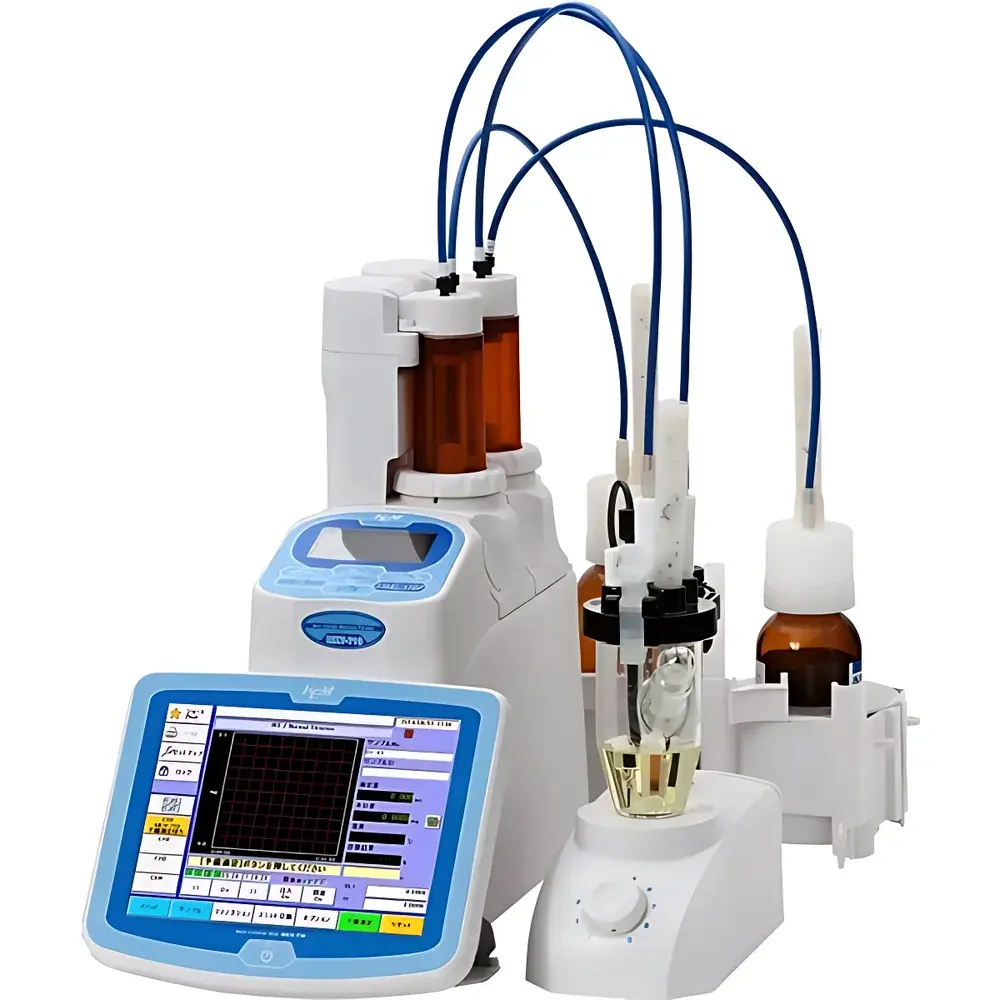
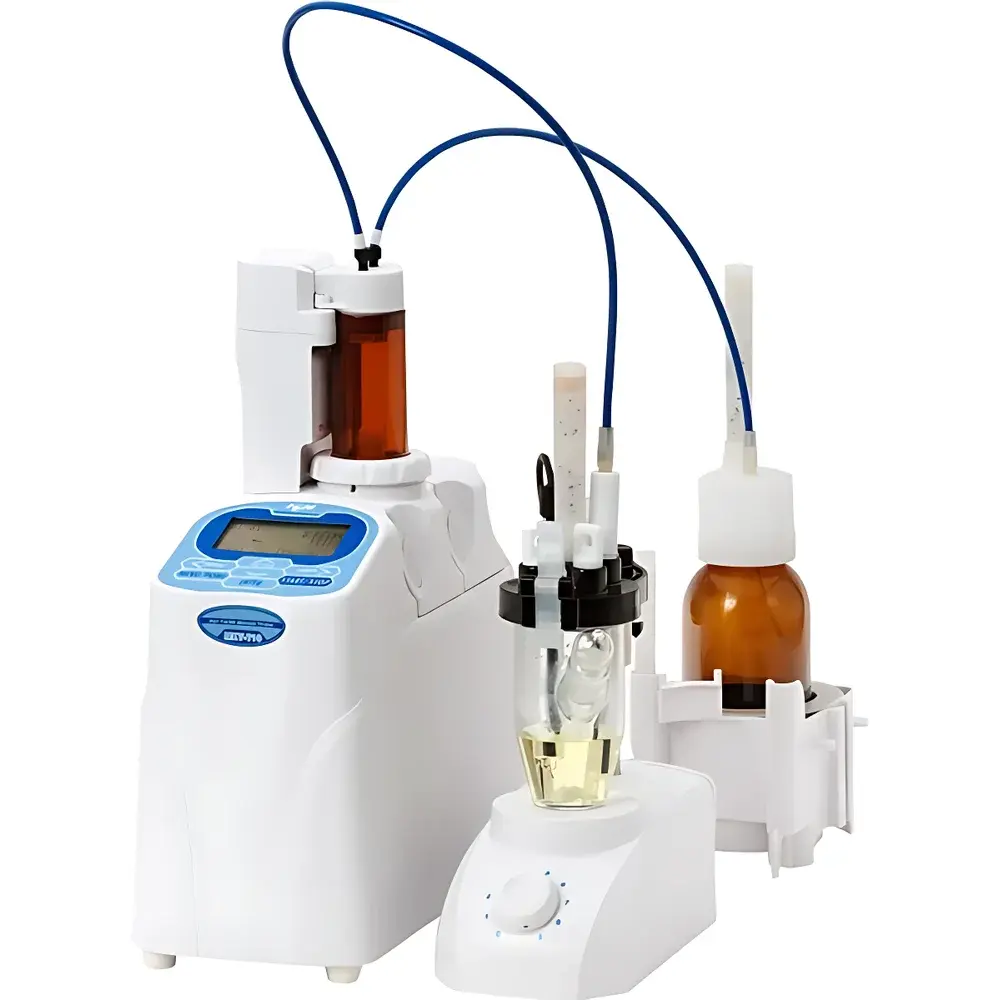
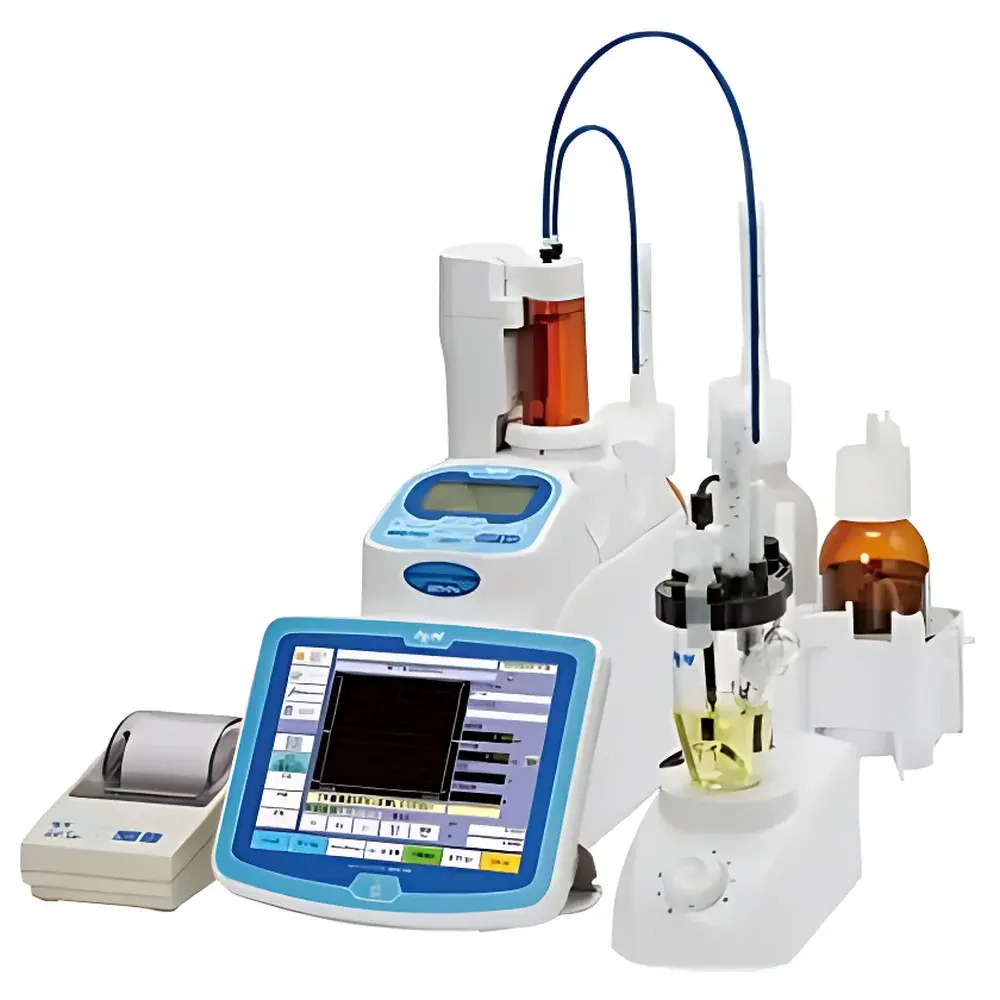
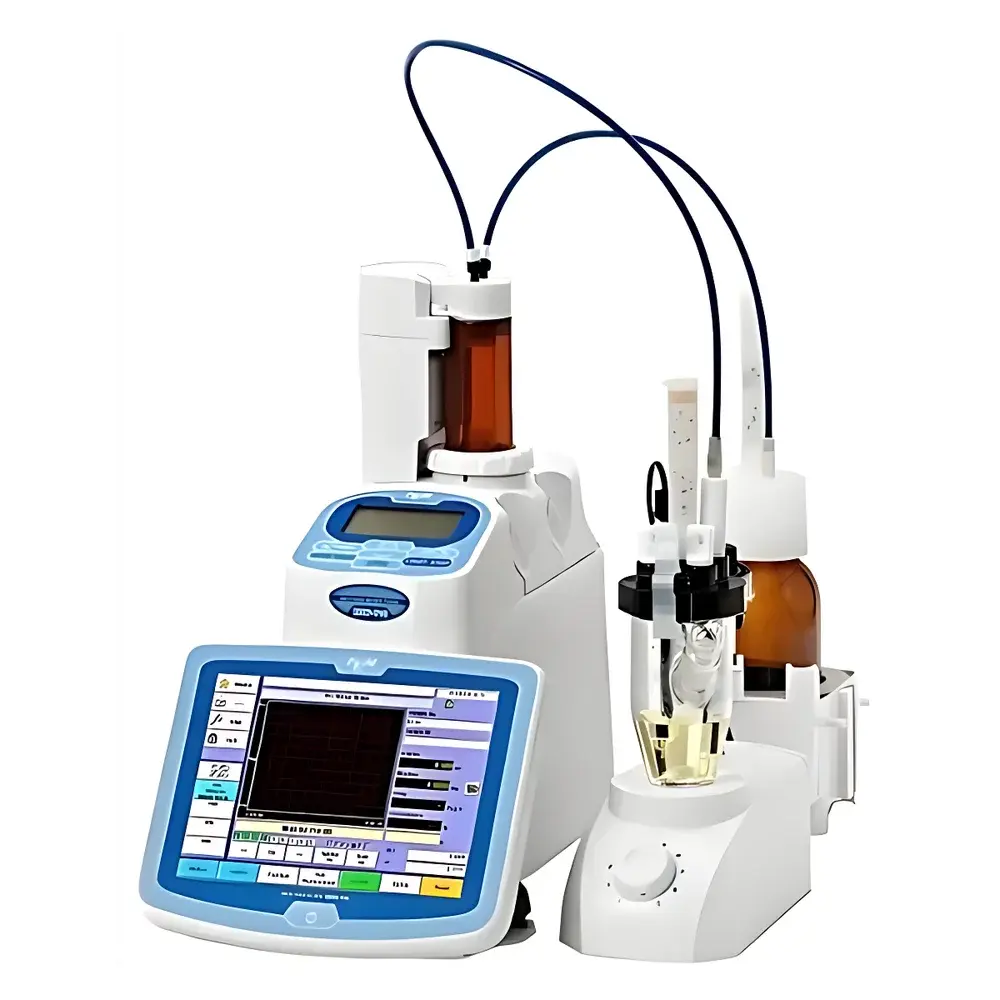
KEM MKV-710M/S/B Volumetric Karl Fischer Titrator for Petroleum Products (Compliant with GB/T 11133–2015)
| Brand | Kyoto Electronics Manufacturing (KEM) |
|---|---|
| Origin | Japan |
| Manufacturer | Yes |
| Import Status | Imported |
| Model | MKV-710M / MKV-710S / MKV-710B |
| Pricing | Upon Request |
Overview
The KEM MKV-710M/S/B Volumetric Karl Fischer Titrator is a precision analytical instrument engineered for the quantitative determination of water content in liquid petroleum products, crude oils, lubricants, biofuels, and related hydrocarbon-based samples. It operates on the principle of volumetric Karl Fischer titration—a stoichiometric redox reaction in which iodine, generated in situ from iodide oxidation by sulfur dioxide in the presence of a base and methanol, reacts quantitatively with water. The endpoint is detected potentiometrically using dual-platinum electrodes, monitoring the abrupt change in polarization potential upon complete water consumption. This method delivers high reproducibility, trace-level sensitivity (down to 1 ppm H₂O), and robust performance across diverse sample matrices—including volatile, viscous, or low-conductivity petroleum fractions—without requiring sample derivatization or extraction. Designed in full alignment with GB/T 11133–2015 (Appendix A: Volumetric KF Method for Liquid Petroleum Products), the system also supports international regulatory frameworks essential for quality control laboratories operating under ISO/IEC 17025, ASTM E203–24, ISO 6296:2000, and ISO 10336:1997.
Key Features
- Modular architecture supporting three configurations: MKV-710M (wireless master control unit), MKV-710S (standalone with integrated display), and MKV-710B (basic benchtop unit)—all sharing identical core titration mechanics and compliance profiles.
- Wireless Bluetooth connectivity (MKV-710M only): Enables separation of the 8.4-inch color touchscreen operator interface from the titration unit—critical for safe operation inside fume hoods during analysis of hazardous or volatile samples.
- Low-dead-volume titration valve assembly: Minimizes residual reagent retention between injections, reducing reagent consumption by up to 20% and accelerating solvent exchange cycles.
- Dual-platinum electrode system with adjustable endpoint stabilization time (1–99 s): Ensures reliable detection even in low-conductivity matrices typical of refined fuels and synthetic lubricants.
- GLP-compliant audit trail: Automatically logs operator ID, reagent batch and titer verification dates, piston replacement alerts, titrant expiry warnings, and calibration history—fully traceable per FDA 21 CFR Part 11 requirements when paired with SOFT-CAP data management software.
- Multi-channel expandability: Supports simultaneous integration with up to four independent measurement units (e.g., AT-710 potentiometric titrators, MKC-710 coulometric moisture analyzers) via SS-BUS and APBLAN interfaces.
Sample Compatibility & Compliance
The MKV-710 series accommodates a broad range of petroleum-related samples—including gasoline, diesel, jet fuel, naphtha, crude oil emulsions, transformer oils, hydraulic fluids, biodiesel blends (e.g., B5–B20), and refinery process streams—without modification. Its solvent delivery system (30–100 mL capacity per titration) is optimized for KF reagents compatible with non-pyridine formulations (per GB/T 26986–2011 and ISO 8534:2017). Regulatory alignment extends beyond GB/T standards to include ASTM D7923–25 (ethanol–hydrocarbon blends), ISO 760:1978 (general KF methodology), and JB/T 12920–2016 (hydraulic oil moisture testing). All models undergo factory verification per JJG 1154–2018 (Calibration Regulation for Volumetric KF Moisture Analyzers), ensuring metrological traceability to national standards.
Software & Data Management
SOFT-CAP data acquisition and reporting software (included) provides secure, password-protected user role management (administrator, analyst, reviewer), electronic signature support, and automated report generation compliant with ISO/IEC 17025 documentation requirements. Raw titration curves, endpoint detection logs, statistical summaries (mean, SD, RSD), blank correction application, and titer drift compensation are stored with timestamped metadata. Data export options include CSV, PDF, and XML formats; USB and RS-232C ports enable direct connection to LIMS, ERP, or ELN systems. Optional ADP-611 moisture evaporator integration allows headspace analysis of solid or semi-solid samples (e.g., greases, asphaltene residues) following ASTM D6304 protocols.
Applications
- Refinery QC: Routine water verification in finished fuels prior to pipeline transfer or storage (per API RP 47).
- Lubricant manufacturing: Monitoring moisture ingress during blending, packaging, and shelf-life validation (ASTM D1744 legacy context maintained for historical data continuity).
- Biofuel certification: Quantification of water in FAME (biodiesel) and ethanol–gasoline blends per EN 14103 and ASTM D7923.
- Crude oil custody transfer: Accurate water-in-crude determination supporting ISO 3733 and GB/T 26986–2011 workflows.
- R&D labs: Method development for challenging matrices such as heavy fuel oils, bitumen diluents, and synthetic ester-based lubricants.
- Third-party testing labs: Accredited testing per CNAS-CL01 (equivalent to ISO/IEC 17025) with full instrument qualification (IQ/OQ/PQ) documentation support.
FAQ
What distinguishes volumetric KF titration from coulometric KF analysis?
Volumetric titration uses a standardized iodine-containing reagent delivered via calibrated burette, ideal for samples with water concentrations ≥100 ppm. Coulometric methods generate iodine electrochemically and are preferred for sub-ppm levels. The MKV-710 series is strictly volumetric; KEM’s MKC-710 platform addresses ultra-trace applications.
Can the MKV-710 series comply with FDA 21 CFR Part 11 for electronic records?
Yes—when configured with SOFT-CAP v4.0+ and enabled GLP settings, it provides full audit trail, electronic signatures, and data integrity controls required for regulated pharmaceutical or biotech environments where petroleum-derived excipients are tested.
Is solvent exchange automation available?
Yes—the optional solvent exchange unit (SEU) enables unattended sequential analysis of up to 12 samples with automatic fresh solvent delivery and waste evacuation, minimizing manual intervention and cross-contamination risk.
What maintenance intervals are recommended for optimal performance?
Titrant piston replacement every 6 months (or 50,000 operations), electrode cleaning after every 20 analyses in high-salt matrices, and annual verification of burette accuracy per JJG 1154–2018 using certified reference standards.
Does the system support reverse titration?
Yes—reverse (back) titration capability is available with optional dual-burette configuration (AT-710 add-on), enabling precise analysis of samples that interfere with standard KF reagent stability, such as strong oxidizers or aldehydes.